Software
Houzz Logo Print
goldstar135

Aglaonema ID/Pollination?

10 years ago
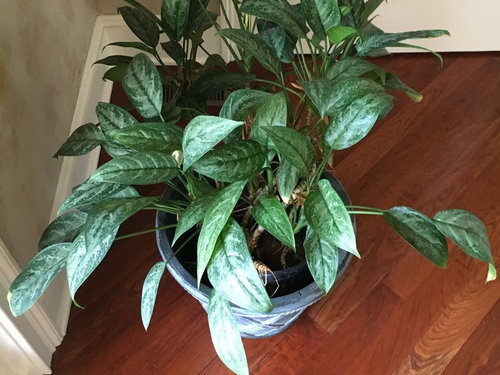
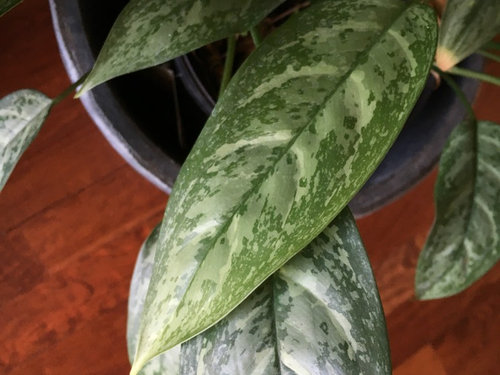
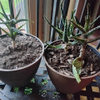
Could anyone ID this ag? I haven't seen it anywhere else.

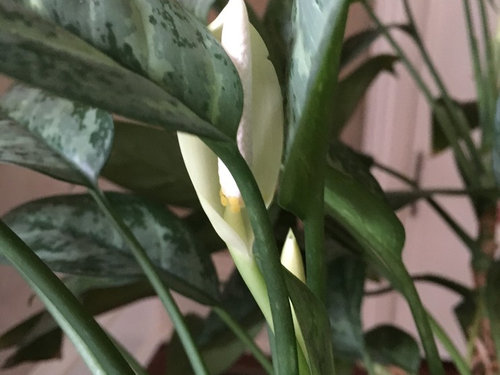
This year I'm considering pollinating it to get some seeds. There's three blooms coming up at the moment-one has been open for about two days

I'm thinking of taking the pollen from the flower above and pollinating a new flower when it opens. Are the yellow bumps at the bottom of the spadix the female flowers?

Also, the flowers were a bit bigger last year. Will the smaller size affect the seeds in any way?

Thanks in advance!

Comments (8)

  • 10 years ago

    Ags are said to be self-sterile. If you have multiple individuals, seeds could be possible.

    Looks like A. commutatum, or cultivar of that:
    http://garden.org/plants/view/75163/Chinese-Evergreen-Aglaonema-commutatum/  


    goldstar135 thanked Tiffany, purpleinopp Z8b Opp, AL
  • 10 years ago
    last modified: 10 years ago

    Self sterile? That's a bummer... I don't have any other ags at the moment.

    Ill still try pollinating them though to see if it will work with this particular cultivar. No harm done, right?

  • 10 years ago

    Absolutely, none! I think the moral of the story may be that you need more Ags though?

  • 10 years ago
    last modified: 10 years ago

    Just an update-

    So I waited for the first flower to start drying and producing pollen along the spadix. Nothing resembling pollen ever appeared though. The spadix just dried up and became cracked. I used a paintbrush and brushed the length of the spadix, then brushed the female flowers on the second flower (they were 2-3 days old, still yellow and sticky). Nothing ended up appearing, and the flowers eventually dried up.

    In short-nothing happened. :(

    What is Ag pollen supposed to look like? Could it be possible that my cultivar doesn't produce pollen?

  • 10 years ago


    Goldstar, I don't recognize your aglaonema offhand, but it is one of the newer A. commutatum hybrids. By newer, I mean hybridized in the late 1980s or more likely '90s or earlier. If you're interested in having some other aglaonemas not common on the market, I'd be glad to trade a few different varieties of your choice for a cutting or two of your ag. Maybe I can ID it if I can compare it to those in my collection.


    I grow all my ags outside and I sometimes have seeds on a number of different ones. I assume they're being pollinated by ants, a moth, beetle or some other critter outside. The outside of the inflorescence often appears parially eaten. One old variety, A. commutatum 'Elegans' is the most reliable of my ags in producing seeds on it's own, and I have a lot of seedlings from it that all look like the parent. 'Tricolor X Manila' and 'Illumination' have also produced seeds. I have some seedlings growing now from the former, one looks much darker in color than the parent.

    Russ

    goldstar135 thanked Russ1023 (central Fla)
  • 10 years ago

    Thanks for the offer Russ! I'll make sure I contact you when I decide to start shipping plants.

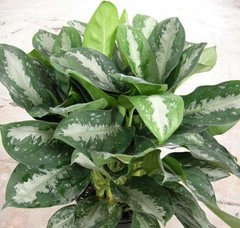
    Would pollination work if I used the pollen from the flower of an Ag "Key Largo" to pollinate the female organs of my plant? The leaf shape and variegation is rather different between the two and I think it would be interesting to see what seeds could be produced by crossing the two.

    Key largo-

  • 10 years ago

    Goldstar, I don't know much about hybridizing aglaonemas, but I would certainly try transferring pollen from Key Largo to your unidentified ag.

    I will say that I have dozens of plants of Key Largo and never had seeds form on any of them. Only 3 ags in my collection have formed seeds, a variety of a species (many times) and two hybrids (one several times, the other once). This is in a collection of hundreds of ags over more than a decade, point being that producing seeds without human interference is a rare thing. So I would dab pollen as much as possible to increase the chances for seeds.

    My experience with lack of seeds has made me wonder if most of the newer hybrids are sterile. Here is an excerpt from the great Dr. B. Frank Brown's book 'The Amazing Aglaonema' where he summarizes how he pollinates aglaonemas.

    "Anthesis in Aglaonema is indicated by unfurling of the upper portion of the spadix to expose the male flowers. At this time female flowers are receptive. However, pollen will not be dehisced (on the same inflorescence) for another two days. Therefore it is necessary to obtain pollen from a separate inflorescence and manually transfer it to the seed parent. This can be done by using a small soft brush and brushing the pollen into a small container. If desired, the entire inflorescence may be removed and turned so the spathe is on the bottom and acts as the container to catch any pollen that becomes dislodged from the spadix."

    "Pollenation can be easily made using the same brush used to collect the pollen. It is helpful to make the brush somewhat sticky by touching the stigmatic surfaces of female flowers, then dipping into the pollen supply and transferring pollen to the stigmatic surfaces of receptive flowers."

    "Receptivity of aglaonema flowers lasts at least 24 hours as evidenced by pollen germination studies. Seed has been obtained from flowers ....pollinated one day after spathe unfurling, but the number of seeds is small. Female flowers do not support pollen germination once pollen is produced by male flowers of the same inflorescence. By this time, flower surfaces have become discolored and soft."

    "Following pollination, we provide flowers with 100% relative humidity to encourage optimum pollination germination. This can be done by wrapping the entire spadix with moistened paper toweling and enclosing in a plastic bag. The cover is removed the next day so it does not interfere with pollen production."

    I had to look up the word 'dehisced'... dictionary says "The spontaneous opening at maturity of a plant structure, such as a fruit, anther, or sporangium, to release its contents."

    Maybe this will be of some help to you. Keep me posted on any progress.

    Russ

    goldstar135 thanked Russ1023 (central Fla)
Sponsored
Kuhns Contracting, Inc.
Average rating: 5 out of 5 stars26 Reviews
Central Ohio's Trusted Home Remodeler Specializing in Kitchens & Baths