Software
Houzz Logo Print
wildhaired_mavens

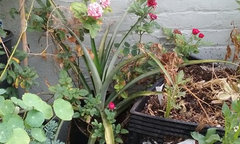
Pineapple houseplant in Water 3 Years

10 years ago
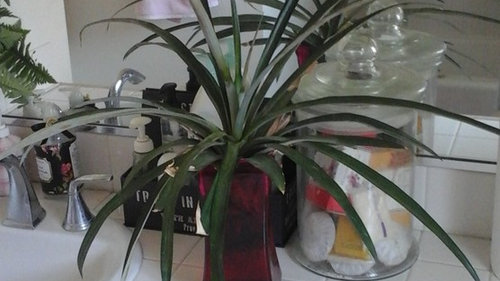
This pineapple was placed in soil three years ago and makes a carefree houseplant. In pervious to pest.

Comments (10)

  • 10 years ago

    I made a mistake in my first post. I meant to say the pineapple has been in tap water for three years. It's in low light so it grows quite slowly, it was started from a grocery store pineapple three summers ago.

    It's elegant, exotic and long lived. Makes its own fertilizer from the air. Doesn't get typical houseplant ailments like spider mites, scale or aphids. If you only grow one bromiliad- pineapple.

  • 10 years ago

    Makes fertiliser from the air? Surely pineapple isnt an air plant. Plus I thought they only get moisture from the air

    Wild Haired Mavens thanked GreenLarry
  • 10 years ago

    I'm surprised it looks as good as it does cause pineapple plants roots don't like to stay wet meaning the roots would start to Rot and than the plant would die over time

    Wild Haired Mavens thanked User
  • 10 years ago

    Greenlarry, I was told all pineapple get some fertilizer from the air, and this one has never received a drop of fertilizer. I started with a grocery store top.

    81 they grow them in soil or water in desert climates like mine. As long as there's enough light and air ciculation for it to grow a good root system it's fine.

    When I first try to start them I lose a good amount. If I put them in the yard before it warms up, they go into shock. I have to wait until dry summer to put them in dirt or they go into shock.

    This one is just for decoration as a houseplant. If it goes after this many years I'll put another one there. All my other houseplants are a big hassle with all that fighting off bugs and fertilizer, plus I have to buy them.

    Was just trying to let some folks know that they can have an elegant no fuss houseplant even if they can't afford fertilizer and pesticides.

  • 10 years ago

    If it is making roots, you might be able to get it into soil and eventually put it outside. Then in a year or so, you would get a new pineapple. Personally, I do not have any house plants, but I do bring some bromeliads into the house in the evening when they are blooming, if they are small enough. I have a couple now that are blooming that I bring in.

    I hope you can get your pineapple into some soil, as they do well in Los Angeles outdoors. You can always get another pineapple from the grocery store to make another house plant for your bathroom. I keep most of mine in pots because I have poor soil, but when I have too many in pots, I do put some into the ground, and so far they have done okay.

    I used to grow orchids indoors, but they are terrible for getting pests, and so I gave up on that and only grow orchids that will live outdoors all year, except for a couple of cattleyas that I keep in the shade outdoors in warm weather and bring inside from November to March, when it is cooler than they like. I mention this because you are in a similar climate to mine (I think) and may be interested.

    Wild Haired Mavens thanked Lars
  • 10 years ago

    Hi Lars,

    This one is three years old outside in dirt. Its three foot wide, and two foot tall so far. The limbs are stiff and have a sharp edge so I keep my distance. How long do you think before it fruits?

    I also have a dendrovian orchid outside that has never flowered.


  • 10 years ago

    If it hasn't fruited already you can force it to fruit by cutting an apple in half and putting the apple in the center and placing a bag over the whole plant for a few days than remove the bag and than in about a month it should flower from the gas that the rotting apple let off

    Wild Haired Mavens thanked User
  • 10 years ago

    I have one pineapple plant that makes fruit every year and some that do not, and so it might be helpful to try forcing the fruit, as the dead guy recommends.

    Here's some info from a Florida site:

    Planting in a Container

    Pineapple plants are well adapted to planting in a container. Choose a
    3- to 7-gallon (11- to 26-liter) container with drainage holes. The
    larger the container, the greater the potential for a large plant and
    fruit; small containers restrict the size of the plant and resulting
    fruit size. Use a well-drained potting soil mix and fill the container
    to within an inch (2.5 cm) or so of the top. Water the soil before
    planting the plant (water should be seen draining from the drainage
    holes). Plant the pineapple in the center of the container and water in
    the plant well. Place the container in full sun for best growth. When
    the plant flowers and fruits, tie the stalk to a stake to prevent it
    from falling over. See the section on care of pineapple plants for
    further information.

    Fertilizer

    Dry Mixes and Iron Soil Drenches. Dry fertilizer mixtures
    containing 6 to 10% nitrogen (N), 6 to 10% available phosphoric acid
    (P), 6 to 10% potash (K), and 4 to 6% magnesium (Mg) give satisfactory
    results with pineapple plants. Young plants should be
    fertilized with 1 to 2 oz (30-29 g) or less of NPK every 8 weeks
    increasing the amount as the plant grows. Plants growing in
    high-pH soils may be periodically fertilized with chelated iron material
    drenched around the base of the plant or sprayed with a liquid iron
    source.

    Liquid Mixes. Pineapple plants may also be
    fertilized foliarly with mild solutions of nutrient mixes that include
    NPK and Mg. Follow the directions on the label of the mixed
    material to avoid leaf burn. Iron may be a component of some foliar
    nutrient mixes, however; if the material does not contain iron, a 1%
    solution of ferrous (iron) sulfate may be applied foliarly. Apply foliar
    nutrients applications every 8 to 10 weeks.

    Micronutrient Mixes.
    Foliar sprays containing micronutrients such as zinc and manganese
    (iron is also sometimes a component) should be applied 2 to 3 times a
    year during the warm season. Follow the directions of the micronutrient
    mix material to avoid leaf burn.

    Compost and Topsoil. A
    small amount of compost and/or top soil may be incorporated into the
    soil before planting. This will aid in root development and improve the
    water- and nutrient-holding capacity of the soil.

    ------

    I've not done this myself, but I do feed my plants on a regular basis, generally with generic MiracleGro, which may not be the best, but it doesn't hurt.

    Wild Haired Mavens thanked Lars
  • 10 years ago
    last modified: 10 years ago

    You have a nice hydroponic system going. Just enjoy it for what it is. Acclimating to grow outside isn't worth the bother. Better to if you want that,is to just try another Pineapple top.

    I've gotten (2) Pineapple fruits over the years by a sunny window. Now,I'm trying outdoors in pots. Much cooler nights than indoors of course is the problem. We will see.

    Wild Haired Mavens thanked stanofh 10a Hayward,Ca S.F. bay area
Sponsored
Peabody Landscape Group
Average rating: 3.5 out of 5 stars8 Reviews
Franklin County's Reliable Landscape Design & Contracting