Software
Houzz Logo Print
saph8705

Dead rhododendron - re-plant? New shrub?

10 years ago
last modified: 10 years ago
Hi all,

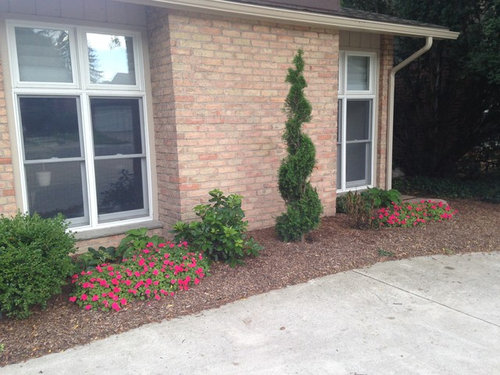
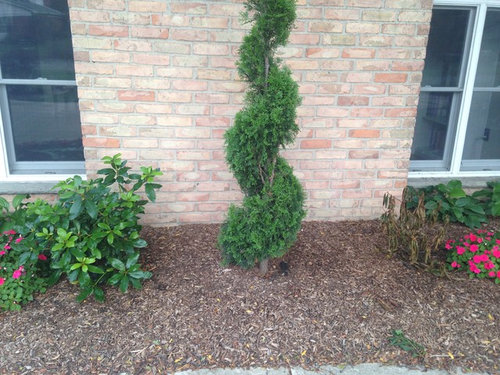
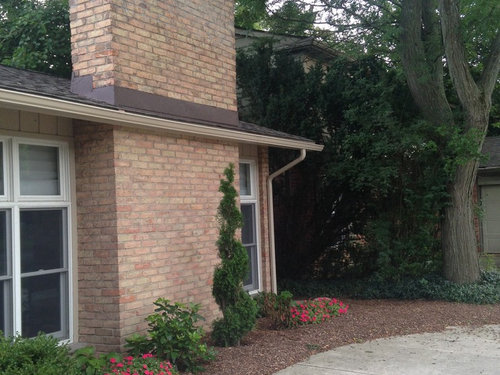
I bought two beautiful rhods from Costco this spring and planted them to flank an arborvitae. Throughout the summer, they appeared to be doing well, when about a month ago, one started doing poorly. I'm in southern MI and it's been a very hot, dry summer. I have been giving the plants water about every other day; it may have been too much, as this spot is shady almost all day with dappled late day sun from about 5:00 p.m. to sunset.

I think it might have suffered from root rot, though I'm not positive. No surrounding plants seem at all impacted, and were in the same conditions.

Anyway...

Two questions:

1. Some relatives of mine are suggesting I leave it in and see if it comes back. It looks very dead to me - dropping all leaves, wood turning all brown. Should I take it out?

2. I really would ideally like another one there; I like the idea of two smaller evergreen shrubs flanking the arborvitae all winter. However, I read that if one plant suffers root rot, the fungus is in the soil, and planting another one could be bad. Thoughts? If I don't plant another, what is another small evergreen shrub I could try? Looking for two of the same type of plant on either side of the arborvitae (I can relocate the healthy rhod if needed).

See photos... thanks for your thoughts!

Comments (16)

  • 10 years ago

    I think it's a nova zembla... which at around 5' wide/high might be too high/wide. I am liking the space between the arborvitae and the smaller plants... hm.


    Flowers are not a must, but a nice-to-have. Foliage contrast would be great!


    Snow doesn't need to fit. We do salt, but not close to that bed. Good questions! Thanks for your response.

  • PRO
    10 years ago

    I would pull it out. It may have been diseased, wilt diseases (v. wilt, anthracose, etc.) reside in the soil. I would plant something else like euonymus silver queen or nandina firepower, Maybe even golden mop cypress.

    Mich A thanked Caldwell Home & Garden
  • 10 years ago

    I forgot to ask - in what zone - 5 or 6? All of Caldwell's suggestions will provide nice foliage contrast and should stay small (though the Chamaecyparis pisifera 'Golden Mop' has the potential to slowly reach 5'), but not all are hardy enough if you are in zone 5. I haven't grown any of these plants. Do think about how you would feel with gold foliage alongside the pink tone of your brick.

    Some other suggestions that might work depending on your soil pH (most require acid soil that has decent drainage but doesn't dry out):

    Many smaller rhodies and evergreen azaleas

    One of the smaller Daphnes

    One of the smaller Leucathoes

    Heather (Calluna) or heath (Erica)

    You could also ask on the conifer forum for suggestions for other small needled evergreens, especially those with blue or gold foliage, and just have a border of annual or perennial flowers.

  • 10 years ago
    last modified: 10 years ago
    So far it looks like root rot. You can check for this by inspecting the carcass.

    http://www.pubs.ext.vt.edu/450/450-615/450-615.html

  • 10 years ago

    MI has been in extreme heat and drought for 12 weeks... if didnt water to perfection ... that is probably what happened ...


    replace that one .... its dead ...


    if that spiral thing is under the eave.. you should probably move it further out in late september or so ....


    i have been gardening in MI for 40 years .. cant think of a single thing the root rotted in draining soil ... what is your base soil ... and did you amend the planting hole ...


    most likely.. a poor specimen .. perhaps pot bound.. with some planting and watering issues ... with the attendant transplant shock ... and uncooperative weather ...


    why one.. and not the other.. who knows ...


    it amazes me.. how we get one post on some topic.. like root rot.. and then it seems like we get bunches of them ...


    i would remove the plant ... find out whats going on underground ... and probably replant in spring .. let it lay fallow for a while .. or just wing it.. and replant in fall if i could find the replacement plant


    i MIGHT.. if i needed the exercise.. dig out some fo the soil.. and replace it with some new soil from out back ... but i doubt i would go that far ..


    what are you going to do about snow removal in winter????


    ken

  • 10 years ago

    Thanks, all! I'm in 6A. I like the suggestions of some of those new plants. I'll check the dead one, but agree it could be root rot. Good to know I can replant the area though.


    For snow, we will have to put it on the side of the driveway - there's a narrow strip of grass between us and the neighbor where it can stack. A bit of a pain to move it, but I want to keep my shrubs up there. :)

  • 10 years ago

    If you see signs of root rot it means the location is infested, see discussion I linked to for more.

  • 10 years ago

    I'll check the dead one, but agree it could be root rot.


    ==>> i suggested that i have never had root rot in MI ... i have had poor specimens.. i have butchered many ... and weather has taken its far share ... but im just not buying that root rot is as prevalent in MI.. as where some of these other peeps come from ...


    of course its possible ... but there are so many other potential stresses and problems.. that it would be down around # 99 in my metro Detroit experience ...


    you also didnt address the snow issue i raised .... trust me ... i have misplanted many things in spring,summer fall.. only to wonder.. come winter.. what was i thinking ...


    nor did you answer if that spiral plant is under the eaves ...


    take a pic of what you dig up ... and show us ...bet you wont find much.. if any.. root growth since planting ....


    ken

  • 10 years ago
    last modified: 10 years ago
    Look familiar? Plants may arrive on the final planting site infected and then go on to collapse afterward. Retailers often have sloppy setups or practices involving pot bases sitting in water part of the time, dirty water being splashed around or hose nozzles being held or left face down on soil or wet pavement. Here I even see wilted plants being revived by setting them in tubs of less than pristine water - probably a perfect way to get root rot started in previously uninfected specimens.

    http://msue.anr.msu.edu/news/container_grown_rhododendrons_and_avoiding_phytophthora_root_rot_in_the_nur

  • 10 years ago

    When you take it out, check the rootball. It will probably look just like the pot it came out of, slick sides and all. It should have been roughed up a bit so there would be more contact surface area between it and the surrounding soil so the rootball could draw water from the soil by capillary action. If this isn't done the rootball can shrink and leave a small gap between it and the soil, interrupting transfer of water to the rootball.

    Mike

  • 10 years ago
    last modified: 10 years ago

    "If you see signs of root rot it means the location is infested, see discussion I linked to for more."

    All typical gardening locations are infested, at least on the east coast.

    'Nova Zembla' is a known susceptible variety and should not be sold outwith the PNW or cool summer areas north of Boston. Unfortunately idiotic and greedy wholesalers continue to promote it for most of the country. A hot, dry summer in MI could certainly trigger root rot. There really isn't a sensible cultural practice to avoid exposure to the organisms themselves. It is going to happen at some point if they are planted into the ground. You have to plant resistant varieties and/or follow cultural practices to minimize it. (Make sure soil is well draining, up to and including planting on a mound or rise.)

    There are better reds, both in color and root rot resistance, but I wouldn't know one to recommend for as far north as Michigan. Perhaps 'Henry's Red'.

    Yes as mike said, you need to open up the root mass when planting container stock. Next spring you might dig the other one up (if you decide to keep it there) and untangle the roots. I would do that down here in fall but your winters are colder, better to wait.

  • 10 years ago

    While this is good general practice for trees and shrubs heath family subjects such as rhododendrons with their stiff, brittle, dense and sod-like root systems do not really lend themselves to being manipulated or washed much at planting.

  • 10 years ago
    last modified: 10 years ago

    Well I wouldn't call it washing...but believe me I've found knotted and circling roots in container stock of Rhododendrons, and they aren't resolved at the time of plant they will cause problems down the road. I agree one needs to be less aggressive with them though, compared to other plants such as conifers.

  • 10 years ago

    I am quite familiar with the problem of pot-bound woody plants and have harped on this issue on Garden Web for years.

  • 10 years ago
    last modified: 10 years ago

    Never said you weren't! I wish someone with enough clout in the nursery industry - though I don't even know who that is - would use their clout to publicly shame other wholesalers on the problem. Create a youtube video of how many newly purchased container plants have circling roots. Make a real issue of it because I think it accounts for a lot of problems that amateur horticulturalist have. (or even professional ones!) Maybe the better nurseries will start using the special pots that supposedly prevent it.

Sponsored
Whisler Home Improvement
Average rating: 5 out of 5 stars9 Reviews
Franklin County's Committed Home Improvement Professionals