Software
Houzz Logo Print
rvird01

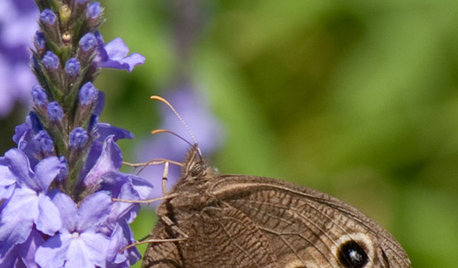
Long-tailed skipper

10 years ago
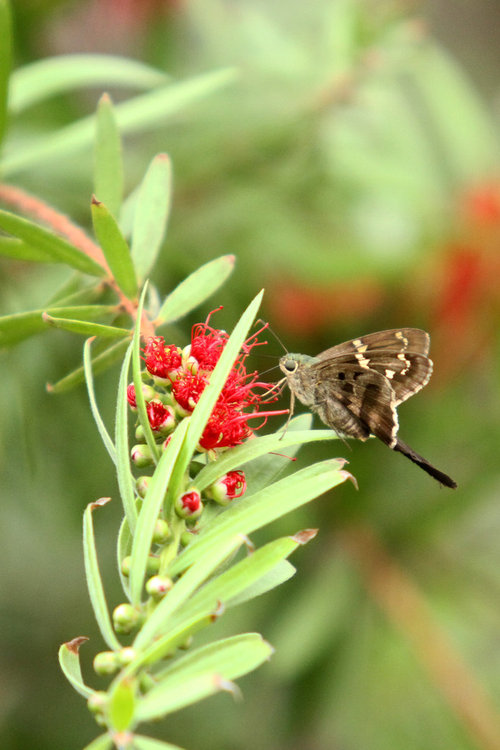
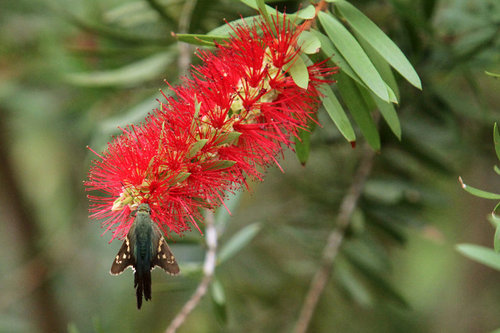
Not the best...doesn't show off the bluish-green on the back well. Or, is it a female? I suppose that we have so many of these due to the fact that this area grows so many peanuts and legumes are host plants?
Rhonda

Comments (19)

  • 10 years ago

    In my area they use Desmodium paniculatum, also known as beggar ticks, you know, in fall you get those triangular seeds all over your clothes? You probably have that weed in your area, too.

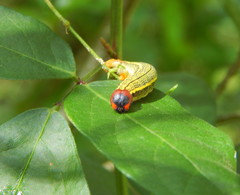
    I let a lot of it grow in my garden, also it grows all along my road. Nearly every plant has egg/s or cats on it, and I brought one in to finish raising myself. It's now gone underneath the paper towel in the cage to make its chrysalis. I just LOVE the teal color on their back, but they do make it hard to photograph their prettiest part!

    Sherry

  • 10 years ago

    You are a wealth of knowledge! I looked up Desmodium paniculatum,
    beggar ticks and I definitely have these along the edges of the road
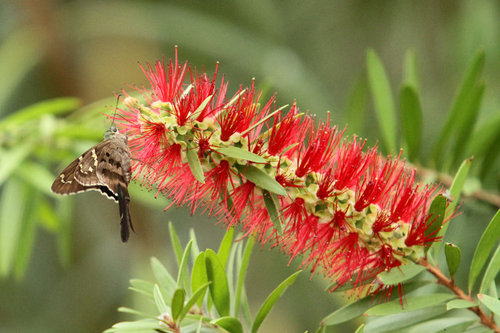
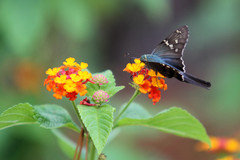
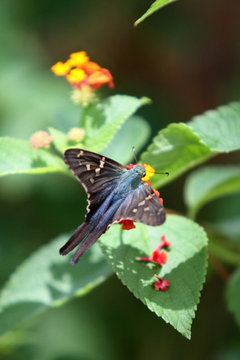
    and woods. I found a couple of pics I took of a long tailed skipper a few years ago that
    show the color off better.

    I just love hearing about your cats and their progress. I wish I was home more so I could try my hand at raising them.

    Rhonda


  • 10 years ago

    Those are beautiful pictures, especially the lower one!

    When the Desmodium leaves have little cut, then folded over areas and some areas where two leaves have been stitched together, that means a LTS has been a caterpillar there. If the cat is still there, you'll find it in a nest with two stitched together leaves, resting on the top of the nest - you have to look up.

    Sherry

  • 10 years ago

    Thanks Sherry! Sometimes the light cooperates :)

    I'm learning so much from you. Now every time that I go outside I'll be looking up, down and all around. Never too old to learn.

    Rhonda

  • 10 years ago

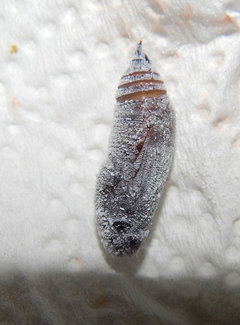
    Ever seen a LTS chrysalis, Rhonda? I think they're interesting looking, all 'frosted' and with 'eyes - my caterpillar made its chrysalis -

    'Sherry -


  • 10 years ago

    I went out to the garden, and a fairly small beggar ticks plant that had three LTS caterpillars on it is about eaten bare. One of the three was at the bottom of the plant, apparently looking for another plant, so I moved it to a real big one where it will have plenty to eat -

    Sherry

  • 10 years ago

    Sherry,

    That chrysalis really does look like it met Jack Frost and the cat is cool. Just curious, how often do you search your yard for cats and are you able to find them without the assistance of a magnifying glass? I'm sure that you've been doing this so long that its just second nature for you to recognize them or where they may have been. I really need to start really looking around me.

  • 10 years ago

    Rhonda, every time I walk through my property I'm sort of looking for caterpillars out of the corner of my eye, if not actively looking. I showed caterpillars to some little boys a few years ago, and their mother says that now when they go outside, they turn leaves over looking for caterpillars! :)

    As long as I have my glasses on, I can see most caterpillars, even butterfly eggs, easily. Except I must not be able to see cloudless sulphur caterpillars when they're on partridge peas - you can't believe how many times I've found late instar/full grown or nearly full grown cats in the partridge pea patch for the first time! Maybe the ferny green leaves and yellow and red flowers create camouflage?

    I transferred another LTS cat off that little plant to the same great big plant that I put the first one on - the big plant has grown up and into the gardenia bush next to it, like a vine! The top of the plant has been eaten away, and yesterday's caterpillar has made a nest on the highest leaves remaining.

    Sherry

  • 10 years ago

    Sherry

    It sounds as if you've influenced the next generation of butterfly supporters in those little boys. That's awesome!

    Just curious, how do you maintain a constant supply of the host plants? Do you grow most from seeds and cuttings so you always have some on hand or do you buy plants to supplement the well eaten plants til they grow new leaves?

    Thanks!

  • 10 years ago

    Rhonda, I don't always have a constant supply of host plants. I don't have any naturally occurring host plants for giant swallowtails, but I've planted Ptelea trifoliata, their favorite, which giant swallowtail caterpillars ate a few months ago - there are only a few leaves left, and the plants are just beginning to make new growth. I have a little rue for them, but not enough to support many cats. I plan on moving a little bitty P. trifoliata in my shady woods to my garden where I can plant it in a raised bed under better conditions.

    I also didn't have any natural pipevines, but there must be some fairly close by, because pipevine swallowtails show up here regularly. About two ?months or so ago a beautiful male nectared in my garden, and it was obvious that he had just emerged, being TOTALLY unfaded and untattered. I've planted woolly pipevines in my garden, and it does well, even spreads. Maypops/Passiflora incarnata grows roadside here, it's not hard to find, but I didn't have any on my wooded property, so I planted some in my garden, and it thrives, too.

    Many host plants grow naturally on my property - wild black cherry, tulip tree, sassafras, the doomed redbay, sweetbay magnolia, and others, but there are many others that I've planted for the butterflies - nearly all of them grow locally somewhere, I often take cuttings or seeds from locals, like false nettles, mock bishop weed, etc.

    Last year, the milkweed I had in my garden wasn't enough to feed the many monarch caterpillars on them, so I made trips to the local stands of A. lanceolata to finish feeding them. I also ordered and planted some milkweed vines, and I'll be getting some native American milkweeds, some that grow locally, some that don't, to add to my garden - I'm making some changes there.

    Once you retire and can devote more time to butterflying, you'll probably want to raise some caterpillars. Gulf frits are a good start - they're SO easy to raise!

    Sherry

  • 10 years ago

    Sherry,

    Thanks for the info. I'm selfishly glad that you don't manage to keep a constant supply of host plants. I was feeling very inadequate as a butterfly Mom.

    Even though I haven't seen any monarchs or queens, my milkweed keeps getting eaten up. The native Florida orange milkweed Asclepias Tuberosa grows along the road edge of my property and I have transplanted some into my garden. But it doesn't like transplanting so I'm going to try and grow some from seed.

    Have you ever grown white twinvine (Sarcostemma clausum)? If so, have you had much luck with it as a host for Queens? UF's butterfly plant sale has it this week and I trust their plants as they are grown by the Ag department.

    I have found several wild limes popping up around the property so I'm set for the Giants. If I could, I'd ship you some but the Florida Dept of Agriculture frowns on that.

    Your woods sound very similar to mine, though yours is much bigger, lots of natural host plants.

    I will definitely be raising cats when I have much more time. It sounds fun and rewarding.

    Rhonda

  • 10 years ago

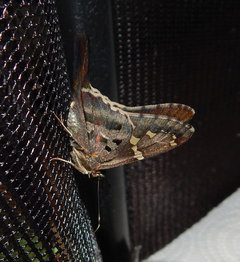
    My LTS chrysalis emerged. It wouldn't let me see its back, so this picture is real blah, and I can't even guess whether it's a male or female. I tried to get it on my finger to move it to get a chance it might open its wings, but it flew right out of the cage! Here he or she is -

    Sherry

  • 10 years ago

    Well it's very pretty no matter what it is :) Thanks, as always, for sharing your wonderful pics and stories.

  • 10 years ago
    last modified: 10 years ago

    Hey, ladies, I'm enjoying your pictures and your conversations. I have lots of white vine growing in my garden, but I have never planted it or cultivated it. It just grows in many places. I have never seen one caterpillar on this vine, and I have looked. Still, I have lots of Monarchs and I don't see many cats on the tropical milkweed that also pops up in many places. I did plant the tropical milkweed, though.

    I am supposedly in zone 9B, in Central Florida, but most of the plants that have grown in my garden are tropical. I think that global warming has really come into play here. We haven't had a hard freeze in five or six years. It will get to freezing or below a day or two, but nothing below 30 and not for long. I think that the white vine (Sarcostemma clausum) is an example of this. Like you, Sherry, I read that it only occurs in the southern third of Florida, but here I am in the middle of Florida and it pops up like a weed almost everywhere in my garden. I have yanked them out many times.

    I have quite a few skippers, but I have no idea what they use for a host plant here. I do have host plants for virtually every other large butterfly in the area. This year has been the best ever for butterflies and this time of year is the peak time for them.

  • 10 years ago

    I thought you planted white vine, Tom, sorry. 'Sounds like it's not worth having, if you've never found any caterpillars on it!

    Sherry

  • 10 years ago

    It's really quite invasive in my garden. When I try to pull them out and they break the white milkweed oozes out. So, I'm sure it will host Monarchs or others in that genus, but I've never seen a cat, nor an egg.

  • 10 years ago

    Tom,

    Thanks so much for the info on the white vine. I don't think I'll buy any based on you never having seen caterpillars on it and it's invasiveness.

    I know what you're saying about 9b and being able to grow tropicals. My eldest lives in Demand and landscapes in Daytona, both 9b. Plants such as tropical hibiscus who h most sites list as zone 10 plants bloom non-stop there but die back to the roots in my zone 9a. What a difference 1/2 a zone makes.

    However, my zone 9a closer to the gulf let's me grow a few more plants than Gainesville's zone 9a.

    Rhonda

  • 6 years ago

    I raise those