Software
Houzz Logo Print
lj_b

Fiddle Leaf Fig tree Root Maintenance & Prune

9 years ago
Hi All,

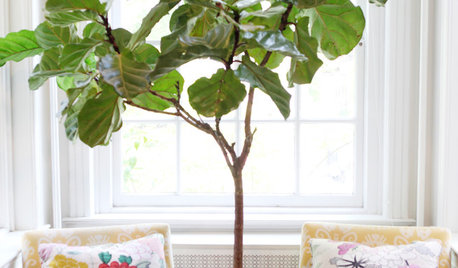
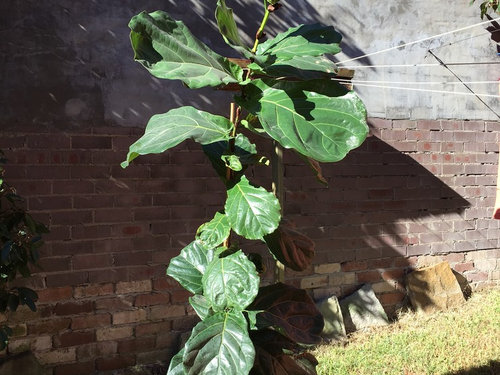
I have a Fiddle Leaf Fig tree that was given to me in July, I live in Sydney so that was the start of winter. I don't think the tree is in great health and I've wanted to prune and give it some root maintenance since I received it. However, I didn't think winter was the best time to put the plant in any undue stress. Now that we have just entered into spring I thought it would be a good time to start helping it along. It's about 2.3m tall and it's leaves are not in the best shape. Some are quite small and others are slowly turning brown. I want to prune the tree beacuse it's getting too tall for me to keep inside or in my green house outside. Also I think the tree would look better to be pruned around the middle where the smaller leaves are, giving it better shape as it continues to grow. The tree seems to have been potted in a pete/mulch mix. The major concern with this is that the roots are starting to grow out of the drainage holes and the whole soil mass is so compacted that I can lift it straight out of the container with everything intact. I would like to give some root maintenance rather then just potting up and put it in some Premium potting mix so it can start to regenerate health. Is it ok to both prune and repot at the same time ? should I look to sort out the roots and then move onto the pruning ? I would also like to propagate the off cut stem into another tree, as the cutting will be approx. 1m. I thought spring would be the best time for this, is that correct? Any advice and/or tips would be appreciated. Attached is a picture of the tree for reference. Thanks in Advance

Comments (2)

  • 9 years ago

    "Is it ok to both prune and repot at the same time?" Yes. If your plant is healthy and your first root reduction requires removing a significant volume of roots, removing a commensurate volume of foliage can help keep the plant from indiscriminately shedding the leaves and branches IT will "decide" to shed. Many growers are very quick to repeat the current/conventional mantra that foliage shouldn't be reduced at transplant time; but w/o taking into consideration the fact that you're also going to remove a significant volume of roots, repeating the singsong mantra is rather meaningless. Your tree is an organism that receives chemical messengers that will tell it to shed foliage if the roots are significantly reduced, and roots if the canopy is significantly reduced. It's better to make the reductions yourself so you have the choice in the matter. It might not be all that significant for your tree, which only has the central stem; but it could be disastrous if you had a well-developed branch structure and the tree shed branches critical to the tree's eye appeal after you repotted.

    Typically, the first couple of repots end up being the most stressful because more work needs doing to get the root mass straightened out. Too, my repots are usually pretty severe; severe to the degree than I wouldn't suggest you try to emulate what I do. Because of that, I regularly prune quite hard when I repot or very soon after - as in as soon as I see new growth appearing. This really does little to slow development or growth of the tree. Root pruning represents a short-term setback, but that setback is more than repaid in the form of growth much more robust than your plant would have realized had you NOT repotted it.


    "Should I look to sort out the roots and then move onto the pruning?" That's typically what I would do if the repot wasn't one of those epochal sessions where a very large fraction of the roots were removed (75-90%).

    "I would also like to propagate the off cut stem into another tree, as
    the cutting will be approx. 1m.
    I thought spring would be the best time
    for this, is that correct?
    The best time for propagating cuttings would be just before
    Christmas for you. That's when the plant will have the most stored
    energy. Any advice and/or tips would be appreciated." If you like, you can increase the probability of your cutting striking (growing roots) and the speed with which it will strike by doing this:

    Purchase some IBA rooting powder.

    Cut 2 pieces of electrical tape long enough to make at least 2 wraps around the stem.

    Sprinkle one end of each piece of tape with the powder, making sure it sticks to the tape, then wrap the tape where you want roots to grow on the stem so the powder is against the bark and secure the tape.

    The tape will create darkness, so you'll be 'blanching' the stem. It will also trap moisture against the trunk. These cultural conditions will help stimulate root initials to form. The IBA hormone will work in concert to help stem cells in the vascular cambium decide they want to be roots, rather than whatever other organ cultural conditions would push the plant toward developing. In mid-Dec, you can sever the cutting just below the lowest tape, remove the tape, cut off leaves at the node immediately above the tape, and stick the cutting in a highly aerated, damp (but never wet or soggy) medium in open shade and out of wind.

    You'll want 2 nodes buried and 2 healthy leaves left on the cutting. If you want a single-stemmed plant, make a tip cutting. If you want a multi-stemmed bushy plant, take an internodal cutting. It's helpful to cut the leaves left on the plant in half across venation to reduce the likelihood of the plant shedding the leaves as a drought response.

    You can always start an air layer now if you like. It should be ready to separate around Christmas or just before when you do your repotting.

    I apologize for the tardy reply. I only got to your message asking me to look at your post tonight. I get at least 10-20 plant-related messages from Houzz members every day, and it's taken me this long to catch up after being away for a week's vacation around mid-Aug. I hope I've provided you with some insight you can put to work for you and your plant. Give a lot of thought to the medium you'll ultimately provide as a home for roots. The need to fight your soil for control of your plant's vitality takes much of the fun and reward from growing, so soil choice is a key factor that influences how rewarding your growing experience CAN be.

    Your turn for questions or added input. I hope I'm not too late to have provided anything useful.

    Al


    lj_b thanked tapla (mid-Michigan, USDA z5b-6a)
  • 9 years ago

    Thank you so much for your response Al, no need to apologise for not replying sooner, I really appreciate you taking the time to give your advice.


    Unfortunately I started with the prune last week before I read your tips on how to propagate & looks like I might have begun the wrong way around by pruning first with intent to repot in a few weeks when its warmer...


    I've cut the tree virtually in half, just at the start of where the smaller leaves began in the middle. The plant now looks more balanced and seems to be doing ok, mind you its hard to tell at this early stage.


    I have started the proppergation by cutting the off-cut stem in two. As soon as I made the cut I put the base of the stems in 2cm of some root stimulater for approx 6 hours (as per directed by bottle instructions) and then have popped the stems in water in light filled positions. I am changing the water every 2-3 days. I Hope this is enough to work! I'd love to create two new plants from that tree.


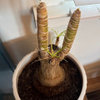
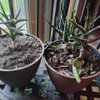
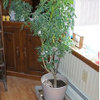
    I've purchased some premium potting mix for the repot and have read up on your notes on how to prune the roots back. I think the tree will be much better from it as you say, though I am a little nervous! I have attached some pictures for reference.


    Thanks again!


Sponsored
HomeCraft Remodeling
Average rating: 5 out of 5 stars4 Reviews
Custom Craftsmanship & Build Solutions in Franklin County, Ohio