Software
Houzz Logo Print
swnshp

Peace Lily Wilting

10 years ago

I have a peace lily about 6 foot away from a south facing window and on the floor. It was requiring water almost every other day and roots started appearing on the surface - it became obvious it was pot bound so I repotted in a larger pot.

The problem is a month later the symptom of needing regular water doesn't appear to have gone away: the soil will still be moist (not wet/waterlogged), but the peace lily will start to wilt about 24 hours after a watering, and it wilts fairly rapidly.

The only thing I have found to work, and I may be doing more long term harm than good, is to insert an aqua globe full of water into the pot and let it drip / take water as necessary. The 200ml globe usually empties within 2 days, and within 12 hours of that happening the wilting occurs.

The leaves have minor brown tips, but otherwise are healthy, and new leaves are appearing, as is the odd small flower. I also mist the peace lily regularly.

Any ideas what is going wrong?

Comments (18)

  • 10 years ago

    If you're watering when the soil is still moist, you're likely over watering.

  • 10 years ago

    Dave is right. The wilting may be from too much water.

  • 10 years ago

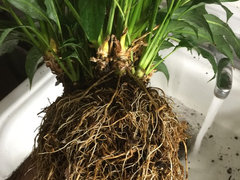
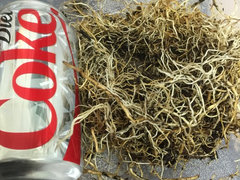
    If you simply moved it to a bigger pot, that wouldn't have solved the original problem. With my Peace Lily, I've had to be very aggressive about washing off all the old soil, and pruning about half the roots.

  • 10 years ago
    last modified: 10 years ago

    Bizarre. This morning I woke up and it had drooped again, and the globe was almost empty. I removed the globe. 8 hours later (5PM) and it's picked back up, as though it has had water - I haven't watered it though.

  • 10 years ago

    I suspect you've got pockets of both wet & dry in your mix.

    The only way to really assess what's actually going on down below is to turn out the plants & check its roots. I'd get a bag of Perlite & be prepared to mix in 50/50 w/ the mix you're already using, mix it up well & repot. I'd guess your plant will perk up quickly once you amend its soil & diagnose the roots' problem(s).

  • 10 years ago

    It appears it has been fooling me. Normally I am at work or otherwise not here during the day. But it appears it wilts in the morning light and then picks up again later in the day! So I have been giving it water before I leave and assumed that was what caused it to pick up.

    The compost mixture is already around 30% perlite mixed well in.

  • 10 years ago

    Compost? You didn't use actual compost did you?

    wilting during the daylight hours and perking back up at night is a telltale sign you're over watering.

  • 10 years ago

    @Dave, in some places "compost" is used to refer to potting soil, which can get confusing on forums like this.

    @Jonathon S, please let us know how your peace lily gets on with more perlite and less water! Hopefully that fixes the problem.

  • 10 years ago

    Sorry, yes everything tends to be called compost here but it's potting soil yes.

    @lmontestella apologies, I am not ignoring your advice, it was just the symptoms at the beginning suggested more water fixed it as the constant trickle stopped any wilting, and before the rapid wilting kicked in I was only watering when the soil was drying.

    I have removed all the sources of water the last few days and it has stopped wilting altogether and looking healthy.

    Regarding the potting mix, it's around 30% perlite 70% potting soil. Should I top up with more perlite or would a quick draining cactus mix mixed in help? I recently bought some of this for repotting snake plant cuttings but didn't have any when I repotted the peace lily.


  • 10 years ago

    "I have removed all the sources of water the last few days and it has stopped wilting altogether and looking healthy."

    Yep, you were definitely over watering. I know it seemed strange. But wilting during the day and perking on at night will point to over watering.

  • 10 years ago

    To repeat what I said earlier:

    "I'd get a bag of Perlite & be prepared to mix in 50/50 w/ the mix you're already using, mix it up well & repot."

    Just putting it on TOP accomplishes nothing, as the problem is down below.

    No, not C&S mix which would be too heavy for this tropical plant.

    What I suggested is the way to go & even tells you how to do it. If you don't correct this, the problem is likely to continue (down below where one can't see it).

    Not trying to give you a hard time, but I have personally learned this the hard way w/ these plants.

  • 10 years ago

    Imontestella gave you perfect advice, but I would add that all the old soil should be washed off from the roots. Last time I did mine, I also trimmed off half the roots.

  • 10 years ago
    last modified: 10 years ago

    @lmontestella to be clear, I didn't mean top up what I have now, I simply meant to add to (mix in) the new compost/potting soil. There is nothing to "top up" in the other sense, as the pot is already full to the correct level. I simply wondered about the cactus compost, and now I have my answer.

    I already have a huge bag of perlite so I'll use that, it's where the 30% or so of perlite in there currently came from.

    And to be clear, I did wash the roots when I previously repotted it, thoroughly, and also it was a new pot, so it was clean. I did not trim any roots though.

  • 10 years ago
    last modified: 10 years ago

    When I repotted my Spathiphyllum, I did just like hellkitchenguy Manuel did and washed away all of the old soil from its roots. Though I didn't prune the roots on mine, because, at the time, my plant was still small. One thing that I wanted to point out, is that my plant's soil contains zero perlite. In fact, none of my plants, except for my orchids, have any perlite mixed into their soil. Not that I have anything against using it, I just don't. All of my plants, of all different kinds, grow perfectly fine without it. The soil I use is similar to a cactus mix, fast draining and never stays soggy.

    My peace lily sits outside on my back porch where it gets dappled, broken up sunlight all day long. I've rarely had to water it, because it normally rains quite often. But towards the end of summer, we usually go thru a dry spell. So I've had to intervene and water it as needed. Because it gets rather hot outside, the soil tends to dry out quite fast. Even if/when the soil gets bone dry, my plant doesn't wilt. I checked my plant out this morning and noticed it had dried out completely. Usually, I keep it well watered all of the time. In their natural habitats, these plants grow on or close to the riverbanks. So they're no strangers to water. But still, there's a significant difference between growing alongside a riverbank with freshwater constantly flowing by, and growing in a poorly draining pot with water that has stagnated. Their roots need to breathe.

    I brought my plant in and placed it into a slightly larger bucket. I mixed some diluted fertilizers into the water and filled the bucket up to the soil line. I plan on letting it soak overnight. And then tomorrow, I'll drain the excess water away and flush the soil out with plenty of fresh water, until it starts to run clear from the bottom of the pot. I do this with my plants, not always, but quite regularly when I fertilize, and not once have I ever "overwatered" any of them. And all of this without any perlite mixed into the soil either. Once I've thoroughly flushed the entire pot with clean water and let it drain, fresh air seeps right back into the soil to replace it. Letting the roots breathe in the oxygen they need. I just wanted to bring this up to point out that when plants are potted up correctly, there is no need for perlite in order for the soil to have adequate drainage.

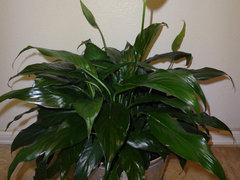
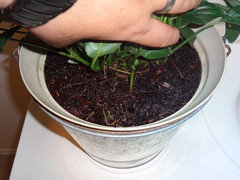
    I snapped a couple of photos to show you just how happy and healthy my peace lily is with the way I have it planted. Zero crispy brown tips, except for some minor mechanical damage inflicted on a couple of leaves by my cats, haha. It currently has three spathes on it right now, two of which have turned green, and the third one's just starting to. I took this photo immediately after I filled the bucket up with water to let it soak. The soil was bone dry, and still, none of the leaves were wilted. Although some of the leaves did feel less rigid and somewhat flimsy, they still held their shape...

    As you can see, no perlite is mixed into the soil. I have it soaking right up to the soil line, and I'll let it soak like that overnight. Then I'll flush it out with plenty of fresh water, until it runs clear out of the drainage holes. Before I place it back outside, to soak up some more dappled sunlight. No problems from "overwatering" it whatsoever...

  • 10 years ago

    Jonathon - By far, the greatest number of problems associated with PLs is the direct result of over-watering, a soil that holds too much water, or both. Any time a fraction of the soil is saturated, it limits the root system's access to the oxygen it needs to function normally, so soggy soil is best avoided to the greatest degree possible.

    The plant uses energy to absorb water and nutrients. To produce the energy needed to function normally, food (sugar) the plant has produced during photosynthesis is 'burned' in the presence of oxygen. Lack of oxygen due to soil saturation = impaired root function, which is exactly what happened to your plant. Depressed root function disallowed the plant to to move enough water to keep the leaves turgid. Later in the day when the plant started closing stomata (small openings in the leaves through which water vapor escapes) in preparation for the dark cycle, water loss slowed and the plant regained enough turgidity to be noticed by you. Next day, when the stomata again opened so the plant was losing water vapor you observed its return to its wilted state. Essentially, your plant was dying of thirst in a sea of plenty and more air in the medium instead of more water was indeed the answer.

    You can apply this lesson to all of your containerized plants, and the best way to ensure there will be enough air in your soils to support efficient root function is to build your soils around that need. Let me know if you'd like to chase that thought a bit. I'll link you to a thread that should give you a different perspective from which to view the health of your plantings. Roots are usually out of sight/out of mind when in fact a healthy root system is a prerequisite to a healthy plant, which is naught but a dream if the roots ain't happy.


    Al


  • 10 years ago

    Thanks All.

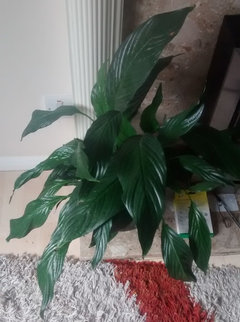
    Here is a picture of the Peace Lily doing what I consider better after the above recommendations. Let me know any thoughts though. (It's near an electric "fire" but that is never used, it's purely decorative).


  • 10 years ago

    Beautiful peace lily!