Software
Houzz Logo Print
nowyousedum

Tobacco Hornworm

9 years ago
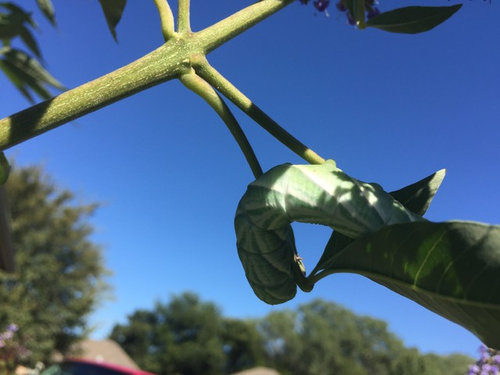
We found one on one of our Chaste Trees. Since I want to grow plants that will attract butterflies and other pollinators, is this a good thing? Or should I kill it?

Comments (6)

  • 9 years ago

    My grandson found another hornworm. Can someone please let me know if I should let it be? When I grew passion vine, I knew to leave the cats alone, but I am not sure about this. I don't want to be killing something that should be allowed to devour my vitex.

  • 9 years ago

    They will eat your entire plant and then move on to the next. I've been throwing them in the field next door. They make a really cool looking moth, though.

    I'm not sure where all the experts are today. Maybe enjoying the nice day and working in the garden?

  • 9 years ago

    I personally don't like horn worms. If you have host plants you can move them to them so they can make the moths. Datura is one of the alternate hosts.

  • 9 years ago

    I think you need to do whatever feels right for you in your particular ecosystem. I happen to like hornworms in general because they turn into beautiful Sphinx moths. I grow lots of plants the tobacco hornworms like (Nicotiana alata and other forms of flowering tobacco, and obviously tomatoes, peppers and potatoes), daturas and brugmansias among them, so when a hornworm is stripping a plant I don't want to lose to it (namely, a tomato plant), I just move it to a datura, brugmansia or flowering nicotine. The daturas and nicotiana alata reseed freely, so there's always plenty of them for the hornworms. If you don't have plants to transfer the hornworms to, then it is your choice whether to kill them or just toss them out in the yard and let them fend for themselves.

    We have fields all around us filled with native nightshade plants (including a few native nightshades in our back pasture, but Tim usually mows them down before they are large enough to interest the hornwroms) so there's a huge native hornworm population here in general. When walking the dogs early in the morning, I often see hornworms crossing the road and, occasionally. traveling right down the traffic lanes of the roadway where they are, of course, vulnerable to being run over by the next car that comes along. Despite all the hornworms around us, I rarely find one on a tomato or pepper plant in my garden. It is hard to say why they are not common on my tomato plants, especially since I have so many tomato plants, but it might be because there's a huge swath of four o'clocks along the west end of my garden, both inside and outside of the fenced garden. Four o'clocks are said to repel hornworms, and I think there might be something to that.

    If your vitex agnus-castus is very large, it will not be harmed by a few hornworms. Yes, they could strip it, but it will put out new foliage and bounce back. I'm not sure if anything ever has, possibly could, or ever will kill a chaste tree. It is about the toughest tree we have on our property. However, if the trees are small and young, they might not bounce back as quickly so I'd try to keep the hornworms off of them for their first couple of years in the ground.

    We have several different hornworms that eat plants on our property---tobacco hormworms (common here, usually found on tomato plants), tomato hornworms (very, very rare and almost never seen in our garden) and then various other hornworms are seen randomly, including one that feeds on our native wild cherry trees and another that feeds on Virginian creeper, which is widespread in our woodland and which I fight to keep out of my garden.

    Once, a hornworm attached itself to Tim's shoelace while he was mowing (using the riding mower) and I discovered it after he came indoors and set down in his recliner, next to the sofa where I was sitting. I looked over towards him to say something, and there was a big hornworm climbing on his shoelace. We took it outside and put it on a trumpet creeper vine because we had seen that type of hornworm on the trumpet creepers before.

    Our two brugmansias sit in large containers in the back yard near the garage for most of the year, but I move them into the greenhouse for winter. I then move them back outdoors in Spring as soon as they begin to leaf out with fresh new growth, which probably is in March. They are a beacon for the hornworms. Invariably at least a hornworm or two show up on the brugs almost as soon as I move them outdoors, but even though that happens, I will not see a hornworm at all in the garden for many months yet. I've always assumed the hornworms feed on native plants until July or August and then move into the garden around then, since that tends to be when I first notice them inside the fenced garden. I think the most hornworms I've ever found in my garden in a single year is 6 or 8, and many years I don't see any at all. It is likely they are there, but with so many alternate plants they like, and plenty of four o'clocks that they don't like, I just don't have a tomato problem with them. I probably wouldn't even notice if they were on my chaste tree, which is about 15 years old and very large, but if I did see them on it, it wouldn't bother me.

    There was a time in my life, when Chris was very young, that I did kill hornworms I found on my tomato plants. That was when we lived in Fort Worth and were limited (by a lack of sunny growing space) to growing only about 6-12 tomato plants per year. As Chris got older and became fascinated with the sphinx moths, he asked me to stop killing the hornworms, which I did, so he could enjoy the moths. It is not a decision I've ever regretted, but you need to do whatever feels right for you and your plants.

  • 9 years ago

    This brings up another question. If I leave it on the established vitex, will this "invite" others to make a feast in other parts of the yard? I had a small mouse once and decided he wasn't bothering me so I would t bother him. Huge mistake. He invited all his friends and relatives. We were overrun with them. Don't want this to happen with hornworms.

Sponsored
AIS Renovations
Average rating: 4.5 out of 5 stars15 Reviews
Custom Craftsmanship & Construction Solutions in Franklin County, Ohio