Software
Houzz Logo Print
asnewatthis

Winter interest

10 years ago

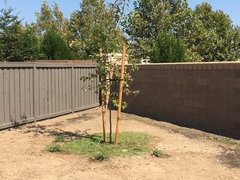
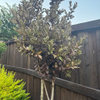
I have an area behind a Tupelo tree we planted that needs filled with a large sized shrub (or several to fill the space depending on their size).

I can't find much that blooms in winter that can take full sun. Can you help me figure out my options? I was hoping for late Fall or Winter blooms to give that area some interest while the tree is bare.


Comments (40)

  • 10 years ago

    Oops. Meant to include zone 9. Sacramento-ish.

  • 10 years ago

    I'd look at Grevillea. It can blossom at various times, but usually from late winter into early summer. But the unusual looking buds are present from late summer/fall onward. Evergreen, full sun, drought tolerant once established and attractive to hummingbirds. There are any number of species but Grevillea victoriae is seldom without a flower year round :-))

  • 10 years ago

    There are lots of plants that blossom or have lots of interest in winter. Your best bet is likely the Arboretum at UC Davis, where you can view plants that will do well in your area. The Sacramento County Master Gardeners work out of there and you can likely get ideas from them. My garden (in Sonoma County) actually looks most interesting in winter, but most of my plants have colorful foliage, not flowers. I do love those Nyssas (tupelos)!

  • 10 years ago

    Yes tupelo (nyssa sylvatica typically here) are nice trees. I don't know of anything that blooms in the winter (maybe I just live in an area too cold). look at forsythia

  • 10 years ago

    There are many things that have fruit in the winter. I can provide suggestions of such.

    Pyracantha

    Deciduous Holly

    English Yew (mostly dull)

    Burford Holly

    Camellia


    Those suggestions are rather generic, I can suggest cultivars and botanical names in more detail if you are interested.

  • 10 years ago

    I will say I love Camellias, but here it's way too much sun for those. I asked one of my favorite knowledgable nursery ladies and she said that even the Yuletide Camellia (red blooms at Christmas time, hence the name) that says it could acclimate to full sun is kind of stretching it. She didn't really recommend it. I almost bought one anyway just to see, but I wanted to check out my other options first. She did say that most things that flower in the winter here are shady type plants. I'm still trying doing my own research since I realize that they don't carry every single plant out there, nor can she be an expert on every single plant.... I'm going to keep looking. I just don't have the time to get to the arboretum. Wish I did, but potty training a 3 year old sucks a lot of time out of my days lately. LOL. What little time I have besides that is spent outside landscaping the backyard. The inside of my house is starting to show it. I think I need a vaca just to clean... LOL!!!


    Sara, thanks for alllll your help. So awesome. I'd love to see pics of your garden if you have any. I know we're in slightly different climates, but I love good gardens I can admire. :) I find myself checking out plants everywhere I go...

  • 10 years ago

    Even here in the chilly, wet and windy UK there are lots of woody plants that flower in Winter or have other interest. In Sacramento there must be even more. This is just a list of some of the things which actually flower here in mid Winter...Garrya elliptica, Various winter flowering Viburnums, Chaenomeles, various Daphnes, various Mahonias, Jasminum nudiflorum, Clematis cirrhosa, Camellia sasanqua, Coronilla valentina subsp. glauca 'Citrina', Chimonanthus, Corylopsis, Hamamelis, Lonicera fragrantissima, Skimmias, Sarcoccas, Ericas, Cornus mas, ...... As an added bonus many winter flowerers have lovely scents.

    If you add in bark and berries we could be here for hours writing lists. I'd also suggest using small winter/early spring flowering bulbs around your tree too, starting with Winter Aconites and Corydalis solida.

    Sara's suggestion to visit a botanical garden/arboretum is spot on to find more candidates for your specific location. You are not remotely limited to a hackneyed palette of Forsythia and a few evergreens.

  • 10 years ago
    last modified: 10 years ago

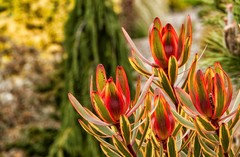
    Is Leucadendron salignum 'Winter Red' hardy in your region. Very interesting plant and blooms over winter. Drought and deer tolerant and of course, evergreen.

    Another idea beside visiting an arboretum or botanical garden in your region is to drive thru other neighborhoods and look for things you like. If you see something you can't ID, post a pic here! Visit good nurseries during the winter. They often put on display what is in bloom. You can try to ask the local nursery people, but I have found that they sometimes don't know a whole lot.

  • 10 years ago

    Thanks. I'm going to have to sit down a little later and check out all these suggestions. :)


    My short list, from things I've noticed at the nursery as well as looking online last night after I posted this include:

    Leucadendron Winter Red - saw this at the nursery

    Super Red Hybrid Aloe - found on Monrovias site but there was no other name listed. Big spikey red flowers.

    Melianthus major Purple Haze

    Distylium Blue Cascade

  • 10 years ago

    'Winter Red' is not hardy here (9b) - it's lovely but I have lost it repeatedly so I now call it 'Winter Dead'. I've had much better luck with other Leucadendron cultivars. Good advice re: driving around. There is also a Facebook page called 'Plant Idents' that has some really experienced people in it (heads of botanical gardens, etc) that can usually ID anything in about 5 minutes!

  • 10 years ago
    last modified: 10 years ago

    There's also a plant id forum right here on GW. Name that Plant Forum

  • 10 years ago
    last modified: 10 years ago

    Distylium 'Blue Cascade' is yet another evergreen in the witchhazel family (Hamamelidaceae) - just as Loropetalum is, and doesn't really have showy blooms. Form is spreading. I have it in my yard and like it. It's pretty tough.

    Are you looking for sort of a lower mounding understory plant? Not sure of your parameters exactly.

    Would something variegated work?....like Pittosporum tobira? Could be kept more dense to contast with the wispy Loropetalum. It is commonly used in zones 8 and warmer in the East, but don't know about in CA.

  • 10 years ago

    Pitts are dead common in most of California :-) And I believe the OP had selected a variety of Pittosporum (dark stemmed ) to go with the loropetalums to begin with.

    I'd also agree that other than being evergreen, the Distylium is not a very showy plant in winter. Flowering - at least in my climate - is somewhat sparse and not really overly visible. And while the Melianthus should be fully evergreen in a zone 9 climate and offers some great foliage texture and color, it does not bloom in winter - the flowers do not appear until mid to late spring. But they are quite stunning when they do appear.

    Some additional clarification may be in order. What sort of winter interest are you looking for?? Flowers? Berries? Bark effect? Variegated foliage? In a zone 9, there are too many plants to name that would provide one or more of those features.........it is pretty hard to live in a zone 9 climate and NOT have a lot of winter interest going on!!

  • 10 years ago

    Flowers.


    But I'm finding most of the winter flowering stuff is for shade.

  • 10 years ago

    Oh, and for size, I'm not too sure. It'll be behind a Tupelo...so something that will show from behind there when the tree has lost its leaves. Otherwise it'll be a nasty bare corner.

  • 10 years ago

    AS would it have shade once the Tupelo leafs out? In winter shade plants can usually be in full sun (when the Tupelo is bare).

  • 10 years ago

    How are the temps in winter? I am sure they aren't like here (below freezing). I have seen camellias do good in full sun. During the winter, it shouldn't matter how much sun it gets. How big is the tupelo?

  • 10 years ago

    Sara, it's a newly planted Tupelo, so it's not big and fluffy. I'm not sure how fast this one grows or how fluffy I expect it to be this Spring.

  • 10 years ago

    Certainly won't provide much shade during hotter months. I wouldn't use camellia in your climate (at least in this situation). most black gums (the common type of tupelo here) aren't all that fast growing. It will take years for that tree to reach a decent size, but the wait will be well worth it. Maybe pairing winterberry (deciduous) holly shrubs with golden mop cypress.

  • 10 years ago

    Because I want the back of that corner filled with something evergreen that requires little maintainence.


    Its a Wildfire. Reportedly fastest grower of the species. Not sure how true that is, but that's what I read. We didn't buy it for that anyway. We bought it for the size. The other cultivar at the nursery was going to be too small (think it was called gumdrop) and the standard Nyssa was going to be too big. We felt like this one would be a happy medium.

  • 10 years ago

    Did you look at any of the Grevilleas I suggested previously? Coming from the southern hemisphere, they sure don't mind the heat or the sun but can also take a fair amount of shade. And most will produce winter flowers as well.

  • 10 years ago

    I am really interested in Grevilleas. I think I did but I'll go look again. I don't think I saw any over 3' high... Was hoping for something generous. Maybe 6' tallish... But I'm flexible on that...

  • 10 years ago

    Ok, I found a lot more cultivars of Grevillea on a different website than I was perusing yesterday. I'll take a closer look.

  • 10 years ago

    That would be nyssa sylvatica 'Wildfire'. I have never grown it, so I wouldn't count on it being fast growing although it is possible. Evergreen to fill the back.... let me think..


    maybe:

    Monrovia's variegated english holly (saw this at lowes and thought it was cool):

    Pics

    Monrovia's Site & Info

    Pyracantha Coccinea

    Maybe certain types of gardenia, they provide a nice fragrance while in bloom.

    Loropetalum 'Purple Diamond'


  • 10 years ago

    AS I use a lot of Australians here but be aware that many are borderline tender. You are a bit colder than I am in winter so check the hardiness. Quite a bit of variety within a genus, at least for me. And placement makes a big difference too. You are right, the Nyssa isn't going to give you enough shade for a while. I planted a bunch of straight N. sylvatica about 15 years ago (#15) and they are lovely trees now with phenomenal fall color. You might look at Artostaphylos 'Howard McMinn', a very garden-suitable cultivar of our native manzanita. It blooms Jan-Feb with copious small white bell-shaped flowers. Great nectar provider. The trunks and branches are twisty and cinnamon-colored and the shrubs can be opened up to expose the branching. They are evergreen. Some of the non-invasive Cotoneasters, such as C. buxifolius (which I think is often mislabled) don't bloom in winter but are covered with red berries, so very decorative, and also evergreen. You could even consider Nandina, which comes in a variety of cultivars, some are tall, others 3-4'. 'Royal Princess' has purple new growth. Arbutus unedo 'Compacta' is another thought - evergreen, blooms in winter, attractive fruit. I'll keep thinking.

  • 10 years ago
    last modified: 10 years ago

    Not Having gardened in CA I'm sure I can't be much help. But in that spot I'd put in maybe three upright conical evergreen small trees (such as Ilex integra or rotunda) to create a bright green backdrop. But I've no clue if they are good for your region.

    Also some smaller evergreen Southwestern oaks might work.

  • 10 years ago

    And the winner is.......


    Leucadendron Blush


    It was between that and Grevillia Scarlet Sprite. Going to give the Leucadendron a try.

  • 10 years ago

    Well I am glad you have made a choice! Hope it does well, no experience with this plant.

  • 10 years ago

    If it doesn't, it was like $12 a piece or something like that. Not too bad. Besides, the nursery gives a year guarantee, so if they don't make it, I'll try the Grevellia instead. LOL.

  • PRO
    10 years ago

    If the Leucadendron are hardy in your area it is hard to beat this genus for year-round interest. Remember, NO phosphorus ( which basically means no fertilizer). Australian soils have no phosphorus and these plants will curl up and die if exposed to any.

  • 10 years ago

    If my native soil has any phosphorus, will we know real soon? Would they start dying right away?

  • 10 years ago

    The former director of the UC Berkeley Botanical Garden said once that the reason that Leucadendron don't get really big here is that eventually the roots find Phosphorus and the plant dies. I generally plant in raised mounds of a mixture of amended loam and 1/4" lava rock (and native soil, which is adobe, if it happens to be during the 20 minutes a year that it is friable) and I haven't yet had a Leucadendron die for no reason, but it's been less than 10 years for me. I saw a huge 'Safari Sunset' at the Gamble Garden in Palo Alto that obviously had been going for a while, and there are some biggies at SFBG. Usually Leucadendron are taken out in the winter here, as they can't withstand long periods of freezing. If they are small plants that usually does them in (a la December of 2013). If they are larger, they will suffer die back, but like a lot of Australians, they have epicormic buds and will push from old wood. I have a 'Jester' (a beautiful cultivar - check it out) that is lipstick red in the winter and it got hit badly in Dec 2013, but it was over 6' tall and I just waited until it budded out all over the stems and cut off the top. It's fine now. I think that the only thing that you can do that is critical is to not fertilize at all. I seldom fertilize anything, other than the citrus or throwing alfalfa pellets around things that need a bit of nitrogen, so I don't have to worry about it. You have some room back there for a nice grouping so have some fun!

  • 10 years ago

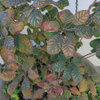
    Here is 'Jester' in winter in my garden, backed by a Cupressus nootkatensis 'Green Arrow' and a yellow Chamaecyparis. Sometimes it is a bit pinker than this, but always this deeply colored.

  • 10 years ago

    I'd just add that a number of Australian (and/or other southern hemispheric plants) are phosphorus-adverse, including the grevilleas. Since I grow mine in containers, I do need to fertilize periodically but I do so sparingly and with fish emulsion, which has a pretty low P load. So far, no issues :-))

  • 10 years ago

    Oh I saw Jester at the nursery too. I don't remember why I didn't go for that one.


  • 10 years ago

    Sarah, that's some interesting looking foliage. Around here we would have to plant kaleidescope abelia to get anywhere even near that.

  • 10 years ago

    If we planted them on the 17th, and our native soil has phosphorus in it (I haven't had it tested so I don't know), would they have died by now??? I'm debating buying a few more to fill in more space but not if I'm not sure they'll work for real. LOL.

  • 9 years ago

    One of my Leucadendron died. I'm not sure what happened. The other two are doing great. I changed my mind about what I want back there so I am going to move those two. I bought a Grevellia Long John. LOVE it. So soft and airy looking. Hope they don't mind being moved, I just have to move them over about 5 feet so they'll be next to the Grevellia.

  • 9 years ago

    I like 'Long John' a lot, too - a great hummingbird magnet. It gets quite large but is amenable to pruning. Good textural contrast with the Leucadendron.