Software
Houzz Logo Print
elizabetheva

Linen drapery lining and weights

10 years ago

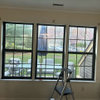
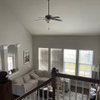
I finally bought white linen for curtains in my front room. I have sewn curtains many lined curtains before, but I haven't used linen, I want to get a good drape to the fabric, and I can't decide how much light filtration I want. Good body is more important to me than light filtration since the room is bright and doesn't need light control for TV or anything. They will be functional for now, but eventually these windows will also have shutters or roman shades and the curtains will just be to soften the room. I have a pleat style in mind but i'm open to altering it based on getting the best results from the fabric.

Where can I read about more professional techniques for getting the best type of lining to provide good body, and to compare different types of weights? I found a few DIY articles but that's not really what I'm looking for, I'm experienced with sewing and want to improve my technical knowledge before I start these.

Comments (10)

  • EvaElizabeth thanked beckysharp Reinstate SW Unconditionally
  • 10 years ago

    The second link is very helpful, thank you!

    I'm hoping someone with experience with linen might also be able to tell me the advantages of fully lining linen. I read that they can look great look without the light filtration because of the texture, but in what way does it change the body of the drape? How much do weights make a difference in midweight linen, with heavy vs. light lining?

  • 10 years ago

    We make quite a few linen panels in our workroom. A few important tips I can pass along....

    After you make your cuts, press and steam each piece. Then, put them aside to "rest". Linen can shrink and stretch depending on humidity levels. You probably know this, but pull a thread before each cut so that you get nice straight-to-grain cuts.

    As far as lining, it's individual taste. Some clients prefer a very light look, others something more substantial. I agree with Anglophilia, bump interlined panels are luscious, but a little more challenging to fabricate.

    In my opinion, you can't go wrong with a traditional 3-finger pinch pleat. It's classic and works with any type of decor. Our go-to lining is called Prima Sateen. It's all cotton and a nice weight. We also use napped (flannel-backed) lining on some jobs.

    Good luck with your project!


    EvaElizabeth thanked torreykm
  • 10 years ago
    last modified: 10 years ago

    Torrykm, pulling a thread!!! I was trying to figure out what you meant so I searched and that is so much easier than what I have been doing! I haven't sewn much linen before, only small craft type things, but when I do sew other woven fabric, I always pull off the threads on the cut side one by one until I get to a long, full thread, and then trim so it's even. But sometimes I accidentally pull that long thread away from the others so it isn't straight anymore, it's such a pain. I just tried it and doing it the right way you described keeps threads on both side of the guide so it doesn't move! So much faster.

    I have made a few curtains before, and I've always lined them, but this is the first time I've ever used interlining so I'm a little nervous. Actually, since I bought the linen fabric on sale, the interlining is more expensive than the fabric.

    I looked through tons of pictures and I'm pretty sure the ones I like best have heavier lining. What I notice I like is for the fabric to look like it holds it's shape and is nice and round in the header when the panel is stacked back, so I'm assuming the lining must be thicker because otherwise the fabric wouldn't be stable enough to do that. I'd never even heard of bump interlining, but I just ordered it this morning.

    Then I became confused because I know what I want the header/panel to look like, but it turns out different pictures (or maybe different companies or fabricators) refer to what looks like the same thing as ripple, single pleat, and cylinder pleat. I think I figured out the ripple fold is just a proprietary name for some kind of spacing strip? And possibly single pleat is mislabeled? I should have done it earlier, but I wanted to make sure I ordered enough fabric, so I was double checking my calculations for the pleats. In the past I did mostly box pleats on stationary panels and pinch pleats on others, I did grommets once in my son's room, and sort of a gathered/ruching thing on sheers for my daughter, and all of my first panels in my first place were flat. And a couple of roman shades, but I didn't like those as much as I thought I would. I want something a little more modern this time, and I'm wondering if I picked something too complicated?

  • 10 years ago

    Ripplefold is a flat panel (no sewn in pleats) with a heavy (nylon) snap tape applied to the top edge. The rod has carriers that the snaps pop into. It is a rather contemporary look, but makes nice folds. Keep in mind however, that the tape is machine sewn on and you will see the stitching lines on the front of your panel. It sounds like you've got some experience. Hope you'll share your project when finished. :-)


  • PRO
    10 years ago
    last modified: 10 years ago

    I like pencil pleat headings and I never cut the strings - can make them narrower or wider. One can also get more fullness. One of my pet peeves is skimpy curtains. A reverse French pleat can also be nice.

  • 10 years ago

    I have all of my linings and Interlinings ready and then I froze because I'm not sure about the right way to assemble multiple linings. I've always just used the combination blackout/lining material before. Do I assemble all but the back lining with the face fabric and then sew the two together? It seems like that would make the seams bulky. Or, do I basically make an envelope with the face and lining fabric and the Interlinings are the exact width of the panel, then hemstitched together?

    Also, my mom gave me some plastic header tape, has anyone used this before? Does it have to be sewn into a pocket? I can imagine it would look really nice with very large panels, but the folds it creates might be too big for mine. I went to buy header tape and it looks just like interfacing, is there a reason I can't use strips of interfacing in the header?

    Lastly, I want to sew in hooks instead of pins because I read they are more stable, but I can't find sew-in hooks. The ones I saw were shaped more like a large hook and eye, but I can't remember where I saw them. Should I just stick with drapery pins?

  • 10 years ago

    elizabeth, I'm the non-sewer in this thread so I'm of no help whatsoever, but bumping this up so hopefully you can get the answer you need...

    EvaElizabeth thanked beckysharp Reinstate SW Unconditionally
  • 10 years ago

    thank you for doing that! I decided to do interfacing in the header so I can do 4" since that width isn't available in any local stores.

    I'm planning to assemble them with the face fabric and interlining together as a group and the blackout and lining as the other group and sew them the same way I would a panel with lining. I have them all ready to go but I had cold feet because I'm insecure about doing it the right way, now that I'm more aware of the mistakes I made in the past. Which is funny, because I still think the ones I made turned out pretty well, but my expectations keep increasing - I want them to look better! I also wanted to track down big folding tables to help feed the fabric in and out of the sewing machine without any pulling.

    I hope this will work, but I'm starting with just one pair so if they don't look great I can learn from them. Worst case I can cut them down to redo for an upstairs room that has lower ceilings and a smaller window.

    The one thing I can't seem to find are the sew in hooks someone described somewhere online. The author said they stay hooked better than drapery pins, and it made sense to me at the time because the tops are shaped more like the hooks that go over eyes for clothing, where they sort of have to snap slightly over the loop. I can't figure out where I read it, and the only things I have found that look similar are in Australia. Interestingly, though, the pictures I came across during my search of the backs of Ikea panels look very similar to what I would like - the hooks have two little prongs instead of one. But, I've also been considering seeing in littleb loops since I heard that is also more secure. maybe I'll post a new thread I that when I get to that point.