Software
Houzz Logo Print
okietexan

Vegetables more cold-hardy than Kale?

9 years ago

Howdy Everyone,

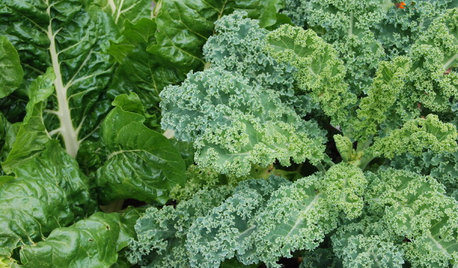
I know the forum doesn't seem to be big on starting threads based purely on a web article but this one seemed really worth sharing. "10 Vegetables More Cold-Hardy Than Kale". Like y'all I espy the upcoming arrival of several months in which things are generally cold, gray and lifeless, but this made them appear much less so. They asked 3 veteran gardeners from colder regions (2 in Canada and 1 in Colorado) to list their preferred winter vegetables, and from it compiled this list of 10. Very different climates than ours, but well-written and sparked much optimism and energy. 10 Veggies More Cold-Hardy Than Kale

Charles


Comments (7)

  • 9 years ago

    Sorry to hear you keep getting targeted by aphids.

    Recommendations by winter gardeners in Canada really got my attention. I liked that they recommended some specific varieties, making distinctions between some that do "ok" and others that really endure the cold.

    Collards just went in this morning. My experiments are in these (huge) blue protein tubs with which they feed cattle in winter. So, being exposed to the cold on all sides and on top may be very different than having them in the ground. Might negate the cold-hardiness of the plants.

  • 9 years ago

    You could insulate those tubs. On another thread someone mentioned overwintering in bags of leaves. So propping bags of leaves around your tubs could do it. Or straw, though I fear straw might attract rodents. Shoot, bags of shredded paper would work. Mulching with straw or leaves is an option, too. Our biggest winter problem is one day it's 80*+ and the next it's zero. We don't get snowcover like they do in Canada and and sometimes our plants don't get the chance to gradually acclimate to cold weather.

    My garden is fairly new. I feel that much of my growing problems is from lack of organic matter in the beds and not enough beneficial insects. I really left the aphids on those old greens to feed the ladybugs I was seeing on dandelions in early spring. One returned the favor by cleaning up some aphids on seedlings in the greenhouse.

    I have parsnips growing (planted in January as George (Macmex) recommended and replanted after a dog got into them, around early march. ) Also salsify and root parsley (which I fell in love with when they had it at Sprouts last year. These things don't get harvested till after frost. Maybe the parsley can be...I should check on that. Carrots, beets, turnips and lots of greens. I don't know where it's all going to go.

    I would suggest googling for the best Oklahoma varieties (which will bring you back to these boards most of the time. Growing what is proven to work here has been more successful for me than than trying things because they had a good catalog description or were recommended in another climate.

  • 9 years ago
    last modified: 9 years ago

    Thanks. Most of my seed varieties are from recommendations here. But the article made some iinteresting ones I hadn't heard before: that Savoy types of spinach are more cold-hardy than others, the Blue Max collards, that the Golden Globe turnips have thicker skin and below-ground protection.

    Know if I can still plant beets and get a root to eat before it shuts down?

    And will hay be an acceptable substitute for straw (at keeping plants warm)?

  • 9 years ago

    Following

  • 9 years ago

    Your tubs will probably work well. I've used 5 gallon buckets, which were probably too small for what I grew in them.

    People use straw because there are fewer weed seeds in it. For insulation it should be okay, but mulch might spread weed seeds to your soil.

    Beets hate me. I've gotten ONE usable beet in 4 seasons of planting them, so I can't tell you if it's too late. I did plant some about a week ago, and I am planting some in cups to use to fill in where many didn't come up.

    Bloomsdale Longstanding spinach has been a winner for me in the past. This year I'm also growing Winter Bloomsdale and Winter Giant (a freebee from a seed company). The chickens scratched up my first planting, so I'm starting seeds in cups. I'm just hoping we have a warmish fall, I'm way behind. Nelson, Napoli and Muscade carrots did great for me last year. I love Piracicaba broccoli. It is a sprouting broccoli that makes many smaller heads. It overwintered in last years mild weather. Purple sprouting grows all winter and buds in spring. Pacman is recommended here. I have one purchased plant of that this year. I have never gotten cauliflower to survive. Never gotten cabbage to survive. Brussels sprouts have made tiny sprouts. I don't think you can kill collards. I hade an Arkansas Purple kale plant that looked like a flower in the garden all winter. We ate the lower leaves and it thrived all winter. Nero, which was sold as cabbage but looks like dinosaur kale is a tough plant. I've grown red and white Swiss Chard, but in my garden it is the first to get eaten by pests. I've tried to grow mache and claytonia with less than stellar results. Pac choy is easy to grow. There's another thread where I listed all the cool season greens I grew last year. My favorite lettuce is Chadwick's Rodan.


  • 9 years ago

    One thing to keep in mind is that more than mere cold-hardiness is in play here. Just as important as cold-hardiness is plant conditioning to cold weather. Cold-hardy plants, in general, become more hardened/conditioned to cold weather as the temperatures gradually get colder in the fall. This allows them to develop a better tolerance for the cold conditions.

    What can hurt cold-hardy plants here is when we stay exceptionally warm exceptionally late in autumn or winter and the plants get little gradually increasing exposure to actual cold temperatures. When that happens, and then when a blue northern blows in suddenly with very cold weather, plants that normally could stand the cooler temperatures sometimes are damaged by the cold (though normally not killed) because they haven't had any prior conditioning. This happened around 2006 or 2007 at our house when we stayed very warm and didn't have any freezing nights until mid-December and then suddenly had an 18-degree night. Even the cool-season plants weren't ready to go from lovely, mild weather to an 18-degree night with no prior conditioning. That abrupt change in environment did kill some normally cold-hardy plants.

    Also, some plants stay viable in winter because of the insulating cover of snow more common in colder climates in ours.

    Finally, some cold-hardy plants are biennials. When are weather fluctuates strongly from warm to cold weather and then back to warm and back to cold, yada, yada, yada, as it so often does in winter, the biennials can get confused and bolt because the widely fluctuating temperatures (once the plants have reached a certain age or size) can trick them into thinking they are in their second year of growth and can cause them to bolt.

    Many years we have many crops overwinter just fine, but other years, it is the warm weather and the wildly fluctuating weather that gets them. People in climates that stay consistently cold all winter long can find it easier to overwinter some winter crops than we can because their weather stays cold consistently. I find it easier to have a great winter garden when the winter is cold than when it is warm or flops back and forth from warm to cold.

Sponsored
Peabody Landscape Group
Average rating: 3.5 out of 5 stars8 Reviews
Columbus' Reliable Landscape Design & Contracting