Software
Houzz Logo Print
hairmetal4ever

Soil test results

10 years ago

I posted this at the soil forum as well, but this board gets more traffic, and is more tree-centric.

I’ll post images below (the Houzz app won’t let me post pics in the initial post for reasons I cannot yet determine). What’s weird is, the low CEC ratio in both samples would suggest a sandy soil, which this definitely is not, it’s more a silty clay and way too heavy and water-retentive to be sand.

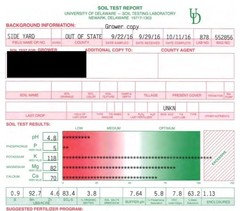
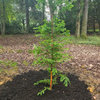
The first sample is from the side yard, where I planted my metasequoia.

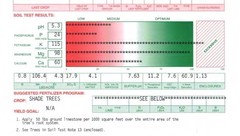
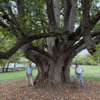
Second Sample is from farther down the backyard. There’s a Schuette’s Oak there, and a few other trees will go there, and then a bit down the hill will be a veggie garden and possibly small orchard. I only did one sample here, but the soil feels/appears similar through this whole area, it’s darker and slightly more humus-y than the first sample area.

Comments (28)

  • 10 years ago
    Sample 1.

    Metasequoias like acidity from what I’ve read. Also in this area are some overgrown leatherleaf viburnum, which my wife hates, and will probably be replaced with azaleas. Some grass here, but I may just kill it all off to let the Metasequoia grow un-interrupted. The tree has been in-ground a few weeks, so if I try to maybe mulch deeply and add some P over a large area for the potential root zone I could still do that.

    Any ideas?
  • 10 years ago
    Sample 2.


    This area is probably already better for most trees – pH is still acidic, but not as severely so, and has a bit more P and better organic matter content (slightly).
  • 10 years ago

    I'm not used to seeing low phosphate levels in soil samples! All of ours from around here are always high. Also, where in the heck is all that potash coming from? Excessive levels! I've not seen that either. Interesting to note your good levels of organic matter. Have you been amending? That's a high rate for just your every day soil. And yes, you are quite acidic there, again, in contrast to my part of the world, where underlying limestone modifies what would otherwise be a leached-out, acidic soil.

  • 10 years ago

    No amending, but I think the previous owners mulched lawn clippings.

  • 10 years ago

    The guys over in the lawn forum recommend Logan Labs or UMass for soil testing - it would be interesting to see how it compares to these results, especially since you have some high values going on.

  • 10 years ago

    Also, take samples from several places in the yard, mix them together, then take some of that and send it in. You get more of an average that way, not just a single spot.

  • 10 years ago

    Just saw this title and thought it was a lawn forum posting. Yes, Logan Labs in Ohio and UMASS in Mass are the two best soil test labs in the country. There are people from a couple of lawn forums who send samples in to various labs year after year to check for consistency and accuracy. UMASS was the hands down winner with Logan Labs coming in 2nd for several years. Then they reversed. 3rd place was not even mentioned in their results indicating that they were unreliable or inaccurate beyond what these guys were looking for. The usual problems with soil are salt imbalances between sodium, potassium, magnesium, and calcium. pH issues cannot be addressed until you have the salt balance, because magnesium levels drive one type of calcium versus another one.

    Anyway, if you get the $25 test at Logan Labs and post the results to the lawn forum here, you'll get advice that would cost you about $250 from an agronomist. They'll tell you what you need, how much, when to apply, how to apply, how often, and where to find the materials.

  • 10 years ago

    Seems like they don't measure nitrogen levels, or am I failing to read the report?

  • 10 years ago

    N is notoriously difficult to measure accurately. Most tests do not test for it.

  • PRO
    10 years ago

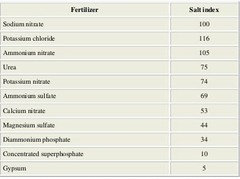
    Happy grass!! You always find these off the wall soil test when someone has used a granular fertilizer. It's more salt then anything why your clay is coming back as sand salt breaking it down.

    #2 it was able to run off or leech the salt down in the soil. Why you're getting better readings.


    When mending the soil add some Gypsum doesn't effect PH it helps remove salt.

  • 10 years ago

    N is notoriously difficult to measure accurately. Most tests do not test for it.

    Interesting, I didn't know that

  • PRO
    10 years ago

    Most soil testing labs are designed for field testing so farmers have a baseline to work with. Lot of field crops suck the N out of the soil so no reason to test for it. Most field fertilizer are high in N

  • 10 years ago

    Bulldog, that's not at all the reason why N isn't tested! And granular fertilizers aren't 'salt'. The 'salt' that gypsum traps is sodium, that's all.


  • PRO
  • PRO
    10 years ago

    Well heres a news flash for you when it comes to making any type of fertilizer salt is found. Granular fertilizer are low grade so they don't remove any of the salt. Liquid fertilizer most the salt stays in the bottom of the mixing tanks. Powder fertilizer they chemically remove most the salt but it doesn't remove all.


  • 10 years ago

    So, when it comes to my almost catastrophically low phosphorous, it seems like bonemeal and triple superphosphate are the things I see when I search, which one is better?

  • 10 years ago

    Maybe use the starter fertilizer on your lawn, it has phosphorous in it.

  • 10 years ago
    last modified: 10 years ago

    I'll be careful.

    Per the University of MD, about 40% of MD soils are deficient in P.

    Maybe bone meal since it doesn't release so quickly?

  • 10 years ago

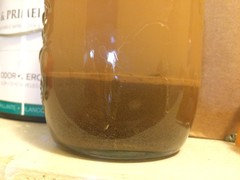
    So I just took some soil, and I'm doing the mason jar test to try to get an idea of the true texture. Within 30 seconds of shaking the mason jar, about a third of the soil settled out very quickly. I have a lot more sand then I realized I did, which is strange, since it dries out so slowly and drains rather poorly.

  • 10 years ago

    After 8 hours of the mason jar test:

    The water is still cloudy, but so far it looks like about a 3-1 ratio of silt to sand and just a tiny bit of clay. Even at 10% clay, which is far more than what has settled, that is silt loam.

  • 10 years ago

    Pic of the jar.

  • 10 years ago

    ' I have a lot more sand then I realized I did, which is strange, since it dries out so slowly and drains rather poorly.' It also make a difference what's in the layer you have underneath.

  • PRO
    10 years ago

    Dig a foot down keeping each shovel full separate from others. Do the jar test on each. This will give you a better view what type of soil the new trees will be setting in and what should be done to keep them healthy.

  • 9 years ago

    So I did another test with similar low results for P.

    I've read phosphate rock won't work at pH over 5.5...so if I lime, it won't help.


    What should I use?

  • 9 years ago

    I haven't had the need for P where I grow but according to this article Monoammonium Phosphate (MAP) is better for soils with high Ph levels.

  • 9 years ago

    What about bone meal?

  • 9 years ago

    I think it depends on how big of an area you want to cover. Bone meal can be expensive on larger plots. Besides bone meal also adds calcium, something a high Ph soil probably doesn't need. MAP phos. will actually help lower Ph a bit.