Software
Houzz Logo Print
amyinowasso

Winter bee food

Dawn, I remember reading you put something out that the bees eat in winter. I was trying to tell DH, and of course my brain won't remember. Was it cracked corn?

Comments (10)

  • 9 years ago

    DH made the comment that I had bees in my garden, as he looked out the kitchen window. It was probably hornets or bumblebees (I saw both later) visiting tomatillos. I pulled the tomatillos today, and a honeybee came by about then and looked at me with sad eyes. I felt bad, but something was ruining the tomatillos before they were ripe and it was past time to put fall stuff in that bed. I got some marble sized potatoes from the volunteer plants I pulled. I just used up the spring potatoes we grew I wish I could have left them. But that is the purple bed. While they were red potatoes (and these babies were fusia pink!), their leaves didn't fit with the color scheme.

    We used to feed cracked corn to our geese. It attracts a lot of birds. I have no memory of bees, though.

    If George does see this...besides sugarwater for bees...what do you feed your ducks? (DH wants some, sigh, I dreamed he bought a turkey and more chickens).

  • 9 years ago

    It's helpful to hear you're pulling your tomatillos. This is my 2nd or 3rd year planting them. I get loads of balloons, but just hard tiny balls inside. They don't fully form. What Fall stuff are you going to put in that bed?

  • 9 years ago

    You know the husks are supposed to dry and start to split open before you pick them? Most of mine have holes in the side where something got in and damaged the fruit. If I grow them again, it will be along the fence where they can stay till frost. Wonder what kind of companion they would be to winter squash?

    I transplanted some Brussels sprouts, kale and cabbage to that bed. I have tatsoi and pac choy to fill in with. I also have some purple sprouting broccoli I may put in there. I think I have more winter greens started than I had spring plants! I don't know why. I guess everything germinated well. I figure what we don't eat the chickens will. All depending on if the weather cooperates.

  • 9 years ago

    I want to know what a bee's sad eyes look like. (grin)

    I am pretty sure I fed the bees a ratio of 2 parts sugar/1 part water during times when there was nothing in bloom for them, and a ratio of 1 part sugar/1 part water in the summer of 2011 when we did have a lot of flowers in bloom for most of the summer (though only because I watered them heavily to keep them alive for the bees). You make the sugar water stronger if it seems likely to be their main food source during hard times and make it a little weaker if it is just a supplement. Some bee keepers make bee candy for winter, but I don't know what recipes they use. I bet you could find them on beekeeping websites if you wanted to try that. One way I was able to gauge bee hunger in the terrible drought year of 2011 was that if a lot of bees were trying to feed at the hummingbird feeders, then I knew they were having a hard time finding food in the wild and that's when I started putting out supplemental food for them. Another natural gauge is roadrunners. Normally roadrunners fend for themselves, but when they start coming to the yard to eat some hen scratch, that's a clue for me that the wildlife is really struggling and I start taking extra care to put out food and water for all of them, including the bees.

    We don't keep ducks any more because ducks are short-lived here in our heavily wooded area filled with tons of wildlife, but when we had them, they sometimes ate cracked corn or picked out whatever grains that were in the hen scratch that they liked. Some feed stores also sell bagged food for waterfowl if a person only has waterfowl and is not, therefore, buying hen scratch for chickens. Mostly, though, ducks are excellent foragers and eat all kinds of stuff---anything green that seems appealing to them, including weeds, slugs, some types of insects, small frogs, lizards or snakes, etc. It might depend upon which breed of ducks you have, but it seems to me that many ducks I've known in my lifetime foraged for the majority of their food and really didn't rely on their human companions to feed them much.

    Yesterday I found 4 more tiny newly-hatched chicks running around in the chicken coop. We picked them up and put them in the brooder with the one hen and her 10 chicks, so now she is taking care of 14 children. She does a great job of having them all gather underneath her at night to stay warm. In the morning when I go into the coop, I ask her "Mama, how are your chicks this morning?" and she stares at me for a moment and then raises herself up off the chicks just enough that I can see them underneath her and then she settles herself back down to cover them up. It is uncanny, almost like she understands what I am asking her. Most hens will try to peck your eyes out if you come near them while they are busy with small chicks, but she is very calm and doesn't overreact when I talk to her or when I open the brooder to change their water and give them fresh food. If she were to get restless and act like she wants to leave the brooder, I'd let her leave it and I'd just use a heat lamp to keep the chicks warm, but she seems very content to stay in there with them. The broody hen who hatched out the 4 chicks I found yesterday still is sitting on a bunch of eggs that haven't hatched, but she abandoned the nest for several hours yesterday so I'm not sure if any of those eggs are still viable. The older chicks are easily 6 to 8 times the size of the 4 little ones so I hope that they older ones don't pick on the tiny ones.

    I love ducks and geese, but feel like turkeys and chickens are better about coming into the coop at night so they are safe. Ducks are very stubborn and defy your efforts to get them to come to a safe place before dark, so they tend not to live very long here. Geese can be outright mean. We'd have a lot more poultry if we didn't have such serious wildlife issues.

  • 9 years ago

    Our geese were really only mean when they had eggs in a nest. My daughter could even pet them (but she is an animal whisperer). However, one time the boy who lived behind us thought it would be easier to climb the fence than walk around the block to our house. He said he spent half an hour protecting his rear from the geese and the dog trying to get to the back door.

    I don't know whether to indulge DH with ducks or a bee hive. He's interested in both. He has even mentioned those tiny pigs! I think a bee hive would be a lot of work. I wonder if the city has any ordinances about them.

  • 9 years ago

    Bees are a lot of work, and they cost quite a bit to get started. Count on about $350 to get one hive going and usually one should start with two. If your husband wants to get into bees he should attach himself to an experienced beekeeper, or better yet, a bee keeping club. Some give classes. But the biggest thing is to be mentored. Nobody ever succeeds without mentoring. I've taught a bee keeping class for several years and probably there is much work in it, helping graduates of the class, as they really get going, as there is in teaching the class.

    Dawn nailed it with the sugar water formula. The only thing I'd add is that you need to bring it to a boil in order for all that sugar to go into solution. The cracked corn is acting as a pollen substitute. I know that soy flour makes up some pollen substitutes used by bee keepers. Really after this time in October until, say February, what they need most is the sugar. Pollen is food for babies. Sugar/honey feeds the adults. Also, at least in our part of Oklahoma, pollen seems more easily found than nectar, during times of dearth.

    Ducks are my favorite! We raise big white Muscovies which make for wonderful eating. They also lay nice eggs. Being large and heavily armed (claws) seems to help with predators. However, our livestock guardian dogs also help a great deal. Our dogs run the predators off so the ducks can stay out all night, if they please.

    Before we had the livestock guardian dogs, I had a duck pen which served to protect them at night. I had them trained so I could herd them in every evening.

    I've had runner ducks. They were much smaller and high strung than the Muscovy. They laid more eggs and they also quacked. All breeds of duck quack, except Muscovies. Khaki Campbells are also a smaller duck which lays a lot of eggs. If I couldn't have Muscovies, I'd probably go for Anconas or Buff Ducks. Both are fairly large dual purpose breeds.

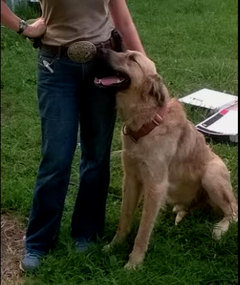
    By the way, if anyone here would like to get a good livestock guardian dog, the people who bred my favorite, just rebred his mom to his sire for the last time. Last I knew they asked about $100 per pup. They're Anatolian Shepherd/Akbash. They live near Bristow. I cannot speak too highly of these dogs. Here's picture of "Mando," who this month will no longer be a puppy. He presently weighs about 100 lb.

  • 9 years ago

    Thanks George. I'm really not ready for more animals, and the chickens already are a money pit. Wonder what else would please him that wouldn't cost so much and doesn't walk on gardens.

  • 9 years ago

    How about raising red worms?


  • 9 years ago

    I want to do that. He's not so excited, LOL. I would raise black fly larva for the chickens. I've even thougt about ::shudder:: meal worms for the chickens. Why they gross me out more than the others I don't know. Maybe I can talk him into mushrooms.