Software
Houzz Logo Print
rick7072

Standing Cypress -- mostly yellow with speckled/striated red?

9 years ago
last modified: 9 years ago
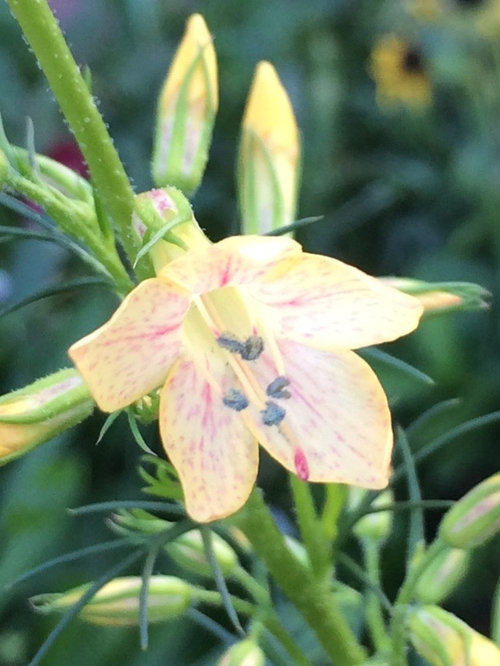
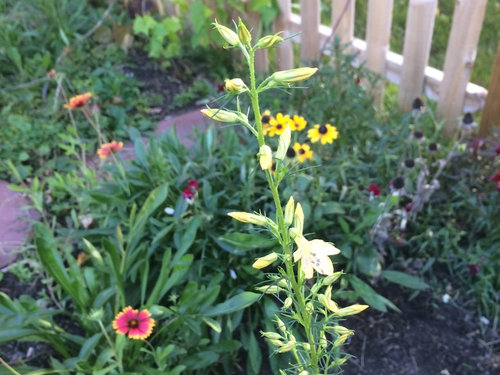
Ipmopsis rubra is usually a biennial in its native southeastern US, but somehow here in Boston where I planted seed in April it's growing as a (confused?) annual. It put out a rosette in July, a flower stalk a month ago, and then yesterday -- the last day before our potential first frost -- one gorgeous flower opened. I feel blessed to have seen it for an hour, particularly insofar as I don't know what the 33 degree temperature at 6 am will do to it.

But I'm amazed at the color of the flower which is typically "scarlet red on the outside [as per the species name] and yellow dotted with red on the
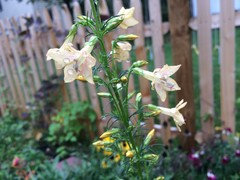
inside." Anyone ever see this color variant -- stripes and speckles of red on mostly yellow, both inside and out It's gorgeous:

Here's the whole plant, with its feathery leaves somewhat in view (the basal rosette is not very much in view):

Comments (15)

  • 9 years ago

    Very nice color! I started with a packet which was collected off a range of shades from yellow to red and never saw anything other than red come up, and they've been reseeding in red ever since. Who knows though, maybe someday.

    Mine come up as annuals and I've never had anything overwinter even though they should be hardy here. I'm convinced there are two different strains, the biennial and the annual and I think the annual is the one with more of a range of colors.

  • 9 years ago

    I'd mention the seed company where I got the seed but does that that go against some informal protocol we have here on these discussion forums?

    That's interesting that yours come up as annuals. So you always get a flower stalk the first year a seed germinates? I planted all this seed this May; I have a few flower stalks (the photo is of the tallest) but mostly just the feathery rosettes. I'm going to cross my finger. I already can't wait till next April.

  • 9 years ago

    I don't think you can advertise, but mentioning sources and sales etc is fine as far as I know..

    That will be great if you get a few of both annuals and biennials, which will prob be the case if you have rosettes. Mine never make it over the winter but the soil here is pretty damp over winter and I dont think they like that. On the plus side the later bloomers look good all summer and a few are still putting in a nice show now.

  • 9 years ago

    I didn't know you weren't supposed to mention seed and plant company names on here.I've been doing it all along and haven't taken any heat for it. I think it's a stupid rule since it helps point desperate members in the right direction and isn't this site here so members can share knowledge.The I.rubra that's a Texas wildflower is biennial.The growing season there is long enough for the flowers to set seed and for the seeds to begin growing into small plants.The Texas bluebonnet is a biennial there with the same strategy too.They complete growing and flowering in the second year. I'm in Z6a, and having been to Texas while the roadside spring wildflowers were in bloom I wanted to grow them here,but couldn't because of the shorter growing season.Apparantly a lot of other gardeners felt the same way so the seed companies have bred them to grow and flower in one season. I've grown the seed version I.rubra and did get flowers,but they need a real early start in order to get decent blooms. I have a couple of packets now that I want to start inside under lights. I didn't have good luck with the seed version bluebonnet but I feel the perennial blue lupin is close enough to make me happy,plus it comes back.

  • 9 years ago
    last modified: 9 years ago
    The Standing Cypress seeds (as well as the annual Blanket Flower, Gaillardia pulchella) that I planted were part of a flower seed mix called Prairie Splendor from Botanical Interests in Colorado.

    In the few days since I posted that original photo, there are now more flowers on the stalk. We had some rain this morning, so you can see water droplets. I am so entranced by this "biennial" flower, blooming for the first time in New England in mid-October of its first year.

  • 9 years ago

    Yours are a beautiful color.They look very healthy. The seed packets I bought which are Burpee have a picture of the flowers in different colors with some orange and yellow in the mix.I grow them for the hummingbirds,but really love them myself.

  • 9 years ago

    "Apparantly a lot of other gardeners felt the same way so the seed
    companies have bred them to grow and flower in one season."

    Jaybirdy, that is very interesting! You're saying that the wild Standing Cypress is a biennial but that the seed companies have sort of created a cultivated version that's ... well -- sometimes a biennial and sometimes an annual. Out of five or so plants in my flowerbed I have exactly one that's produced a flower stalk and flowers, while the others -- not two feet away, in the same soil, same flowerbed, same sun exposure -- have only their beautiful feathery basal rosette of leaves. The mystery of nature.

  • 9 years ago

    Well,they never perfected the final product before they put it out. I think that,s why I have to start them very early and they have very few flowers compared to the ones in Texas which are absolutely covered with blooms.Rick, I had the same situation as you will some plants never growing past the rosette stage.These days I'm focusing more on native hummingbird flowers that will thrive in my area.It's much more rewarding than trying to grow hummingbird flowers that are from warmer and more arid regions of the U.S. I've tried growing those many,many times and have always ended up disappointed.It would be nice to be able to grow the brightly colored penstemons of the southwest here in Illinois,but the white and lavender native ones I can grow are just as beautiful to me now.

  • 9 years ago

    I grow ipomopsis collected from a wild source which is a clear biennial. Both reds, yellows and inbetweens have appeared although this is only my third season of sowing. Very bizarre seeds, I thought - like tiny pieces of calcium carbonate.

  • 9 years ago

    I grow ipomopsis collected from a wild source which is a clear biennial. Both reds, yellows and inbetweens have appeared although this is only my third season of sowing. Very bizarre seeds, I thought - like tiny pieces of calcium carbonate. Mine are definitely quite tall and upright but will not expect to see a bloom until next seasons geums (planted together for a hot colour scheme).

  • 9 years ago
    last modified: 9 years ago

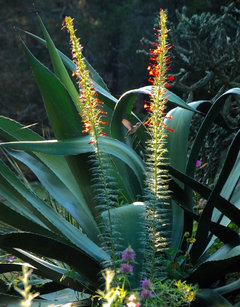
    I think that it is all about the kind of growing season that you have. I have them growing wild around me and the wild population sometimes has a yellow mixed in with the red. Not often. We have a gentle winter, mostly warm with some cold snaps that do not kill them off. If they sprout in the fall, they will bloom in the spring. If they sprout in the spring, they will bloom in the fall. The spring blooms are much happier than the fall blooms. Our summers are a strain on any plant. Many annuals for other places are considered biennials down here where actually , they might be seen more as winter growing annuals. Papaver somniferum and Larkspurs are like that. The ipomopsis like to germinate here in 80-70F weather. That this year is late october, november. The Ipomopsis like a bit more warmth than the poppies and larkspur who are considerably later in their appearance. They can grow to 6' in good garden soil with drainage , but they will grow fine in a dry limestone marl, just shorter. Here is my favorite picture of last years' bunch. It was a bit after the prime floral display , but I loved the hummer on it this one morning.

    I planted them out in the back gorge but the deer kind a went after them . They don't seem to go after them quite as bad up here.

    I was told By native American Seed in Texas That one population is all red and one has yellow as a recessive trait.

    Camp, glad to hear that your ipomopsis has taken off for you.

  • 9 years ago

    Wow that is a nice photo. I almost missed the hummingbird!

  • 9 years ago
    last modified: 9 years ago

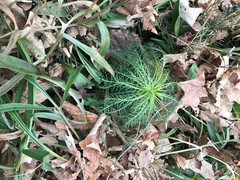
    Just to let you all know that I have several first-year Standing Cypress plants whose feathery leaves are amazingly still green here in late December in New England. We've had temps down into the single digits and most everything else in my garden is brown now (except for the coreopsis nearby in the photo) but for some reason this Southeast US native Ipomopsis is able to tolerate our cold weather so far. Interestingly, the single plant that started this thread earlier in the fall that sent up a flower stalk and bloomed the first year was planted the same time as this one that never sent up a stalk and only produced the first year rosette. And I have two or three more exactly like this.

    I'm crossing my fingers that these will act like the biennials they are and send up a flower stalk next year and bloom.

    Amazing that seeds from the same seed packet will produce plants with very different behavior even in the same flower bed only a foot away from each other.

  • 9 years ago

    I was out by the area of this plant and there is a blanket of seedlings.