

Ready For A Hot and Dry Winter?
If the predictions are right, we may not be as cool, wet or snowy as many people would prefer.
The long-range winter forecasts came out last week and looks like this:
NOAA's Winter Outlook for Winter 2016-17
This doesn't mean we won't have any cold weather or won't have snow or ice or whatever. It just means that overall, the odds are higher that we'll be warmer than average and drier than average. That's the same exact sort of winter I had down here in 2015-16, and I really didn't want a second one in a row like last year's.
What I remember most about last winter is that I had a new winter coat and new winter boots that I never even wore. We had way too many winter days with highs in the 70s and 80s and even the low 90s a couple of times.
On the other hand, the lack of cold made it easy to plant the winter/early spring crops early, but then the warmth also made the weeds sprout early and grow like mad, and it made the fruit trees bloom much too early.
Remember the old days when winter really was winter? (grin) I wouldn't mind a winter like 2010 again. I loved having the snow and actual real cold weather.
Comments (20)
 9 years ago
Aw...I was hoping for a real winter.
2010--was that the year there was a blizzard on Christmas Eve? That was cozy for a few hours--until we got out in it to drive to my Mom's house for celebration...and my sister and family had to drive from Edmond. And my dog wouldn't go out to potty.
We have a hill next to our property. Bought a sled when we moved out here so the boy could enjoy it when it snowed. Haven't had enough snow since being out here. Now there's goats on that hill.
BUT I would take it again--just preferably not on Christmas Eve.
I guess I'll look on the bright side. We can work in the garden on warmer days--clean stuff up. We can plant early to beat the squash bugs. That's what I'm hoping to do.

Okiedawn OK Zone 7
Original Author9 years agoYes! That is why 2010-2011 was so much fun! I finally, at the age of 51, had my first White Christmas, even though, technically, the snow fell on Christmas Eve. Then, it seems like I spent much of January and February 2011 shoveling snow off the top of the potting shed so that the roof wouldn't collapse from the weight of the snow.
The Super Bowl was at Cowboys Stadium in the first week of Feb 2011 and the pre-Super Bowl Storm was supposed to snow heavily on OKC and mostly miss Dallas. Instead, the storm went further south and snowed heavily on Dallas and mostly missed OKC. I believe we had about 8" of snow at our house in one day during the Super Bowl Week snowstorm (which fell before the actual day of the Super Bowl itself). We may have had closer to a foot of snow. It is the most snow I can remember ever falling in my lifetime. To be fair, we had about a foot of snow right before Christmas of 1964 or 1965, but I was very young and only have very vague memories of that. My only real memory of that snow storm is going across the street to the park and playing on the swingset with my dad while the ground was covered in snow. I probably was too young to appreciate that it was, more or less, a White Christmas.
We also had the downside of the snow here....lots and lots of wrecks on the interstate and people stranded everywhere. The cops, firefighters, medics, etc. and ODOT folks worked really hard to try to rescue everyone and keep the roads open on the snowy days that winter. So, in that sense, I suppose we're better off with warmer weather.
The reason I hate warm winters is that the snakes come out on warmer winter days, totally destroying the myth that they hibernate all winter. Last year, snakes were out in January and February, which is incredibly rare. I have to very carefully choose colder days to work outdoors in a winter like that, not warmer ones. In a cold winter, I can work anywhere on our property without having to think twice about venomous snakes. Before last year, I think the earliest I'd ever seen a venomous snake out in the winter time was the first week in March. Last year, they were out most of the winter, on and off. In a warm winter when snakes are out, I'm the one hibernating indoors.
We have a sled in the garage somewhere, but I don't think I've seen it since 2010.
Related Professionals
Longview Landscape Architects & Landscape Designers · Harrisonburg Landscape Architects & Landscape Designers · Peoria Landscape Architects & Landscape Designers · Longview Landscape Architects & Landscape Designers · Olympia Landscape Architects & Landscape Designers · Hot Springs Landscape Contractors · Jonesboro Landscape Contractors · Longview Landscape Contractors · Youngstown Landscape Contractors · Bridgeport Landscape Contractors · Spokane Landscape Contractors · St. Louis Accessory Dwelling Units · Charlotte Accessory Dwelling Units · Waterbury Accessory Dwelling Units · Utica Accessory Dwelling Units- 9 years ago
I would like for it to get cold enough to make the grasshoppers hibernate. I am over run with grasshoppers.
 9 years ago
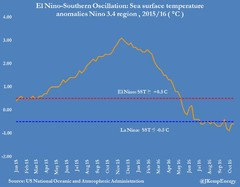
I'm reading that a cooling is taking place in the Pacific, and it appears we might have a La Nina , after all. There was one predicted a few months ago, but it faded to a 20% chance, and now looks like we're gonna get some La Nina effect. Which the effects of that vary across the country.
Okiedawn OK Zone 7
Original Author9 years agoI've been watching the La Nina Watch updates all summer, expecting a La Nina to develop this fall/winter, which for me means hot and dry almost every time. Of course, it depends on how strong the La Nina is and how long it lasts, and we've had some La Ninas last multiple years and those periods were just miserable. In general, though, La Nina is bad for us gardeners here in southern OK and I truly hate even hearing the words La Nina. However, the development of either La Nina or El Nino conditions are just one influence on the weather we get in any given year, so some years we see less influence from those ENSO cycles than in other years.
Currently they have us under a La Nina Watch with a 70% chance of La Nina conditions developing this autumn and a 55% chance of La Nina conditions persisting through the winter. That's from the most recent update.
When I am working on grow lists for the spring planting season, which is normally something I work on in autumn, I plan my garden very differently if we are expecting La Nina conditions than if we are expecting neutral or El Nino conditions. Since it has been hard, thus far, to get a handle on what to expect for 2017, I haven't really done any garden planning yet for the next planting season. My general plan for 2017, though, is to plan/prepare for being hotter/drier than we were in 2016 and in 2015.
Okiedawn OK Zone 7
Original Author9 years agoI came back to add that sometimes the weather experts really confuse me. All summer I felt like we were seeing a La Nina developing, and then wasn't it back only about a month ago that the media was reporting the La Nina Watch was being ended and it looked like we weren't going to develop a La Nina after all? It caught me by surprise, and I said "What?" Then maybe 2-4 weeks later, suddenly it seemed the development of a La Nina was underway again. So, often I ignore what they say and just watch to see what pattern I'm seeing with my own two eyes. I've been seeing too many grasshoppers and conditions that are too hot and too dry for months now. With or without the official development of a La Nina, those conditions are enough to make me plan for a hot and dry garden, overall, in 2017.
- 9 years ago
I had heard the same. Last June, they were saying 80% chance of La Nina, then it went to 20% , and now we are in borderline La Nina conditions, with some rapid cooling reported in the eastern Pacific .
But this may all change next week. They can't predict what will happen next week, much less next month or in the years to come.
 9 years ago
Ok, so planning for hot/dry 2017, what will you do different? I'm already thinking plant most crops early, and go with more southern peas and okra in summer. Maybe squash. I may throw buckwheat in the beds in July and not go back out there till Oct.
Okiedawn OK Zone 7
Original Author9 years agoYou can take two different routes to a hot and dry garden season.
1) Enrich the soil more than usual with compost and other amendments to improve its water-holding capacity and then plant as early as possible, using whatever spacing is normal for you in a normal year. Mulch heavily, mulch early and mulch often. Be prepared to irrigate early and often since regular rainfall is less likely. Cover up rows on cold nights to keep them from getting too cold. Getting too cold (even if they stay above freezing) can cause their growth to stall. To plant early, you may need to cover the ground with plastic for several weeks in advance of planting time to help the soil warm up more quickly. To really make it warm up quickly, put plastic directly on the ground and then put another layer of plastic over low tunnel hoops.
Within this choice, I make smaller choices like bush beans instead of pole beans since they tend to mature earlier, smaller melons and winter squash versus larger ones, smaller slicing tomatoes versus larger ones etc. I plant onions slightly closer together than normal since they aren't likely to get enough rainfall to make softball sized monsters and tell myself I'll be happy with just baseball-sized onions. Those small decisions, made about virtually each and every crop, go a long way towards helping maximize the harvest in a tough weather year.
You also help yourself and your garden by choosing plants with shorter DTMs. For example, I'd chose bush beans that produce in 46-50 days instead of 60--70 days. It doesn't sound like much of a difference, but it is...just a week or two can be the difference in beating the heat. I grow more determinate tomatoes and more short DTM tomatoes, etc. Grow dwarf forms of okra and southern peas. Grow icebox melons instead of regular ones. All that sort of stuff.
Or, if heavy irrigation over a very long, hot and dry growing season is going to be too high of an expense, then the other option:
2) Enrich the soil more than usual with compost and other amendments to improve its water-holding capacity and then plant as early as possible, using wider spacing (like you'd use for dryland farming) so the plant roots have a larger area to mine for moisture. If I am expecting a very dry year, I like to mix in large chunks of half-rotted wood into the soil. I gather them from the woodland after snake season has ended. The chunks of wood hold water pretty well (and I soak them in water before putting them in trenches in the middle of each raised bed). Think of them as a mini-hugelkultur used to amend a bed pre-drought. You may have to add extra nitogen to make up for the nitrogen the wood uses up as it decomposes, but I don't always do that. When I can, I gather half-rotted logs and limbs from the woodland, so that much of the biological activity that will eat up the wood and make it decompose already has occurred. Mulch heavily, early and often to hold in whatever moisture there is.
If you aren't going to irrigate or only plan to irrigate minimally, add water-catchers to your garden at planting time. For example, use the Texas Pot Method to grow tomato plants (this means sinking a homemade olla type contraption into the ground to catch water and reserve it, distributing it slowly to nearby plants). I like to use 5-gallon buckets or cat little buckets with a few small holes drilled in the bottom. some people use 2-liter bottles, but I find it hard for them to catch enough rain through their small openings. Of course, you can occasionally fill them with a hose if you want. The buckets or jugs need the lids on them when rain is not expected. The lids will prevent butterflies, bees, birds, field mice, etc. from drowning in the water. Use rain barrels (set up in winter to catch and hold winter rains) to catch and hold water until you need it. This works great with a smaller garden, but is not as useful for a very large one as there's just not enough rain you can catch to water a huge garden. Of course, if you chose not to irrigate early and to wait instead for naturally-occurring moisture, accept that growth will be slower and productivity lessened because that's the trade-off for not irrigating heavily in a dry year. Accept also that not irrigating can mean crop failures. For that reason, chose varieties that bear heavily despite heat and drought. Cover up plants as needed if cold nights threaten. Chose smaller varieties that don't hog too much space because wider spacing means less room for plants to grow. Monster-sized plants need lots of water. Chose varieties that perform better in drought. Within each category of warm-season plant, there's varieties that are more tolerant of drier conditions. Use those. Do everything you can to beat the heat. That way, if a La Nina year sets in with very hot and dry conditions, you've done everything you can to get the garden off to a great start. That means it has a greater chance of producing well before you have to face the worst of the summer heat in July and August.
I try to get my mind in a mindset where I know I'll stop watering and will walk away from the garden if we reach a certain point. You can make that point whatever point you want it to be. It can be that if you aren't getting enough cucumbers every 2nd or 3rd day to make pickles, or if you're aren't getting a certain number of pounds of tomatoes per week, or whatever. It can be that if you are spending more time watering than weeding/harvesting, or more money watering the garden than you'd like. I don't have a specific $$$ amount for the water bill that drives me to stop watering because it has to be considered relative to what is being harvested, but there is a point where I look at the water bill, decide it is too high and just stop watering. I try to make my stop-watering decisions based on productivity, but sometimes I let the water bill itself drive that decision. I push hard to get as much production as I can from the garden by the end of June so it is easier to stop irrigating and let the garden sink or swim on its own in extreme heat/drought conditions in July or August. It is hard to know when to quit, but in my soul, I always know instinctively when we've reached the point where I cannot water enough. Sometimes I ignore it and try to water for a couple more weeks even though I know that it is pointless.
I will not necessarily plant as many succession crops in a hot/dry year because there's no point in putting in a succession crop in June if you feel like you don't want to spend all of July and August watering it heavily to keep it productive. Sometimes I just scatter-sow zinnia, moss rose and cosmos seeds instead of a vegetable succession crop as these drought-tolerant flowers won't require as much moisture as veggies and their flowers will feed the beneficial insects if the fields dry up.
If winter is really, really dry, I plant a smaller crop of Irish potatoes and some more space for heat-loving sweet potatoes.
I plant more in pots in a dry year and line them up along the west fence line to take advantage of shade from nearby trees. That way the plants in pots grow in morning sun/evening shade and are easy to irrigate. It is a whole lot easier to keep 20, 40 or 60 large containers watered than to pour water into the soil in a very large garden area where it seems like it runs clear through to China in 5 minutes and your soil still feels dry. I will grow all my greens in containers in dry years because it is easier to keep them well-watered and it is easier to protect them from hungry/thirsty insects, birds and mammals if they are in containers I can elevate well above the ground.
I treat more aggressively for grasshoppers early in the season. With hot, dry conditions, the grasshopper population explodes and you cannot do much about it by mid-summer. However, using Semaspore earlier in the season knocks out the first few generations and gets your plants off to a better start. Since Semaspore isn't effective in hot weather, you have to use it in whatever passes for cooler, wetter weather in Spring. I tolerate all insects less in hot, dry weather than in cooler, wetter weather because the plants grow less robustly in difficult weather and you cannot afford to feed grasshoppers and slugs, or whatever plagues your garden.
If the weather is going to be hotter and drier, I plant herbs like dill, fennel and basil in morning sun/afternoon shade to help shield them from extreme heat and to keep them from bolting too early. Otherwise, I often grow them at the east end of the garden in full sun in a more normal year.
I shade plants earlier in hotter, drier weather. While most years I don't even put up shadecloth at all, in a hotter, drier year I might put it over some plants as early as May or early June in an effort to keep the plants cooler and happier early in the season so they can produce before the heat/drought become a huge issue. In a regular year I don't use shadecloth at all, or only use it in July or August as needed and if needed.
- 9 years ago
For crying out loud......I really wanted a cold winter and I am not a "cold weather" person. I wanted some snow in there occasionally. Not too much snow to snow us in but enough. Our front yard is sloped towards the house and the kids wanted to get a sled. I refuse to buy a sled now lol. They'll just have to settle for the makeshift sleds I had as a kid.......cardboard boxes.
I was born and raised in Oklahoma and have lived her most of my life in either central or northeast Oklahoma, but my mind keeps telling me it wants change. Again, not a cold weather person here, but we are considering moving North; not anytime soon but eventually. Or it could be next year, lol. Who knows, but I do know that the weather in Oklahoma has just become irritating.
I remember back in the late 80's where it would get so cold and we'd get a lot of snow. It was great!!! We could have snowball fights, build snowmen, and build a trail to sled down with our cardboard boxes. The snow now won't even pack together for a snowman.........so sad. :(
Strike, strike, strike!!! I am on La Nina strike!!!
- 9 years agolast modified: 9 years ago
Mellissa, maybe you don't remember the summer of 1980. Thank you, Dawn, I have saved that info and will try to remember while I plan.
- 9 years ago
Was fortunate to miss that 1980 Oklahoma summer, was in Houston. I would talk to people back home and they would envy our day time high temps in Houston.
But I was back home in Oklahoma for the winter of 1983, when it dropped below freezing in December and stayed there for three weeks.
I also recall a day in February 1981, when it was over 90* , I think it peaked at 95*.
And in 1998 we did not get our first freeze till something like December 7th.
In Oklahoma, ya never can tell what ya gonna get.
- 9 years ago
Hey everyone, will y'all be publishing your grow lists here when we get closer to spring? If La Nina turns out to affect things, it'll give gardeners like me a heads up on what specific varieties y'all believe will cope.
Charles
 9 years ago
I just wanted something to kill back the fleas, ticks, and mosquitoes. Damn. I hate snow but love rain, and need some of that desperately here. My only water spigot in the front yard is behind the thorniest rosebush ever created. It's dangerous enough to be part of my home security system.
Dawn, Thank you for telling us what you'll do different next summer than in regular summers. I'm going to follow your lead, so it's good to know all this before I place seed orders. What are your favorite drought tolerant tomatoes, peppers, etc? I was going to plant more tomatoes in the ground next year, to utilize space better and save money on buying pots and potting mix. So maybe my clay-ish soil will come in handy, in that it holds water better? Guess I'll start amending now. Maybe I can find compost on sale.- 9 years ago
I think we should prepare to plant citrus and maybe bananas (joke...because our erratic temperatures would take at least one dip too low for them).
Okiedawn OK Zone 7
Original Author9 years agostockergal, I know, right? What's happened to our good cold winters? I don't mind heat in summer. I despise it in winter.
Melissa, We bought our land here in OK in the fall of 1997 and came up every weekend to clear a path through acres of woodland so we could fence our property (to keep the neighbor's cows out). I remember snowy weekends in 1997, 1998 and 1999, which is the year the house was finished and we moved here to stay. So, what has happened since then???? We've had way too many warm/hot winters and way too little snow. I love snow, though I wouldn't want endless weeks of it. To me, having some gorgeous snowy days is one of the advantages of living 80 miles further north than we did in Texas, where snow was a lot more rare. Nowadays, it seems like snow is becoming rare here.
My favorite thing about winter is that I can work in the woodland, raking up leaves and gathering them to use as mulch in the garden or in the compost pile. I have to avoid the woodland in snake season (traditionally April-October in our early years here, but March-November more recently, and last year that didn't even happen) but in winter time I can go into the garden all I want without worrying about the timber rattlers, pygmy rattlers or copperheads. Last year? Snakes were out in January and February. That is just so wrong! I also like to gather up rotted wood for compost piles and hugelkulturs, but you cannot do that unless it is really cold too, because of the obvious snake danger.
I don't care what the rest of the winter does, but I need one good really, really cold month when I can work in the woods without encountering snakes.
We went through a spell in the mid-2000s down here (you might remember this) where winter was becoming warmer and they kept saying on TV that we were having a warmer than average winter. Well, how many warmer than average winters do we have to have before that warmth just becomes the new average winter? Are we already there?
Amy, You're welcome. I remember the summer of 1980 but it seems like the winters were more wintery back then, though I'll never claim we had to walk to school 5 miles, uphill each way, with 3' of snow on the ground. (grin) I do remember older relatives making extravagant claims about winter weather the likes of such I've never seen in my lifetime, but even then we kids always felt like they were exaggerating. I always thought nothing would be worse than the summer of 1980, but then along came the summer of 2011, which was even worse. And, that horrible summer of 2011 followed the really great winter of 2010-2011. I think that was our last really good, cold winter that we've had in recent years.
lcdollar, We lived in Fort Worth that winter of 1983 and I remember it well. Fort Worth gets less bitterly cold weather than OK does, and what I remember most is that water mains broke all over and the water ran in the streets and then froze and it was extremely hazardous. Also, many trees, shrubs and perennials froze and died (as did St. Augustine lawns) that winter and massive new landscaping projects were required in the spring and summer. Those plants probably could have tolerated that sort of extreme cold if they were subjected to it on a fairly regular basis, but since they weren't conditioned to cold like that, it killed them like crazy....including tons and tons of crape myrtles.
I also remember that Tim found a stray Border Collie running loose at D-FW Airport in the middle of that bitter cold spell and couldn't find any reports of a lost Border Collie, so he brought her home to us in the middle of that icy, cold spell. We named her Lady and she still was with us when we moved here in 1999, though she was extremely old by then. She always loved snow even when she got too feeble to play in it----she still liked to walk through it and occasionally stick her face down into the snow and toss the snow up into the air above her.
I agree that our weather here is all over the place and you never know what you're going to get. Our very first year here, in 1999, our first freeze hit on either September 29th or 30th. I had spent the whole day quickly building a high tunnel (PVC pipe, leftover pieces of lumber and 6 mm plastic) over my garden to protect it from freezing. Then I lined up a long row of hay bales on the north side. About 90% of the garden survived. A few years later, our first freeze didn't happen until about a week before Christmas, which was just crazy. Most years, though, we get our first freeze in the 2nd or 3rd week of November right on schedule.
We all also need to remember that even in a much hotter/drier than usual winter, all it takes is one wicked cold front/Blue Norther, and we can get a huge drop in temperatures, ice and snow that just hit almost like a bolt from the blue, and when we look back at that year, it probably would be the wicked ice storm we'd remember more than the overall warm winter.
Charles, Yes, we spend a lot of time in late autumn, winter and early spring posting various grow lists. Most of us base them on (a) varieties that have performed well for us in the past and (b) varieties that have performed well in the type of weather year we're expecting to have.
dbarron, lol. I grow citrus trees in pots, and carry them into the greenhouse in the winter time, though I don't bother heating the greenhouse. With all these warm winters, the greenhouse stays just barely warm enough for the citrus without a heater. Bananas, though? I agree that if we planted them, we'd guarantee ourselves a cold snap of the banana tree killing type. So, maybe we all need to run out, find a banana tree left over from the summer, buy it and bring it home and plant it. Maybe if enough of us planted banana trees, we could guarantee our region at least some cold weather. I did have a friend who grew bananas in the ground just a bit NW of Ft Worth in the 1980s and 1990s, and some years he even got fruit, though he had to wrap the trees in plastic in the autumn (picture a crude, small high tunnel that just barely enclosed them) to keep the trees long enough to give his tiny bananas a chance to enlarge and ripen....otherwise the season would end before the fruit could mature.
Some years my citrus trees make a good crop and some years they don't, but they are worth growing just to have the incredible scent of citrus blossoms perfuming the yard in late winter and early spring.
Do y'all think we are crazy? Is is wrong to hope for winter weather in the winter time? Why does it seem so hard for seasonal weather to be seasonal any more????
Every time I read one of those climate reports that declares that, for example, September of 2016 was the warmest (or second warmest, whatever it was) September on record worldwide, I wonder what is going to happen. If each month keeps being one of the warmest ever, I can't help thinking that's a bad thing.
Autumn seems lost, buried under the remains of summer. Our tree leaves aren't turning yellow, orange or red. What few leaves have fallen just turn brown and fall. So far, autumn does not even feel like autumn yet as most trees still seem to have almost all their leaves. I miss the autumn color. We deliberately planted tons of red oaks near the house so we'd have red leaves in the fall. Well, so far, we've only got green leaves and brown leaves. Since the leaves are brown, and the temperatures are hot, October is not autumn right now. It is snake season, and the snakes are out in huge numbers, and they are hard to spot among the brown leaves on the ground. The brown leaves do, however, match the brown grass. The oaks are dropping tons and tons of acorns, so at least there is a good mast crop for the deer and other wildlife. Of course, for us right now, walking across a yard covered with acorns is like trying to walk across a floor covered in marbles.
Dawn
- 9 years ago
Amy, I actually don't remember the summer of 1980. I know I'm giving away my age here but I was only 5, so.....no, I don't remember lol. But....I do remember about 1988ish we lived just southeast of OKC in Newalla and we had so much snow. It was great!! We had horses and they would just frollick through the snow. I loved watching them play and I'd go out with them in the pasture. We had a big trail from the top of the hill down to sled on. We were in a basketball tournament and had several games over the weekend. It took my dad 3 or 4 runs to get out of the driveway.
Another winter that I specifically remember was 2000. My husband and two kids and I were renting my grandmother's house that was 4 houses down from my parents in Northeast OK. It was right before Christmas and my mom, myself and the kids went to the store to get groceries. It was barely spewing when we went in and when we came out (about an hour later) it was so thick and deep already we had to drive way below speed limit home. The whole state had major snowfall and then ice storms with thousands of power outages all over the state. Thankfully since we were only 4 houses down, I walked to my parents house in my husband's old U.S. Coast Guard boots to keep my feet warm and dry. Our satellite was covered in snow so I pulled a 24' ladder home....now that was a workout.
I honestly just miss the natural seasons. I miss the fall/winter transitions the most. :(
I want a cold, cold winter just not unseasonably wet. Although, we are in Oklahoma so what is to say if it's unseasonable or not, right?! Just don't give us ice storms!! Now that, I can do without. It's beautiful seeing ice dangle from trees and spiked icy grass, but the power outages are no fun. In 2006 my parents didn't have power for 4 days. They were running their heater and fridge off of a generator and cooking on my dad's turkey fryer base.
Anyway, I just want Jack Frost to show his face already.



Okiedawn OK Zone 7Original Author