Software
Houzz Logo Print
johnnycoleman

Calling all corn experts

9 years ago
last modified: 9 years ago
We will be harvesting our field corn soon. How do you tell when ear corn is ready to be harvested and stored in a corn crib?

Most of the information out there applies to modern harvesting techniques. We will be doing it all by hand.

Thanks,

Johnny


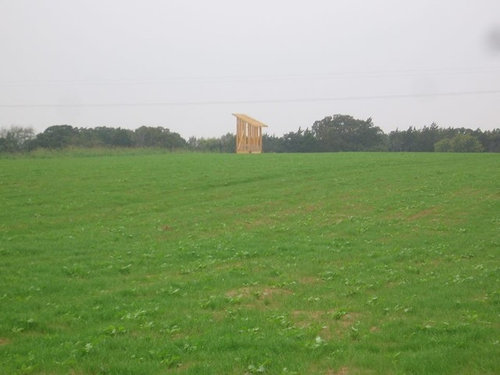
PS Our corn crib is about 2/3 complete. See picture below.

Comments (16)

  • 9 years ago

    Johnny, bust a cob open and see if the cob is completely dry. You cannot have any moisture in the cob or kernels. It should be ready by now.

  • 9 years ago

    stockergal,

    Thanks, I'll check tomorrow.

    Johnny

  • 9 years ago

    I'm not an expert either, and usually only grew sweet corn which, of course, I harvest in the milk stage. When I do grow field corn, I don't pick it until the plants have turned fully brown (including the tassels and silks) and then I still pick random ears here and there and test them to see how dry the kernels feel and how easy the kernels can or can't be removed from the ears. It helps if you know what is normal for your specific variety. With some varieties, the ears sort of (I am struggling to find the right word here) lose their ability to remain upright. They start to lean out further away from the stalk, to almost droop. That's a sign the ears are getting pretty dry, but it doesn't work for all varieties because with some varieties, even dry ears stay about as upright as the green ears do.

    I know some old-timey farmers who put water in a 5-gallon bucket and toss a few test ears of field corn into it. If the ears float, they're dry but if they try to sink, they're still too heavy with moisture and need to dry on the plants a while longer. That's what has worked for them, especially if they were too thrifty to ever buy a corn tester. Some of my old farmer neighbors (mostly all gone on to the big farm in the sky now) never did set much store in buying all the new-fangled gadgets that came along over the decades, so everything they showed me and taught me was the thrifty way to do things.

    Oh, and the best way to know? If you see the birds and deer devouring your corn ears, it probably is dry enough. Or even beyond being dry enough.

    You know, after you harvest it, you still can dry it down some more in a corn crib with good air ventilation, particularly if you can put a large fan blowing on it. It you put it in the crib too green, there's a greater chance it will mold or mildew, so if in doubt, let it stay in the field a bit longer----just not long enough that it becomes bird chow and deer chow.


  • 9 years ago

    Okiedawn,

    I understand the Amish perform the float test on field corn too. I have been using the microwave for a minute and weigh technique. When you get two or three weights the same, you can assume the corn is at zero moisture. Start with 100 grams of corn in a paper bowl, if you wind up with a weight of 75 grams that means you had 25% moisture. I think your technique is more appropriate because our corn crib is on the top of a bald ridge. Lots of wind.

    Sometimes I get a little too involved for a small holder. I just don't want our produce to rot and go to waste. We will be supplementing commercial chicken feed next year. The following year we will be supplementing with wheat, milo and corn. We will be starting a new flock of 12 dozen chicks in the Spring.

    Thanks for the guidance, again.

    Johnny

  • 9 years ago

    Johnny, That's interesting that the Amish use the float test too. Of course, they likely are as thrifty as my old Okie farming neighbors (some of whom came here before statehood in horse-drawn wagons and their families had to cross the river via a hand-pulled ferry boat). The old farmers always told the best stories, and they were able to fix anything broken with some baling wire, angle iron and a welding rig. Or, as a concession to modern times, maybe a little duct tape. One of our neighbors said his family had a wood-frame house using lumber they hauled here from Texas, though it was unpainted (cause paint cost money, you know) but his uncle lived in a dugout that was dug into one of the banks of the Red River. I love that Oklahoma's history is young enough that an old farmer could tell me that story about his family.

    I certainly wouldn't want the harvest to go to waste either. I don't grow grains for our little flock of hens, but I like to grow them fresh greens year-round. My favorite way to grow winter chicken feed for my chickens is to rototill the back garden and just broadcast sow hen scratch over it. If I do it early enough, I can add handfuls of whole kernel corn (not cracked corn, obviously) and get them some young corn plants to eat. You wouldn't believe how great the chicken scratch grows and how quickly it covers the soil. Since our first killing freeze is often very late here, they get to eat greens for a while before they freeze, and some of the plants will stay green all winter. So, it is sort of an edible green manure plant that the chickens can graze on repeatedly....and they deposit fertilizer in the garden area....and the chickens also dig and scratch and eat weed seeds and bugs....and in the spring, I can work it all into the soil so that the chickens were happy for several months, and then I remove them from the garden and make the soil happy.

    Of course, after I cut them off from their greens, I have to keep the garden gate closed or the chickens will dig up and scratch up seed at crop-planting time. I've also done it with deer plot mix some years, and with just bunches of old leftover seed in other years. Of course, in the winter months it isn't going to head up and give us grain, but they like the plants just fine and are happy to have anything green in winter. Since they are eating so much green stuff, I can buy less chicken feed. I usually open the gate after the stuff has grown a foot or two tall and let them go in there and eat their feed while it is fresh and green. Sometimes I forget to close the gate and the wildlife goes in there and eats, but they don't hurt anything. Deer scat and rabbit scat make a good free garden fertilizer too.

    Dawn

  • 9 years ago

    Dawn,

    I wonder how how much less commercial feed the laying hens eat when allowed to eat fresh greens in the Winter.

    Johnny

  • 9 years ago

    I haven't measured it, Johnny, but it is significantly less....based on how much less hen scratch we buy, I'd guess they eat 30-50% less hen scratch in winter when they have plentiful winter greens available to eat. It varies from year to year depending on how warm the winter is (warmer winter weather obviously means the winter greens grow/regrow faster and provide more for the chickens to eat) and on how much the chickens utilize them. Some years the chickens spend all their time in the greens, eating, digging, scratching and just doing other chicken things, but other years they spend a lot more time roaming around the pastures and even the woodland. I assume when they are in the woodland, they are digging through leaf mold and autumn leaves searching for insects beneath them.

    I sort of stumbled upon the winter greens accidentally when I planted a deer plot for the deer to have in a severe drought. The deer didn't touch the carefully planted and tended deer plot, but the chickens loved it. So, I took notice and started trying harder to grow more and more winter greens for the chickens.

    You realize that my chickens are incredibly spoiled, right? I plant big wide rows of lettuce and other mixed greens in late winter and spring in my garden and cut lettuce and various greens to feed to them all spring and summer. (I have to keep the garden gate closed at that time of year to keep the chickens out or the greens don't live long enough to grow big and produce a large harvest.)

    If you want to be happily greeted by chickens running towards you at breakneck speed, just walk out of the garden with an armload of freshly cut greens of all kinds, and the chickens will come towards you as fast as they can run. The poultry have given me many laughable "Foghorn Leghorn" moments, as the old roosters get stiff-legged as they age and run exactly like the old cartoon character Foghorn Leghorn. When I harvest greens for us humans, I have them hidden in a 5-gallon bucket so that the chickens don't know I am carrying greens up to the house. Otherwise, every trip I make from the garden to the house becomes a big chicken parade, with chickens trailing along behind me hoping I will drop something for them.

    It is ridiculous how happy you can keep poultry with just a random assortment of plant greens.

  • 9 years ago

    Dawn,

    Thanks again. I will factor in your numbers during our planning session this Winter. Our new employee hasn't a clue about chickens. We have a lot of work to do this coming year. He will be learning cool season crops, potatoes, corn, chickens, tractor maintenance and soil conservation and stewardship. I hope I don't burn him out before our first harvest.

    I have asked him to find buyers for some of the thousands of Daikon radish we have growing right now.

    We will have to get him a small shotgun too. Coyotes, coons, possum etc...

    Thanks again for all of your support and guidance.

    Johnny

  • 9 years ago

    Johnny, You're welcome. I'm excited you have an employee! I hope he loves farming.

    Could y'all join the OK Food Co-op and market your daikon radishes through them perhaps? Or, could y'all be a wholesaler who supplies market growers with daikons to sell at the Farmer's Market?

    Everyone should have a good varmint-killing gun. Until we moved here, I had no idea what vicious killers some wildlife can be. (Coons, for example, if they get into a chicken coop will engage in wholesale slaughter, including reaching up through the bottom of the chick brooder and pulling the legs off of each chick. There's nothing like finding a brooder full of dead, legless chicks to get your day off to a really bad start. (We now have a different brooder with solid floors, being fast learners...it only took one coon in the coop to make us build a better brooder (and a more secure coop). Coons only seem bad. Weasels and all members of the weasel family are worse. Everything we learned about chickens, we learned the hard way. Lessons learned the hard way are lessons never forgotten.

    I wish y'all well with the new guy and hope he sticks around and becomes an integral member of the team.

    Dawn

  • 9 years ago

    I hope I don't wear him out.

  • 9 years ago

    The way you work is likely. Lol

  • 9 years ago
    last modified: 9 years ago

    I expect you will thoroughly wear him out! However, it is my fervent hope that he falls in love with farming----the soil, the sky, the wind, the rain, the birds, the butterflies and the bees, the frogs and the lizards, even the cottontails and the deer that long to feast on the garden as well as the miracle of little seeds sprouting and growing and turning into monster-sized plants that provide a bounty of food. I also hope he falls in love with the concept of feeding the hungry. If he does, you'll have a life-long convert to the values that really matter.

    I learn lessons about life and death, what really matters and what doesn't really matter at all, every single day that I am out in the garden, or even when I am in the house processing the harvest or cooking it and eating it, or sharing the produce with other people---or with animals. Choosing to be a gardener, a farmer or a rancher is truly a life-altering experience that affects people in every choice they make in every facet of life.

    I hope he loves it. I hope he gets it. If he does, you'll be giving him a precious gift that will affect him profoundly. I hope he has the wisdom to understand what a rare gift it is to be able to work with you, Johnny, and to learn from you. You make the world a better place every single day of your life.

    Dawn

  • 9 years ago

    Once an Army Sergeant, always an Army Sergeant. Just trying to get the most important stuff done.

    Keep pushing me, maybe others will follow. We create new community gardens for free.

  • 9 years ago

    Johnny, is your corn ready to harvest?

  • 9 years ago

    stockergal,

    Yes, but we still haven't completed our corn crib. We plan to complete the crib this weekend.