Software
Houzz Logo Print
hzdeleted_36621590

Framing lumber exposed to elements

10 years ago
last modified: 10 years ago

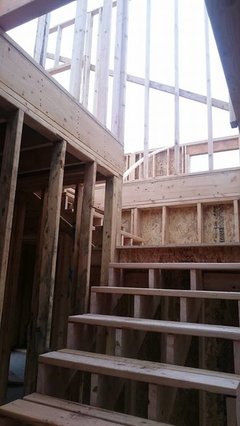
While having our house framed, we had a historical/constant amount of rainfall for about a month and a half. The framing was up but there wasn't a roof for that month and a half (small crew and weather meant it took a lot longer than expected to get it up). Because of this there is quite a bit of what I can assume is mold on the framing. It doesn't look like 3D growth and it doesn't smudge if you touch it, rather it looks more like black marks/staining. So again, I assume it was growth but has dried out/died? I am pretty sure most of it appeared due to being exposed to all the rain.

Our carpenter is very competent/came highly recommended and says it's not really an issue/he wouldn't worry about it and that it does happen with pretty much all lumber. We are owner builders and I just am not sure how to proceed. Should we leave it and not worry about it since it is being dried in, doesn't appear to be 3D growth, and eventually will be dry-walled? Or should I use something like Concrobium to try and eliminate the spores/any unseen active mold. Have you had something similar happen? What did you do? Thank you, I appreciate any advice/input!

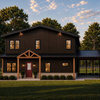
*I've attached a few photos. Sorry they are from so far away, but they are the only ones I have at the moment. These are from the first floor before the second floor and roof were on.

Comments (21)

  • 10 years ago

    It doesn't look like the pictures uploaded so I will post them here.


  • PRO
    10 years ago

    Lumber in most yards these days is outside, uncovered. I've never seen any builder cover studs with a tarp when rain is expected.

  • 10 years ago

    I have seen builders cover stacked lumber with tarp, but not something that the majority will do.

    If it was my house I would want to minimize any chance of it being an issue down the road. I'd be willing to scrub or spray the worst areas with any suitable products.

  • 10 years ago
    last modified: 10 years ago

    Preparation of a construction schedule will help assure that lumber and millwork are delivered as needed and not stored on site for long periods of time.

    Protection of materials after delivery to the site should be described in a specification like this:

    "Support framing lumber, plywood and panel products at least six inches above ground and protect
    them below and above with a waterproof cover such
    as plastic film. Finish lumber and flooring are to be protected from ground or concrete
    slab moisture and kept under cover preferably indoors until installation."

    There should also be a maximum moisture content required before sheathing and drywall are installed.

    Unfortunately, many home building projects are built to a specification written by the builder that consists of a description of the basic features of the structure and omit worksite precautions and protection of materials.

  • 10 years ago

    If builders could only build in bone dry weather, most of us would be living in manufactured homes, because it would be impossible to supply enough housing otherwise.

    Frames get rain and snow, it's perfectly normal and just about unavoidable. As long as the frame is dry when sheathing. insulation, and drywall go in, you are fine.

    Personally I wouldn't run around trying to "clean" the frame, either, since spores are airborne and virtually everywhere. You are likely breathing them right now. In my experience, it's the moisture level in the home after the fact that can create trouble, especially leaving the house unheated over the winter.

  • 10 years ago

    I can't think of a reasonable excuse for not covering stored building materials or scheduling their delivery appropriately. The time to deal with it is when the materials are sitting uncovered on your site.

  • 10 years ago
    last modified: 10 years ago

    letty, weather is unfortunately not one of those things that anybody can control. But from somebody who just went through "historic rains", during a custom build?

    I asked our contractor to bring in a mold remediation specialist- before we covered it all up. In our area, spores get activated in rain and wind. It was incredibly important to me, since I am severely allergic to mold- anaphylactic shock, even with mild penicillin.

    Got it treated. It took away a week from our build, cost my builder (oh yes- that's why you do fixed price!) a small amount of bucks. But I'm protected from living in a home that will make me sick.

    Actually? Our contractor, once I explained the issue, was totally on board. The last thing he needs are endless claims for medical bills. :) Or as he put it: "I;d really rather not have to tear down this house to keep you safe".

    I'm really not a " health nut", but mold is one thing I CANNOT live with. And calmly explaining to the contractor how important this is made all the difference. He got on board, helped with the remediation, and- spores gone, then COVERED.

    Whew! While the mold spores outside sometimes affect me, my house is clean.


  • 10 years ago
    last modified: 10 years ago

    We have a lot of comments about stacked lumber but the OP's post said, "The framing was up but there wasn't a roof for that month and a half (small crew and weather meant it took a lot longer than expected to get it up)." I am not sure of the connection but cool.

  • 10 years ago

    It will dry out just fine in short order, nothing to worry about.

  • 10 years ago

    millworkman- Curiosity- do you live in a area where mold is prevalent?

  • 10 years ago

    I suspect the staining is due to unprotected storage before being exposed to rain in the house. Mold likes moisture, still air and shade. Rain only provides one of those factors.

  • 10 years ago
    last modified: 10 years ago

    On-site improper storage, as mentioned repeatedly above, is likely the main culprit.

    We've never had the problem simply because wood (and anything else of value) quickly disappears here if it's not nailed together. Deliveries are staged so what comes on site is used within two-three days. On one infill, every last piece of unused plywood was loaded into my trailer at the end of every day and spent the night in my driveway or garage covered and secured.

  • 10 years ago
    last modified: 10 years ago

    Wow thank you for so many comments so quickly!

    My husband and the carpenter did an excellent job coordinating to make sure materials were delivered and used promptly. And looking at earlier pictures, most of the first floor framing was actually pretty pristine before all the rains. So I don't think it was caused by being stacked/improperly stored.

    Perhaps because it was without a roof and exposed to the rain for so long, it caused the same effect as you see on stacked lumber? I guess I am just surprised about how prevalent it is, probably around 40% of the pieces in the house have some sort of non-fuzzy black/stains. Is that normal/ok? I guess it could just be the simple fact that there was so much rain for so long, 10+ inches in October : ( Hubby said it was really dry today, but we are definitely planning on using a moisture meter/using dehumidifiers before installing drywall.

    @902juanita-if you don't mind me asking, are you allergic specifically to the penicillium mold, or the medicine penicillin? I ask because I am slightly allergic to the medicine penicillin and it makes me cautious/nervous about the mold penicillium that can grow on wet wood.

    I'm sorry for all the questions, we began this process exactly a year ago and with literally every single step there has been some sort of delay or problem. I am so ready to be done and we're only half way there : ( So thank you for all of your input!

  • 10 years ago
    last modified: 10 years ago

    Mold and mildew can form very rapidly under the right conditions. It should probably be cleaned before being covered but otherwise is nothing to worry about.

    The easiest way to clean it use a $15 pump sprayer and oxygen bleach, just spray everything down and repeat. You want to keep the wood wet for about 90 minutes. Do it right before you put the roof on. You can also use chlorine bleach, you will use less but it is much meaner stuff.

  • 10 years ago
    last modified: 10 years ago

    letty- I don't mind the question, but a caveat for all reading? I'm not a nut :) Although nothing but penicillin has ever caused major, major problems, I'm sensitive/allergic to it all.

    "Fun" story- we rode out our last build in a rented duplex, a couple of blocks away. Close, so I could be on-site with just a walk. It ended up being a real nightmare. I was, almost immediately, sort of "sick"- all the time. Couldn't quite figure it, thought it was perhaps just a stress reaction. HA!

    First we discovered that our attic space was home to the "OG" rats of a 32 unit complex that looked great, but hadn't been cared for. After months of trying to deal with our slumlord, I gave up and called our city's Code Control. That made the rat problem go away, in a hurry. Slumlord had to clean it all up.

    But during that process, the pest folks also found great gobs of mold growing on "infrastructure places". That included the closet that housed the HVAC unit. Stachybotrys-black mold, confirmed through a lab. No wonder I felt like poo. Those spores blowing through my vents, all day and all night. Contacted the owner.

    Slumlord was unimpressed. Sent me a letter (we were on a month to month) that said he was sure I'd never be satisfied, no matter what he did, and so he was considering ending our arrangement. He's a lawyer from New York- probably has never even been to Austin, TX. And he gave me flowery legal stuff, designed to intimidate.

    I was 3 months from completion of the house. Not only an awkward move, but expensive and highly disruptive to business...

    I did 2 things:

    1. Contacted the Health Department. They got excited in a hurry...

    2. Sent the slumlord a registered letter with nothing but City, County and State codes that he'd violated. Also sent him a copy of my rights as a renter.

    Boom. It was fixed, within three days. Mold remediation of that sort is expensive, complicated- he had to install a new HVAC system/venting etc. But?

    Within a week, I felt so much better.

    And so yep- I was a freak about getting the framing completely dry, then treating it properly. No mold growing in any areas, and honestly- I thank my contractor for moving quickly, being responsive while we still had no walls, and it was fairly easy to do.

  • 10 years ago

    We live in NW Oregon, and our house was framed in March, so rain was unavoidable, and the framing got soaked before everything was closed in. The builder planned a break in the schedule for a drying out period. We used both a dehumidifier and an industrial fan to get everything to the appropriate moisture level (they measured -- and I measured with a friend's meter -- throughout the house multiple times until it was dry). A small amount of mold did form. I sprayed vinegar, which kills the spores without the health problems associated with bleach (just don't mix the two!). Fortunately, we were living on site during the build, so I was able to see to both drying and mold removal myself.

  • 9 years ago

    Everyone is calling the black stuff mold. It looks more like mildew. If you want, spray it down with bleach. It will still look ugly and it's not necessary, but you will have peace of mind.

  • 9 years ago
    last modified: 9 years ago

    @902juanita-wow, that sounds stressful! I am glad that everything ended up working out for you in the end!

    @bluesanne- we are also in the NW! We were in the middle of/finishing up framing when all those crazy storms came in, so it got quite soaked. I don't think I've ever experienced such a wet month out here. Living on site would most definitely be helpful. Unfortunately we are a little over an hour away from our build, but hoping it will all work out just fine.

    Everyone else, thank you for your input and giving me some reassurance! I'm originally from a state where we never had mold anywhere besides decaying plant material outside. We will be going up tomorrow to take care of a few other things so I'll try a couple of the suggestions!

  • 9 years ago

    letty_7, an hour's drive does make coordinating fans and dehumidifiers a bit impractical. Talk to your GC about what they have planned for mold abatement. As NW builders, they certainly deal with this constantly and should have a plan (our involvement was part of our agreement). Mold is a serious issue with lasting health effects and potential legal problems for builders. Get it in writing.

  • PRO
    9 years ago

    It is not uncommon in residential construction for framing lumber to get wet before the home is under roof and the windows and doors are set. Based on the amount of rain you described, I think you'll be well served to rent one or two industrial dehumidifiers and operate them in the home until the framing moisture content is near equilibrium for your climate. Doing so should both terminate active mold/mildew growth and minimize the potential for drywall nail pops.

    Best wishes.