Software
Houzz Logo Print
blackwillow87

Bromeliad ID?

9 years ago
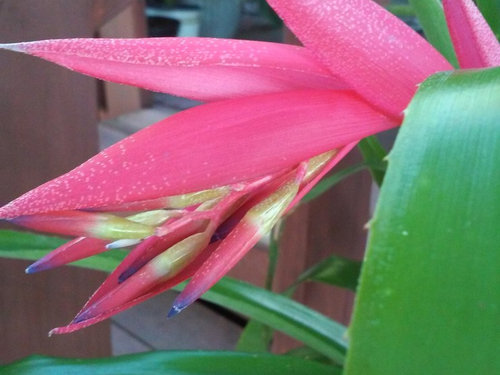
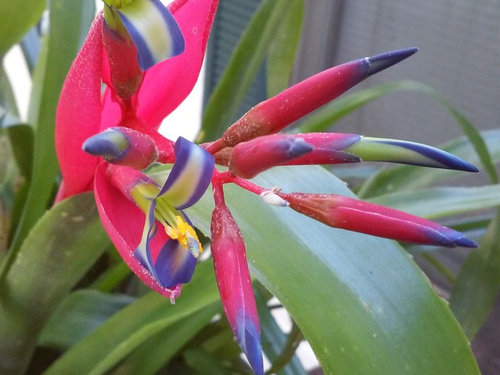
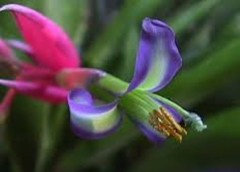
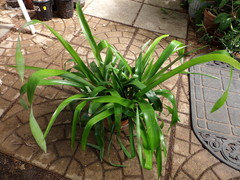
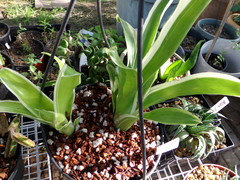
Hi this is my first post on this forum and I've looked through some of the posts that had beautiful Bromeliad photos.I have had a bromeliad for 4 years now and I thought it was a billbergia windii, but the flowers look different from pictures I've come across. The whole plant is only a foot tall and it's produced tons of pups. Some of the leaves are spotted and the leaves are also serrated. I hope someone can identify the type of billbergia it is? Thanks

Comments (10)

  • 9 years ago
    last modified: 9 years ago

    Don't quote me 'cause I'm no expert of bromeliads, but if I'm not mistaken this one's called Bilbergia Nutans, Queen's Tears.

    P.S. Welcome to the site, Blackwillow.

    blackwillow87 thanked Kei Seya
  • 9 years ago

    Thank you Kei! I was thinking it was nutans but then someone on another forum told me nutans has smooth leaves instead of serrated ones. I have the narrow leaf nutans that's finally producing an offset.

  • 9 years ago

    Hi everyone.

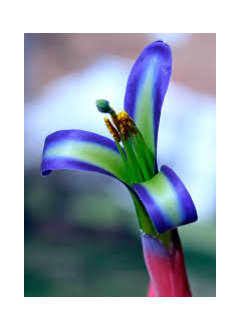
    Blackwillow - There's no mistaking those flowers, either it's Billbergia nutans (the species) or one of the many hybrids bred from it of which there are 55 registered on the Bromeliad Cultivar Register and probably many thousands more not registered.

    (see http://registry.bsi.org/?fields=Parents&id=745&search=nutans)

    There are also several photos showing the variation between species on the FCBS Billbergia species Photo Index at http://fcbs.org/pictures.htm .

    If you haven't used this site before just open the home page with the URL above, select Billbergia from the index on the left, when the Billbergia screen opens, select species from the choice between cultivars and species at the top of the list and scroll down to number 30. Billbergia nutans to view selection of pictures.

    I have several different clones of Bill. nutans and they all have the serrations on the leaf edges, although some are very fine and you have to actually run your finger along to identify them as it's almost impossible to identify them with the naked eye.

    Some are quite easy to see while others are more like the edge of what we used to call "sword grass" and although hard to see can produce similar to a "paper cut" when your finger is dragged along the edge.

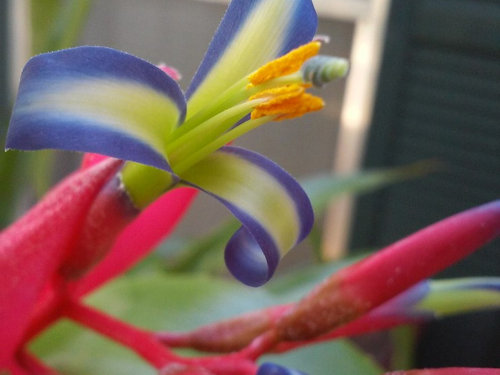
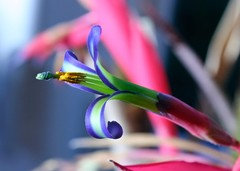
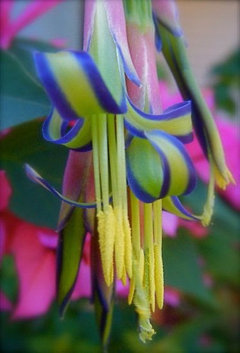
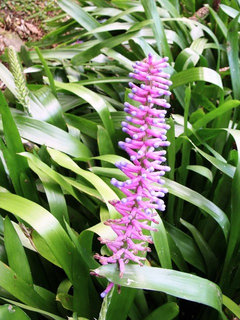
    The flowers all have that brilliant blue/green contrast which can vary slightly depending on the available light where the plant is grown.

    Below are some pictures of typical Bill. nutans flowers for comparison.


    All the best, Nev


    blackwillow87 thanked splinter1804
  • 9 years ago

    Thank you Nev. I didn't know there were that many cultivars of nutans? I've learned a lot and I looked at the links you posted and I didn't know there were so many variations of nutans.


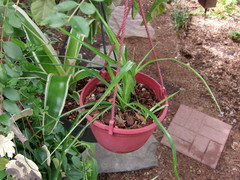
    Thank you too Kei. My plant really needs to be repotted, since it's been in the same 6 inch clay pot for its entire life.

  • 9 years ago

    That's truly amazing Nev! I didn't know they were nearly indestructible and thrive without much care. I've probably been pampering mine too much and I tend to kill plants that way. I can't believe they survived being trampled on by cows. Here's a picture of my plant. The pot is probably mostly roots now lol.


    My other nutans


    My Kyoto (one plant died randomly but the offset survived.)

  • 9 years ago

    Hi everyone.

    Blackwillow – The only other thing I should mention about
    Bill. Nutans is that if they are taken
    out of the pot and planted in the garden, they can become quite invasive much
    like Aechmea gamosepala.

    You say about your Bill. ‘Kyoto’ (one plant died randomly
    but the offset survived.) This often happens with bromeliads; they are great
    survivors, so never toss out a plant that has rotted or died due to rot, trauma
    or other reasons; just set them aside somewhere and they will usually produce a
    new pup or two as they have amazing survival ability.

    I had a plant of Aechmea
    miniata discolor
    which had a large tree branch fall on it and completely
    flattened it. I put it to one side to see if it would produce a pup, but after
    six months it had lost all the leaves and was just a bare piece of dry looking rhizome
    devoid of any evidence of life, so I tossed it on the compost heap.

    After three months of grass clippings being added to the
    heap, it was time to turn the heap over, and as I did I spotted something
    orange in colour which I initially thought was a small piece of orange peel. On
    closer investigation I found it was (what I thought) had been the dead piece of
    Ae. Miniata. It had produced a small,
    spindly, three inch flower spike with two tiny deformed orange coloured buds in
    one last effort to reproduce itself.

    I took it to our Bromeliad Society meeting for “show and
    tell” and a fellow member volunteered to take it home and out of curiosity, see
    if he could get a pup from it but he reported to the next meeting the flowers
    partly opened before it eventually did die. The only regret I have is that I
    didn’t photograph it; but it certainly is a great example of why we should
    never give up on a supposedly dead bromeliad plant.

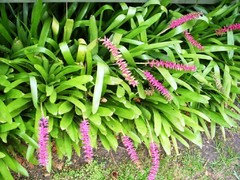
    To demonstrate what I said about Aechmea gamosepala (like Bill. Nutans) becoming invasive when grown
    in the garden, the plants in the picture below started from a four growth plant
    transferred from a pot to the garden five years previously.


    All the best, Nev

    blackwillow87 thanked splinter1804
  • 9 years ago

    Nev, I wish I lived in a climate where I could plant mine outside. We're supposed to be a bone-chilling 19 degrees Friday morning. I was so afraid the other 'Kyoto' would meet the same fate and I constantly checked on it to make sure the center didn't rot like the parent plant. Now it's nearly surpassed the parent plant and I have it in front of a sunny south facing window. The narrow leaf nutans was a shriveled plant when I received it a year ago, and now it's finally growing its first offset, so I'm happy it's finally getting established. It's amazing your aechmea still had the will to live, even though it ended up dying. I have a newfound respect for bromeliads now and I won't give up if any of mine die.

    The Aechmea gamosepala plants in the picture are definitely happy and pretty. The flowers look like pink bottle brushes.

  • 9 years ago

    Hi everyone.

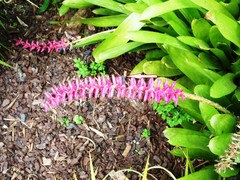
    Blackwillow - Just to keep the record straight, those are spent flowers on the Ae. gamosepala picture above, with some on their way to becoming seed capsules which will eventually turn black. (Indicated by white arrow in Pic.1)

    The actual flowers are much more colourful and do slightly resemble the old style wax matches, hence the common name of "Match Stick Plant" (see Pic.2

    All the best, Nev.


    blackwillow87 thanked splinter1804
  • 9 years ago

    Wow even the spent flowers are stunning. The blooms definitely look like little match sticks.

Sponsored