Software
Houzz Logo Print
sara_kost

Propagating s. cylindrica

9 years ago
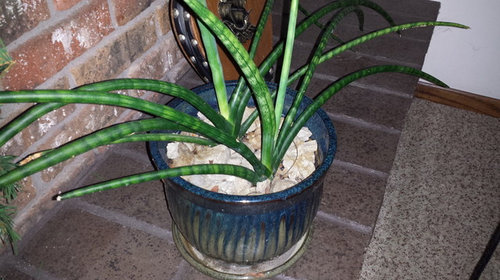
Hello,

I just found out I have a sansevieria cylindrica. I've had it for years not knowing what it was, just thought it looked cool. Asked on a different forum for help identifying my plant, and now I have my answer, and more questions! Specifically, how do I go about propagating my plant? I've read about propagating other sansevieria plants, but nothing much about cylindrica.

Anyone have any ideas?

Thanks!

Comments (9)

  • 9 years ago

    Great advise but if going with the glass of water. Use some pebbles or stones in the bottom to keep the plant off the water but close so the new roots will reach the water. Many times you see cut cylindrica stems (leaves) planted in peat being sold as Japonesa or Mikado which is a art or planting 'technique'. They often then sprout roots with their own new sprouts (pups) and start to look like the common Sans. cylindrica. They also use other Sans for this technique like Sans. Fernwood or any of the cylindrica types so you don't know which Sans it is until it starts to grow and that takes years.

  • 9 years ago

    I have two Sans Boncels. One was mature when I bought it, and when repotting it, I accidentally broke off a healthy-size leaf. I stuck it into a small pot of Turface and just let it sit there -- no water (because after all, it has no roots), no nothing but moderately bright light. It took a few weeks -- like 7 or 8 -- but eventually, one day I saw another leaf poking up through the Turface. It has since been repotted into a mix that's about 1/3 C/S soil and 2/3 perlite and pumice. It's not growing wildly now, but it IS a bona fide plant and I think it will do well when springtime comes. They are not too fussy about propagation. Mostly they seem to require patience.

  • 9 years ago

    Hey Sara,

    We met again, glad you found your way over here!

    Yes, propagation of these does take a lot of patience sometimes, Spring/Summer may be faster, frankly I don't recall.

    Have fun.


  • 9 years ago

    Robin, I've only seen Boncel in pictures, it's a beautiful and unusual sansevieria. A young Boncel must be cuter than a wiggly puppy, any chance for a pic when it gets to a recognizable size?

    Pure Turface was an interesting choice for a rooting medium for the leaf, I'm glad it worked out for you. I included Turface in sans mixes for several years and lost too many to rot, so I'm repotting everything that was in it. It makes no sense for an aggregate to hold so much water.


    For rooting, I prefer perlite with a little peat moss, fine pine bark, or commercial peat mix. The organic will be dark when wet, light colored when dry, so it's a good moisture indicator and keeps the medium from drying out too fast.


    Stush, your technique of propping a leaf just above the water surface is something new to me. I don't root in water but I've agreed with advisors that say to use only an inch or so, but the leaf being just above the water sounds like an even better idea.

    Russ

  • 9 years ago

    Thank you all for help! I enjoy reading your comments and getting different opinions.

    Is it safe to say that I need to let the leaf cut end dry out before doing anything with it? I've tried propagating succulents before, with no success, and I think my mistake was I didn't let the ends dry out before putting them in soil.

    I might try doing two, one in soil and the other in water and see which works best!

  • 9 years ago

    Russ, I will try a photo when it is a tad more "recognizable." You're right -- it is cute. I think I learned the Turface rooting medium selection from Rina. I KNOW I learned the don't-water-no-roots advice from her. It's hard not to water, and just wait.

    I know nearly everyone here uses Turface in gritty mixes of various sorts, but I have not been as pleased with it as I hoped. I still have it and use it, but sparingly. For my Sans, I am using about 1/3 sieved C/S soil and the rest perlite and/or pumice. I am not an over-waterer. Just the opposite. My plants don't get watered too often, so having some soil seems to help. Nevertheless, I've had a bad year for crown rot and have lost more than I wanted or expected. And yet….we soldier on, don't we?

  • 9 years ago
    last modified: 9 years ago

    Sara: here's the key thing abt propagating Sans. which we've all forgotten to mention. Pls. keep track of which is top & which is bottom of leaf.

    One must set it to root w/ bottom end down (it's even OK to mark the leaf w/ Magic Marker, Sharpie, etc. to be certain which end is up/down). If potted upside down it will not root at all.

    (Am a C&S Mix + pumice user myself.)

  • 9 years ago

    Sarah, a thick leaf like cylindrical will definitely need drying before planting. You could literally set this leaf on a bright windowsill now and it would be fine until spring, it might even produce some roots by then and leaf in this condition would explode into growth once it's put into a medium. Very large cylindrical-type leaves an inch or more across could easily stay on that windowsill for 9 months to a year with no ill effects other than shriveling a bit.

    If you use soil, be sure to mix it with at least half perlite. I'm assuming the 'soil' is a light, peat or bark based commercial mix, not the heavy, dirt-type so-called potting soil.

    Regarding rooting in water, don't forget about Stush's comment above about keeping the leaf just above the water by setting the end on pebbles. I think it's well worth giving that a try.

    Robin, interesting comments about Turface, I think it and other similar products are highly over-rated and over-promoted, and I can't recommend it.

    Imonstella, good advice about keeping track of the direction of leaf cuttings. I always cut the bottom at an angle and if I cut the top I cut it straight across. But an arrow in black magic marker works well too.

    I would use pumice if I could get it locally and it was cheap enough in large quantity. Finding good potting mix ingredients at a decent price is always a problem. I envy folks in California for the availability of pumice and perfect climate for cacti and succulents.

    Russ

Sponsored
Kuhns Contracting, Inc.
Average rating: 5 out of 5 stars26 Reviews
Central Ohio's Trusted Home Remodeler Specializing in Kitchens & Baths