I couldn't remember if I had ever posted about my Corytoplectus to this group. So, here's a little step by step photo essay with some dates and a few details.
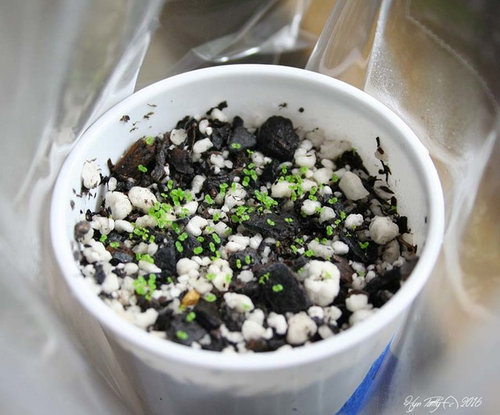
Corytoplectus cutucuensis seeds (very tiny) sown March 24th, 2016 and shown here germinated by April 6th.
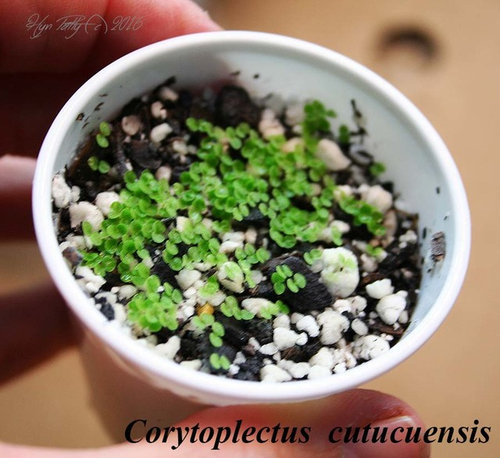
The same seeds as seen on April 16th and now ready to divide. They are starting to crowd each other in the 3 oz solo cup that was started in a ziplock baggie under lights.
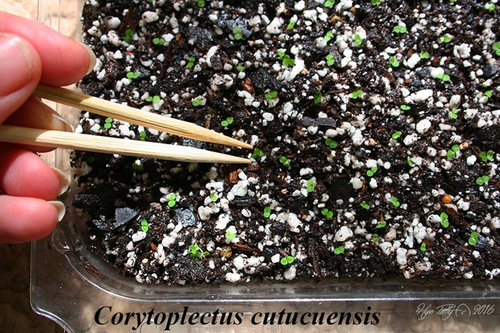
Same day, seedlings carefully spread into a deli salad container with lid.
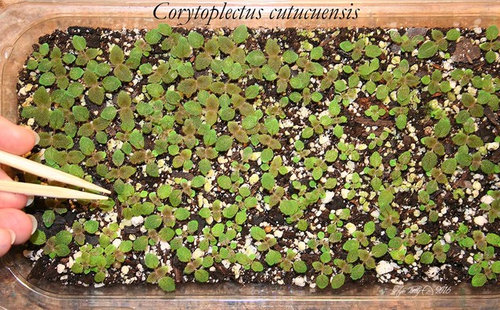
The same seedlings at the end of 05-29-16 (they were slower for a while) now ready to start transplanting again, this time as singles or small groups into 3 oz solo cups. Every time gesneriad seedlings are disturbed and transplanted, it usually results in a growth spurt. I should have transplanted these sooner but I got busy.
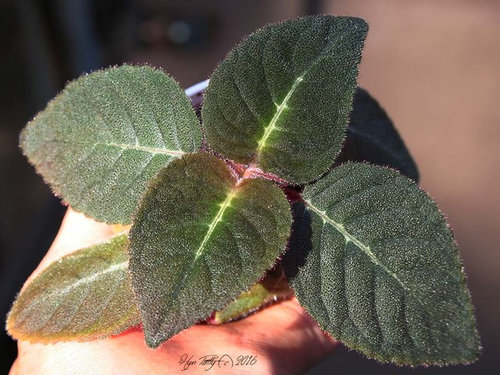
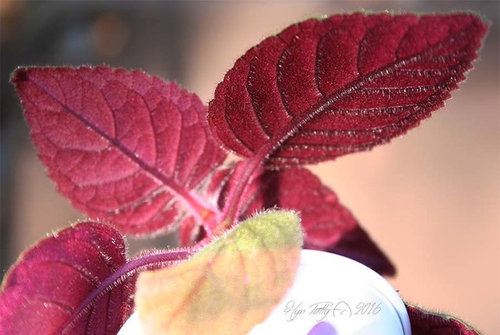
Top and bottom views of a Corytoplectus seedling starting to get the first hints of adult leaf coloration above and already a rich wine red below. These were kept beneath a dome /and/ wicked as they love a lot of moisture. I also grew some wicked on an open shelf under the same lights but they grew more slowly. Shown here 9-27-16.
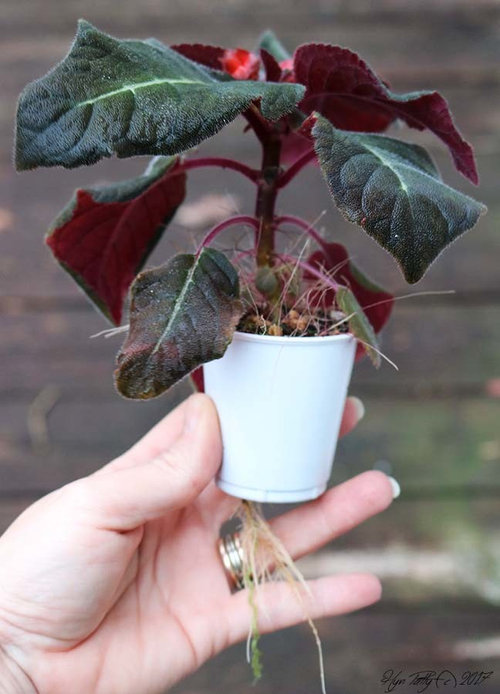
Maturing seedling photographed on 12-30-16 showing roots in the air due to having been domed with high humidity while wicked. The first red-orange calyces are forming in preparation to flowering. These are very ready to be transplanted up to larger pots and should be magnificently in bloom by spring.
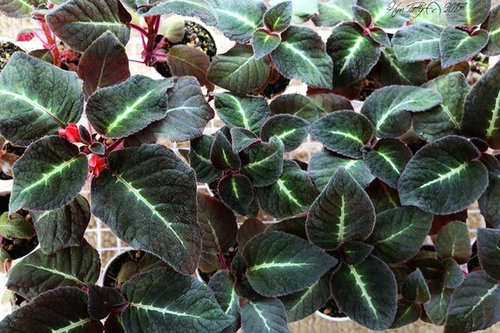
One of my several flats of maturing seedlings, also from 12-30-16.
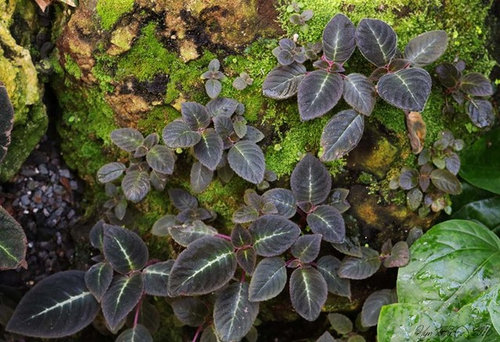
Seedlings in various stages of development growing on a wet mossy rock at the Atlanta Botanical Garden. I make trips there a couple of times a year to photograph their gesneriads and orchids.
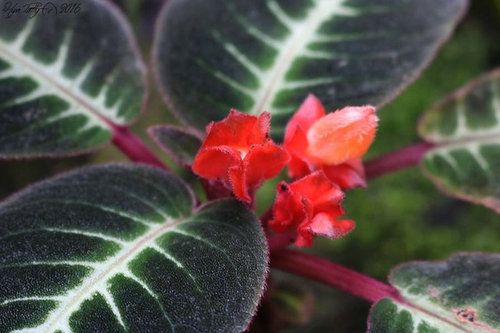
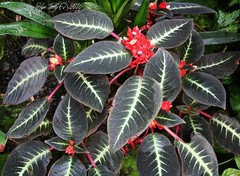
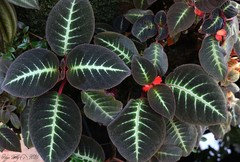
And a few more showing plants maturing and starting to flower. The fruit looks like large black pearls filled with tiny seeds. My post won't let me add any more photos so I'll dig up a few more to pose lower in the thread. I really love this species! Red Listed, it is an endangered species of gesneriad from the mountains of Easter Ecuador. Few are in cultivation and plants can eventually reach a decent spread in size. They require a LOT of water and warm temperatures always above 50 degrees (much like episcia) but do very well in larger terrariums, or wicked on open shelves under lights. Mine are under single T8's.


 9 years ago


irina_co