

Ficus Triangularis
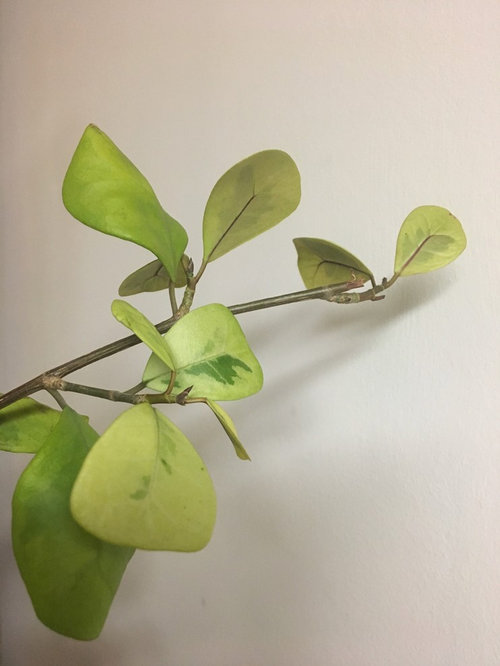
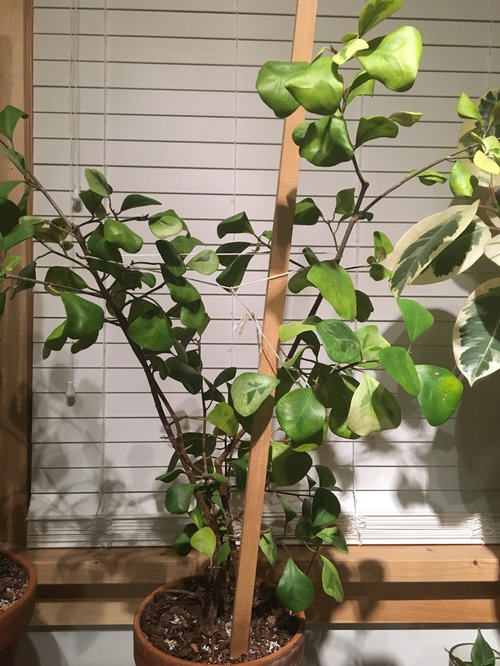
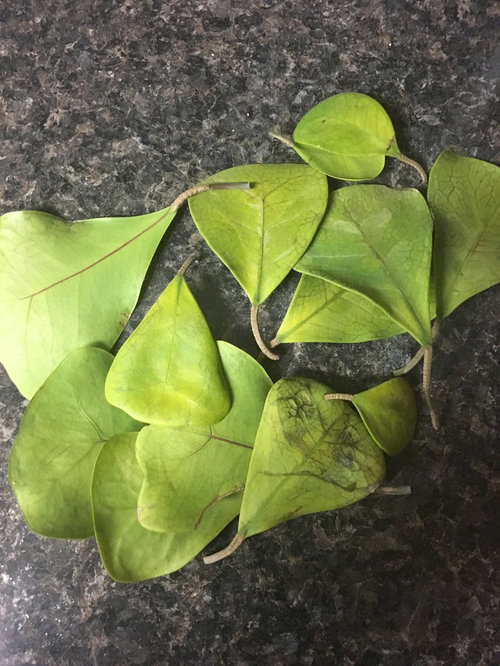
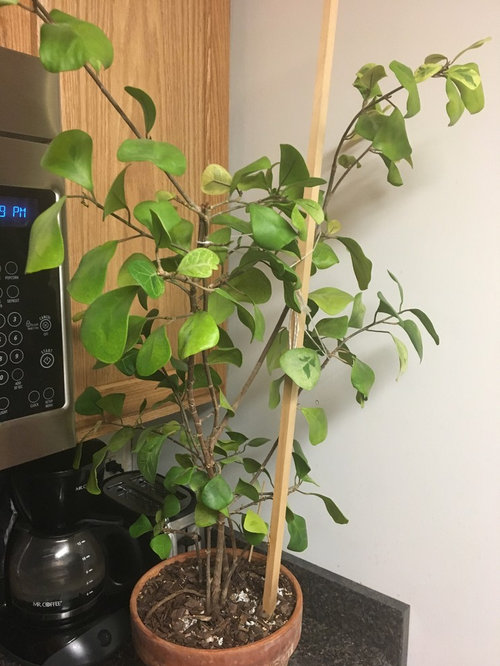
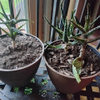
I've had this Ficus Triangularis for a few years and it's always been the heaviest drinker of all my plants. I re-potted it into gritty mix this past summer and it quickly filled the pot with new roots to the point where the entire bottom of the pot is covered with roots from the drain hole. It needs watered so much more frequently than my others that sometimes it probably gets drier than it would like. Over the course of the last month it produced dozens of figs (which I removed), sprouted many new leaves (which I thought was odd since I live in Pennsylvania and its winter) and then it wilted and many old leaves turned yellow and died. Not sure whats happening with this plant but any suggestions would be helpful. Thanks everyone.
Comments (12)
 9 years ago
It just acts like a ficus. Too wet or too dry causes leaf abscission (shedding) - cold drafts or reduction in light causes shedding, tight roots and nutrient deficiencies (especially of the mobile nutrients) causes shedding.
Al
Related Professionals
Richmond Landscape Architects & Landscape Designers · Aurora Landscape Architects & Landscape Designers · Brattleboro Landscape Architects & Landscape Designers · Middlesboro Landscape Contractors · Monroe Landscape Contractors · Memphis Landscape Contractors · Richmond Landscape Contractors · Pittsfield Landscape Contractors · Sanford Landscape Contractors · West Palm Beach Interior Designers & Decorators · Coldwater Interior Designers & Decorators · Napa Interior Designers & Decorators · Victorville Interior Designers & Decorators · Ogden Interior Designers & Decorators · Edmonton Interior Designers & Decorators
Josh
Original Author9 years agoYes Marcy, a title I once held lol!
It is by far my most temperamental plant, none of my other ficus ever shed leaves like that and it's probably lost 20+ in the last couple days. I think this summer I'm going to prune it back pretty hard but I'd like to try to strike some of the cuttings. Are these easily propagated with cuttings or will I need to air layer? Also, while this might be one of my favorite plants, it certainly doesn't have the most eye appeal. Is there a certain look I should be going for, or do they all just have branches growing in disarray at varying angles? Where would you prune it Al?
- 9 years ago
"Strike" means to grow roots, so it would be more appropriate to say something like, "I want to start some cuttings and hope they strike. They're very easy to propagate in summer. I have very close to 100% success rate with ficus cuttings.
As a bonsai practitioner, I'd be thinking about cutting it way back. The heaviest branches would all be cut back to small branches with only a few leaves on them, come Late Jun early Jul. After that point, I'd start pinching faithfully. Your tree houseplants always get away from us when we don't pinch, so I'd become a faithful pincher. Once you start that habit, your pruning is reduced to eliminating unwanted branches that are either problems or in need of elimination to allow more light to the tree's interior.
Al Josh
Original Author9 years agoThanks Al. If I cut it far enough back that it's no longer green and into the woody part of the trunk, can I still start some cuttings with those? Or would they need to be air layered in order to strike? Also, I guess I'm just not really sure what the general idea is behind pruning and pinching. For instance, I wouldn't know what would qualify a branch as unwanted or a problem and if you pinched every tip, how would the plant ever grow? I have many plants that I'm sure need pruned, but I'm just not sure where to start. As far as pinching, I have a benjamina that seems like it would be impossible to pinch faithfully. Lastly, I've read somewhere on here about defoliating a tree houseplant on purpose. My question is why and when would that be appropriate? I guess it makes sense that in nature, mature trees don't really have single leaves growing from their trunk so by pinching and defoliating you would force the tree to grow more limbs that would then have leaves on them? Although, I've never seen any ficus in nature so maybe they do.
Josh
Original Author9 years agoWill definitely need to come back to this for reference (along with a few other posts) this summer when it comes times to prune all these ficus. I really want to increase the amount of leaves and branches on the triangularis along with starting some cuttings. Looking forward to it actually.
- 9 years ago
Josh - I think there are many planes on which we interact with our plants. Another way of looking at it is, we interact on a single plane that has the potential to be continually elevated by our knowledge, practical experience, and the intuition that comes from being intimately familiar with our plants and their predictable responses. As the plane(s) is/are elevated, depending on how you prefer to view things, so does the potential for personal rewards and gratification. It can't be said that learning how to manipulate your plants' growth habits so you're able to produce a plant more pleasing to the eye than one left to its own habits, is a small thing. I think it rates right up near the top of the list of things most apt to increase the rewards you get from growing things; so I would encourage you to learn what you can about pinching and pruning and put it to work for yourself.
Caity - If we're talking about plants we can say are commonly considered houseplants, I can say that I do as little pruning or pinching in the winter as possible. Here's why: When you pinch or prune a branch back, you stimulate back-budding. The last thing I want on my plants is a large number of long internodes. The greater the distance between the leaves on a branch (the internodes) the less full the tree or plant can be. Since full/compact plants are highly desirable, I let the plant do it's thing and grow all those long/ugly (to me) internodes in winter, THEN, I cut them all off in mid to late spring when the plants go outdoors. Then, ALL the new growth has short internodes through about the middle of Sep for me ...... or when I move them indoors. After that, I let them grow unencumbered by pruning until the next late spring and prune off all the long growth again. Pruning any time but late spring thru early autumn forces the grower to allow growth with long internodes to remain as a part of the plant's branching structure or it forces the grower to cut the plant WAY back to behind the long internodes in a subsequent pruning session if he wants to maximize the plant's fullness.
If we're talking about other plants like winter dormant bonsai, I do prune or pinch in late winter, just because it's much easier to see developing branch structure when branches are bare of leaves. For instance, I have several small bonsai in the garage (dormant) I've been eying and watching for the first signs of budswell, which is usually when I prefer to prune the dormant stuff. They CAN be pruned any time after they lose their leaves. Their reaction will be as if they never went dormant insofar as how they respond to pruning.
Though it seems counterintuitive, bonsai practitioners often want to reduce the growth rate of plants that are genetically vigorous. When this is desirable, I'll let the plant push the spring flush of growth and allow branches to extend. This exhausts a LOT of stored energy. If you prune after the spring flush has occurred, the plant will be forced to depend only on the current energy production for growth. Since this is significantly less than the current production + reserves that fueled the spring flush, you can depend on the second flush of leaves to be smaller and internodes on branches to be shorter, which of course makes for a smaller and more compact plant, which is the underpinnings of bonsai. We also incorporate partial of full defoliation as a way to 'bleed off' excess energy and balance the flow of energy throughout the tree.
Al  9 years ago
Thanks Al! That's very interesting. I've been poking my head into bonsai, but at the moment I have plans rather than plants.
- 9 years ago
In all honesty, that's the better plan. Bonsai isn't easy. If it was, at least half the people who currently tend plants in pots would at least dabble in bonsai. Buying plants in the bonsai category is easy, but keeping them healthy while at the same time trying to bring the plant where it's image is evocative - to the point where its appearance alone tells a story, isn't easy. We strive to produce a tree that you might come across in nature. In some cases, it might bring to mind a stately oak that stands in the middle of a meadow, or an old gnarled juniper that hangs off a mountainside and survives after years of exposure elements that have played the biggest part in shaping the tree.
The number of folkes that come to bonsai for a try is hundreds of times greater than those who stay; and, there's a reason for that - frustration. It's not easy to deal with not being able to keep plants happy enough in small pots that they'll tolerate the stress of being worked on to change their appearance. Mt first foray into the practice of bonsai was a failure that came from insufficient knowledge, so the person who gains the knowledge required to keep their plants happy side-steps the initial frustration that acts to cull those who didn't take time to prepare for what lied ahead. After I hit the books and worked at it for 3-4 years in my spare time, I found that I had equipped myself with info sufficient to keep my trees viable over the long hall. From there, it was a matter of learning the various techniques used to refine the trees.
Along the way, I realized not only that much of what I learned was completely absent from anything I had read about container gardening in general, but also that much of what I learned had the potential to impact the level of gratification/reward the average houseplant growers could enjoy as a return on their growing efforts. Almost everything I share is aimed at providing an opportunity to increase those rewards we all get from the growing experience. For me, that part is just a natural extension of my own growing experience and serves as an additional source of gratification I'm able to take from it. Plus, I get to meet a lot of really good people.
Al
Josh
Original Author9 years agoI'd like to dabble in bonsai, maybe with this plant. Would I be able to start with this one by cutting it way back? Id probably start cuttings with everything I chop so it's a win-win right?




tapla (mid-Michigan, USDA z5b-6a)