Software
Houzz Logo Print
heruga

Osmanthus fragrans question

9 years ago

I was thinking of growing the orange variety in a pot but it looks like it's hardy right on zone 7,my zone. Is it too risky to plant it in the ground here? Or if I have it in a protected location will it be alright. Also, is this plant deer resistant?

Comments (26)

  • 9 years ago

    It is likely deer resistant, but all bets are off on that. Local deer have local tastes.

    It may or may not survive your zone. I would say yes to a Southern zone 7a where there are frequents warm-ups in winter.

    In the ground, for sure place in protected area with winter shade and be ready to cover it with a large pot if the temps get down into mid-single digits.

  • 9 years ago
    last modified: 9 years ago

    I've seen cold damage (previous season's growth completely destroyed) on mass plantings at one location and a chronic chilled appearance on most plantings everywhere I've noticed this shrub here in this part of USDA 8.

  • 9 years ago

    Hmm would northern NJ count as a southern zone 7a? It gets really hot and humid on summer, averaging to 90 degrees everyday. But if you've noticed damage on zone 8 then idk... I really want to grow this plant outside though. Is it impossible?

  • 9 years ago

    Hot summers could be producing a more favorable result. Easterners also claim USDA 7 for Loropetalum chinense yet it acts like it is basically a Zone 9 item out here. Probably it is a combination of people who aren't in Zone 7 sometimes thinking they are and some hot climate shrubs such as these being better prepared for winter then they are after our cool summers.

  • 9 years ago
    last modified: 9 years ago

    Northern NJ would not count as a Southern zone 7. Tennessee or Oklahoma would, for examples. Your potential sustained winter cold could damage it.

    But your summer heat will give it an advantage over ones growing in the Pac. NW. There is an Osmanthus fragrans growing one street over from me (I'm in zone 7a). It seems to be doing OK. Its growth is not fast, and it had sustained a bit of tip damage during vortex years. But it looks pretty good. It's getting a fair amount of winter shade.

    I would recommend Osmanthus x fortunei over fragrans for 7a in the ground.

  • 9 years ago
    last modified: 9 years ago

    The hybrid has been recommended for this area also (see at link, below). Independent garden centers here have been presenting it in recent years. Being half Osmanthus heterophyllus it does not display quite the same tropically vivid, Citrus-plant-like yellow green as clones of O. fragrans seen at outlets (and in resulting recent plantings) in Greater Seattle. Like the "hardy" Citrus types that have also been at local stores the particular O. fragrans selections that have been on offer look during our cool and damp autumn/winter weather as though they absolutely hate such conditions, often are still in active growth at inappropriate times late in the year. The latter behavior in particular is a hallmark of plants that are not northern adapted.

    Osmanthus x Fortunei 'San José'

    http://arthurleej.com/p-o-m-Dec01.html

  • 9 years ago

    You know what, I rather not then. I only want the species variety. No hybrids. If it needs full sun in the spring and summer and shade in the winter, thats hard to do enough.

  • 9 years ago

    So actually I am starting to look at the hybrid 'san jose' and its flowers seems to be white... I'm looking for an orange one. Are there any hardy hybrids that have orange flowers?

  • 9 years ago

    '...Are there any hardy hybrids that have orange flowers?...'

    No, none that I am aware of. I have a hybrid with cream-colored flowers. Very fragrant. But nothing in a hybrid comes close to approaching orange, unfortunately. Perhaps they have done some hybridizing in China or Japan and have come up with something, but it's not in the US yet, to my knowledge.

  • 9 years ago
    last modified: 9 years ago

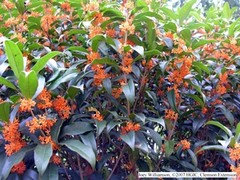
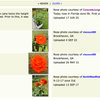
    Yup there's an orange one that's very cold hardy. O. fragrans f. aurantiacus.

    Photo and info from: http://www.clemson.edu/extension/hgic/plants/landscape/shrubs/hgic1083.html

    I just special ordered 2 creamy white colored ones from a local nursery. Can't wait for them to come in!

  • 9 years ago
    last modified: 9 years ago

    There's certainly an orange species O. fragrans. But no orange hybrids to my knowledge.

    O. fragrans var. aurantiacus is still the species or a variant thereof.

  • 9 years ago

    Cori Ann - thx for this. I had no idea that this orange blooming O. existed.

  • 9 years ago

    I was in fact talking about osmanthus fragrans var aurantiacus. I was asking if there are any even hardier hybrids that also have orange blooms

    And I still have my doubts on their hardiness in my zone which is why I post this thread for advice

  • 9 years ago

    Oh... sorry Heruga! I misunderstood since the name O. fragrans f. aurantiacus wasn't in your question.

    I hope a hybrid that handles your zone is made at some point since the fragrance on these is just so lovely. Maybe worth winter protection? I don't know... we are totally spoiled in my area with warm winter temps.

  • 9 years ago

    Clemson says: "O. fragrans f. aurantiacus has light to bright orange
    abundant flowers in fall. Although the flowers last for only one to two
    weeks, this form is exceptionally heavy blooming. It is more cold hardy
    than the species, tolerating temperatures down to -8 °F with little
    damage."

    I wonder what their basis is for that surprising claim...but oh well. I hope it's true.


  • 9 years ago
    last modified: 9 years ago

    '....tolerating temperatures down to -8 °F with little damage."....'

    NO WAY! If that were the case, they'd be small trees in my region. They would be so in demand because of their evergreen foliage and sweet-smelling blossoms. Even the much hardier x fortunei can occasionally get damage in my zone 7a.


  • 9 years ago
    last modified: 9 years ago

    This may or may not be helpful for you amazing colder weather gardeners... have you heard of these, which may be more cold hardy...?

    Goshiki Variegated Holly Tea Olive

    (Osmanthus heterophyllus 'Goshiki')

    or

    Fragrant Princess Dwarf Tea Olive ( 'Kaori Hime' osmanthus )

    Interesting foliage on both. https://www.newlifenursery1.net/products/goshiki-variegated-tea-olive-osmanthus

  • 9 years ago

    I've posted a separate thread specifically on how osmanthus aurantiacus will do in my zone hardiness wise and most told me its not recommended. And that claim right there with the -8 degree survival is just a lie or he's exaggerating quite a bit. People have told me about alternatives such as the osmanthus heterophyllus but I'm only interested in the orange colored blossoms with the heavenly smell. Thanks though, Cori Ann. I wished I lived in zone 8 then I would've been growing this plant and my citruses outside!

  • 9 years ago
    last modified: 9 years ago

    I'm with you Heruga. I'd love to be in zone 8 too! Although, in zone 8 you'd probably get a bit frustrated with citrus. Most of them prefer zone 9 and warmer! But many years Satsumas should do OK in zone 8 with a bit of protection. I'd definitely check into 'Dekopon' (Shiranui), a Japanese-created -- and wonderful tasting fruit! Marketed here as Sumos, you should pick some up and try them this winter.

  • 9 years ago
    last modified: 9 years ago

    Clemson isn't a disreputable nursery, obviously. We can assume they didn't post that statement out of a willful disregard of the truth. I wonder if at some point someone read a European or Asian source about it surviving -8C, and accidentally translated it to -8F? VERY BROADLY speaking, across all plant genera, you expect the more deeply colored representative of a given clade of related plant genera or species to be LESS hardy. For example, with Rhododendron arboreum, *generally speaking* the lighter pink and white forms are the hardiest, highest elevation forms. While the blood red ones seen in the photos of tourists visiting Nepal, are down lower a bit, in the thoroughly subtropical areas that do not freeze in a normal winter.

    I did see a creamy-light-yellow one at Duke Gardens, but didn't see the tag if it had one. Dave any idea which cultivar that is? At least O. X fortunei has been hardy in my garden, through the polar winters, and is more fragrant that any of the O. heterophyllus cultivars I have, 2 of which now bloom regularly. Sam posted a picture of the huge O. X fortunei at Udel.

  • 9 years ago

    Clemson isn't a nursery though... it's a college and part of the cooperative horticulture ext / master garden program in SC. I'm sure there's a lot that goes into survival in colder areas, much more than zones. You cold weather gardeners are amazing people!

  • 9 years ago

    davidrt28: which cultivar are you referring to? I'm getting confused (happens a lot).


  • 9 years ago
    last modified: 9 years ago

    Dave I was asking about the form common in North Carolina with light yellow flowers; is that the one that is supposed to smell like apricots? It was an old plant, so it's not the deeper orange ones coming out of the woodwork these days.

  • 9 years ago

    I'm pretty sure its osmanthus fragrans 'fudingzhu'.

    Well I'm only growing yuzu, satsuma mandarin, and sudachi and that will probably be the only citrus I will every grow. And the yuzu and satsuma is the hardiest citrus. I do grow them in pots so thats ok but would've been much nicer in the ground and growing to its fullest extent.

  • 8 years ago


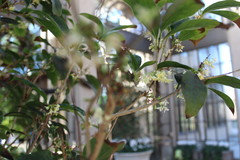
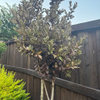
    Here is Tea Olive today in a Chester Co., PA,, conservatory. While the flowers perfume the whole building the plant does not really look very happy.