Software
Houzz Logo Print
wantonamara

Rudely Removed Quercus

9 years ago
last modified: 9 years ago
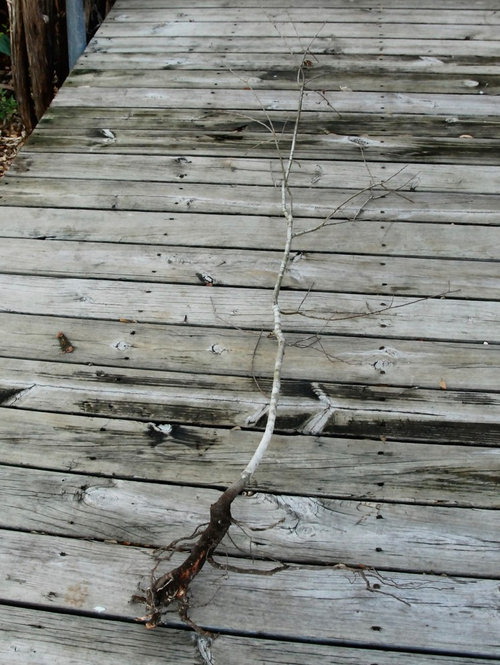
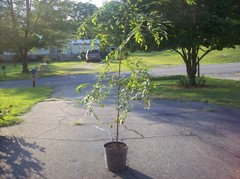
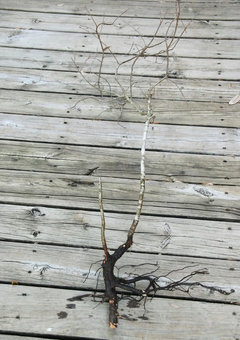
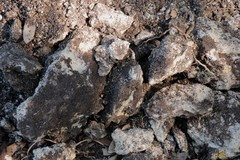
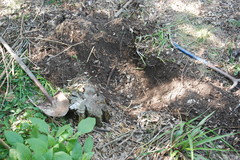
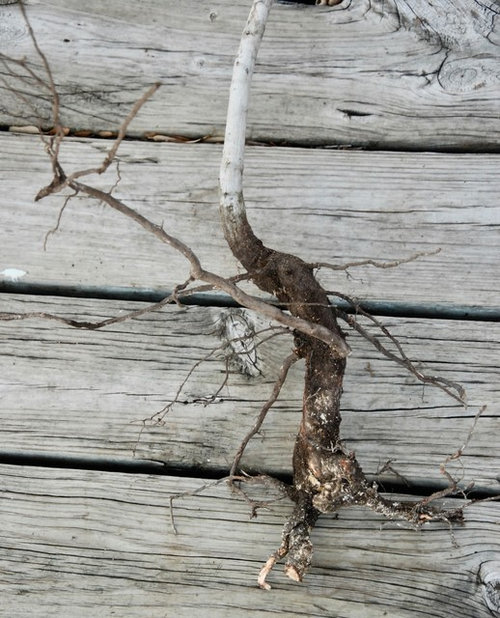
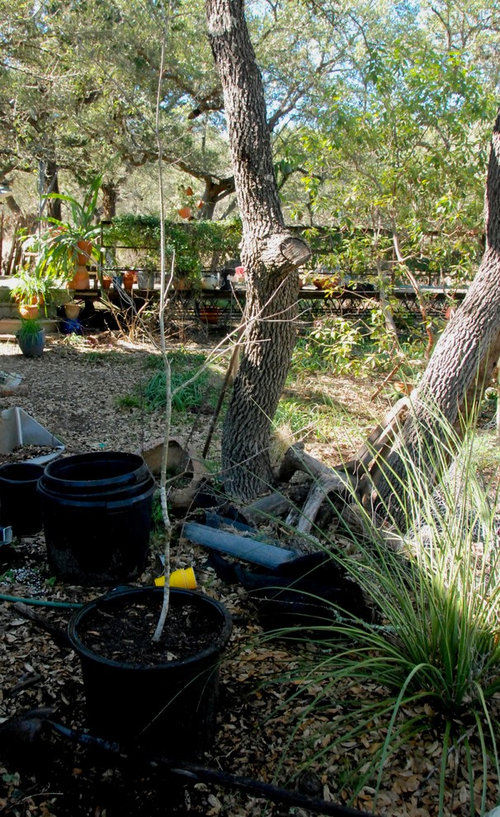
OK, I rudely removed a Quercus buckleyi out of very difficult soil. I tried to be as sweetly polite and gentle as possible., but the soil is full of limestone marl It is also quite late for doing this in Texas.. NO leaves as of yet, but we try to do our tree work as early in the fall as possible. My back and work schedule got in my way. This was low on the priority list.... also high on the fear of moving tree list. I got as much as I could get. Also it was growing close to things that I did not want to disturb. I am even wondering if this is going to live. I did put it in a 15 gallon pot full of the top soil / potting soil/ expanded shale mix . Should I trim the tree back . It is 80" from the flare to the tip. Is there something that you recommend d to drench it with to help with the transplant shock. My thought is to keep it in the pot by the water hose in the shade for this summer and plant it out in late October once the ground has cooled down. Any thoughts......I am on shakey ground here,...actually rubbly ground. I am good at cutting trees down and trimming them. What would you improve the soil with . I live in alkaline limestone soil. This is new territory for me. Here are some pictures.

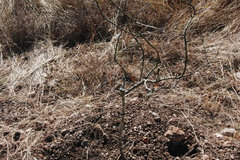
This was all I could pry out from the rock. Is there any hope that this will live?

Here it is potted up. My feeling is that I had the supplies and spare pot, so why not throw the dice and hope for the best. I did the digging with knowing that I could always toss it.

Comments (24)

  • 9 years ago

    i have gotten worse looking trees in the mail ... lol ...


    err towards dryish.. with your peaty media ...


    i would have snipped clean the broken roots ...


    live and learn.. you and the tree ...


    i cant figure out what the thing is.. thats points to 10 oclock ... root or branch.. if broken.. remove ... i think i id'd it in the first pic ...


    ken

  • 9 years ago

    you seem to know what the odds are. it cost you more in time to take the pics and create the post, the pot and materials you simply had on hand. at this point, it'll grow or not, all you can do is provide some water, some shade (when it gets warmer, and see what happens. if it makes it, ok, if not, well, you don't sound too optimistic yourself.

    as far as timing, dormant is fine. spring is actually better for certain oaks than fall...I just don't have enough direct experience w/ Q. buckleyi to know.

  • 9 years ago

    Digging trees out of this dirt was not the easiest thing for me. The pics were easy and quick. a great excuse for another cup of coffee. It is not that I am pessimistic. It is just that I don't know how much a root system a tree of this size needs and how much abuse it can sustain and not give me the finger during its demise. I have never moved a tree. Should I go and buy some of that Vitamin B something that I see recommended for transplant shock?. Should I uproot i and clip the roots back or should I call it a deed done and complete? This red Oak grows from herein Central Texas on the Edwards Plateau west in to New Mexico so it does like dry and rocky.

    Ken, that was a root and it was not broken , just a weird angle.Actually the mix very little potting soil. Maybe 1/4 or less, mostly the topsoil which is humous from live oak and limestone topsoil that looks like a loam and some gravel..

  • 9 years ago

    I've dug out some worse looking transplants than that, usually while they're leafed out. Some I have gotten just 5-6 inches on the roots..... like this weeping goose plum below:

    Not to mention countless other trees, in which some cases survived and some did not. However, the one you see above did live (surprisingly) but did die back near the ground. It re-sprouted and I expect it to grow rapidly this year, especially after I planted it in the ground.

  • 9 years ago
    last modified: 9 years ago
    Logan, That is what I want to hear to give me hope and keep me watering it through the next 9 months. Did you fertilize them. and with what? I have one more tree that is in the wrong place. I have a bridge that spans two buildings and it is a great place to see sunsets and those dramatic Texas storms blowing in. They would be view stoppers when they got larger. This type of oak is good at growing back from roots in the wild when they suffer dieback.

  • 9 years ago

    No fertilizer. It's generally a bad idea to fertilize trees (especially new transplants) because it makes the tree focus on production of branches and foliage instead of roots. This tree needs roots, and chances are, if it does live it will re-sprout from the ground, or it will have really small leaves for the first year or two.

  • 9 years ago

    This is good info. When it does go into the ground it will be going into the wild , not a garden, so I do not want to spoil this tree. It will get water to establish the first year , but after that it will be on its own most likely. I like to protect these trees because they are becoming endangered around me due to deer chowing down on them.

  • 9 years ago

    I would say watering for the first year routine (depending on rain and temperature) and then water the second year on an as-needed basis. I assume by "the wild" you mean in the woods, which will benefit the tree by giving it shade. See the article below on planting and skip steps 2 and 3. Also, plant it now, as soon as possible. Immediately after I dig a tree (dormant or not) I tend to put them in a bucket of water until I can get it into a container or planted in the ground, usually no more than 2-3 days. If the roots have any chance to dry, your tree has less chance of success. I recently dug up a prunus serotina (black cherry) and it sat in a 5 gallon bucket of water for two days. Now it is in a container and I can see it forming buds. Whether it lives or not, time will tell.

    ==>>>https://plumtreetrading.blogspot.com/2016/08/planting-potted-stock-trees-shrubs.html

  • 9 years ago
    last modified: 9 years ago
    I planted it in a pot already to get some more roots and I will plant it in the wild in November when it is a healthier tree. It will be going into a area in the rocky gorge OR in an area closer to the house, but still nothing gets pampering around here. I live on rainwater so their is no irrigation after establishing. So you say two years. I went to a seminar/workshop at Bamberger Ranch and they suggested digging a square hole so the roots get stuck in a corner and "break through" into the native soil. They also say 10 gallons once a week during heat and dry times OR if it is really fast draining to do 5 gallons twice a week. This is the part where I fail. Carrying all that water during the hot dry Texas summer gets me forgetting trees that I planted. They get to be invisible out in the woods..

  • 9 years ago

    Sounds like a good plan. I don't have irrigation either, and I have to water everything by hand so I try not to plant too much at one time. Watering depends on how fast your soil drains and the amount of rainfall. Insert your finger into the soil, and see if it is moist. If so, it doesn't need water. A technique I use so I don't forget about things is to tie a brightly-colored ribbon around the tree.

  • 9 years ago

    I have 17 acres of dense cedar brake so the pretty pink ribbon could be out-a-sight and out of mind. I tried the surveyors flags on wire stakes and they fade in the Texas sun. I found that out. I am only doing 4 trees this summer. It will still be in the pot by the shop , it won't get in the ground this summer. Our summers could be 12" of rain in one night and then nothing for 5 months and then another flood event. That is what the summers have looked like lately. WE end up with burnt cinders and huge cracks in the ground and then everything goes from grey to green in September or October. We had 4 months of not a drop in the summer and still came in at almost 20" over our norm pf 35" Normal is way below 35" and then we have a bumper year like last 2 years that bump the curb up . Most years is in the mid 20's. If we get into a dry year it will be 11" - 19".

  • 9 years ago

    Well, then the watering method should work, assuming you remember to do it. Do you have a windows computer (windows 7 or 10) that you use frequently? Or do you have google calendar? If so you could use windows sticky notes on your desktop, or set up google calendar reminders.

  • 9 years ago

    Rule of thumb for root systems is, for every onch of trunk caliper at 6 inches above ground, 10-12 inch of root diameter.


    That's the approved answer, the safe answer. If you were to do this for a living, that's what you'd want. In terms of will this specific tree make it, there is only one way to find out.


    There are times i should just bow out.


    Fertilizer is, in my opinion, up to you. I can think of one specific situation in which you do not fertilize, and that is dry, and other situations in which fertilizer is often unnecessary or generally inefficiently applied. This is not one of those. I'm a proponent of root stimulator. Few others here are.


    Is this an important tree to you? Or is it just a tree you'd like to save, if you can?

  • 9 years ago
    last modified: 9 years ago

    I recently moved a Quercus X procera and even though I have a FEL on my Kubota BX tractor, I could not quite get the leverage I usually do when attempting this maneuver*, and it ended up being ripped out in a similar way. That was two falls ago. It is doing fine. As Logan said, don't fertilize the first year after doing this. The reason it had a deep root in the first place was to extract moisture AND nutrients out of the adjacent soil - by the fact it now has physical mass, those nutrients must exist in sufficient quantity within that physical mass to support it. Let them support it its first year, while the root system rebuilds itself. (OTOH you are certainly going to have to keep an eye on it with watering! And yes, I suspect this comment could trigger a certain board regular, but so be it.)

    * although it is obviously not a tree spade, there is a way you can partially dig out the tree - it still takes a heck of a lot of work - by creating channels to match the width of the bucket on either side of the tree. Then, use the lip of the bucket to undercut the root mass. It works best if you have 360 degrees of access around the plant, because you can do it on two sides. Ultimately it scoops out very well if all goes as planned. Have used it on a 7' Abies firma and a 8' Citrus/poncirus hybrid, and both moved successfully. The Quercus X procera had already rooted so deeply, and I didn't have full 360 degree access, so the main 1 inch feeder root just ended up getting snapped.

  • 9 years ago

    I have a hole shooter, regular spade reciprocating saw, a couple of picks and adzes and a hoori hori knife. NO tractors, with buckets. Only bucket I have is a 5 gallon plastic thing.

  • 9 years ago
    last modified: 9 years ago

    I should further clarify I have a bucket and detachable pallet "forks" which you can buy as a non-Kubota aftermarket part. Terribly useful thing to have - I have now had several things delivered to my house on a pallet and it worked out fine. On a small tractor like mine the weight limit might only be 500 or so, but that's usually enough. I use the bucket for the actual scoping/lifting, and sometimes use the pallet tongs (what I call them!) to help with the last part of the digging. It's surprising someone hasn't made a full-on attachable tree spade for Kubotas, though it might make more sense to make it for the bigger B or L series tractors.

    Oaks are probably some of the worse plants for the technique I talked about. They seem to form deep roots very early on. I have done it with two rhododendrons so far and it worked like a charm because of their tight, fibrous root system. It holds together when you rip upwards from one side.

  • 9 years ago

    Yeah, rhododendrons transplant pretty easily with surprisingly minimal care.

  • 9 years ago

    I got an oak seedling with about the same amount of roots from Arbor day several years ago, I'm not kidding. It didn't live, needless to say. I hope they've trained whomever digs there seedlings up since then, it's been about a decade since then.

  • 9 years ago

    Lol poaky. I just got some bare-root trees from the missouri conservation department and they had very good root systems. I do however think "seedling" is a bit of an understatement. They are big enough to plant in the ground already.

  • 9 years ago
    last modified: 9 years ago

    OK, I have tree number two. This one was growing up next to and some of it inside a 12 year old Anisacanthus quadrifidus var wrightii , their roots fairly intertwined. Actually the oak did not have many roots on that side. I had to move both. The anisicanthus wasn't blooming too much anymore because theLive Oak had shaded it out through the years, Here is tree #2 after extraction. Big question is , Do I cut off the secondary trunk that was nipped when I nipped all the branches on the Flame acanthus. It was a mistake. Should I take it off at the joint? My instinct is too cut.

    I went down as low as I could go . This is what I was chiseling out around the roots. I swear at this shizz . At least it isn't the super hard stuff that sends sparks. Just MARL. I have named my inner byatch "Marl". Since my name is Mara, it is only a change of one letter.

    Oh , there was an old cedar stump right next to it with roots.

  • 9 years ago
    last modified: 9 years ago

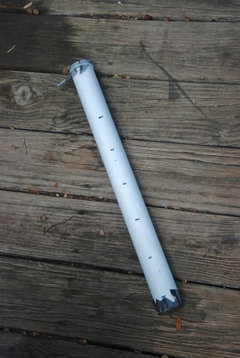
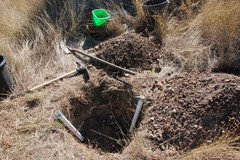
    OK, the second smaller one lived through the summer, but the first one did not. The small one's leaves were eaten by some caterpillars before I sprayed it with BT but it is alive and growing a few new leaves just intime to loose them.. I just planted it out away from hose reach. I have been reading "Gardening With Less Water" by David Bainbridge" and he recommended Deep Piping. I am in Texas that has gotten extreme droughts and we are looking at back to back La Niñas (true not strong ones). I am on a sloping terrain so I am going to add some drilled pipes to the digging hole. These are 20" long with 1/8" holes drilled on one side. I did pick a spot where some dirt from a septic system dug in adobe clay and some dirt from the house being dug into a limestone hill was dumped and leveled. It made the digging of an 18" hole possible. I normally have 2" of topsoil on top of marl and then a solid shelf of limestone.. The pipes should get the water deep into the ground. It has been a dry fall after the hurricane.

    I was recommended straight square holes by a land restorer at Selah ranch. He said that root would be less likely to do the strangling round round. They would get stuck in a corner and bust on through to our inhospitable his country cr@p ( I say affectionately). We will see.

    the two rocks are on top of the pipe ends. I still need to gather together a bunch of leaf mulch to op dress it with. AND a cage to keep the deer off of it.

    I am now digging wholes in an area of no top soil to plant a small red bud and it got a 16" long pipe and I had to calk in the top hole due to not being able to reach depth. That was tough digging. I have also planted a Carolina buckthorn , wafer ash and Anacho Orchid trees in this manner on this Thanksgiving weekend.

  • 9 years ago

    Wantonamara, 20" watering pipes and straight-sided square holes sure seem to defy the related science.

  • 9 years ago

    This is how I was told to do it in the rocky soil that I have. Believe me, I am not happy about the depth of the hole to accommodate the pipe. Its a real pain.. I have dug the straight sided holes on other trees and they have done well. The pipe is new to me. It really does help get the water down deep. We are drying up down here. We often only get 15" of rain a year. Last few years have been wet, that means dry is on the way.

    I have been using THIS BOOK to design systems around my place . I am using a lot of ollas and closed caption systems in my garden and they have worked wonderfully.. I am now trying to use the recommended deep piping . The guy is not an idiot, PHD from Un Cal Davis and many years doing arid land brush restoration. I was trained about the Square straight sided holes, working on a 5500 acre Ranch of upland limestone hills. I am sorry that it is different from how you do it. Central Texas is more like mountains of Eastern Arizona than it is like Tennessee.. I am not making this up....... I have decided to shorten the pipes to 16".

    I hope I am on the right track, doing what is written in a book..