Software
Houzz Logo Print
biondanonima

Help killing grass/establishing ground cover on steep slope

I have a steep slope (actually two slopes, separated by a small flat area) in our new backyard that are currently planted with a mixture of grass and weeds. The slopes are far too steep to walk on or mow, so the grass is a huge PITA to trim (my husband has been using a weedwhacker to keep it somewhat under control but that will become a nightmare in the summer).

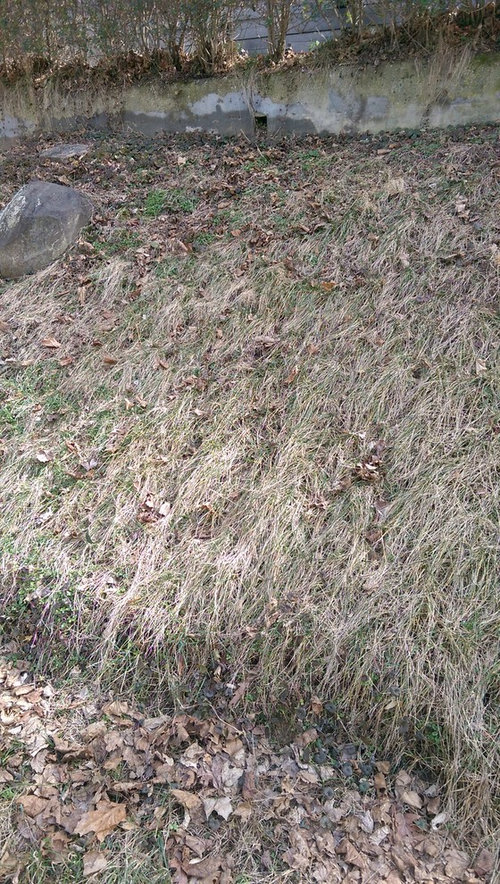
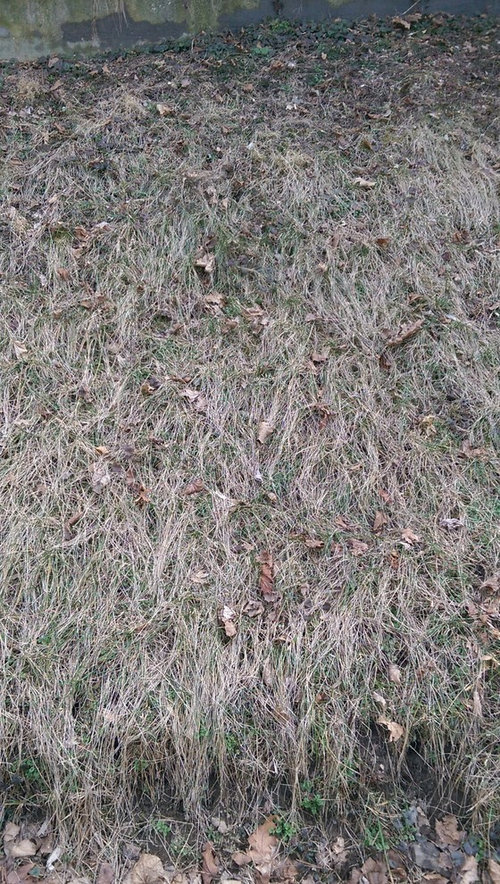
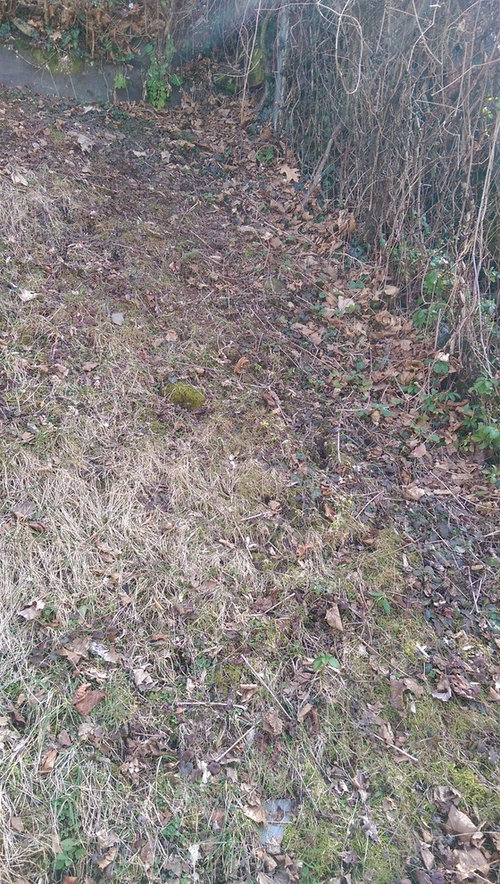
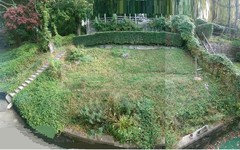
Anyway, I would like to plant a low-profile, low maintenance, shade-friendly, erosion-preventing, evergreen groundcover on most of the slope, and I have more or less settled on vinca minor as the best option. The question is: how to start? I don't want to smother all of the grass only to have the hillside erode while the vinca is getting established, but I'm also not sure that the vinca will thrive in competition with the grass. Is this the sort of thing that should be done in sections? Top of the hill to bottom, or vice versa? Or start with patches that are already bare and go from there? Here are some photos of the slope in question - thanks in advance for your guidance!

Comments (14)

  • 9 years ago

    Just bumping - any thoughts? Thanks!

  • 9 years ago

    I would probably start with patches that are already bare, given that you don't want them to erode further. You can anchor burlap on the newly planted areas to reduce erosion while the plants fill in. If you want to use vinca, you might also mingle in some sweet woodruff. The vinca's purple blooms look gorgeous with the woodruff's fluffy white flowers.

    biondanonima (Zone 7a Hudson Valley) thanked Deb
  • 9 years ago

    Thanks Deb! I found an older thread where someone else had this same issue and it sounds like killing the grass first is wise, simply because it will grow through the vinca and their root systems will intermingle if you don't. Still, I can start with bare patches while I'm killing the grass elsewhere. I appreciate the sweet woodruff suggestion, too - what a lovely plant! I was considering using a few different varieties of vinca for some variety but the woodruff would be nice too.

  • 9 years ago

    To keep the grass from encroaching on your bare spots while you're killing grass nearby, you could install cheap polyurethane edging around the spots if you thought the spots were large enough to warrant it.

  • 9 years ago
    last modified: 9 years ago

    Depending on time and energy I would first kill either all the grass or one chunk of grass (top to bottom starting at one end.) A few days after spraying with glyphosate, water well and leave for a couple of weeks to see if anything else sprouts. If it does, hit it again with glyphosate. Give it a few more days so the grass gets baked dead, spread with mulch so that any weed seeds don't sprout, and then start planting the vinca. It's a whole lot easier to plant through the mulch than to mulch around already planted things. Instead of trying to plant some vinca in spots while you wait for grass to die, I would probably spend the time installing edging along the bottom of the slope with a wide mowing strip of brick or patio block at ground level on the side that will become vinca. This will prevent new grass from creeping into the newly created bed

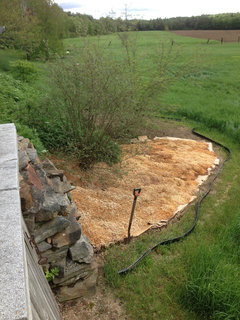
    Grass dead, first part of mulch spread, getting ready to install edging.

    Close up of installed patio block with black poly edging just visible in the lower right. Sunk so only the rolled top is visible, it is soon hidden by the grass. To mow, run the mower's wheels on the mowing strip, no edging needed. A wide mowing strip is needed with vinca IME; where I have vinca and only a single brick mowing strip, it quickly crawls over the brick and roots into the lawn.

  • 9 years ago

    NHBabs, thank you for the photo - it's very helpful to see a visual! Let me show you what I'm dealing with as far as the entire yard is concerned:

    Not sure if it's entirely clear, but the yard is actually comprised of two slopes, divided by a flat area (that old post and beige rock on the far right are in the middle of the flat area, which is about 6-8' wide). Each of the sloped areas is about 10' and the angle is quite steep. The top slope is fairly evenly angled but the bottom one has a sharp drop off about two feet above the retaining wall. This creates a good bit of flat space behind the wall, where I am planning to plant herbs and peppers (the kitchen opens right out to the back to this area, so this will be very convenient). I am going to rip out that bed of pachysandra in the lower left corner and all of the plantings in the center to create as much space as possible for edibles. The elderberries I mentioned on the other thread could maybe go on the flat area, but I am planning to plant a dwarf cherry there, which I think will eventually dominate the area. I think I'm just going to put all of my berries (raspberry, blackberry, blueberry and elderberry) in pots for now, then transplant all but the blueberries once I have a better grasp of the sun patterns, etc.

    Anyway, I think we might as well just kill all the grass in one go, mulch and then start with the vinca. It sounds like the grass' root system will keep the topsoil in place even when the grass is dead, and hopefully a fine/shreddy mulch will stay put long enough for the vinca to get going. I really appreciate your advice on this technique!

  • 9 years ago

    I am dealing with the exact situation as yours (two grassy slopes interrupted by a flat area) and also in the Hudson Valley. I am doing it in sections, but to kill the grass I've been laying lots of newspaper topped with wood chips. Despite the steepness and heavy rains, the chips have not migrated very much. My first task was laying out a path and installing some steps where needed. I have planted heather and some low shrubs in the mulched section (no proble to cut lift up newspaper and put back down. I may follow NHBabs' method for a section where I will plant many small groundcover plants.

  • 9 years ago

    Thanks kitasei - it's nice to know I'm not the only one! Good to hear the newspaper and mulch is working for you, too. I may try that on a section and just see how it goes - if it slides off the slope I can always clean up and start over!

  • 9 years ago

    Before using glysophate, please do a search for glysophate toxicity. It's been linked to cancer, autism, chronic diseases. The woodchip on newspaper (or corregated cardboard) is a much safer way. Another way is to cover the grass with black plastic or epdm (like pond liner). Wait a couple weeks. The grass will die and you can plant the ground cover. The roots will still be there to hold back erosion. If you have kids, pets, or generally care about the environment, try the chip or plastic method.

  • 9 years ago

    kitasei - What did you use for your path and steps? Any photos?

  • 9 years ago

    I used a hose to lay out the switchback path, adjusting it after walking it multiple times to find the most natural and comfortable (flattest) route. Then I did a cut- and-fill operation with a shovel and heavy boots to tamp down a flat path. Where it was steep, I used large flat stones levelled with sand to create steps. As of now, it is all pretty much grass just like the slope. I like the look - a trodden path through a meadow. I have started planting thymes and other creeping perennials around the step areas, and will eventually convert the grass to either chips or gravel as I replace the grass with plantings. It's a work in progress.

  • 9 years ago

    So now that spring is here, I've discovered that a good bit of this area is covered with glechoma hedera, or creeping Charlie. I actually like the look of it, and the bees seem to love it, so I'm perfectly happy to let it do some of the groundcovering work. Would I be crazy to plant vinca along with it and let them duke it out a bit? In my mind's eye, they look pretty together, although I haven't been able to find any photos to back me up. ;)

    I think we're going to do a little grass killing this weekend. DH isn't thrilled with the idea of leaving the yard covered with plastic for weeks, so we've got Roundup at the ready.

  • 7 years ago
    last modified: 7 years ago

    With regard to glyphosate, I use it where needed, but not otherwise. In the bed shown above, there was rough rhizomatous field grass, not lawn, and it isn’t discouraged by mulch and wasn’t completely killed after a full season of west facing sun under plastic. Hence herbicide. I do wear protective gear and either paint it on or do a larger droplet size to reduce migration. I also paint it on invasives since I have 200 acres and cannot hand weed fast enough so it is one of many tools I use.. The organic farm next door does no invasive control of any sort so I am finding my burden is increasing.

Sponsored