Software
Houzz Logo Print
davessels

Does anyone grow fastigiate fastigiata boxwood?

9 years ago
last modified: 9 years ago
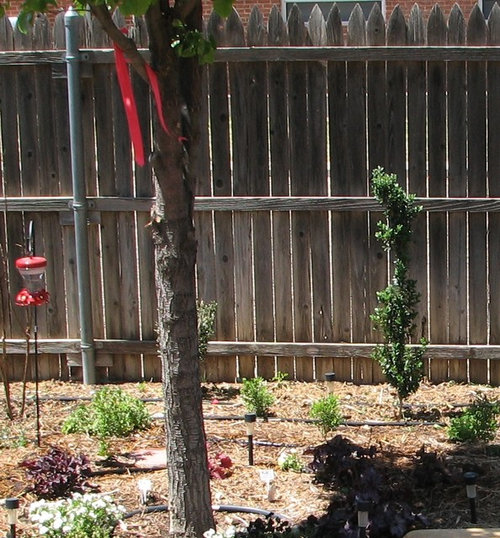
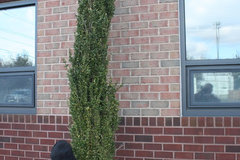
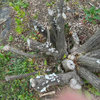
I planted this in 2014. It was 3' tall when planted, although it is now over 6' tall it is very spindly, and needs to be staked. We had a harsh Ice storm this winter, so it is looking a little rough. I would like to trim it up to make it a little fuller. I am a little unsure of how to go about this. Should I top it off and trim the longer braches?


Any suggestions would be great!

Comments (21)

  • 9 years ago
    last modified: 9 years ago
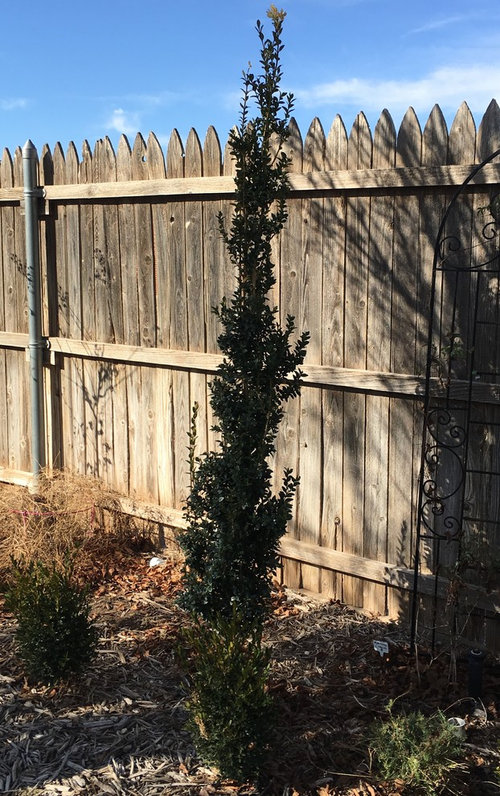
    Looks like it's doing what it was supposed to - maybe it's just not suitable for the complete climate situation there. You could try cutting it back but then after it recovers from that it will resume following its genetic blueprint. Unless you keep shearing it, over and over, resulting in it becoming a sort of small architectural element rather than an informal landscape feature.

    Another variable is Boxwood Blight is now making the rounds in the US. You might want to see if there are any reports of it in Texas at this point - it is a spoiling condition.

  • 9 years ago

    Thank you for the reply. The plant is very healthy, just a little winter bronzing. I will check on the blight. I found a good web site, landscape advisor, and Roger told me exactly what to do to make it a little fuller. It was what I thought, I just needed confirmation that I wasn't going to harm it. Just a little hand pruning and that will encourage some new growth. I love the informal shape, that is why I purchased it, plus another one last year. The fact that it is in part shade contributes to the spindly look.

  • 9 years ago

    When you trim it see if you can root the cuttings. They root rather easily.

    Debra Vessels thanked Mike McGarvey
  • 9 years ago
    last modified: 9 years ago

    Just a little hand pruning and that will encourage some new growth

    You will temporarily get different growth in response to the pruning, and not more growth. Any time a bigger plant top is desired cutting it back is counterproductive, as not only does that immediately make the top smaller but it results in a slowed rate of increase afterward.

    Until the plant restores the top size it had before the pruning. This is because leaves make food which is stored in the stems, used to fuel new top growth.

    The idea that cutting a woody plant back makes it grow faster is a misapprehension based on the vigor of replacement shoots generated by a specimen trying to replace the top it had before the pruning. Hard pruning actually reduces how quickly the entire top gets bigger, until the plant recovers its previous volume.

  • 9 years ago

    I would cut it in half with no regret. You're over-complicating things. It won't hurt it, I see this often with these and 'Sky Pencil' holly. Doesn't hurt them.

  • 9 years ago

    If you are talking about horizontal topping cuts half way up that will encourage forking and broadening of fastigiate forms that may already be subject to falling open or splitting, particularly under the weight of snow. And why buy a skinny growing plant and then try to make it wider?

  • 9 years ago

    "And why buy a skinny growing plant and then try to make it wider?"

    I would much rather see a slightly wider shrub than one that flops over in the wind and rain. If it snowed right now it would probably snap.

    Debra Vessels thanked Logan L Johnson
  • 9 years ago
    last modified: 9 years ago

    In which case, Logan, you wouldn't have planted a more expensive fastigiate form in the first place. And the plant in question has already survived an ice storm so is unlikely to snap in snow.

    Debra Vessels thanked floral_uk z.8/9 SW UK
  • 9 years ago


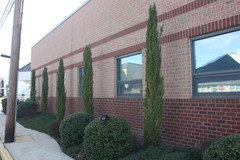
    Here is a well-placed group of boxwood beside a professional building in Maryland. They've been there maybe 10 years. They are somewhat protected by the building. Morning shade, afternoon sun.


  • 9 years ago

    I have seen them planted before, but they snap or fall over if not pruned or banded together. I, personally, would take 1ft of growth off of them. It really depends on the look you are going for, and the climate (or in this case microclimate) that the plant is growing in. These are protected by the building so damage from the weather and splitting may not be such a problem.

  • 9 years ago

    I grow a columnar and I would not touch yours. Its doing what its supposed to. they are on the slow side of growing. They also fill up with time. don't touch it except to remove a dead branch, you know, cosmetics.

  • 9 years ago
    last modified: 9 years ago

    Well placed is debatable as the overly simple shape of the building is emphasized by the single row of evenly spaced exclamation mark box rather than softened by them. And except for the formal shearing of the one intermediate height kind the rest of the planting is comparatively informal, resulting in a thematic conflict within the same planting.

    Topping the box spires would have no useful purpose that I can think of. As is often the case with fastigiate variants there is already some bending out of side branches taking place. Topping of trees and shrubs in general amounts at first to an immediately deforming assault on the specimen, followed by a later outcome that tends to include a permanently altered branching structure.

  • 9 years ago

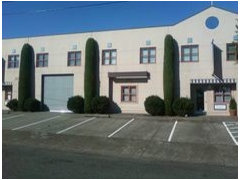
    Here are some really well-placed group plantings

  • 9 years ago

    Is that a men's club?

  • 9 years ago

    I think you're right, Embo.

  • 9 years ago

    OP said of her plant: The fact that it is in part shade contributes to the spindly look. I can agree with that.

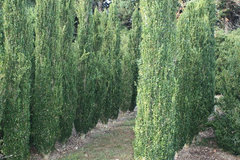
    Below 'Graham Blandy' box are seen in a display from the Blandy Farm. So far they've escaped the problems that Buxus sempervirens in my area are plagued with.

  • 9 years ago

    No men's club, landscaper unaware of his incompetence ;-)

  • 9 years ago

    "No men's club, landscaper unaware of his incompetence ;-)"

    Or both

  • 9 years ago

    That would be my guess. :-)

  • 9 years ago

    Mike,

    "When you trim it see if you can root the cuttings. They root rather easily."

    So sorry I missed this comment, or I would of tried rooting them. The fastigiate has had 12" cut off the top, and a little vertical hand pruning to even it up a bit. It has lovely new growth coming out all over it, so I am happy. Thanks