Software
Houzz Logo Print
ariel7576

Crappy Germination Success Rate

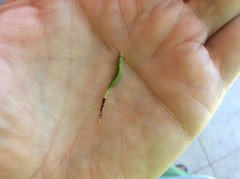
Of the 15 obesum seeds I sowed on 10 February, only 1 sprouted (unfortunately, it wasn't Pantiporn, but Chanjo looks interesting). For 10 or so days, it has done nothing. Once it stood upright, it has been as if frozen in time. The seed coat is still there. I'm somewhat afraid to help it slide off. I still have it covered & I spray a few times a day. It is out on the balcony all day for sun, and then inside on a DVR at night in case the temps drop below 70F.

I don't remember such a stock-still period from previous successful germinations. What's your advice? Stop being so impatient? Maybe start watering with Dyna-Gro?

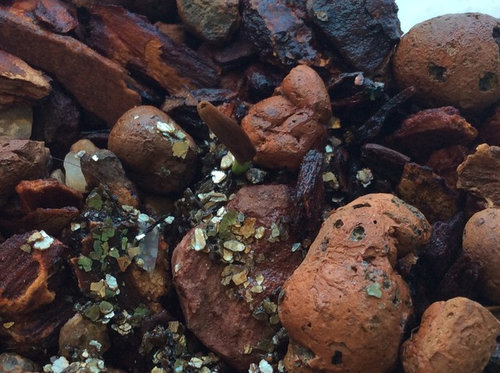
I know the size of the particles in my mix is too large. Gritty mix ingredients are not easy to come by here, so I'm experimenting with what I'm able to procure.


Comments (11)

  • 9 years ago

    Your suggestion that some seeds fell below the boulders is a good one, but I examined each seed &, when nothing happened, I did sort of a post-mortem. A couple were mushy mess, a few somehow dried out completely, and a few just did nothing. I probably should have left those that did nothing but I'd pried away the coat. Everything was on the surface of the media. I sprinkled some vermiculite on top, but I accounted for all of the seeds. I suspect I may have been overzealous in my spritzing, leading to rot, but I was trying to compensate for larger particles. Or, the seeds were not great, except my lone survivor. I had much better luck in the mid-Atlantic (of the US--Annapolis, not Bermuda!) and Miami. The climate here is not drastically different from that in Miami, so I didn't expect this much adjustment. But when one can't obtain the supplies to which one is accustomed, difficulties rise.

    I do not presently have any seeds left. KO & Rinoa both say that they can ship to Mexico successfully (customs officials are tetchy here!), so I'm going to place a few orders soon. I think I may wait until the night time lows are reliably above 70F/21C (they can sometimes dip into the upper 60s), so I don't have to bring anything inside to sit on DVRs.

    Gritty mix supplies are not available here. I can get reptibark. I can get gravel. Turface seems impossible. I used expanded clay instead. So, I may try germination in a more traditional (dirt) mix. Maria Elena gets good results in seed starter mix. I've yet to find that (the Home Depot here is limited & the grocery/department stores tend to stick all-purpose mixes) here, but I'm going to visit a few nurseries as well. And I should make an effort to stop insisting that practices that served me well enough in different locales will work here.

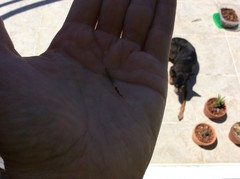
    Any thoughts on the one little guy in the pics above that did germinate? It has been in suspended animation for 10 days or so. I spritz him to keep his seed coat from drying out, so it will be easier to shed. Start fertilising? Stop covering? I want to take him out of the tray & put him into a yoghurt-cup-size container, but I have been thinking I should wait for the seed coat to shed first.

  • 9 years ago

    I appreciated that sometimes we just have to work with what we can obtain, as obviously you have done here.

    Vermiculite has a tendency to absorb and hold onto water, so that could have compounded your spritzing forays and caused some to rot. As mentioned above, I personally wouldn't start to fertilise it yet, it needs to grow and get established first. A yoghurt pot would be ideal, making sure it has drainage holes of course! How about sieving some reptibark and using the small to medium pieces according to their size, mixing with some same sized gravel and a small amount of general purpose potting mix for a more seed friendly mix? That could work. When I said you could put it into some ordinary soil, I should have said potting mix, as soil to me suggests garden soil or dirt as is often used here. Dirt to us in the UK is sweepings up, rubbish etc that is useless and gets thrown away! All very confusing! The seed coat should come off if it's moist, and remember there's also a transparent one underneath that sometimes doesn't come away with the brown one and gets really stuck on!

  • 9 years ago

    The cover can come off as prolonged humidity can also promote rotting. I do it at once, not gradually over a day or so, but that's just me:-)

  • 9 years ago

    Just pull? Hold the caudex so I don't yank it out completely & pull the seed coat?

  • 9 years ago

    Well, he's bald now, but I pulled him out. So into yoghurt cup he goes. :)

  • 9 years ago

    Thanks for all of your suggestions! By dirt, I meant potting mix. Given the daily rain that will start in May, I do think amending a potting mix will be necessary, as you suggested.

  • 9 years ago

    Ariel,

    Sorry to see you 've experienced such meager germination. We've all been there ... Experience always proves to be the best teacher.

    Whatever soil you use next, make sure it's loose and airy (not hard & clumpy) when dry. Why not just use cactus soil mixed with perlite? I imagine it's readily available. If not, just mix 3 parts potting soil, 2 parts perlite, 1 part course construction sand (arena de rio), which contains no salt ... do not use beach sand. Seedlings love water, just not standing water, so all you have to look for is something quick draining, not heavy.

    I move my little seedlings to the small square yogurt cups at age 1 month. The height allows perfect space for downward root expansion. This is also the time to begin to fertilize them at 1/4 strength. They remain in the yogurt cups until they're 3-4 months old, then on to 4" pots.

    I'm happy to see you'e successfully removed the seed cover without damaging the critical apex. For future reference, you don't need to keep the seed hull moist ... it's the seed that needs to remain moist, yet not soggy. As the seed swells and expands, the seed hull rips open, like paper.

    When I germinate in cactus soil, the seeds emerge (for the most part) without the hull attached. I believe it's the heavy grit of the construction sand ... They are left behind in the soil.

    You have the right idea. Sow your seeds when you have sunny 85ºF daytime temps and 78ºF overnight temps. You can sow in direct sunlight. The warmth of the sun actually helps germination. Just don't let the seedlings dry out. I water mine with the hose set to fine mist 3-4 times a day. To be safe, bring them in the first month to protect from winds & rains, low overnight temps, and pests (birds, cats).

    KO has some fabulous seeds right now. He always sends 15, not 10 as listed. I know we'll see more of you and your marvelous desert roses in summers to come. In the meantime, please keep us updated on Junior, there.

    Maria Elena

    ariel7576 (Puerto Vallarta, Mex.) thanked Maria Elena (Caribbean - USDA Zone 13a)
  • 9 years ago

    I'm able to get perlite here, but it is kind of fine. There's plenty of tezontle (volcanic rock), so maybe I can find some small enough. Most of what I've seen so far is big chunks.

    At least my orchids are happy. :)

  • 9 years ago

    I don't like the look of that root, it looks dark and makes me wonder if it is also going down the dreaded Road to Rot, I certainly hope not. Keep goin lil fellah!

  • 9 years ago

    We'll see. I hope not. I kind of think it is discoloured a bit from the reptibark & hydroton. When I would shake water out of the holes in the trays, it would be brownish, as it can get when one soaks reptibark. The root tip is white.

    When I put him in the yoghurt cup, I used the smallest bark chunks & hydroton balls I had.

    Hopefully he makes it. If not, it has been a learning experience. :)