Software
Houzz Logo Print
ml12321

groundcovers.. advice

9 years ago

When we bought our house a year and a half ago, we cleared out a (completely untouched for 25 years) large wooded area in the back of the house that goes down to a street. The area was full of invasive figs and out of control morning glory. As we were digging out the morning glory roots that were buried under 3-4 feet of pine mulch ...we apparently drove out rats from their burrows ....this from the city as they were getting horrified calls from homeowners across the street that is behind our house who were watching the rats leave in droves. ( Which explained why we saw so many hawks and owls around our house that first year) .
So now we have oaks, pines and some figs left back there and we have planted toyon and some arborus ceanonthus. Is there a ground cover that will definitely NOT attract rodents?

Comments (26)

  • 9 years ago

    I've read they don't like mint. But mint is very invasive and will be everywhere and takeover.

    Maybe some thyme that stays only an inch tall. No hiding places in it.

    m ml thanked gobluedjm 9/18 CA
  • 9 years ago

    Mml mml, how awful you must have been terrified! I have 2 types of beautiful ceanothus groundcover but they seem to attract bunnies, and perhaps rodents if the holes around them are any indication. So this year I am experimenting with shrub type manzanitas and sages. I've been reading about the "meadow mice" and it seems they like our weedy still undeveloped grassy area but also deep mulch attracts them. Due to our snakes I didn't want too thick a cover. Would a sage type groundcover be an option?

  • 9 years ago

    Thank you both.


    5Birdy not terrified, just blissful ignorance - as no signs of them in our house and the wooded area is behind a fence - I didn't learn of the rat exodus until I was told about it by a city employee a year later...I would just would prefer them not to come back again.. ever.

    I could do a hummingbird sage - despite the pruning and removal of many invasives / dead trees - the area is still pretty shaded. I think I need to get some advice from a professional on this one..


  • 9 years ago

    Agreed. Let us know what you decide, as I have areas which will eventually need something similar! (one of my new planted lovely groundcover hybrid sages just died - not sure why since there are 3 others thriving on same sloped hill - think it just did not get enough sun on his spot)

  • 9 years ago
    last modified: 9 years ago

    What about just mowed grass and trees? Some bushes will be less likely to host rats if they are off the ground, trimmed into a tree shrub. Arbutus and pomegranate may be good candidates for these sort of bushes. Thorny bushes, like rugosas, are unlikely to host rats. Clumps of ferns are so dense they tend to be impassible to small creatures and the rats can't really climb on them either, so that may be a good idea too.

    Basically any woody vine or dense bush against the ground is going to attract rats. You know, your typical low maintenance landscape plants.

    Light ground cover like clover, wild flowers, or violets may be an option in some spots. They are too low or provide too sparse cover for big rats to hide in (field mice may try to make their home in tall grass but I wouldn't worry about them).

  • 9 years ago

    Arbutus and pomegranate, while lovely trees, would be very attractive to fruit rats for obvious reasons.

  • 9 years ago

    Thank you for all your ideas. And to be clear, I am fine with bees and lizards, just feel like I probably try not to make this place so hospitable to rats going forward (and yeah, they creep me out a bit).

    I was hoping to just leave the trees and bushes and get a one size fits all ground-cover that works in part shade-shade and that I don't have to mow or worry about or weed after a certain period. The back wooded area has no grass currently, so don't want to add any. It's actually pretty weed free given how deep the natural pine mulch was and how thick the (now removed) morning glory roots were...

  • 9 years ago

    Keep in mind almost anything edible is going to attract the bad pests.

    Also keep in mind how steep it may be. Will you want to up/down on it trimming bushes, trees, mowing grass etc 5 years from now? You could build tiers with rocks/boulders or retaining wall block.

  • 9 years ago

    The slope is steep but not so steep as to be inaccessible and not a slide risk according to the landscape architect we hired and then fired at some point during the initial stages of drafting plans (as she was under the mistaken impression that we had money to burn). On the bright side she did tag all 10 or so oaks back there so at least we know what we can't take out or trim without a $50K fine which is what the oak laws in our new town require.

    In terms of rat fodder-food... The figs and acorns from the pines are not fully going away anytime soon otherwise the site would be too bare, Also the pines are 150 ft tall so while we had them trimmed to make them more safe taking them out completely is prohibitively expensive. We - my poor husband - have spend so way too much time on the weekends, cleaning up the dead brush and dead trees and the garbage dumped back there by the former homeowners. I am looking for a planting strategy that ultimately requires 2-3 hours a month of work, not 10 hours of cleanup work every weekend (which is what has going on for the past 6 months or so). Oh, and that doesn't need to be watered after the first year .. easy right?


  • 9 years ago

    Any plant that makes seeds or fruit, whether or not it is fruit that a human would eat, is rat-fodder. Any plant that is large enough to shelter a rodent will probably be used at some time for rodent shelter. Rodents are everywhere and there's really nothing practical that you can plant that will not be used by both cute and not-cute rodents as shelter or forage. They're just part of life. If I were you, I would look for pleasing groundcovers that are appropriate for your climate, pleasing to you in appearance, and don't require routine upkeep.

    The rats are there whether or not you see them. If they could find food and shelter under morning-glory vines, they can find food and shelter anywhere. If you plant concentrated food sources like fruit trees, you'll see rats more easily because they'll tend to collect around those food sources. If you plant less concentrated food sources (things usually not grown for human consumption), you won't see the rats. The upside is that if you lived in the city with no yard, you wouldn't see little country rats, you'd see great big city rats!

  • 9 years ago

    I can't believe this happened to someone else! We started out trying 2 different landscape pros, both highly respected architect and designer/installer. After $1500 consult time fees, didn't even have a list of plants so cut bait. (I have the blackest thumb out there and only lived in concrete condos so a big yard was overwhelming). Our lot was new construction - translates to bulldozing massacre and then weeds we never knew about making their home. Never heard of an oak fine so you are right to say that was a blessing to discover!

    Are you going to try your Theodore Payne people? I do love the look of natives that survive well for their site location. Found this interesting article regarding the rat problem:


    Growing food and rodents

    Your hard work is really really going to pay off! Yikes had NO idea ivy was such a harbor for rodents. Maybe a "rodent" expert could give you a list of plants too.

  • 9 years ago

    I am going to try the Theodore Payne folks but I am also going to give our city landscape person a call. She is actually a really knowledgeable person; she understands natives, and the natives that grow well in our area.

  • 9 years ago

    And sorry about your experience with your landscape pros. We did get something from ours - a lot of information ( of course we never used the beautiful design she put together for 1/3 of our property as the estimate was a scary number).

    The real reason we fired her is that ... despite every native plant book I read the first year saying 1) no amendments and 2) no drip, she wanted to rip out our sprinkler system, install a big drip system ( for an outrageous price) and truck in tons of new soil.... Oh yes, and she kept on insisting we needed a professional survey done ( for another$ 10K) before she would even start.. Hell. No.


  • 9 years ago

    I don't mean to laugh but it's like you were sitting at our consult table mml mml! The whole reason I decided to try natives on our own was to avoid all those "fees" for soil testing, amendment, irrigation. Dig a hole and water? Think I can handle that. (umm except in Oct before the rain ground was brick. Wait til after rain). We've certainly made learning curve mistakes and despite our black thumbs have about 60-70% success vs our usual 100% failure. Our garden is finally starting to look like something wonderful. And several that died reseeded just to keep me from despairing.

    You've found some wonderful helpful local people. I've found wonderful helpful books, online (laspilitas.com is on speed dial), and a great nursery to order from. Have you seen this funny article? Myths about California Native Plants

    m ml thanked 5birdy
  • 9 years ago

    Love this article and yup really the whole site. I want to visit their nursery someday even through I suspect that I am better off buying from T. Payne given climate similarities.

    Can you post your ground-cover? Would love to see what it looks like!

  • 9 years ago

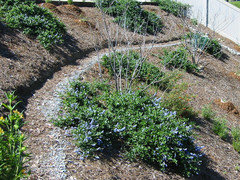
    Here's ceanothus groundcover from a complete Black Thumb new gardener (and yes I'm eligible for AARP). Posting a brief timeline so it will encourage your intense efforts.

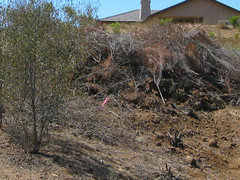
    Before Aug 2013. area is actually behind the huge debris pile

    m ml thanked 5birdy
  • 9 years ago

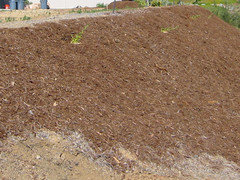
    June 2015.

  • 9 years ago

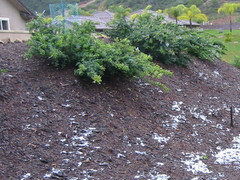
    Jan 2017. These are Joyce Coulters right before their bloom to give idea of greenery. Bunnies love to eat their tips so they are regularly trimmed. Meadow mice love the mulch hill. :(

  • 9 years ago

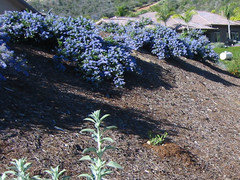
    Full bloom March 2017, and they are not even 2 years old!

  • 9 years ago
    last modified: 9 years ago

    Last one, another bank just taken with Yankee Point same age progression (have 1.5 acres so this is just the area considered groundcover). Yankees seem to like the afternoon shade. All these slopes are north facing. We have hot interior chaparral climate. Related to Joyce Coulter, but Joyce loves intense heat. Killed 2 and now trying manzanitas but I don't do anything to these plants now, not even water, just pull stray weeds.

  • 9 years ago

    Wow. These are amazing and inspiring. Thank you!


  • 9 years ago

    And I like the white sage ( I think it's white sage) in the foreground....

  • 9 years ago

    Those are lovely photos and so much prettier than a sterile, rodent free landscape of grass and hard surfaces. Easier care and less water too.

  • 9 years ago

    If this is under pine trees then ceanothus may be disappointing. I had coffeeberry and ceanothus under pines and the needles hanging on the ceanothus were very unsightly. Manzanita in a lower growing but shrubby growth pattern would be nice. Lovely pants but none of these three lived foe a long time for me.

    From Thomas Payne I bought a nice Artemisia and Catalina currant that worked well. Artemisia didn't live for more than 10 years but so pretty. The currant has a lovely scent and is easy to keep short, had it since the low growing manzanita died on me, maybe 25 years.

    If you want something wild looking snowberry could work. White berries on arching stems through winter that get cut down when berries look shabby in spring. Does not create any sort of dense mat that critters can hide in.

    Grasses? The state grass, Purpleneedlegrass nicely seeds in my dry garden and doesn't grow dense. It's small and easy to cut back yearly. Deergrass is really attractive but while I haven't noticed my critter hunting dogs show any interest in the 3x3' clumps critters could definitely use them as a home. A big job cutting them down yearly too.

    I got impatient and tucked a very small growing Rhapiolepis in my shady dry garden and it's been there doing fine for more than 20 years.

    m ml thanked Kathy Yata
  • 9 years ago

    Thank you very much mml mml and jxbrown! Yes, it is white sage. Have no idea how natives smoked them! I have some of your first year list mml mml but definitely not all. Be sure to take photos of your progress because it is really surprising to look back and see it later. I know this will not help your groundcover situation but wanted to show some results of hard work. This year I added several varieties of manzanitas and sages on the sides and bottom area. (Should have mentioned between pic #1 and pic #2 we let a pretty little yellow "native" grow all over the hill. Found out it was mustard weed and highly disturbing to native gardens and it spread all over creation!!) Kathy, would like to see pics of your plants. I don't know anything about the currant and snowberry plants. You all are very supportive :)

    m ml thanked 5birdy
Sponsored
Haus Studio
Average rating: 4.8 out of 5 stars28 Reviews
Franklin County's Preferred Custom Cabinetry & Design Studio