Software
Houzz Logo Print
paulie_nyr94

After Germination

9 years ago

I have a bunch of tree seeds that I have germinating or have germinated, either with the paper towel method or sitting in moist perlite. I have anything from Mahogany Trees, Japanese Pagoda, Woman's Tongue, Lead Trees, Pacific Rosewood, Royal Poinciana and etc.

My question is once the root pops out of the seed and they're ready to place in soil, do you cover the whole seed in the soil or just the root? Sometimes the root is long (its probably because I left them in the paper towel too long) and curved up and not sure how to plant it. I have planted many of them already and things seem to be fine but I'm just want to know the correct way. The Mahogany seeds tend to be the worst (take longest to germinate) and look the most fragile. Im trying to get near 100% success rate on these Mahogany trees.

Thank you!

Paul

Comments (19)

  • 9 years ago
    last modified: 9 years ago

    Thanks for the advice! I do real well with the Poincianas. Those are the easiest and grow fast here too. In your experience, how long do you wait to put the seed you just sowed into sunlight? I usually keep them in the shade for a while but I'm not sure if that is correct either. After a few days, I usually put them in the sun for a few hours to dry up the soil a little bit or I place them in an area that gets 3 hours of sun a day.. What are your thoughts on that?

    THanks!

  • 9 years ago

    I put just about everything under the roof of the east veranda so that they get a few hours morning sun as the first leaves emerge. This results in sturdier plants. If it's going to be cloudy for a few days I move them out in the open so they green up ASAP. The sun and sea breeze also helps prevent damping off and other fungal problems in our humid climate.

  • 9 years ago
    I pretty much do the same thing.. thanks for all your help!
  • 9 years ago

    I think I get the damp off on my loquat seeds, at least I think that's what it is. They grow about an inch of stem and then they turn brown. Its happened to every single one, in multiple pots. Is that what "damp off" does? I think I read it happens to the root. This actually happens to the stem so not really sure.

  • 9 years ago

    Damping off is when bacteria or fungus attacks the stem at soil level..causing the stem to collapse and fall over dead. Captan® is supposed to prevent this but I never found it to do any good. Some say covering the seed with coarse sand will prevent it, but I haven't found that to help here where the dew point is so high the sand will stay wet most of the night and next morning.

    A few years ago I decided to trial some desert pines P. halepensis & P. coulteri to see if they would grow in South Texas. I don't think I've ever seen a pine growing much south of Houston where they get 3X the rain we do. The first batch damped off within 5 days of the stem emerging. Second batch I started raking and turning the compost around the emerging stem and leaves with a dinner fork so that it would dry out on the surface every day but the tap roots (radicles) would remain moist. All survived and are doing well now. Hopefully in another year or so they will be big enough to survive in the ground without 24/7 drip irrigation in the summer.

  • 9 years ago

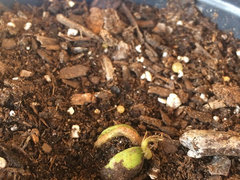
    This is what my loquat seeds look like...Every single one.


  • 9 years ago

    In your photo where the stem meets the soil looks like it's tapering down to a thread before it disappears and the cotyledon is unsupported by the stem. Both classic symptoms of damping off. Your potting medium looks kinda chunky and well drained which is really helpful in preventing this. I can't guess what is wrong other than it might just be poor air circulation around your pots.

    paulie_nyr94 thanked Steverino z9b Texas
  • 9 years ago
    last modified: 9 years ago

    I just took about 20 loquat seeds and placed them in damp perlite in between 2 plastic cups taped together (My own little weirdo mini green house) I'm going to try this instead of placing them directly in the soil this time. I want to try to get a pretty good root started before I move them to soil. Just an experiment anyway. Since I started germinating seeds this way (instead of the paper towel method), my percentage of germination has gone up dramatically. Seeds tend to get less mushy or moldy this way. They stay firm and germinate twice as fast.

    I had about 10 Japanese pagoda tree seeds in some moist paper towel closed up in a Tupperware container for the past 7 days.. only 1 germinated and the rest got soft, mushy and bit moldy like I stated above. I placed 10 more in the perlite cup and every single one germinated. Im sold on that, big time.

  • 9 years ago

    Well, your little weirdo mini greenhouse seems like a good way to get the root growing straighter than paper towels so that they are easier to transplant. I used to do similar to germinate temperamental hardy palms that can take a year or more to germinate and another 3-6 months for the first leaf to emerge. Now I have too many "rare"palm trees.

    I think Japanese pagoda trees are Sophora japonica. Oddly, one of our most beloved native Texas large shrubs/small trees is Sophora segundaflora ,common name Texas mountain laurel. These are a real challenge to germinate but once they get going they are truly Texas Tough.

  • 9 years ago

    I got a whole bucket of christmas tree palm seeds that I picked off the ground but wasnt sure how long they were there. Not sure If they are viable or not. (Any way to tell?) I took 10 seeds and put them in potting soil in a zip lock, 10 seeds in a soil sand mix in a sealed container and took 5 seeds, placed them in a pot with regular potting mix. Its been about 2 weeks and I dont see anything happening yet. I think it take 4 weeks though but not completely sure. Some guy told me if they lay on the ground in the sun for too long, they die.

  • 9 years ago

    I've never tried to grow Christmas palms (Adonidias) here since they can't take a light freeze, but generally the more tropical they are the faster they will germinate.

    Washingtonias are the only ones I've grown that will start germinating in two weeks. Most take at least six weeks for the radicle to emerge and often another six weeks for the first leaf to emerge. Seeds picked up off the ground are more likely to germinate than imported seeds of unknown age. I started my Phoenix palms from berries picked up off the sidewalk in front of a taverna in Nicosia, Cyprus.

    Christmas palms and Phoenix are similar in that the seed is in a berry so you need to soak in water and scrub off all remnants of the berry pulp before placing in the zip lock. Pure peat has a lot of antibacterial properties so I just take a handful of moist peat, toss it around with the cleaned seeds so it is light and well aerated and then put it in the zip lock and wait til the radicles emerge, potting them up individually as each one emerges. It often takes 3months for a batch to finish germinating.

    Never had a damping off problem with palms! Good luck with these.

  • 9 years ago
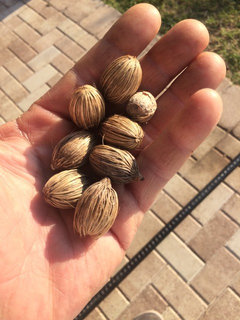
    These Christmas palm seeds look like this with the husks.
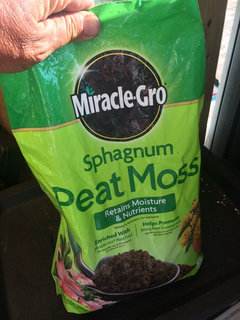
    Is this the right peat to use?

    Pics attached
  • 9 years ago

    Your seeds look like they have already been scrubbed clean of the berry or fruit pulp so I would just soak them in warm water for a day or so before sowing.

    Yes,that's the right kind of peat although it's really expensive to buy it in those small bags if you're going to do very much of this. It's probably dry in the bag so soak it in warm water for a while til it's wet and then squeeze out all the excess moisture you can with your fist . Then you're set to toss it with the seeds and place in the zip locks.

  • 9 years ago
    last modified: 9 years ago

    It's what they look like after the berry falls off the tree and sits on the ground for a while.. the red exterior dries up and the husk is underneath which can be peeled off very easily...

  • 9 years ago
    BUT I don't know how long they've been on the ground. That's the issue..
  • 9 years ago

    Well, OK, now I understand what you have and what the issue is. Palm seed with the dried berry or fruit pulp still on them so they look like dried cranberries or dried jujubes can bake out in the sun without any harm..This is a good time to pick them up off the ground. Once the pulp starts dissolving in the sun and the rain without staying moist, the embryo in the seed will start dehydrating and die. If they looked like your photo when you picked them off the ground without washing or scrubbing them they are probably already dead. The some guy was probably right about this, seeing what you were gathering.

  • 9 years ago

    I check this out.. I found some with the fruit on the seed but dried out. THey were still reddish in color. I should of taken a picture. Actually Ill get more and take a pic. I cut one of the seeds in half of the older ones I had and cut this new one in half and they both look identical. These new seeds haven't seen the sun though since the is another tree shading the area. I'm not sure if that means anything or not. Now could they both be dead? Maybe. LOL..

    I scored today with some fan palm seeds, straight off the tree. I can harvest as many as I want too. I picked a bunch of the fresh fruit straight from the tree and I picked a ton off the ground, This tree is also shaded so I think the ones on the ground are fine. The seeds are quite small, like the size of an olive seed. You have any experience with these types of palms?

  • 9 years ago
    last modified: 9 years ago

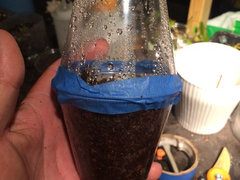
    OH.. here's a pic of my freaky deeky portable mini green house.. LOL... I have like 20 of these all over my back yard.. I have those fan palm seeds in this one with peat like you suggested. I hit them with a little bit of sandpaper before they went in.

    The other ones have the perlite in them..


Sponsored
Peabody Landscape Group
Average rating: 3.5 out of 5 stars8 Reviews
Franklin County's Reliable Landscape Design & Contracting