Software
Houzz Logo Print
natecasto

Tomato plants seem infested.

9 years ago
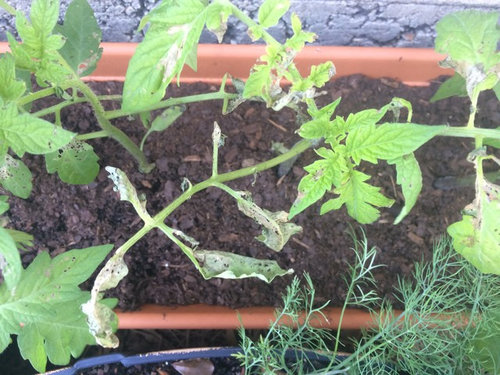
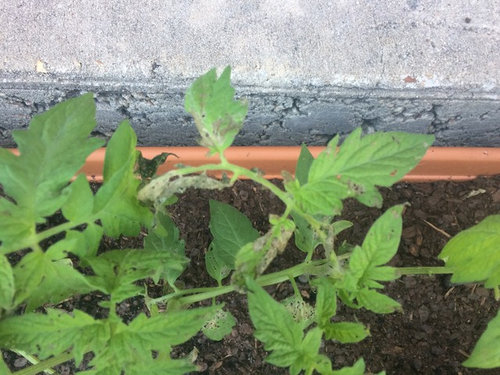
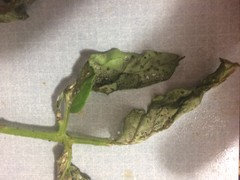
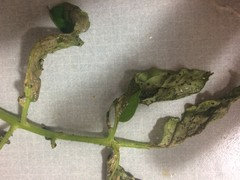
Hi. I have two different types of tomatoes growing. Beefsteaks and Cherry. A couple of days ago I noticed my beefsteak toms are wilting with little holes and have turned a gray/brown color. The Cherry tomatoes are perfectly green and healthy. I've recently moved my dill weed directly in front of the affected plants and sprayed them all with insecticide. Here are some pics.

Comments (17)

  • 9 years ago

    Okay will do. I'll post new pictures.

  • 9 years ago
    last modified: 9 years ago

    These are the best I could do. I did find two horn worms earlier after I sprayed so I was hoping that was the only issue but their damage looks different than this.

  • 9 years ago

    Where are you located?

  • 9 years ago

    I reside in the panhandle of Florida.

  • 9 years ago

    When you look at your plants and brush the leaves, do you see little tiny black beetles jumping all over the place?

  • 9 years ago

    Not at all. The only pests I've seen are worms.

  • 9 years ago

    Little tiny caterpillars?

  • 9 years ago
    last modified: 9 years ago

    It may be tomato pinworm. They look like tiny, segmented worms. They cause damage that sometimes resembles leaf miner damage but other times looks like they've scraped away layers of the leaves, leaving brown, papery areas. Other times, they leave holes like other small caterpillars, etc. Occasionally, they create pockets in leaves in which they hide by "stitching" leaf surfaces together or pleating them.

    Some reference pics:

    http://media.photobucket.com/user/meran_k/media/Garden%202011/pinworm4.jpg

    http://media.photobucket.com/user/meran_k/media/Garden%202011/pinworm3.jpg

    http://www.omafra.gov.on.ca/english/crops/facts/04-025.htm

    https://extension.umd.edu/growit/insects/tomato-pinworm

    Does that look familiar to you?

    If it's pinworm, cut off any heavily damaged leaves, especially leaves with "pockets" created in them and apply BT regularly to kill future populations. You want to take care of this now before your plants start fruiting, because they burrow into tomato fruit and ruin it.

  • 9 years ago

    Sorry if this is a dumb question, but what is BT?

  • 9 years ago
    last modified: 9 years ago

    BT = Bacillus thuringiensis. It's a bacterium. The Kurstaki strain is in a lot of "caterpillar killer" products. The Israelensis strain is in mosquito dunks and is used to kill long fly larvae (mosquitoes, black flies, fungus gnats, etc.)

    BT strains are very target-specific. BTk kills only the larvae (not adults) of moths and butterflies (i.e., caterpillars). BTi kills only the larvae (not adults) of long flies (mosquitoes, fungus gnats, black flies, etc.). And it's not a contact poison; it has to be eaten by the target pests to work. It acts on their digestive tract. Shortly after eating it, they stop feeding, and they eventually starve to death.

    But if the damage is from beetles or snails/slugs, BT for caterpillars won't affect them. Many tomato "worms", including pinworms, hornworms, armyworms, etc. are caterpillars, so BT is helpful to have in your arsenal.

  • 9 years ago

    Conventional insecticides work short-term, but they often wipe out predator bugs as well. This can lead to a cycle of worsening problems with pests. Most pest bugs reproduce far more quickly than predatory bugs.

  • 9 years ago

    Well I used sevindust and it seems to have stopped them. I believe they are pinworms because I've seen a few, small dead ones. After I dusted my tomatoes they evidently moved to my squash and strawberries so I just dusted everything.

  • 9 years ago

    I would personally never use Sevin on a large scale like that in my garden. I don't want the headaches from greater pest problems down the line from using something so broad-spectrum that throws the mini-ecosystem in my garden out of whack, and it would also counteract my efforts to nurture local native pollinators.

    But everyone has their own considerations that go into their decision-making. I just hope people are making educated choices.

    Also, pinworms are pretty host-specific. They tend to stick to solanaceous plants (tomato, pepper, eggplant, potato, etc.). If you have damage on squash and strawberries, it's almost certainly something else that's eating those plants.

    It's normal for a healthy garden to have a wide variety of pests in it. But if pests are doing serious damage to a wide variety of crops, then something is likely out of balance, or you have a big problem with a very generalist pest or pests, like grasshoppers, certain beetles, slugs, etc.

  • 9 years ago

    On second look, that looks very much like the damage from an explosion of baby slugs that I have on my peas. Which would explain why your strawberries and squash are suffering as well. Slugs eat everything. Pinworms, on the other hand, are rather host-specific.

  • 9 years ago

    I'm having the same issue, I have some caterpillars eating my tomato leaves. I have a couple different kind, some I know are hornworms, the others are blue like in color with some black dots on them, and I have some that are green but different from the hornworm. I have been just picking them off and destroying eggs when I see them. I would check all the undersides of your leafs for a white web-like thing that has lots of eggs. I agree with Gorbelly on both using the BT and also not using Sevin Dust. What part of the panhandle are you from. I live in Navarre, but have also have a garden in Pensacola.

  • 9 years ago

    For slugs, I use iron phosphate slug pellets, NOT the extremely dangerous old-school metaldehyde slug pellets. The latter can kill pets and wildlife if they are eaten, and too many birds, chipmunks, and the like like to eat slug pellets for me to feel comfortable using anything that toxic. Also, I would never forgive myself if a neighbor's dog got loose and ate poison in my yard or something.

Sponsored
More Discussions