Software
Houzz Logo Print
roxzn5

Tell me I am not crazy trying to recreate this....

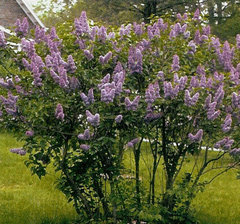
Ok, I have to admit I am pretty excited about this, I have an area with full sun, not protected from the wind - about 20 ft long and I will be happy with 5' or so in expanding width... I am in central Indiana with zone 5...it's the property line.... the main reason for planting shrubs is privacy, but the hubby is not big on boxwoods so I have to explore other routes...I have a korean lilac on front of the house that I love, it seems to be a fast grower so I am game for that... and then I found this picture which gives me hope, so before I start digging and goign crazy here could you tell me the cons ( or whatever you think) of this?

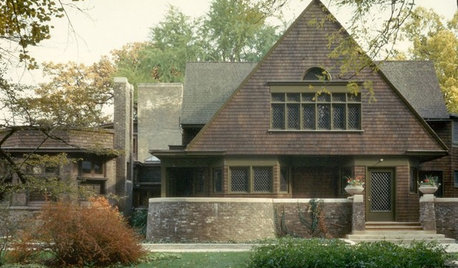
See the link Lilac Hedge


Comments (15)

  • 9 years ago

    It could work very well. In colder zones - like yours - lilacs bloom very consistently with minimal attention once established. And they bloom quite heavily and with very fragrant flowers. They also can offer very good fall color, depending on the specific selection.

    Other than conifers - which offer little to nothing in seasonal variation - and a very limited number of broadleaf evergreens like the boxwood, deciduous shrubs or trees are about your only alternative. None will have an overly long bloom season and fall color or other seasonal interest will vary by species but lilacs rate up there pretty highly for reliability and ease of care.

    Roxana *** ZN 5 Indianapolis IN *** thanked gardengal48 (PNW Z8/9)
  • 9 years ago

    I really love the idea to have some sorta bloom - whenever - but also want to make sure the condition of the leaves - rest of the shrub is decent for the rest of the time, seeing how amazing the korean lilac looked last year for me with its delicate-full leaves.. it make me think of it as an option. I would not consider the blooming time as a con but a bonus ;)


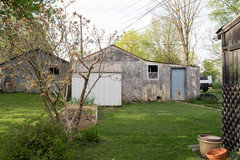
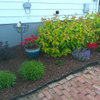
    This is the area that I have to work with ( excuse the condition of the garage as hubby is concentrating on main home remodel first)

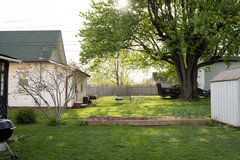
    Full sun - no protection from the wind, that rose of sharon will be taken out since is half dead, it came like that with the house, and that veggie garden we had last year there will be removed as well.


    On the second pic you can see how open we are with the neighboors, so I am anxious to have some sort of privacy.

  • 9 years ago

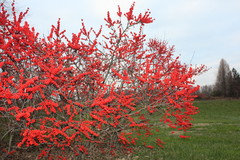
    Roxana, here is Winterberry or Ilex verticillata female selection. Three full months of color. There is the chance you will attract Cedar waxwings and the berries will disappear but who cares? Which birds are attracted to lilacs?

    f

  • 9 years ago

    lol Sam_md I think you really dislike Lilacs... that Winterberry is cool too!

  • 9 years ago

    Hydrangea paniculata 'Quickfire'

  • 9 years ago

    Actually many conifers offer dramatic seasonal variation. There are many Picea (orientalis, pungens, glauca) cultivars that have very pale to almost white new growth. Also some abies. They are stunning in spring - real jaw-droppers. Then there are the ones that turn purply-rust in winter - most Cryptomeria, some Thuja, Microbiota (which you will not use for a hedge!) There are also some with really showy and prolific cones. Sorry, had to stand up for my 'peeps'!

  • 9 years ago

    never plant a monoculture.. one of each suggestion could be one idea ...


    5 feet is not much of a spot.. even for claimed dwarf plants.. given enough years ...


    the problem being.. for it to get high enough to hide the neighbors.. you would have to presume it is as wide.. if not wider ...


    if you can.. you might want to plant further into your yard .. if space is available.. a 5 foot bed.. means you are planting one 2.5 feet from the property line ...


    you might also want to consider a smallish tree .... maybe a redbud???


    we need a AM I CRAZY forum .. lol ..


    ken


  • 9 years ago

    Again we are having issues with absolutes......never say never :-) When one is dealing with any sort of standard hedging, a monoculture or row of the same sort of plants is entirely common and expected. And in most cases, is not a point of concern. Especially when dealing with such a tough, durable and long lived plant as most common lilacs.

    And 12-15' tall is not out of line for a mature lilac shrub (left unpruned), providing more than adequate screening height for most purposes. And a single lilac shrub can be easily maintained at a much smaller footprint than 12-15' - most start as just a small grouping of stems or a single trunk and if suckers/root shoots are removed, will remain well within the scope of a 5' planting bed.

    It might be more helpful to the OP to provide some positive suggestions or advice rather than offering all the negative possibilities that could - not will - arise.

  • 9 years ago

    i see gal is in one of her.. argue with absolutely everything i say moods ... it was a restful winter ...


    see link ...


    do any of them look like they are 5 feet wide ...


    ken

    https://www.bing.com/images/search?q=Lilac+Hedge&FORM=IRIBIP

  • 9 years ago

    I argue with you ken because in addition to much of what you post and advise, which IS helpful, there is also a lot you post that is not helpful. And even misleading or inaccurate.

    I've grown myself, advised on and recommended planting lilacs to scores of clients so I am completely familiar with their growth habits. Few ever look like the photos you post (which btw are NOT all common lilac hedges, as is typical with any Google image shot), with branching, foliage and flowers down to the ground. Most will look like small trees with bare stems up for several feet before producing leafy, flowering growth........looking very much like this:

    garden web photos · More Info

    And while this shrub is larger than it could be due to root sucker production, those are easily and safely removed and any other pruning can also be undertaken, if necessary.

  • 9 years ago

    Lilacs spread like crazy, and I never did think suckers were easy to remove.

  • 9 years ago

    "Lilacs spread like crazy"

    Some do, some don't. I had one trained as tree form (single trunk) and it never produced suckers (planted in 1960) until I disturbed the root system by enlarging the planting area surrounding it. I never had any trouble removing what suckers did pop up after that. Gave them away to friends and family.

  • 9 years ago
    last modified: 9 years ago

    I am with Indianagardengirl, that one of the larger Hydrangea paniculata cultivars will do well for you. Limelight, Quickfire, Pinky Winky, etc will bloom for 3-4 months, depending on the cultivar. Unlike many other types of hydrangeas, they set flower buds in the spring, so bloom reliably. The 3 I mentioned will be in the 6'-9' size range. Foliage stays nice all season, and if you leave the dried flowers on for the winter, you will have a bit of coverage then also. I get enough natural rainfall here that I don't have to water either lilacs or the hydrangeas, both of which are in all day sun, though you may need to water since you are drier and more southern than I am. Here's a thread on Limelight hedges, and though a few of the photos are missing, most are there, and some of the posters came back to post annual photos for several years as the hedges grew.

    I have lilacs that sucker some, and some types are susceptible to powdery mildew. If you get freezing rain or heavy wet snow, branches sometimes break on mine. I don't have any of those issues with my Quickfire and Pinky Winky (I don't grow Limelight), so my lilacs don't look as good for most of the season as my Hydrangea paniculata shrubs. I also found that in my area, the hydrangeas reach a good size much sooner than lilacs. But if you really love the lilacs, go for it.

    Or if you are willing to give up the space, plant a row of later-blooming low growing shrubs or vines such as clematis on trellises in front of the lilacs to extend the bloom season for the hedge.

  • 9 years ago

    Lilac 'Palibin" is one of my favorites; bushy, small leaves with no mildew and often good fall color.