Software
Houzz Logo Print
jaio2000

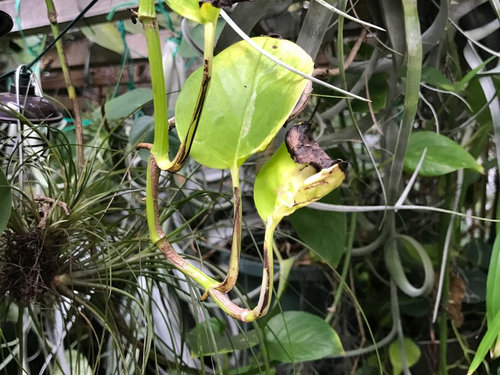
Pothos help - all new growth deformed / blackened

9 years ago
last modified: 9 years ago
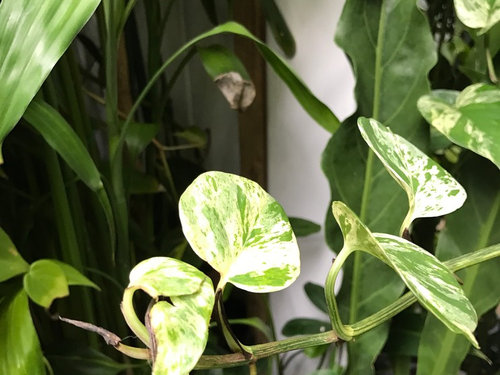
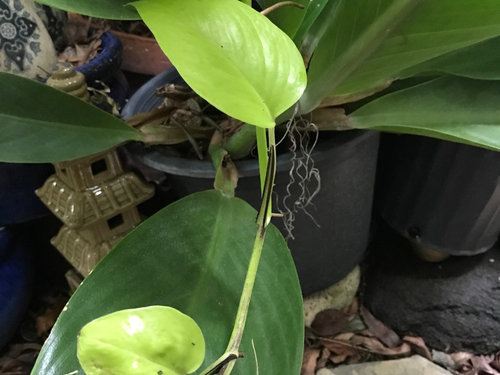
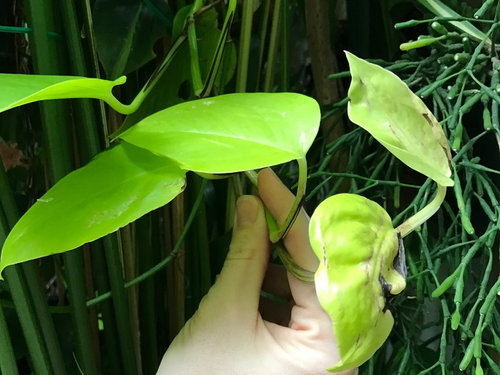
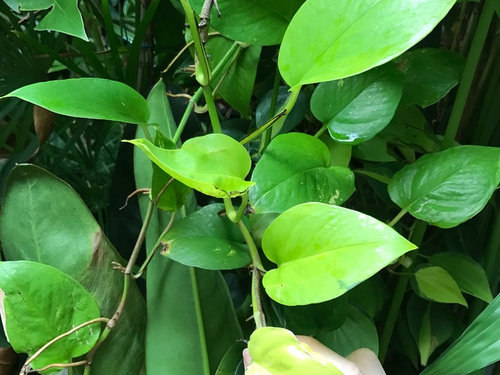
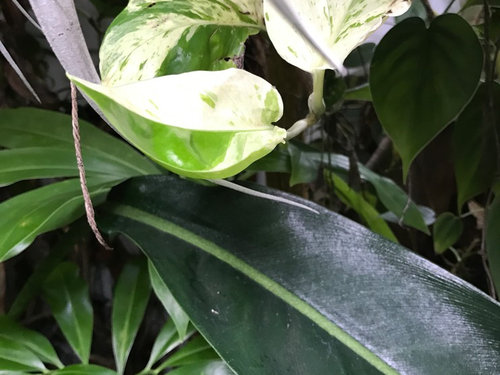
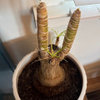
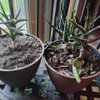
Over the years I've collected pothos varieties. This summer all of my new growth seems to be blackened and deformed. Some I fertilized prior and some I didn't. They have been on this cycle for some time now. About 10 good leaves then some ugly ones...the vine end dies and an offshoot occurs with about 10 good leaves then again the deformity.


I don't know what's happening to them. I'm in Hawaii with great climate for them. Friends plants and plants in public aren't effected. Just mine. Please see photos and if any idea it would be much appreciated. Thank you.

Comments (14)

  • 9 years ago

    This is a great question. I also have pothos that appear to be healthy and for some reason a new leaf seems to be rotting even before it unfurls. And yet no other leaves are like that. I love pothos and have several and am always interested in learning better care. I will watch this thread to see if anyone has any thoughts.

  • 9 years ago

    I don't know what it is but I would cut it off to keep it from spreading.

  • 5 years ago

    Hi,

    I live in Brasil and it happened in my photos collection too. I don't know what it is. I'd like to know.

  • 5 years ago
    last modified: 5 years ago

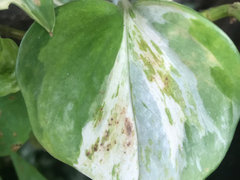
    I have the same plant (marble pothos, I think)) w/same problem. its been doing this about three years. I just keep taking off the damaged/ugly leaves as they appear. I have it in conditions that are correct for it, according to all that Ive read, so IDK 🤷‍♀️ It goes outside, part shade for 3 seasons & inside, bright shade & high humidity (60-70%) for winter. I dont see any pests & dont think its a light, watering, humidity or nutrient issue, as its in well draining soil & fertilized weakly, weekly. Im at a loss.

  • 5 years ago

    Additionally, vines can get damaged going over the edge of a hanging pot. They get heavy and there's a lot of pressure and stress where a stem bends over the rim of the pot. To get bigger leaves in general, try a ground pot with a trellis. Some do a pole, which does seem more likely to lead to bigger leaves, but I also like the wider canopy that a trellis can help support.

  • 5 years ago

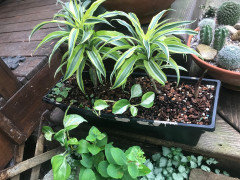
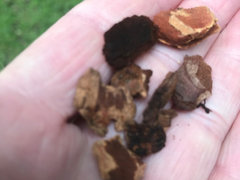
    Al, thank you. I should start my own thread . Its planted in your 5-1-1 mix, I use a bamboo skewer before watering, I use the MG fert that you reccomend, in the yellow bottle at 1/4 strength, weekly, year round. I also wait until its just on the dry side of damp before watering, as I know pothos likes to err on the dry side. It sits out in bright shade w/ morning sun 3 seasons on my porch & about 4 ft. away from a huge floor to ceiling, 8-ft. wide wide, East-facing window in winter. I run a ceiling fan on low all winter in that room. I did notice this past winter it was taking about 2 wks to dry out, in a long, rectangular plastic pot also containing 2 dracaena warneckii, 2 African mask plants & 2 impatiens walleriana that I decided to overwinter. I used reptibark in the large bag as when I potted these a few yrs ago, I had a busy summer & no time to pick out the excessive amt. of sapwood that comes w/ my regular source of pine fines from a local peat/stone supply. It does seem the reptibark is slightly larger in size than the sifted fines I normally use, but not by much so I didnt think it’d be an issue. Could it be that the slightly larger bark pieces are upsetting the PWT & causing it to retain water longer than it should? Im in the final stages of my summer repot process, so I should probably unpot the whole planting & investigate.

  • 5 years ago

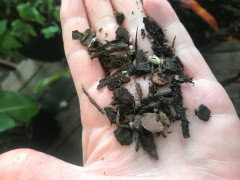
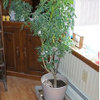
    Here are photos of the plant, whole planter (it poured rain this morning) the repti bark size & the size of the usual bark fines I use:


  • 5 years ago
    last modified: 5 years ago

    R - did you add dolomite (garden lime) when you made the 5-1-1?

    Al

  • 5 years ago

    Yes, Espoma, 1TBS/gal per your recommendation. That pot was made 2 yrs ago. Perhaps the lime has dwindled & the acidity is high again? I plan to repot soon, although my african masks (also in this pot) are just now popping up from winter sleep so I should wait till those are leafed out to disturb them.

  • 5 years ago

    Do you live in a large city?

    While a 2-week wait (or longer) for the soil to dry down is fairly common, commonality doesn't mean the plants that grow in it are going to show appreciation. Let's work on that point, and I have some other ideas that will allow you to make adjustments that might fix whatever is going on.

    That you can go long intervals between waterings w/o under-watering means there is an excess of water in the grow medium for at least a week after a thorough watering and perhaps longer. I know you've been at GW for awhile now, so you've probably read my tips on how to significantly reduce the amount of excess water your medium can hold. I'll outline them in case you're already familiar.

    * You can use items in the pot bottom as ballast to displace a large fraction of the grow medium that would otherwise be filled with excess water.

    * If the pot is of manageable size, moving it downward then sharply upward while holding the pot over the sink can remove ALL excess water from the pot.

    * You can tip the pot when done watering, which also removes a good measure of excess water.

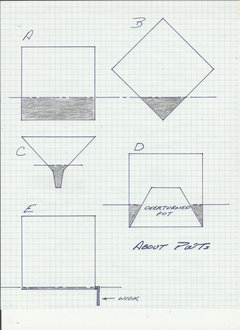
    * You can use a wick through the side of the pot exactly where the sidewall meets the bottom (that's the best spot) or through the drain hole.

    Compare B to A to see what tipping your pots gains you; and compare E to A to see what a wick can do. Figure D is one way of using an item as ballast, but there are other set-ups.

    Sometimes, when the bark is too large, you'll get stratification where the peat migrates to the bottom of the soil column (causing it to remain wet for long periods) while all the bark is at the top of the soil column; but through the tell, it would seem you'd be picking up on that. Still, it's worth investigating when you repot.

    Wet soil and organic forms of N can combine to cause ammonium toxicity, and your fertilizer derives all of its N from urea. This is a very common issue but one seldom diagnosed.

    Your fertilizer doesn't contain Ca or Mg. Garden lime serves as not only a pH adjuster, but as a source of Ca and Mg as well. The magnesium fraction of garden lime is more than 125X more soluble in water than the calcium carbonate it contains, so it's not uncommon for a planting to need a Mg boost after a couple of years, especially when using a fertilizer that contains no Mg.

    I used to use and recommend MG 12-4-8 or MG 24-8-16 because I hadn't yet found Foliage-Pro 9-3-6. It has ALL nutrients essential to normal growth, and serves admirably as a complete single source nutrition package. I use it for all plants except tomato and hibiscus. For those, I still use it, but I increase the amount of K it contains for hibiscus and tomato by adding ProTeKt 0-0-3, which also contains silicon, which I have found makes a big difference in that it helps plants better tolerate heat/cold, too wet/too dry, insect herbivory and disease pathogens. You might want to try the Foliage-Pro 9-3-6. In the meanwhile, you can try adding a dose of Epsom salts with a solution strength equal to 1/4 level tsp/gal. I almost never recommend dosing with anything aimed at providing a single nutrient, but in this case there is so little probability of a negative result it seems reasonable.

    Finally, the damage is concentrated in areas of the leaf where the variegation is lightest. If these plants get much foll sun, it could be sunburn. The pigment, chlorophyll, actually protects the leaf's photosynthesizing apparatus from solar overload. Leaf tissues with little to no chlorophyll are much more sun-sensitive than their greener neighbors.

    Al


  • 5 years ago

    They get very light shade. Mostly morning sun. Now that I think about it, you may be correct about the leaf pictured. The new leaves, Ive noticed, dot have the brown margins they were emerging with this past winter. but you may also be right about the peat & bark migrating. I’ll have to investigate. yes yes, I live on the outskirts of a big city. I see what you mean about tipping and sharp ups & downs w/ pots pots- Ive been doing it since I started following your teachings & its almazing the volume of water that runs out after you upright it again after tipping.

  • 5 years ago

    I asked about the city because many plants are sensitive to pollutants in the air, and the sensitivity is usually made manifest in spoiled or at least blemished foliage. Also, in my experience, it's always the lighter part of variegated plants that present symptoms first, but some of that could be because early symptoms are easier to identify on the light background. Are you by any chance in an easterly or north easterly direction from what you would consider to be a primary pollution source - lots of traffic, industrial/ chemical manufacturing, ......

    Based on your habits, you should be enjoying very good results. Unfortunately, Mother Nature has a way of camouflaging cause/effect relationships causes so the cause remains idiopathic, and she always sides with any hidden flaws to the detriment of the green friends we keep and the satisfaction we get from doing so. I'd encourage you to review what we talked about, then act on anything which left you with the sense that "This could be the cause". If you find several things, start with easiest first.

    Al

  • 5 years ago
    last modified: 5 years ago

    There is a busy street at the end of my somwhat long driveway, almost all of my plants sit facing that direction. they face east but we are west of the road. A small factory directly across the street. Further east than the busy street, about 1/8 of a mile east of that road, is a super busy 4-lane divided highway. This tiny “rural farming” town about 12 miles north of Fort Wayne proper has alot of people who like to “compete” for the loudest pickup truck, hot rod, motorcycle or ATV. Lots of loud exhausts as of late & where we used be surrounded by farmland about a mile radius surrounding us, now there are subdivisions going up everywhere left & right as farms are divided & sold. Fort Wayne keeps making the ”top places to live, least crime & most affordable places to live” lists, plus fairly mild winters, so people are moving here in droves. Ive been here 11 years and I cant believe the difference in growth from when I first came here.