

Coco Growers Thread.
I thought we could discuss Coco growing.
Comments (57)
BettaPonic SuperRoots
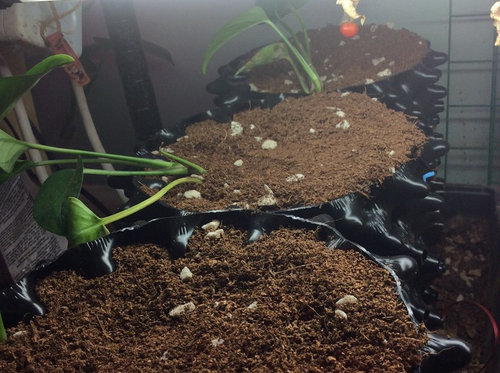
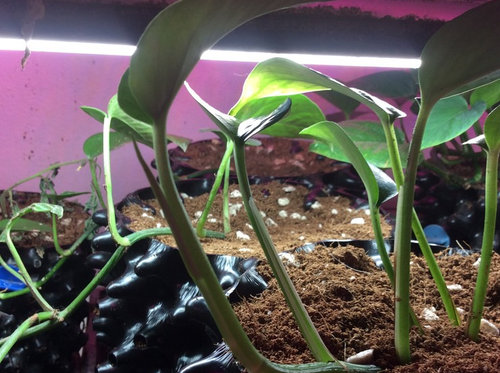
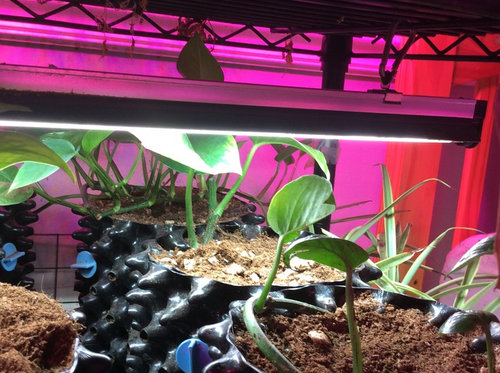
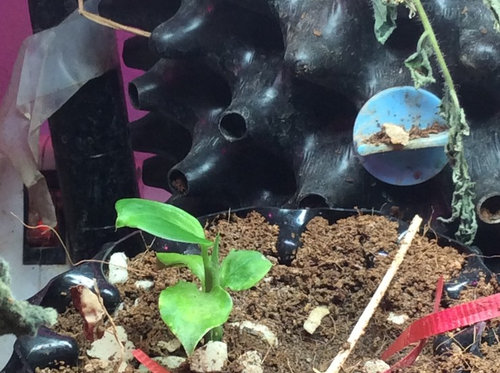
Original Author9 years agoIt is not pure Coco. I added Growstone. I water when it dries off a little.
Related Professionals
Richmond Landscape Architects & Landscape Designers · Cherry Hill Landscape Architects & Landscape Designers · Montrose Landscape Architects & Landscape Designers · Middlesboro Landscape Contractors · Marquette Landscape Contractors · Kingman Landscape Contractors · San Luis Obispo Landscape Contractors · Pittsburg Interior Designers & Decorators · Newark Interior Designers & Decorators · Manhattan Interior Designers & Decorators · Aberdeen Interior Designers & Decorators · Modesto Interior Designers & Decorators · Salinas Interior Designers & Decorators · Williston Interior Designers & Decorators · Spokane Interior Designers & Decorators 9 years ago
Oh, I thought those were rocks. Duh.
rina, you always come to the rescue :)
- 9 years ago
It looks like there are not enough to really aid in aeration. Am I missing something?
 9 years agolast modified: 9 years ago
How do you deal with A) the potential for an extremely high level of EC/TDS at the time plantings are established? B) the extremely high K content? C) the fact that the pH of coir is so high it precludes the use of dolomite either as a liming agent or source of Ca/Mg?
Please offer comments re this study, the summary of which follows this paragraph. It's published by Utah State, but there are many more like it only a quick search away.
"SUMMARY
These studies show that coconut coir should be used with great caution. Although the Sri Lanka brands performed better than the Mexican brands, no brand performed
consistently better than sphagnum peat. Some species tolerate [my emphasis] coir better than others. The addition of calcium sulfate to the media did not have a consistently beneficial effect on growth and in some cases it reduced growth. The best growth in coir media occurred in the Grow Coir ® brand. We are continuing these studies to determine the underlying causes of poor plant growth in coir. [my emphasis]"Something I wrote several years ago:
Peat
vs. CoirSphagnum
peat and coir have nearly identical water retention curves. They both
retain about 90-95% of their volume in water at saturation and
release it over approximately the same curve until they both lock
water up so tightly it's unavailable for plant uptake at about 30-33%
saturation. Coir actually has less loft than sphagnum peat, and
therefore, less aeration. Because of this propensity, coir should be
used in mixes at lower %s than peat. Because of the tendency to
compact, in the greenhouse industry, coir is primarily used in
containers in sub-irrigation (bottom-watering) situations. Many
sources produce coir that is high in soluble salts, so this can also
be an issue.Using
coir as the primary component of container media virtually eliminates
lime or dolomitic lime as a possible Ca source because of coir's high
pH (6+). Gypsum should be used as a Ca source, which eliminates
coir's low S content. All coir products are very high in K, very low
in Ca, and have a potentially high Mn content, which can interfere
with the uptake of Fe. Several studies have also shown that the
significant presence of phenolic allelochemicals in fresh coir can
be very problematic for a high % of plants, causing poor growth and
reduced yields.I
haven't tested coir thoroughly, but I have done some testing of CHCs
(coconut husk chips) with some loose controls in place. After very
thoroughly leaching and rinsing the chips, I made a 5:1:1 soil of
pine bark:peat:perlite (which I know to be very productive) and a
5:1:1 mix of CHCs:peat:perlite. I planted 6 cuttings of snapdragon
and 6 cuttings of Coleus (each from the same plant to help reduce
genetic influences) in containers (same size/shape) of the different
soils. I added dolomitic lime to the bark soil and gypsum to the CHC
soil. After the cuttings struck, I eliminated all but the three
strongest in each of the 4 containers. I watered each container with
a weak solution of MG 12-4-8 with STEM added at each watering, and
watered on an 'as needed basis', not on a schedule. The only
difference in the fertilizer regimen was the fact that I included a
small amount of MgSO4 (Epsom salts) to provide MG (the dolomitic lime
in the bark soil contained the MG, while the gypsum (CaSO4) in the
CHC soil did not. This difference was necessary because or the high
pH of CHCs and coir.) for the CHC soil.The
results were startling. In both cases, the cuttings grown in the
CHC's exhibited < 1/2 the biomass at summers end as the plants in
the bark mix.I
just find it very difficult for a solid case to be made (besides "It
works for me") for the use of coir or CHC's. They're more
expensive and more difficult to use effectively. The fact that some
believe peat is in short supply (no where near true, btw) is easily
offset by the effect of the carbon footprint of coir in its trek to
the US from Sri Lanka or other exotic locales.That's
the view from here. YMMVAl
BettaPonic SuperRoots
Original Author9 years agolast modified: 9 years agoI flush the plaintext's once a month. I add CalMag from general hydroponics. The Coir is a waste product that would be thrown away.
- 9 years agolast modified: 9 years ago
Flushing the plant monthly doesn't speak to its initial potential for extremely high TDS levels.
What do you do about the rising pH levels when using CalMag, especially when the pH of coir is already high to begin with?
There are LOTs of organic waste products or byproducts in the market place that are highly phytotoxic, so that coir is a waste product is no good reason that it SHOULD be used. When judging suitability of products used to support living organisms, they should be judged on their merit, and not on the fact that WE might get a better grade for recycling. Sorry, but I'm not at all convinced that relying on a significant fraction of coir or CHCs in our container media is the best course. YMMV.
Al
- 9 years agolast modified: 9 years ago
Al,
We've had this conversation before, you and I :). I use a pretreated high pith coir. I add a good slow release to it. And with the exception of maybe two plants, I amend heavily with bark, pumice, perlite, or grit. Sometimes the coir is the peat in the 511 mix.
i honestly like it better. The plants seem to like it better. I used it on a sunset jade, and it's growing beautifully.
the problem is that peat just isn't a better alternative for me. I am a heavy handed watered, peat is too heavy to me, and coir virtually eliminates gnats. Finally, it is great for the desert because it holds onto water without suffocating the plant.
some plants I still keep in pure gritty mix or pure pumice. The crassula seem to like it and they can handle the desert temps.
But, I have come to terms with it this way: the plants like it, the roots like it, I have never killed a plant in coir, and i like it.
again, I am using a pretty high end brand. Next time around, I will probably go up to the next better high end high pith pretreated coir. I think this makes a difference because they are formulated with the potential problems in mind.
But I have killed plenty of plants in peat. So I just have to go with common sense and observational knowledge at this point. Coir for now.
also, I don't understand the less aeration part. I repotted an old goosefoot in pure coir and a smidge of perlite a while back. And then I proceeded to water that plant with about four gallons of water. I just wanted to see what would happen.
the water ran out, the plant was fine. I took it out a bit later to see what was going on below. It already had new roots growing and the coir just falls away from the roots leaving them clean. If I had done that in a peat mix, that plant would have drowned to death.
BettaPonic SuperRoots thanked Lauren (Zone 9a) BettaPonic SuperRoots
Original Author9 years agoTapla, I am mainly attracted to Coco because it is great for living having a healthy rhizosphere. I have Tomatoes that have grown generations in Coco. I have tried other mediums and Coco has worked best from me. I add a lot of organic.
- 9 years ago
Obviously many studies reach the same conclusions I reached about coco products. The fact is, there are several serious issues inherent in the use of coir as a significant fraction of any container medium that don't go away if ignored, and can't be wished away. If a grower doesn't understand what those issues are and take steps to mitigate the limitations inherent in those issues, said grower ends up accepting the loss of potential that comes connaturally with coir without reason.
I guess what I would suggest to others is that once deciding to try coir or CHCs, they use some discretion and start with a plant or two for a year or so before making a significant commitment to using it as a notable fraction (more than 10%) of a container medium.
Al - 9 years ago
There are plenty of factors that make peat undesirable as a medium as well. And unless someone can offer me a superior alternative, I don't see why I would not use coir.
As ive pointed out elsewhere,coir is used heavily by desert nurseries. Peat is used heavily by nurseries as well. Here in Arizona, coir is a good medium for plants because it is exceptionally hot and because it retains water. I am not prepared to say that a well established nursery here that I visit frequently and which uses coir as the primary potting medium has it all wrong. I am prepared to say that nurseries that use peat (even for cacti and succulents), as most bb stores do, are not doing the best they could do for those plants. I have taken home plants in peat that needed to be repotted immediately. Conversely, I've taken some home in coir and they do not need to be repotted.
i agree with you that one should experiment, heavily actually, with coir before committing to it. It took me a long time to get used to it and how to amend it properly, or how to learn which plants really like it and which would prefer another mix. In fact, I am reluctant to accept the advice of anyone who has not worked with it extensively.
Again, peat is not a superior alternative, and that is the real problem for me. Coir has performed better for me, and that is after much experimentation and observation. I am pretty meticulous about the health of my plants, and I am attentive to how they perform in different mixes. Over time, I have found that those in coir do well, and their roots look very healthy. When I add the proper nutrients, they do even better.
Finally, I will add this: growing plants indoors or outdoors in the desert is a special kind of challenge. People who wish to do so find that they have to relearn and adapt their growing practices--even when growing native plants. I did not and could not have imagined this before I moved here. So, I suspect that coir may be particularly appealing to plant growers in this environment because it solves many problems related to plant growing in extremely dry and exceptionally hot, water-starved climates. If I lived in your neck of the woods, I would probably use gritty mix or 511 mix more.
BettaPonic SuperRoots thanked Lauren (Zone 9a) BettaPonic SuperRoots
Original Author9 years agoHey Lauren, do you use any inoculants? I ask because that is one of the things I love about Coco.
 9 years ago
BettaP
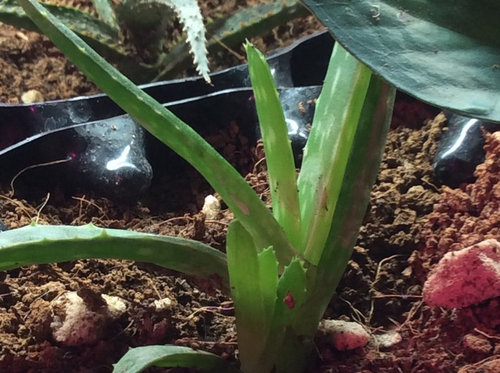
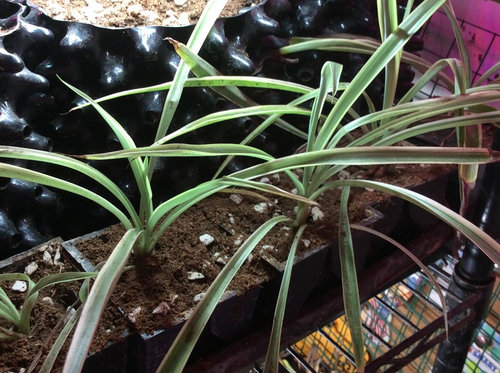
I wonder what is the point of adding few, looking quite large, pieces of any gritty particles to coco coir? - I could be wrong, but that's what is visible in your photos. Is there more mixed with the coir?
- 9 years agolast modified: 9 years ago
Lauren - Please take a minute to provide us with the list of factors that make peat undesirable as a significant fraction (more than 10%) of container media. We can't just make an announcement that peat is not a superior product when compared to coir, or that coir is when compared to peat ...... and expect that to be taken as a form of proof. Additionally, your observations cannot be accurate because comparisons between peat and coir show that loft and water retention curves are almost the same - no appreciable difference - so it's very unlikely even the most skilled grower would be able to detect any difference between any advantages/disadvantages associated with water retention in either product without closely controlled experimenting. The issues inherent in the use of coir are brought to light in virtually every scientific study you find. Kevin Handreck and Neil Black, in their widely read/used reference text Growing Medium for Ornamental Plants and Turf, talk about coir extensively, and confirm the issues I noted that are inherent in its use. They suggest that when coir is used, it should be limited to no more than 10% of the medium by volume.
The cultural conditions plants prefer are based on genetics, not geography. On a species to species basis, what's optimal for the plant at the equator is exactly what's optimal for plants at the 45th parallel (half way to the North Pole). It may be more difficult to provide what is optimal in one location or the other, but a plant's wants don't change because it lives in MI vs SoCal. Often, for the grower's convenience, keeping the plant viable in hot/dry climates requires building so much water retention into the medium it becomes limiting, so disagreements often arise because of the perspective the parties take. I always look at things from the plant's perspective and would note that it's better for the plant to have to water twice a day than to put convenience at the forefront and build a soil that allows the plant to tolerate several days between waterings.
I'm no slouch when it comes to accurately observing a plant's reaction to it's environment or being able to consistently keep all my plants in a high state of vitality, and I try to keep my credibility intact by not operating at beyond the limits of my knowledge and experience. I avoid coir and CHCs because of my own experiences and the high quality authoritative information I've seen over and over. What's readily available to anyone who might also care to look into the topic confirms everything I said ..... as long as they stick to reliable sources rather than conferring clarion call status to anecdotal commentary; so, I'll let others decide what their course should be while cautioning that the greater the expectations the greater the disappointment when things go south. Nothing at all personal in what I said - purely informational. I hope what I said yields light rather than heat.
Al
- 9 years agolast modified: 9 years ago
What you said will, as in the past, produce further thinking and discussion, but not heat:).
this is, however, an argument that could go on for a long time because we approach plant growing differently. I rely heavily on my intuition and you rely heavily on scientific knowledge. We both incorporate a bit of both.
i am not just "announcing" that peat is not a superior product. Peat breaks down, it gets soggy, it is heavier than coir. What's more, it is not -- in my observations-- a superior medium. And that simply must count for something.
I maintain that using peat in the desert presents a problem. Peat can be difficult to rewet and it is heavier than coir. So when you have a situation in which plants need to be watered very frequently, even in pure peat, you run the risk of overwatering, and you have to repot more because the peat wears down. Gritty mix and 511 are ideal mixes, but summer time watering can be all consuming if you have lots of plants all over the house as I do.
also, it is very important that we remember that you and I are talking about different coir products. You used chips I believe. I use high pith pretreated coir. So, we may be having a discussion over two types of coir actually.
for me, it comes to this. I tried gritty mix and bark based mixes because you and other knowledgeable people like Rina and josh use them with great success and were kind enough to help me understand why they work. I know no other plant people around me who understand these mixes or why they would work. Now, I am trying something else, and it is working for me (and others, I presume). And that is how we learn and expand. I have to trust both your knowledge and my own experiential knowledge to find solutions that work best for my plants.
I agree with you that many may find that their expectations are not met with coir. I did as well initially. It took time and tweaking and reading and experimentation to learn how to use it well. There are, by the way, many studies that prove coir's usefulness, just as there are many that don't favor it.
Also, the fact that the majority of the discussions on this board revolve around problems with peat, or how to use less peat is itself an indication that peat is not the ideal potting medium. You use it only minimally yourself.
finally, I think that anecdotal information can be useful depending on the source. People rely far too much on institutionally backed scientific studies. The Sciences in universities, the entire STEM in general, suffer from the same type of "but we've always done it this way" mentality that the humanities do. Further, they can be heavily swayed by financial support from the corporations that make products they are "studying". I am an academic, and I remain skeptical of any type of institutional knowledge-- even the knowledge I produce. I always welcome a healthy mix of official and unofficial discourse on any topic.
- 9 years ago
Lauren
I had this typed about 2-3 hrs ago, but didn't post at first since I don't want to sound as I am picky or disagree with you, just couple of things that I would like to point out:
..."I am prepared to say that nurseries that use peat (even for cacti and succulents), as most bb stores do"...BBS stores (as far as I know...) do not grow plants, they get them from growers - so whatever growers use, that's what plants in BBS are in. Many (not all) growers use peat - they have figured proper watering that is often automatized and can manage to keep it just wet enough, and not become soggy or hydrophobic. (They can also control light, air circulation and temperatures better - these may not be as easy to maintain as well at home.) It is ideal for them, it is inexpensive (comparing to other growing media) and very light.
..."in Arizona, coir is a good medium for plants because it is exceptionally hot and because it retains water"... that may be suitable for a person caring for plants, and may or may not be best for plants (not that they should be left constantly to dry too much - it is a person that has to water more/less often).
There is a difference between drainage and water retention in some way IMO: substrate could drain well while retaining some (more or less water). It depends where he water is held.
Since there are few posts since, one more thing I noticed: I do not think Al was referring to coco chips only, he talked separately about coco coir and the coconut husk chips (CHC) - and yes, he did use them (CHC) in experiment he described.
Lastly, growers of plants keep them for quite short period of time: their goal is to grow them as fast as possible to 'saleable' size, and ship them away as fast.
- 9 years ago
Rina,
i am not sure what distinction you are making about the peat based plants in bb stores. I was suggesting that those plants that are sold in peat tend to need repotting while those in coir do not, ime. We often tell posters having difficulty to take them out of the store soil, right?
And yes the water rentention "how's" are important, I agree. Coir retains water and drains well. It provides aeration while retaining. As I have observered (and I will ignore al's suggestion that my observation couldn't have been correct because I find that insulting), water flows through it very easily.
on another note, please don't feel that I would take issue with your post, no matter what you say. You have been nothing but helpful and kind to me, and you are my go to person for cactus and succulent advice always.
I am getting caught up in a debate about coir that I don't want to be in. I just know I like it and the plants like it. I like gritty mix and 511 too. I just pulled a jade plant out of perlite peat mix and the roots were covered in peat sludge, even though I rarely water it and the majority of the mix was perlite and the pot was a snug fit. It's been in that mix for two months. That is what I am trying to avoid for the most part. And I am trying to keep my mind open to different ways of growing for different plants. That's pretty much it.
it might be best if I stay out of these conversations. I do not want to make you feel as if you shouldn't post something to me. I'd prefer a good plant friendship with you over defending coir or needing to feel I am right.
- 9 years ago
Lauren
I am actually not defending coir or perlite or any other substrate, just had a pause when reading (but that happens to me a lot!!!). Sometimes, some statements are not quite clear to me and that is all I was commenting on. But maybe I shouldn't (and that is why I didn't post at first) since my knowledge of English and especially of grammar is very limited; maybe I am reading something that is not there :) Stores do not use peat (or whatever) - as I said, they just carry plants in whatever substrate growers grew it in & delivered. I guess it isn't important, so my comment is not needed, or maybe it is incorrect. It is choice of words I was commenting on (and maybe I used them wrong :).
In either case, I am not trying to continue this debate as I, personally, do not have anything to support or dismiss coco coir. I have used it only once, in small amounts in a mix, so there are really no results to say yes or no. I only know what I read (including Al's comments). Lots of it makes sense to me. But that is off the subject I brought up - and also end of it.
 9 years agolast modified: 9 years ago
I've purchased a few plants in some kind of little spongy bits that I've gathered from various conversations was some kind of coconut coir, and it's very impressive, compared to the average bag of "potting soil." And LOVED the way it just fell so easily off of roots when it was time for plants to move on from their store-bought pots. That's usually something I do immediately but didn't feel any sense of urgency about the coir at all because the plants looked so daggone happy. The first was a snake plant (Sansevieria) a few yrs ago that I left in the coir all winter, and the other was a pot of Caladium bulbs (already growing for the season) that I got last weekend.
Are there several different types of coir? I'm left wondering if everyone has experienced the same product that is being called coir?
If the coir is being sold as a planting medium, it would be disappointing if it was too salty, and seems unlikely that such a large contingent of growers would be using it. Not all palm farms are near an ocean at all, so I'm also left wondering about the necessity of the salty concern.
BettaPonic SuperRoots
Original Author9 years agoThe biggest producer of Coconuts is Sri Lanka and they get a lot of salt on it. Good brands remove the salt and treating it yourself can remove salt.
- 9 years ago
Rina,
i was referring to me defending coir, not you. I was trying to say that I don't want to get caught up defending it, especially at the cost of losing an otherwise friendly relationship with you. And I was saying that I need to check my need to feel right.
i wasn't blaming you in the slightest. I was examining my own participation in this conversation. And I felt horrible that you felt reluctant to post something to me.
Just for clarity. Sometimes things get lost in transmission online, and I want to be as clear as possible, even if it means saying it again.
Lauren
- 9 years agolast modified: 9 years ago
Al: that book was revised last in 2002. I would not consider that a viable reference for learning about coir. It is standard practice in any research project to consult recent studies as well as some older sources. Even when I am teaching medieval literature, I expect students to find sources that have been published before 2002.
There is no "virtually every study." There are studies that you've read and studies you have not read. Unless and until you can provide an annotated bibliography of "virtually every study," your position remains just as shaky as you claim mine to be.
I am not the one who should provide a list of resources (as you suggest). I am not the one who has a problem with coir. You are. So, you should provide a list--and it should be a properly researched one with a mix of sources. Even scientists don't rely solely on university studies, and they damn sure don't rely on books published in 1984 and revised in 2002 as their sole secondary source.
Finally, I would say this: if you suggest that my observations are incorrect, I would suggest that so too are yours. I mean, if we are just saying whatever we want to in order to make a point, why not? What you are really doing is asserting your knowledge over mine, your observational skills over mine, your way over mine. And I find that insulting.
oh, it turns out your first instinct was right: your comment did generate "heat." It just took me a minute to warm up.
- 9 years agolast modified: 9 years ago
Actually, you said there are also many problems associated with the use of peat, and I asked you to list what you perceived as problems. I didn't ask for a list of resources or sources.
Statistics regarding water retention curves and loft are available if you look for them. You'll find that peat and coir are remarkably similar re these physical properties, which would invalidate claims that coir offers any readily observable advantage insofar as water retention or aeration is concerned. Either the properties commonly published to provide a comparative look at peat/coir are wrong, or the assertion (yours) that coir offers advantages over peat re water retention and aeration (sort of hard to offer both) is wrong. I'd bet on the product of published research, especially since my own observations mesh with the the research I've reviewed.
This isn't about your way/my way. This is a discussion about the suitability of coir in container media, with peat added to the mix to provide something of a baseline for comparative purposes. The chemical make-up and physical properties of coir haven't changed since 2002. I think we can take that as a given. Therefore, coir/CHCs are still very low in Ca, very low in S, very high in K, and have a pH that is higher than desirable for containerized plants and precludes the use of dolomite as a liming agent. This can be a significant problem in areas where municipal water sources provide water that is >8.0 at the tap, and the overwhelming % of water supplied municipally has a pH >8.0. As noted in many studies, the significant presence of phenolic compounds in coir and CHCs causes allelopathic effects in a notable fraction of plants grown in it. The former are innate physical and chemical properties associated with the use of coir, some of which the grower who is willing can make the effort to learn about and deal with, and some of which require the grower to accept the limitations that come part and parcel with its use.
Al
- 9 years agolast modified: 9 years ago
With respect, I am not interested in the research you have done along with your observations. I have done research and I have made observations as well. I trust my own, not yours. I am a thinking human being with the capacity and academic training for critical thought.
it does come down to your way or my way. And you would like for me to rely on your research and your observations. I choose mine.
This is no longer a productive conversation. You are using lazy terms like "commonly published" and "I'd bet my research." You just want to be right, Al. And you don't even have a dog in this race really. So let's leave it be.
oh, while the physical properties of coir have not changed since 2002, the availability of different types of coir products has increased. I doubt I would have been able to find pretreated high pith coir so easily if at all then. And none of this changes the fact that you should be consulting recent studies in addition to those published in 2002.
Oops, I did say let's leave it be, and there I go again....
- 9 years ago
Hi betta,
I don't add inoculants. Would you recommend that I do so? What do they do?
lauren
BettaPonic SuperRoots
Original Author9 years agoI use a lot of organic supplements and inoculants. I personally love it, because Coco is great for microbes.
- 9 years ago
Tiff, it's true, not all Coconut plantations are near the ocean. When it comes to production Indonesia was way ahead of Sri Lanka by a factor of about 10. But you can't just guess that coir in a store will necessarily be from the top producing country. Mexico is also a big producer and well ahead of Sri Lanka (in 2016). So (until "The Wall" goes up) it would be easier for companies to source coir from there for the US.
I did try some peat a long time back but gave up on it as it was a dead loss. The remaining peat I used for waterlilies where water retention wasn't a problem. I have my own coconuts so have no shortage of coir in any case, just a bit tedious extracting it. Being cheap, easily accessible and a good medium makes it an ideal choice for me. I put organics into it but haven't tried inoculants. That sounds like a good way to go. BettaPonic SuperRoots
Original Author9 years agoI use mycorrhizae and some other stuff. One thing that makes mycorrhizae great for me is it increases heat tolerence. I use some inoculants to help break down organics in the soil too.
I personally use Voodo Juice, Hydroguard, Orca, Some small companies mix, and Azos.
My personal favorite nutrient companies are General Hydroponics and Advanced Nutrients.
- 9 years agolast modified: 9 years ago
Oh, I've seen some of these at my hydroponic store! I didn't know about the heat tolerance- this is something I will add to my list to explore.
Thank you for that.
topicbreeze: when you say you tried peat a while back, do you mean regular peat? Also, wow to being about to harvest your own coir. How do you find it as a medium?
- 9 years agolast modified: 9 years ago
So, I forgot about this plant until today. It is a zebra plant that I cut back to the stem and root pruned severely. I overpotted it in a glass pot with one small drainage hole and used cocopeat and a bit of pumice.
I intentionally overpotted it to see if the coir would allow the roots to grow. I just took it out of the pot today, and these are the roots:
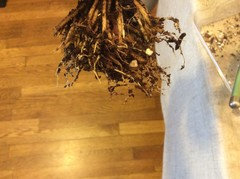
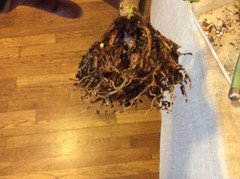
Also, I forgot this about coir: it falls off the roots immediately. So, when I lifted the plant from the pot, the whole thing crumbled and fell onto the table.
i didn't add nutrients to this mix, so that's why I'm repotting. Also, I want it in a pot with more than one drainage hole.
eta: there was about two inches of growing space left at the bottom, and I watered it yesterday. Fyi hth
- 9 years ago
Lauren, it was the store bought stuff in a block. Swells up when
soaked. Which I understand is also much the same way coir is
commercially available. There are two things that I get from coconuts (apart from cutting up the fronds as garden mulch). At the base
of the fronds there's small sheets of what looks like a woven cloth. I
use that at the bottom of pots to stop loss of soil through the drainage
holes. The coconut husks provide a shredded fibre as I don't have the
facilities to grind it into a powder. But sometimes I just chop it up
into chunks. The bulk of my plants are in the ground. A lot of
those in pots are waiting for me to get around to planting them out.
Then there's plants that are affected by soil pathogens in my garden and
have to stay in elevated pots. Some Amorphophallus such as titanum and
gigas are susceptible to nematodes and there's a lot in my soil.
Alocasias are affected by what I suspect is a soil fungus so have to be
kept off the ground. Although I also have several Alocasia that are in
pots sitting in water. And then there's epiphytes, most of which are on
trees but some in pots. The amount of coir used in any blend is what I
assess is suitable for the particular plant. As with the old saying,
"Horses for courses". And it's worked out well. BettaPonic SuperRoots
Original Author9 years agoLauren, I get the same sense at my local hydroponic store. I once went to one in Atlanta and I could tell there were pot growers. One one the owners jokingly asked if I was a cop.
- 9 years ago
Lololol!!! It was like talking to a bunch of slightly tipsy academics. Like, they were clearly high but still knew more about plants and soilless media than literally anyone I've ever met....
BettaPonic SuperRoots thanked Lauren (Zone 9a) BettaPonic SuperRoots
Original Author9 years agoI think the legal limitations on them makes them try harder with newer techniques.
- 9 years ago
Well, they sell marijuana every other block here in Tucson. I was shocked when I first moved here, but now I am used to it. I suppose that's why the hydroponics store does so well in such a small town. He said their business is booming.
And it's hard to keep a business going around these dusty parts....
BettaPonic SuperRoots thanked Lauren (Zone 9a) - 9 years ago
Funny you should mention hydroponic stores. Many years ago someone I knew told me that a particular hydroponic store was basically a front for distributing marijuana. I've never really been into hydroponics so never went in, never got to see whether there possibly was any truth to it. More than likely they were just a centre for distributing equipment and fertilisers and growers tended to congregate there. The shop's not there anymore, disappeared a few years back. Don't know if they were shut down or just moved elsewhere. But 'times are a changing' along with laws and it won't be long before there are businesses like this on all main streets. I guess in terms of the 'glass half full' it's probably better than having in back alleys.
BettaPonic SuperRoots thanked tropicbreezent - 9 years ago
Yes, I suppose so. I am still kind of amazed that marijuana is sold so freely here. And in LA, too, it seems. But then I think about how incredibly laid back tucson is, and I wonder if perhaps there is a correlation.
It took me a minute to figure out as well that many of my students are completely high off their heads on a daily basis. When I taught in on the east coast, that was a rare thing. But, now, goodness. But it is college after all....
- 9 years ago
Just read through this thread. A lot of interesting information and not without controversy apparently.
I must say though that Lauren - you come off as very defensive in your dialog with Al. From everything I know of Al, he is extremely knowledgeable and very objective. To me, these are the most important qualities regarding any topic.
Lauren, to put it bluntly, you seem to be one of those people who can just never admit they're wrong - even when piles of facts and evidence are handed forth. And then you have to go on and actually insult Al? What do you mean that he "doesn't even have a dog in the race"? This is a public forum and he gave more useful information in a few posts than you have in all of your posts combined.
Then you feel compelled to go on and talk about how you are a professor and how your students need to have certain sources etc.. Really? Insecure much? A professor who can't admit when they are wrong is the worst kind and, not ironically, one of the most common types in our educational system.
I'm greatful there are people like Al on this site (and on Internet forums in general) who are highly informed and mature enough to keep their personal biases and insecurities out of the discussion. Sadly they are in the vast minority.
- 9 years ago
People should feel free to speak up when they encounter hypocrisy. If they choose not to or if that isn't their cup of tea then that's fine as well. I'm no expert or horticultural professional - I found this great houzz forum in search of advice for a ficus plant (which I found a great deal of). There are many very knowledgeable people out there such as Al who offer a lot of time and energy with nothing in return.
- 9 years agolast modified: 9 years ago
I recognized the debate w/the prof had morphed into an exercise in futility; but I had left enough information to ensure that people whose minds weren't closed to the fact that coir and CHCs have issues that need to be worked around would at least look hard at their choice of coir as a primary or significant fraction of their medium if noticing results were sub-par. The extant problem is, the average grower would have no idea how to address these issues. While I do know how to work around the inherent issues, I've decided it's not even close to something I'd want to do, given the issues aren't associated with the use of soils based on peat or pine bark. It's actually easier to work around the extreme water retention in soils like MG et al than it is to work around issues associated with coir.
Prof Lauren actually reached out to me last summer by way of Houzz Messaging with some very basic questions, primarily re soils. As I remember, we had a back and forth question/answer session that lasted for a while. Less than a year later, I was being schooled by a recent pupil. Since I'd already made the points I wanted to make, I figured it was time to search for an otherwhere opportunity to be of help. While I usually try to focus on presenting my thoughts in a positive manner, sometimes being negative about a particular construct can yield positive results for those who care to assign a measure of weight to the ideas presented and go with what makes the most sense.
Al
 9 years ago
Stackers I'm calling the bullsh** card. I think you wanted to try to get an argument started. Lauren and Al had already moved on a few weeks ago rather than continue to debate the issue. Why else would you stir the pot except to be antagonistic? Not to mention, Al is a big boy, fully capable of defending himself and his ideas.
If you have something to say about using Coco coir as a potting medium feel free to post away. Otherwise it's nothing but annoying for you to post just for the purpose of attacking people personally.
- 9 years agolast modified: 9 years ago
Wow. I go away for a few days...
stackers: you don't know me, and you can't make assumptions about who I am as a person or a professional. Also, why do you care? The argument was over.
al: you have been and continue to be a source of wisdom and advice for me. There is no need to be passive aggressive by calling me prof. Lauren. We have had friendly and respectful exchanges, and I look forward to that continuing. There's no way for me to measure how much I have learned from you. So much.
We had a disagreement. It happens. This forum is like any other place where people spend lots of time together. Sometimes we clash. I definitely wasn't going to hold a grudge, and I hoped you wouldn't either.
Stackers: seriously, go to hell.
- 9 years agolast modified: 9 years ago
Why one person that posts his/her opinions should go to hell and other should not for doing the same?
- 9 years agolast modified: 9 years ago
Rina: I can answer that for you. Because stackers chose to make personal attacks against me. That's why. Would it be better if my comments to stackers mirrored his to mine? That would involve me calling him insecure and making other assumptions about his character.
i didn't post my opinion about stackers. I responded to his comments about and to me. He wasn't starting a conversation. He was telling me off about things I've written in this thread.
If you have found an oblique way to tell me to go to hell, then I would say, ditto to you.
if not, I would ask why you felt the need to step in and say that, and why you didn't feel the need to address stacker's comments to me as well.
I think it's funny that my one line, "go to hell" can be seen as more attention worthy or transgressive than stacker's full out attack in which he suggests that I am what's wrong with th educational system.
We had moved on, Rina. What is the point of your passive aggressive comment? To keep things going? Al and I left it alone, so what do you hope to achieve?
I don't get it. If you think what I said is inappropriate, say so. But I sure would appreciate it if people would stay out of it if they have nothing productive to say.
geesh.
- 9 years ago
Unfortunately the internet is full of cyber bullies. Lauren, do what I do - ignore them they're not worth it.














Lauren (Zone 9a)