

Tomatoes sick
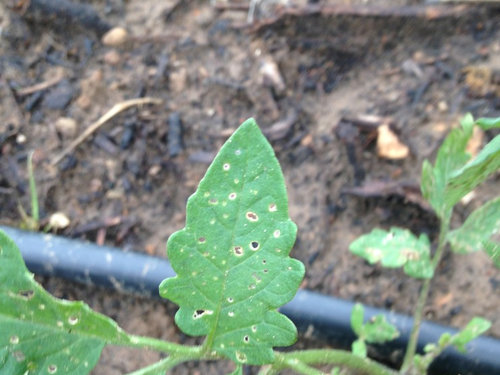
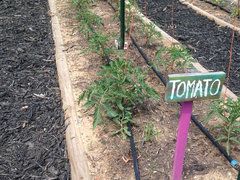
1st pic.. insect damage sprayed with malathion about 4 days ago seems to have helped
but I dont think that is the main problem.
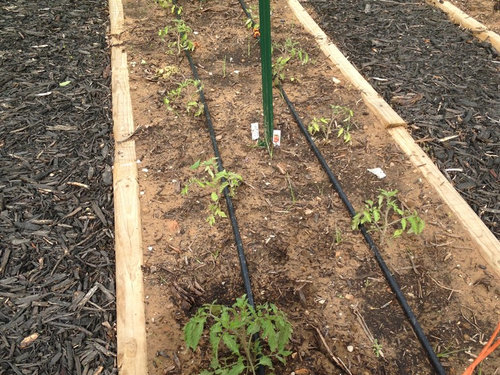
2nd pic.. The plant closest seems to be doing the best of all of them pic 1 came from this plant
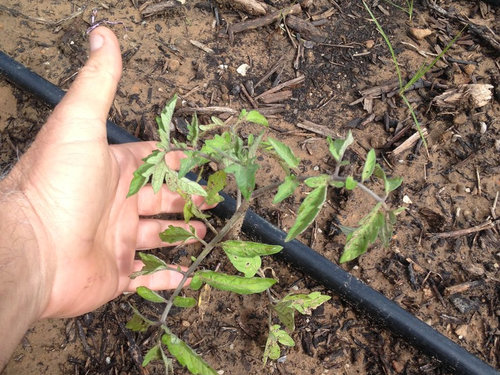
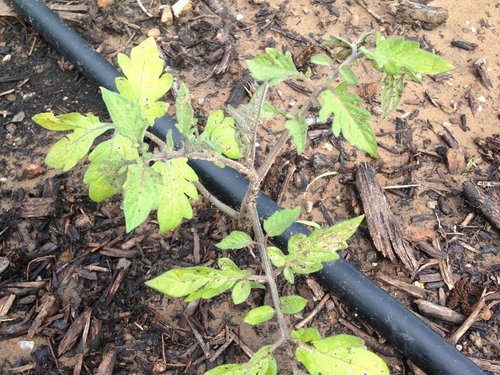
3rd and fourth pic..They just look sick
I got a trailer load of compost last fall from the norman facility and put probably 4" on this bed and turned it in before planting also added about 5 cups of 13-13-13. The compost still had lots of small sticks in it and wondering if they are tieing up my nitrogen.
Maybe too much water. I have completely quit watering but have had a lot of rain.
I lost a lot of plants last year also..Maybe disease? They just seem stunted.
Anyway hoping you guys can help me save these plants.
Thanks, James
Comments (33)
 9 years ago
Jake, how long between the time you tilled in the compost to the time you transplanted? How's the weather? Has it been cool?
All my tomatoes and peppers are stunted like this because it is cool. Today, I was gearing my mind to the potential of not having much of a summer harvest and focusing on fall gardening plans as a backup. Our average frost date has passed. I have no protection for them.
I believe your yellow tomato is probably just water stress. I have a lot of sticks in my own compost. When those sticks go through the hot composting process, I don't concern myself with nitrogen fixation. If it were raw wood or wood chips, it might cause some problems, but if your soil deep below is healthy, a surface application of wood chips as mulch will not hinder, still. A small quantity of wood in compost mixed into healthy soil shouldn't be a concern. These will slowly break down and add more organic material into the soil.
The babies with bug damage: They'll continue to grow and probably outgrow those bugs, but the application of malathion will prohibit their predators from showing up and managing when they return. Still, they will grow just fine even with holes in the leaves.
James Drake
Original Author9 years agoThe compost just sit on top all winter and I turned it in just before planting. The soil under these beds are very poor and rocky. I brought in topsoil last year when I started this garden probably about 6" worth of decent soil. I would say overall it has been pretty cool. I think I was over watering but have stopped but have had a lot of rain the past week. If it warms up and drys out how long do you think before I see improvement? If they dont perk up pretty quick I may replant.
Thanks so much for your response
Related Professionals
Decatur Landscape Architects & Landscape Designers · Bainbridge Landscape Architects & Landscape Designers · Annapolis Landscape Architects & Landscape Designers · Indianapolis Landscape Contractors · Philadelphia Landscape Contractors · Longview Landscape Contractors · Martinsburg Landscape Contractors · Taunton Landscape Contractors · Flagstaff Landscape Contractors · Cowansville Landscape Contractors · Middlesboro Accessory Dwelling Units · St. Louis Accessory Dwelling Units · Gloucester Accessory Dwelling Units · Laconia Accessory Dwelling Units · Plattsburgh Accessory Dwelling Units- 9 years ago
You're welcome, James. I look forward to Dawn posting her opinions, too.
As soon as warm weather comes in, they'll perk up right away, but be patient because unless you're taking photos you won't even see it and might mistake them for being totally stunted.
I've had tomato plants curl up on me like this that went on to grow into gigantic vines that produce prolifically
We are supposed to get rain all week and I'll be surprised if a couple of my weaker seedlings survive, but they might still!
bonJames Drake thanked chickencoupe  9 years ago
The insect damage appears to be minimal, just ugly. Honestly, I wouldn't be spraying for that. Once it warms up and the plants get growing, I suspect they'll be fine.
Bon's point could be right on, that they've received too much water recently.George
James Drake thanked MacmexJames Drake
Original Author9 years agoThanks guys..just hope they make it till dryer and warmer weather. Might make me some row covers next year, that would give a guy a little more control over this problem.
James Drake
Original Author9 years agoVery good point about my use of malathion and wiping out beneficial insects...Duly Noted. Still trying to get past my more is better syndrome lol
Thank you very much for your post Dawn
- 9 years ago
You're welcome. It takes time to reprogram your mind to try to work with nature instead of fighting nature, but I know that you can do it, and you'll have a healthier, happier, thriving ecosystem in your garden because of it.
James Drake
Original Author9 years agoThought I would give an update and let yall know you all were right. I let them dry out and they are perking right up. Cant wait for that first tomatoe they are always the best. Yum
James
- 9 years ago
James, That is great news. I'm glad they have perked up and are doing better. I agree there's nothing like that first ripe tomato of spring. I never get tired of it and look forward to it all winter long.
Dawn
 9 years ago
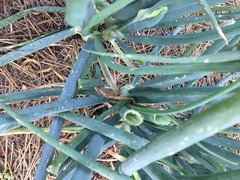
I have a question about a pest I just learned of the hard way, the flea beetle! They ate holes in my tomato plants and I read that they will usually get better on their own, which they did, all except one. I went ahead and pulled it and bought another plant and planted it in the same hole which is probably why that one was severely damaged! I don't know squat about that pest, I'm thinking I ought to pull that poor thing and try one last time. (I have a small garden, only planted 4 tomatoes) any advice for me? Is there a way to prevent those pests from getting to it? Do they live in the ground? Should I cover the new one till it's bigger? And another question. This year I planted shallots for the first time and well, all of my garlic is doing amazing! I cut off many scapes that I fear I let grow too big and the stems are big and hollow. Did I do the right thing? I don't want to hurt the plants, should have snapped them off a while back.
- 9 years ago
I'm confused. What about garlic and shallots? The picture looks to be shallots or some kind of onions. I usually pull any plants that are putting up flower stalks except for two or three that I leave just to bloom for the bees.
- 9 years ago
I guess much depends on how bad your flea beetle infestation is. My plants usually get hit by flea beetles for a brief period early in the season and outgrow the damage. Usually, after that first round of damage, there isn't any more. You should do whatever feels right for you. I do not remove and replace tomato plantsif they are hit hard by flea beetles or anything else--I let them recover on their own and 99.9% they will recover just fine. If your plants have been in the ground for several weeks now, they'd have large enough root systems to outgrow damage in most cases. Any new tomato plants bought and planted this late are not going to do as well as plants that have been in the ground for several weeks, so I'd opt to keep whatever plants still are in the ground unless the plant seems unlikely to live. The hot June weather is just around the corner and new tomato plants put into the ground now may not start blooming in time to set fruit before the heat shuts them down. If you want to buy a new plant to replace the replacement plant, choose one that sets well in hot weather like Phoenix, Porter, Heat Wave II or Summer Set.
I've never done anything for flea beetles, but you can spray with an insecticide labeled for them next year when they first show up. Watch for them around the time the temperatures hit 50 degrees because that usually is when they emerge. You could spray the plants with something like Safer brand insecticidal soap. You probably could exclude flea beetles from your plants by covering them with a lightweight floating row cover or Micromesh. I don't do that with tomato plants because I haven't found it necessary but I grow squash under Micromesh to exclude squash bugs and squash vine borers. If the thought of flea beetles hitting your plants next year makes you nervous, buy an eggplant plant next year and plant it in a pot a few feet away from the tomato-growing area a couple of weeks before you intend to plant tomatoes. Use the eggplant as a trap plant. Flea beetles seem to prefer eggplant plants and will flock to them instead of to tomato plants. When you see the flea beetles on your eggplants, kill them all. Hopefully you can wipe them out before your tomato plants even go into the ground.
With the garlic, I imagine it will be fine. While the conventional wisdom is to remove the scapes from hardneck garlic by the time they have formed two loops, you don't really have to do that. Some varieties may do even better if you leave the scapes on the plants. Don't worry about it and don't overthink it. In most cases, the plants do just fine if we plant them and leave them alone---they know what to do and how to do it, and in fact, really don't need for us to attempt to micromanage them. So, Hailey, I hope you can relax and not worry about your plants. My favorite part of gardening is that it is fun and relaxing. I find it generally is only stressful if we let it be. As long as you plant your plants in good soil, protect them from wildlife or domestic animals that would eat them, lay on them step on them, etc. and water them occasionally, they really don't need a lot from us. Plants can overcome a lot of damage if we allow them to do so and it tends to make them stronger in the long run. Plants also do not have to look perfect to produce a harvest. Remember that we grow edible plants for their harvest and they should not be expected to serve as perfect, ornamental plants. That's not their job!
Happy Growing,
Dawn
- 9 years ago
Thanks for the advice, I will certainly remember the eggplant trick next season! (I'm not a big fan of it anyway) And that picture was of my shallots, I did chop the scape stalks off, my first shallots, now I know what to expect!
- 9 years ago
The waiting is the hard part.
I'm not good at waiting, so we have tomato plants in pots indoors in winter. Harvested the first tomatoes from those plants in mid-March. Those plants now are in the ground and still producing ripe fruit periodically. You get spoiled by those early fruit and decide you cannot live without them. And, it is worth every bit of trouble carrying the plants out into sunlight and back indoors on cold nights just to have early fruit. As long as I have an early plant or two in big pots indoors in winter, I don't get into too much of a hurry to rush our home-grown plants into the ground too early.
We've been getting ripe tomatoes from our own home-grown plants for several weeks now, but mostly just Sungolds. I put those plants in the ground in mid-March. Some of the varieties that are non-cherries now have full-sized fruit, but the only ones breaking color are from the early Better Boy plant that we grew in a big pot indoors. I'm about to harvest the last 4 fruit it has that are coloring up. These are fruit that set while it still was indoors or right after I moved it outdoors. Sophie's Choice now has some full-sized fruit that should start breaking color within the next 5-7 days, and a few other varieties are not too far behind.
James Drake
Original Author9 years agoWow Dawn I never thought about growing them indoors like that...great idea for some early tomatoes. When did you start those that have been giving you ripe fruit for weeks now? Ive got lots of blooms but no fruit set yet, so alas it will be a while before I get that first taste.
James
- 9 years ago
A question for Dawn, please. I see you talk about growing tomatoes in- doors. Are you talking about in the house or in a greenhouse? And, are there tomatoes that work better than others if it is literally "in the house"? I had an unheated greenhouse in MO, but didn't try tomatoes and don't have good windows for it here. I do have a grow light set up that my son built for me that I use to start plants, but am limited by height of plants that will fit under the lights. I have a back deck that I move plants onto when the temps allow.
FWIW.. we built up raised beds in a green house with large rocks, then smaller and smaller, next sand, then pvc water lines, enough sand to cover, a hardware clothe cover, and growing medium over that. We had a small travel trailer hot water tank with an inline pump on a timer. When the temps went below 20 degrees it was turned on... the lettuce, etc. covered with floating row covers, timer set for 20 minute intervals. We kept fully grown lettuce through 2 degree nights as long as the soil temp was about 60 degrees under that cover. I believe those beds were three concrete blocks high for easy access. Sometimes we had a few lettuce leaves frozen that touched the exterior plastic cover. I always tried to time it so the lettuce was fully grown by the end of November.. it would set there all winter waiting to be harvested. Got the idea living in Castle Germany back in the nineteen sixties. We were stationed on top of a mountain outside of town.. there was a green grocer who had his own cold frame set up. ( BIG SETUP ;-)) His lettuce was fully gown when the daylight hours and temps were low. We could go there and ask for lettuce (usually a butterhead type) and he would just go out and cut it for us fresh. I figured if he could do it, so could I.
I love the exchange of ideas on here... hope I can contribute once in awhile.
James Drake
Original Author9 years agomil_533 no problem as far as i am concerned the more the merrier :)
- 9 years ago
James, I started some of the them November 1st and the rest around January 7th-10th.
Re: November 1st. For these plants, my goal was to have tomato plants at the very same size as the ones that normally arrive in stores here around February 1st. In that sense, I succeeded, but it was a pain in the neck to keep them happy indoors that long. So, if I start any that early next year, it will be just a very small handful of plants. The Sungolds were in that group and already had ripe fruit on them when I transplanted them outdoors. It was insane. We actually had harvested several Sungolds off the plants while they still were upstairs on the light shelf. I cut them back severely when we transplanted them because they were too tall to survive being transplanted at their full size when the wind was supposed to gust into the 40s over the next couple of days (and it did gust that high).
Re: The early January plantings were earlier than I usually start seeds, but January was so hot that I felt like I'd be able to transplant them outdoors early, so I started them early. Usually I start seeds for my main crop on Super Bowl Sunday and they're ready to go into the ground by mid-March. Starting earlier wasn't a bad idea, but it meant I had to keep them happy indoors for a couple of weeks longer than usual.
We've done the early tomatoes in big pots that I can carry outdoors on sunny days and indoors on cold nights/days for almost a decade now and have become immensely spoiled. Usually we get those first tomatoes around mid-April, but this year we got them in mid-March....not something that we'll be able to replicate every year unless every winter is as insanely hot as this past winter was. Eating the first BLT sandwiches in mid-March felt completely and totally surreal and we loved it. (grin) Being spoiled by having home-grown tomatoes, we don't buy grocery store tomatoes ever---not even in winter---so the first tomatoes are eagerly anticipated and long awaited. Even if our last fresh, home-grown tomatoes were eaten in December, by March or April it feels like it has been a lifetime since we last had a fresh tomato.
I'm in extreme south-central OK just across the Red River from Gainesville, TX, so my weather is more like the weather in the Dallas-Fort Worth metroplex than the weather in OKC or Tulsa. That means we warm up a lot earlier some years and we have to plant extremely early to get good fruit set before the temperatures arrive that shut down tomato fruit set. It hit 90 degrees today at our house, and most of the big-fruited tomatoes stop setting fruit at daytime highs of 90-92 degrees. Luckily, I don't think we are in the 90s to stay (I certainly hope not!) but it is a reminder to us that we need for our fruit set to hurry up and happen before the heat sets in to stay. I try to get my tomato plants in the ground 1 to 2 weeks before my average last frost date, and just cover them up with a floating row covers if a cold night threatens. This was a pretty good year. I don't think we ever went down to freezing at our house after I put the tomato plants in the ground, but I had to cover them up a couple of times because it was going to be close. Our nearest OK mesonet station did go down to freezing several times, but they have consistently hit lows of 6-7 degrees lower than us on a lot of spring nights (backing up a complaint from friends who live very close to it that they cannot have a garden any more because the late freezes get it every single time).
Mil, Generally I raise them in a spare bedroom that has two very large east-facing windows and one south-facing window. That room is sunny and warm all winter---so much so that we keep the heating vent in that room closed off so it won't overheat. I have two sets of light shelves in there and raise all my seedlings in that room as well. Some years I have carried out the big early plants every morning to get sunlight and brought them back in during the late afternoon hours, but this year I mostly just left the Better Boy in its big pot sitting by the sunny, south-facing window and it did great.
I have a greenhouse and can use it for tomato plants, but would have to heat it and I never really intended for it to be heated. I mostly just use it to overwinter some zone 8 plants that are marginally hardy in our zone 7b winter, and also use it as a place to harden off seedlings raised indoors. There is a method to my madness---the indoor light shelves will hold only so many plants, so once I move flats of seedlings out to the greenhouse, then I have empty shelf space and can start more seedlings.
Some years I have overwintered tomato plants in the unheated greenhouse, but honestly, the daylight is so poor (both weak in intensity and short in duration) in December and January that the plants barely grow and any fruits that set enlarge and ripen terribly, terribly slowly....so it isn't even worth the effort. Also, tomatoes need heat to develop their full, rich flavor and since I don't heat the greenhouse, they don't develop their full flavor. Do they taste better than grocery store tomatoes? Yes, but only marginally so. Sometimes you have to pick your battles, and I choose not to heat the greenhouse all winter just to get a few early tomatoes, when I can get them from plants raised indoors in a sunny window anyway.
I need a greenhouse divided in half, with an actual wall down the middle, so I could overwinter plants and grow cool-season plants without a heater, and a smaller section that I could heat for tomato and pepper plants. I don't know if we'll ever do that though. When I try to keep all the greenhouse doors and windows closed in winter to build up heat for the tomatoes, then the cool-season lettuce growing in the greenhouse gets too hot and bolts. When I try to keep all the greenhouse doors and windows open as much as possible in winter to keep the lettuce cool and comfortable, the tomato plants stall and don't grow. So, even with a greenhouse, you have to make choices about what crop is your biggest priority and manage the greenhouse accordingly. I could try telling my husband I need two greenhouses, but I'm pretty sure he won't buy that story---even if it is the truth.
Lettuce is easy in the greenhouse as our outdoor temperatures rarely drop below 10 degrees in winter down here. This year we had one cold spell (and dropped down to 4 degrees) in January but the greenhouse stayed around 18-20 degrees with no heater. I can throw a row cover/frost blanket over greenhouse plants prior to a cold night and they will tolerate very, very low temperatures in there.
Everyone in our immediate family is a member of our local volunteer fire department and winter is our worst fire season here, so I'm usually so busy with VFD stuff that I don't have the time available consistently to fuss with greenhouse plants too much. It never fails that the very times during which I am transitioning plants from the indoors to the outdoors and planting the garden coincides with the peak of our winter wildfire season, and I'm always rushing from garden/greenhouse to fires back to garden/greenhouse back to fires. It is an odd combination of activities, and I have to really watch the plants. If I leave for a big wildfire and cannot make it back home at the right time, the plants can sunburn if left out too long while I'm hardening them off or can freeze it if gets too cold at home before I get back from a fire. I spend time (too much of it!) frantically carrying plants back indoors before I rush off to fires in January-March, so I don't get too fancy with what I'm doing with the greenhouse because some days I barely have time to open and close the doors and vents, much less worry about whether everything inside is warm enough, cool enough, wet enough or dry enough. I love gardening, but in winter I try to ensure I get some good downtime to make up for the fact that it occupies virtually all my time in the growing season.
Dawn
- 9 years ago
Thanks Dawn. Whole different situation. Even though we were involved with a VFD, even that was different. We were surrounded by National Forest which meant they pretty much took care of wild fires and with very little grass to catch on fire, it was mostly a way to keep Fire Insurance at a minimum. We practiced, but saw almost no action. ;-) In 31 years, only had one forest fire which couldn't really travel with the wind because it was trapped between the main body of the lake and very deep cove that was wide and wandering up this and that valley. Besides we were no longer holding down jobs... did I mention that I am older than dirt. Take care all... Millie
James Drake
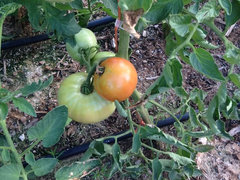
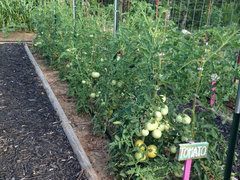
Original Author9 years agoHi Everyone thought I would give an update on my tomato patch. I think they are doing really well with lots of tomatoes. I pulled my first one you see in picture about a week ago, and I was a little disappointed, it had a nice flavor but was a little mealy. The ones I pulled yesterday are awesome. I Love Tomatoes lol
Anyway just a quick update and to say thanks again for everyone's help
James
- 9 years ago
Looking good James! My first few tomatoes were mealy too. I wonder why? Oh well I've had a bucket or two of toms since that have been perfect. Happy gardening!
Alexis
James Drake
Original Author9 years agoAlexis I read somewhere one cause can be over watering but whatever the cause it seems to be fairly common. My main problem now is how I can eat all I want without making my mouth sore. hahaha
- 9 years ago
James, Thanks for the update. I'm glad the plants are doing so well. The mealy tomatoes usually are a result of too much rain or of too much cool weather as the fruit was ripening, but really, I think that any adverse enronmental condition can cause mealiness. I notice it more on the earliest tomatoes of the season in general, or on late tomatoes ripening after, let's say, October 1st. Mealiness is an odd duck---you can have a lot of it one year, little the next---or you can have it on a specific variety one year but then not observe it with that same variety the next year. There's not much we can do to prevent mealiness since we have little control over the weather, but if a gardener has a constant problem with it non-stop, then that's likely from excess fertilization and excess moisture. I suspect you and Alexis both were observing the typical too much moisture/cool temperature type of mealiness. Now that the weather is hotter, and presumably will be drier, I bet you won't see the mealiness any more.
Dawn
- 9 years ago
James, your garden look great! It brings up a question I have, but I'm not being critical okay?
See the tomatoes that are in the open up frong? they're a lighter green than those beneath. Is that sunscald? Is it or will it be an issue? (Actually, I think the tomatoes below down in front are actually blushing.)
I ask because I haven't grown tomatoes too many times and am learning about the issue and how best to manage the culture for tomatoes. And, I guess the answer lies in where they are in my yard. My tomatoes only receive about 4 hours of direct sunlight right now, but its the intense sun. This will all be obvious to me in another month or so, but I'm impatient and curious.bon
James Drake
Original Author9 years agoThats a good question Bon. I have little experience in growing tomatoes also. I just walked out to take a good look and they arent as light as the picture looks but they may very well have sunscald. I have another bed of tomatoes that are not single stem trained and have more leaf shading and they do seem to be a little darker, but not by much. Im glad you pointed that out, it may be time for me to start thinking about rigging some sort of shade cloth.
James
- 9 years ago
I've read about it before, but back then I was just happy to get the plants to grow and didn't soak in the details. I'll read up on it this winter. I think it's time to shade. I do remember reading that sunscald happens with both heat and sun. We're getting around to this, I guess.
Ima throw some old cotton sheets over the plants which still look very good.
I didn't plan it, but the tall corn is providing partial shade. So I think mine will be okay this year.
bon  9 years ago
What a beautiful garden, James. I'm also following this thread with interest. And now I'm all excited about finding the most delicious tomatoes to plant in January/Feb.
James Drake
Original Author9 years agoThank you Nancy. I live on top of a rocky hill so I had to have soil hauled in to even have a garden so I try'ed to fix it so it would be the least amount of work, including automated the watering. My brother in law gives me a hard time telling me I probably have $15 a pound in my tomatoes which is probably true lol, but I really enjoy doing it.
If your wanting early tomatoes Dawn has very good info, I was green with envy when she told me she had tomatoes in mid March.
Good luck with your gardening
James






Okiedawn OK Zone 7