Software
Houzz Logo Print
mattp321

Nepeta "low" vs "junior"

9 years ago
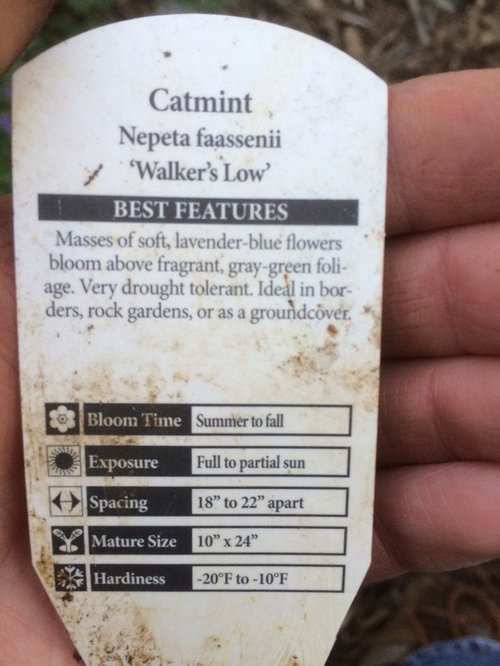
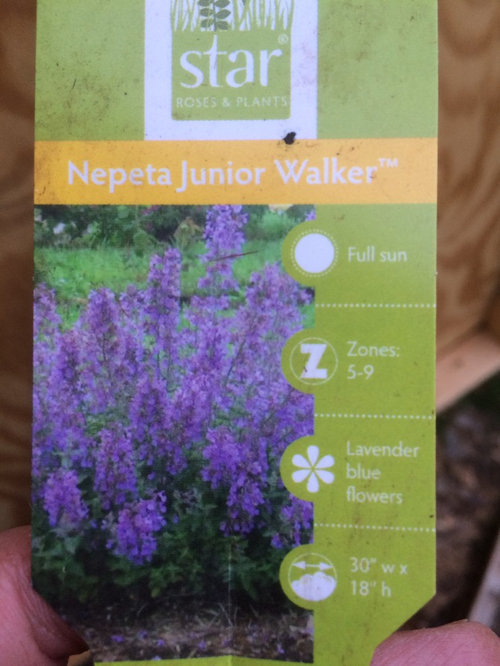
Okay so I read online about how great "walkers low" is, sounds perfect... then I read that "junior walker" is basically the same but smaller "half the size"... so of course I went out and bought one of each from a reputable nursery to test them out, and I figured this would be a piece of cake... then I looked on the plant tags and now I'm really confused as the size dimensions on the tags don't really jive with the claims online about the sizes and I was wondering if someone with expierience with both can tell me with certainty the difference:


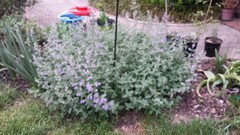
and here's a bonus pic I took today of nepeta outside the US Supreme Court:

Comments (17)

  • 9 years ago

    My Walkers low got bigger than that. More like 3' wide.

    mattp321 thanked wantonamara Z8 CenTex
  • 9 years ago

    My walkers low is 2 years since I bought a quart size and is now atleast 4 feet wide

    mattp321 thanked nchomegarden
  • 9 years ago
    last modified: 9 years ago

    Huh, my walkers **edit - I have the Jr version ** is going into it's third year and is less than 2 ft in diameter.

  • 9 years ago

    Hmm so maybe it not a width difference, it's just a lower height?

  • 9 years ago

    I have no experience with Junior Walker, but those dimensions for Walker's Low are way off. Mine is about 18" high; it would be higher but the weight will make it flop. Width about 4 feet wide.

    mattp321 thanked linnea56 (zone 5b Chicago)
  • 9 years ago

    The cultivar name 'Walker's Low' doesn't describe the plant's growth habit - it is named for the garden in Ireland where the plant was first discovered. If growing in a moderately rich soil and offered plenty of water, the plant can get quite large - 2-3' tall and as wide, if not wider. And it could tend to flop. Drier and leaner conditions will usually result in a more compact size and upright habit.

    'Walker Junior' is just a more compact version of Walker's Low but just how compact will be dependent on growing condition.

    mattp321 thanked gardengal48 (PNW Z8/9)
  • 9 years ago

    I have four 'Walker's Low' underplanted among some light pink roses at my fence line. They grew much larger than I anticipated and some of the longer stems brush the top of my 3' picket fence. Each one flops open from the middle by late spring (the annual flop happened just this week in fact) every year and looks awful and embarrassing as they are right along a public sidewalk. I always swear I'm going to replace them with something (maybe the shorter cultivar?), but usually just end up cutting the half back on my side of the fence and let the front half fill in. By the end of the summer it looks decent and I usually give up on the idea of replacing it until next year's flop.

  • 9 years ago

    as gardengal mentions...the richer the soil, the greater the flop;)


    I have 4, planted in 4 different beds. The one in the raised
    bed with rich, amended soil, gets the biggest. To corral the flop I shaped a
    section of that inexpensive short wire garden fencing that has arches, making
    each panel curved, then linking them together. So, like a 1 foot tall cage. I even left it on
    over winter, because other wise when it starts growing fast it gets away from
    me. If any tips get through the wire to the outside, I try to pull them back in
    before they get too long. Once it’s full you never even see the cage on there. It
    will still flop a bit but it’s not so open in the center.

    One in my front yard that was starting to outgrow its space
    I moved to a side yard last summer. That is unamended soil that seldom gets any
    watering except rainfall. It will be interesting to see if that one doesn’t
    flop.

    Another is tucked into a odd spot hemmed in by bricks and with
    stones embedded in the soil. That one has not flopped.

    Maybe you can shear it too to make it shorter before it
    starts to bloom.

    I went to 2 garden lectures in the last 2 weeks where this plant
    was mentioned. In each case speakers were very quick to say, while still
    recommending it, that “The name doesn’t mean its short!” But I think that name
    must have mislead many people, including myself, with the first one. I think
    the name should be revised to something like, “Walker’s
    GIANT Low catmint”, or “Walker’s Low
    Read-the-Other-Side-of-the-Tag Catmint” or something.

  • 9 years ago

    I like it because it likes lean alkaline soil and little water.

  • 9 years ago

    Yes thank you and thanks to everyone who's left comments, it's been very helpful. Basically my takeaway so far is that this plant's form is extremely site-dependent: both size and floppyness. I'm trying to grow as a groundcover on unamended clayish Virginia soil, some areas dry others moist. Basically I'm just going to have to plant some and test things out for a year or two I think. I wish it was more straightforward!!!

  • 9 years ago

    Gardening is all about flexibility , plans gone to hell and delightful serendipity.

  • 9 years ago

    That's great Wantonamara and so true. Some of my greatest garden features are more serendipity than design.

    Matt, my post is the only one with direct experience Jr or Blue Wonder, both of which I would call loosely compact compared to Walkers Low which is a larger version.

    All plants act differently in different conditions- some more than others. However, I think others are sharing their experiences with a cultivar ("Low") that was never intended to be a compact plant. You can judge from my pictures if you think Jr or Blue Wonder are compact enough. I have found for my 6 plants for the size to be rather consistent.

  • 9 years ago

    Posierosie- yes thanks for that... I believe your photos show that if I want to create a full groundcover effect with "junior", the plants should be spaced approx 12-16" O.C., which is quite different than the 30" spacing/width listed on my photo of the plant tag...


    which raises an interesting follow-up question: does this plant "reroot" from these stalks as they stretch out and touch the ground? So will this patch just indefinitely expand? Supposedly it's very easy to root nepeta cuttings...

  • 9 years ago
    last modified: 9 years ago

    Hi Matt,

    I think at 30" you would see the individual plants rather than a mass. I would expect minimal overlap. I might try the 16 - 24" for a hedge like effect.

    Remember, if your mileage varies, digging and rearranging is a great workout. :) This plant seems to not mind being transplanted as long as you keep a good amount of the root system and water in well afterwards.

    I have not had luck with rooting twigs and I have tried twice. However, I didn't use rooting hormones and literally just stuck it in the ground and walked away.

    I have divided it and found it a bit touchy with some portions taking off and others dying. I think the ones that took off were larger clumps with a good amount of roots. Again, this goes against the advice that they root readily as the portions that died had "some" roots, but were unable to grow enough to sustain themselves in time.

    I have had one seedling (I think) and the other kind of split in two. I'm thinking the split one more did that ring that older perennials sometimes do, but instead of a circle with an empty spot, it just went in two directions.L

  • 9 years ago

    PS> update us w pictures!

  • 7 years ago

    My Low Walker is 1 year old and a good yard across and 18 inches high and still growing. It has not stopped blooming and with its grey foliage makes a lovely hazy background for the echinacea Pow Wow Wildberry and White which really pop against it.