Software
Houzz Logo Print
miniplants

Need advice about Cattleya warscewiczii

9 years ago
last modified: 9 years ago

I have a Cattleya
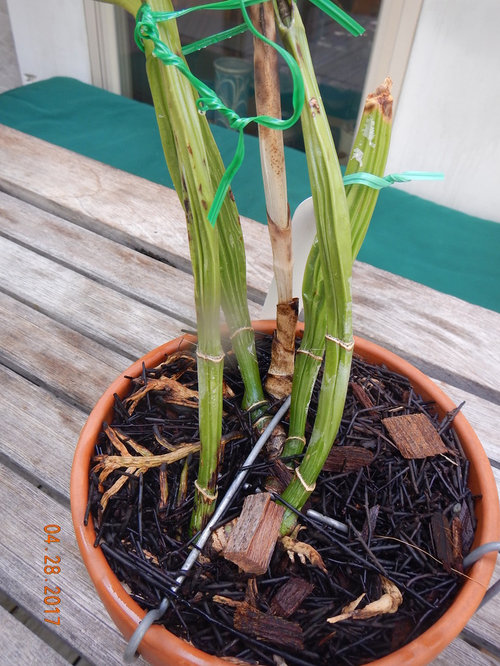
warscewiczii (bought at end of December 2016) which is in my southeast window
among my 3 other catts plus a dendrobium. It came with 5 pbs, each with
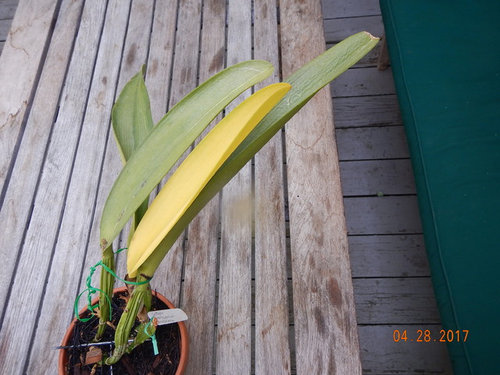
one long (9-13"), healthy-looking leaf. A couple weeks ago a leaf on
an older pb suddenly turned completely yellow. I removed it. The
other day I noticed that the youngest leaf is doing the same thing
(yaaa!). The leaves on this plant do sit nearer to my supplementary 100W
LED supplementary lights than those on my other catts which either are shorter
or flopped, but the yellowing doesn’t look like heat burn: it appeared suddenly
and over the entire leaf, and nearby leaves are normal.
A little more on
the history of this plant: it never seemed to do anything at all after I
received it. Lore I have found for this catt relates to how to bring it
out of dormancy: you should start C. warscewiczii growing as early as
possible in late January or early February. You do this by giving it full sun
and teasing it with light spraying of water on sunny days. Once the “eye” (growing
point) breaks and begins to grow, continue to give it light sprayings of water
and as much sun as it can take without burning.

Cattleya
warscewiczii should not receive much water until the new growth is at least 4
inches tall. Too much water, too early, seems to retard rather than stimulate
good flower production, and even early growers like Linden felt this was
important enough to call to the attention of their customers. As the
growth gets taller, slowly begin to increase the amount of water, but even when
you are giving it heavy waterings, always let it dry out thoroughly before
watering again. The old pseudobulbs should be fully plump by the time the new
leaf begins to emerge.)

I followed this advice,
but no eye broke: the plant just sat there. I finally began watering as
for my other catts (which do have new leads and roots) in March, but the pbs
have not changed noticeably. They are deeply ribbed and firm (the sheathed
pb with the yellow leaf also is firm; so is the leafless pb that had done the
yellowing thing earlier).

I should note that my other catts are in a mix
of LECA pellets and lava rock; they get watered
(~ weekly) by immersing the plant's pot for 30 min in 1/4 strength Jack's
20:20:20 plus seaweed extract (Maxicrop) at 1 T/gal. I mist exposed roots daily.

I reluctantly
unpotted it (the normal right time to repot C. warscewiczii is soon after it
has flowered, which normally occurs in August-September). It was in a clay pot with slot-holes down the
sides and a hole in the bottom. The
vendor had it jam-packed (quite tightly) in shredded tree fern with a scattering
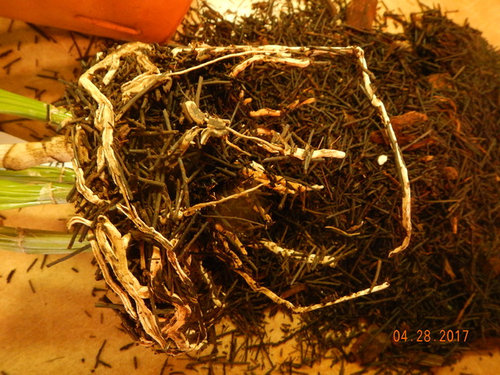
of bark. Upon unpotting, the medium was faintly moist (the
plant had been watered 4 days previously). My overall impression of the
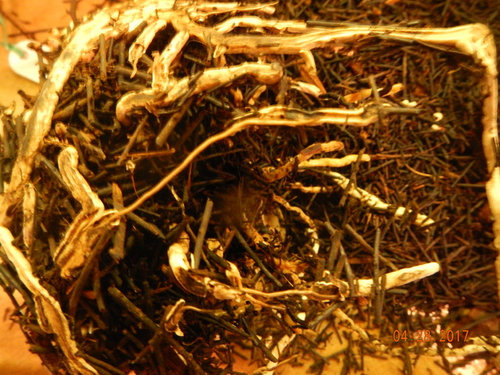
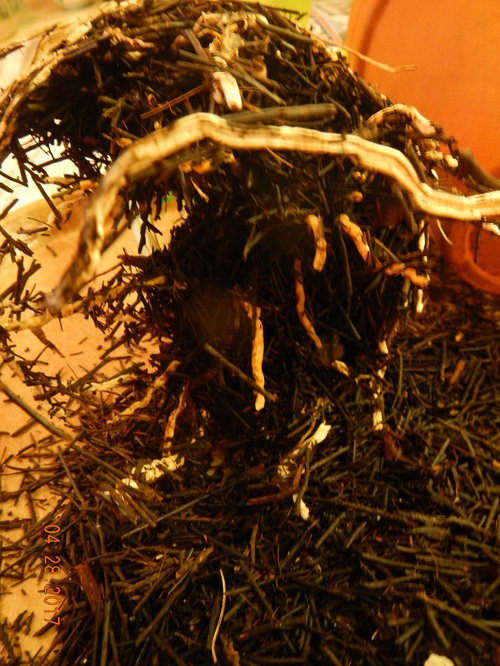
roots was that there was alot less root mass than I
expected. None of the roots was mushy, soft, or black.
The ones at the edge of the pot looked shriveled and old whereas the shorter
ones emerging from the center were plump.


I personally don't like
tree fern, so as long as I was disturbing the plant I went ahead and repotted
in a moistened mixture of LECA and lava rock.

Soooo: Why did this plant not initiate a new lead? What is causing this dramatic almost-overnight
yellowing of single leaves? What are your thoughts on this? What is your
experience with and advice for C. warscewiczii? Any input is welcome!

Sue

Comments (9)

  • 9 years ago

    Harvey, my plant was in the shredded tree fern when it developed the sudden single-leaf yellowing, and I know from when I unpotted it that the medium was still faintly moist after 4 days (and it normally would be watered again in 3 more days). Nonetheless, the peripheral roots in the pot seemed dried out, so maybe you are right! I appreciate your warning about the new medium it's now in, particularly since its pot has side slits: I will water it more frequently. The humidity should be OK, as its saucer sits in a lake of water (no water in the saucer itself). Thanks!!! Sue

  • 9 years ago

    I'm going to make some wild guesses. I do not grow this orchid but looking at the roots and that leaf I have a few ideas.

    Is it possible you are growing this plant too cold? If near a window, you are zone 6 and this orchid might need more heat to get going. Tree fern should be fine and drain quickly. The fact that it was still damp after four days suggests the roots are not taking up the water.

    I do not see any signs of root growth. Roots should be starting to show signs of life.

    The bulbs are shriveled. Those bulbs are losing moisture, thus the yellow leaf. They are getting nothing from the roots.

    If it were my plant, I would increase warmth. Put it in the sunniest spot you have. If your room gets cool at night, I would move the orchid away from the window over night. Put it back in the morning.

    Keep your lamps on all day for at least 16 hrs.

    I may be wrong, but something is definitely going on. There is no sign of growth from the bulbs or the roots. Forget humidity, increase heat and light and see what happens.

    Jane


  • 9 years ago

    I think you did the right thing by repotting into your preferred media, hopefully it will recover and start developing new leads. If possible get it outside where it is protected from mid-day sun, as you can't beat the real light. Always "ease" them out into the sun over a couple of weeks, they burn easily when first out. If staying inside, give as much natural and artificial light as possible.

    I might also suggest to stop the soaking. Dunking is OK, but soaking for 1/2 hour each week seems to be an unnecessary PIA... FWIW: I grow indoors under lights over winter and my catts all get watered 1x week with a small watering can. When outside it is weekly with a hose (sometimes 2x week if it is very hot and dry), which provides much more water as opposed to the can. But I think they use more water when outside also, so it works out pretty well for me.

    Good luck,


    Bob

  • 9 years ago

    Bob, good info. But when you speak of watering I think it is important to explain your potting. If you use plastic with a lot of sphagnum or clay pots with lava rock, the required watering will be different.

    On the dunking it also creates opportunity to pass along virus and other bad stuff.

  • 9 years ago

    Jane, it's in my sunniest location where often I need to run a fan to prevent overheating. My light is on for 14 1/2 hours. I will increase it to 16: thanks for that tip!

    Bob and Harvey, thanks for more input on watering. One thing I did yesterday was to put the clay pot inside a glazed ceramic pot to help retain moisture. I will develop a new watering protocol for it.

    Sue

  • 9 years ago
    last modified: 9 years ago

    Pot in a glazed pot is looking for trouble. Even the plastic pots have drainage holes. A general rule of thumb is orchids need to get wet and they need to dry to some degree or another depending on the plant. The 2 ways to adjust the moisture is the pot and the medium. Also involved in the calculus is your humidity and temps. I like the way you pot now. I think just increase the frequency of your watering. In their habitat, catts. are not in pots. Their roots are completely exposed. They live on trees or rocks. They get deluged by a short but very hard rain. Then it may clear to blue sky. And repeat. and sometimes repeat again and again. In general the best you can do is to mimic their habitat. To some degree. You can't bottle Costa Rica. And the good news is the orchids respond at partial efforts of trying to mimic their habitat...

  • 9 years ago

    Culture notes. I read a few culture notes and they seem to agree... http://www.orchidflowerhq.com/Cattleya-warscewiczii.php 

  • 9 years ago

    OK, no glazed outer pot; just more frequent watering, allowing to dry in between. Thanks! Sue

Sponsored
Schlabach Woodworks
Average rating: 5 out of 5 stars21 Reviews
Franklin County's Reclaimed Wood Professionals