Software
Houzz Logo Print
kristenlh

What's going on with my peegee hydrangea?

9 years ago
last modified: 9 years ago
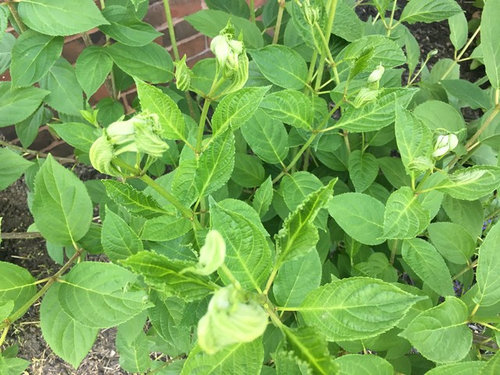
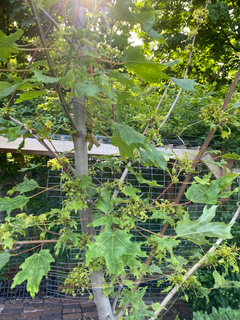
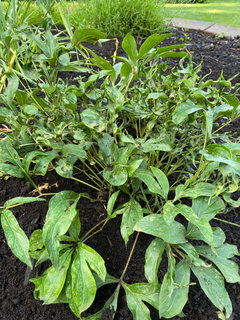
Never seen them do this before in the last 5 years I've had them. Is it just dehydration?

Comments (21)

  • 9 years ago

    Consider winter/cold damage, insecticide (chemical) injury and in some leaves that close up, consider some pests like the hydrangea leaftier larva insect (you can open them and see if there is "something" inside).

  • 9 years ago
    last modified: 9 years ago

    I vote for the leaf tier insect which sort of glues the leaves together to form a shelter and buffet all in one for itself. The caterpillars are sort of greenish IIRC, and as Luis said you can peal the leaves apart to see them. If that's what it is, either squash them through the closed leaves or clip them off and drop in a container of soapy water.

  • 9 years ago

    Wow, really?? Literally every single bud end is like this. Is that typical for all of them to be targeted by this insect?

  • 9 years ago

    My Annabelle gets almost all the tips attacked some years. Thus far I haven't seen them on the paniculatas, but they are a goodly distance away.

  • 9 years ago

    I do not have this pest here but someone once jokingly said that opening the leaf to search for the larva rated a 100 in her Eeeck Scale!!! LOL

  • 9 years ago

    Ugh gross! I told my husband this evening I needed him to take care of it. I would likely have nightmares if I tried! Literally all of the tips are like this. How long before they've destroyed the bud?? And is there a way to keep them from coming back?

  • 9 years ago
    last modified: 9 years ago

    If you pick them and get rid of them, all of them, this will prevent the moth(s) from coming back. The amt of damage is usually small if the numbers are not allowed to grow. If it gets out of control, you may need to spray Bt, Bacillus thuringiensis kurstaki (DiPel, Thuricide, etc). I would suggest -next year- applying it again but earlier than when you first detected the problem this year. So, basically spray in Spring 2018 too (maybe 2019 until the problem goes away for sure). Choose a time 2/3/4 weeks earlier than when the problem started and do it for several Springs in a row; maybe make a note in a wall calendar? I would write notes in December 2017 listing new things to do in 2018. Say Bt spraying of hydrangea must be done in April 2018 for example. The damage is typically cosmetic and I guess it would rarely kill a hydrangea. But never say never, hu? :o) Open one up to see if there is something inside so you know for sure.

    Kristen thanked luis_pr
  • 9 years ago

    Considering the leaves below the tips are also deformed or contorted but not rolled up tightly, I'd consider chemical damage before an insect problem.

    An insect problem is pretty easy to determine - open the tightly furled leaves and see if anything is lurking inside (you can't be a proper gardener if you get squeamish about insects!!). If nothing is there, then chemical damage/pesticide contamination is the culprit. Have you used any weed and feed on nearby lawns? Anything else?......maybe even on neighboring property?

  • 9 years ago

    Hi Kristen, I have this problem every yr(Leaftier Moth) they attack my Annabelles and Incrediballs, will start with leave sticking together moth looks like black dots as the leaves get more wrinkerly the moth grows...I also open leaves and run finger and thumb along the leaves..I thought the moths only attacks Arborescen

  • 9 years ago

    I had my husband open the curled leaves on two buds and we found nothing inside. We did use weed and feed on our yard mid-April. That totally could be it....

  • 9 years ago

    Good catch, gardengal48!

  • 9 years ago

    Thanks for all your help, everyone! Anyone know if the weed and feed may have destroyed the buds for this year? Or does it just need more water and over time it will recover?

  • 9 years ago
    last modified: 9 years ago

    Not sure if it destroyed buds. I am guessing no from the pics because it develops blooms on new wood and I am not sure if it has started developing flower buds yet or not. These flower buds are also located in the stems and I could not see any visible damage in the stems. If you do not see any damage to stems either then the chances of any impact on bloomage would be reduced.

    It may leaf out again on leaves that brown out (I did not see any in the pics); or it may just do without any leaves that brown out. The sorry looking but green leaves that stay green, will probably hang on for who knows exactly how long. Unless you carefully cut them. ;o)

  • 9 years ago

    If it is herbicide damage, I doubt it will have much of an effect on flowering. Even routine munching by my local deer herd has not stopped my paniculatas from flowering, if a tad later than normal.

  • 9 years ago

    you may need to spray Bt, Bacillus thuringiensis

    I have had the worm/larva cocooned in various hydrandea leaves the past two seasons. I did find the use of BT to be effective.

  • 9 years ago

    Update: I've been watering them frequently and the tips are starting to unfurl. They still look funny but they seem to be doing better.


  • PRO
    4 years ago

    We had the same issue with a peony a few years back. It didn’t die right away and in fact came back for a couple years but smaller and more shriveled each time. Now we have the same thing happening to a hydrangea, azalea, dogwood and Japanese maple! I’ve looked online everywhere for something showing similar issues but haven’t found anything! Someone PLEASE HELP!

  • 4 years ago

    That looks like chemical/herbicide damage.

  • PRO
    4 years ago

    But we don’t use any and why hasn’t it happens to all of our plants?

  • 4 years ago

    No weed and feed on the lawn? The neighbors never use any herbicides or the county spraying easements and right of ways?

    Some plants are more susceptible to herbicide damage than others. The effects are rarely uniform.