Software
Houzz Logo Print
marsha_moody76

Dawn Dishsoap????

9 years ago

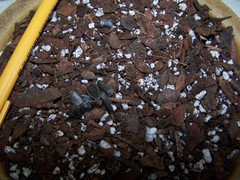
Hoping Dave will see this but looking for opinions on the use of Dawn dishsoap to rid my house plants of gnats. I have recently repotted a few plants and mixed in bonide white the soil but they are everywhere flying all over the house and driving me crazy. I have used dawn in the past but I was just looking it up again and read mixed reviews on the use. Any help or opinions would be great. Thanks

Comments (26)

  • 9 years ago

    I wouldn't use that. When using soap with plants, something like pure castle peppermint soap is best. But I don't think either would have much effect of the gnats.

    The gnats are likely from over watering though. Or constantly moist soil.

    Let the plants dry out a little more and see if that helps.

  • 9 years ago

    Thank you

  • 9 years ago

    Putting BTi in your watering can will stop the problem, but isn't an instant fix. Tons of info about it if you search the internet. Popular brand names are Mosquito Bits and Mosquito Dunks.

  • 9 years ago

    fungus gnats live, and reproduce, in the top 1 inch of soil so let your plants dry at least that far and they'll die out

  • 9 years ago

    Not if they access the soil through the drain hole.

  • 9 years ago

    I agree to use BT. It kills the larvae in the soil and stop future generation. I use mosquito dunks in my water can indoor. 1 quarter of a chunk.

  • 9 years ago

    Well, she just repotted a few plants so it's very likely that the soil on those plants is staying too wet, if you hear hooves..., so imo letting the soil dry a bit more between watering will probably take care of the problem, if it doesn't then more active or intensive measures may be warranted. I had the same problem a couple of months ago, I brought home a couple of large plants, repotted them and got a little heavy handed with the watering can, I got fungus gnats every where, so I started letting the soil dry out more and within a week or so the problem was largely gone. So, just saying, the BT probably works but if improving cultural practices can take care of the issue, then why not just try that first...

  • 9 years ago

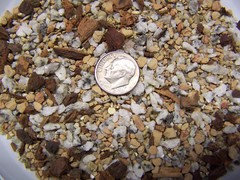
    Tiff, what do you use for a potting medium?

  • 9 years ago

    Cactus or palm if I'm buying bags.

  • 9 years ago

    My last post (minutes ago) also contained something I wrote as a reply to a similar question and saved:


    Detergents

    Dishsoap/
    detergent’s effect on plants varies with the mode of exposure. If
    the top of the plant is sprayed thoroughly with even mild detergent
    solutions such that all surfaces including leaves are covered, the
    detergent can easily dissolve the protective coating of cuticular wax
    on the leaves of the plant, causing abnormally high rates of water
    loss and possible necrosis of all or part of the leaf. Cuticular
    waxes prevent leaves from drying out, and help stop pathogens from
    attacking the leaf. Strong solutions will even dissolve cell
    membranes, causing death of the cells.

    If
    a detergent solution is used as a soil drench or makes its way into
    the soil as a consequence of overspray or run-off, the effect on
    roots is immediate. Because one of the main function of roots is to
    absorb water and nutrients dissolved in water, they lack the waxy
    protective coating that leaves employ. Detergent solution in contact
    with root cells can quickly dissolve the lipid membrane
    surrounding cells, killing the cells and inhibiting water/ nutrient
    uptake. Hair cells growing as appendages off larger roots do the
    lion’s share of assimilating water and nutrients, and these very
    delicate cells would be the first casualty of any detergent in the
    root zone.

    There
    are widely available insecticidal soaps, designed to be used
    topically and made from potassium fatty acids, that are specifically
    formulated to be safe for mammals & birds, death on most insects
    they contact, and safe for plants. If you need something soapy, it
    would be much better if you selected a product intended for use on
    plants than one intended for other purposes.


    Al

  • 9 years ago

    I use ivory, most detergents have additives that I don't want on my plant.

  • 9 years ago

    ..."Proctor & Gamble puts the following ingredients in its Ivory dish liquid: water, sodium lauryl sulfate, sodium laureth sulfate, alkyl dimethyl amine oxide, sodium choloride, PPG-26, cyclohexanediamine, phenoxyethanol, methylisothiazolinone and fragrance. The ingredients in Ivory dish liquid have one of four purposes -- they are processing aids, cleaning agents, preservatives or fragrances"...

    More what some of these hard to pronounce ingredients do is here - click me.

  • 9 years ago

    Not only do the detergents in Ivory have the negative effects on plants I listed above, the Na (sodium) and chloride anion which are so amply represented in the product become highly toxic when available for uptake in concentrations only very slightly above normal. It's just NOT a good idea to use any form of dishsoap or household cleaning products on your plants. Even potassium oil soaps like Castile's and Murphy's should only be used when absolutely necessary, at the lowest dosage possible, and you should always take pains to prevent the detergent surfactant solution from making its way into the soil.

    Al

    Marsha Moody thanked tapla (mid-Michigan, USDA z5b-6a)
  • 9 years ago

    Al - does your last comment apply to the insecticidal soaps too ie. should you prevent it making its way into the soil? I've been using Yates Natures Way Natrasoap (here in New Zealand), which they describe as "potassium salts combined with fatty acids in a vegetable oil base", and I have been spraying the potting mix surface as well as the plant. As well as what drips down. Not good?

  • 9 years ago

    Seems I need to read my bottles. Lol

  • 9 years ago
    last modified: 9 years ago

    While potassium fatty acid soaps are much easier on plants than
    household products for dishes, it's still a good practice to cover the
    soil when you apply - especially if you think you'll be applying to
    beyond the point of run-off. U of Connecticut says: "Begonia, chrysanthemum, Crown of Thorns,
    cucumber, delicate ferns, narrow leaf evergreens (especially when
    stressed or when tender new growth is present), dieffenbachia, fuchsia,
    gardenia, impatiens, jade plant, lantana, ornamental ivy, palms,
    poinsettia, redbud, river birch, schefflera, Zebra plant and some
    succulents may be sensitive. The open blooms or flowers of many plants
    may also be injured. Glaucous bloom on spruces and waxy bloom on grapes
    may be altered.

    When uncertain, spot treat a portion of the cultivar, and wait at least
    24 hours to see if any phytotoxic (plant damaging) symptoms develop
    before treating an entire group of plants.


    Dishwashing soaps and detergents are designed to remove grease from
    dishes and may cause plant damage by dissolving the waxy cuticle on
    plant leaf surfaces. There is increased risk of plant injury with the
    use of dishwashing soaps and detergents (not labeled as a pesticide)
    when used as a spray."

    Keep in mind that when using insecticidal soap. Ca and Mg in tapwater can bind to the fatty acids in the soap. Unfortunately, this decreases its effectiveness at the same time it increases the severity of phytotoxic reactions and the number of plants that will react to the application. For best results, use distilled or otherwise deionized water (r/o water works great) and add a tbsp of vinegar or a small amount of citric acid to the soap solution. Any time you see a scum on top of the water after it's had a chance to rest for a bit, the water you're using is too hard.

    Al

  • 9 years ago

    Thanks for that, Al, I will keep it off the soil surface in future.

    Our water is fairly soft (but hasn't been specifically softened) : it is rain water, it lathers well, there's no build up on the kettles electric element or scum on top of water. But not totally soft - we still get water marks on the glass shower doors, and by the time the water has run across our roof (where there are birds & leaves & dust & sometimes even some ag lime, seeing as we're rural) and been stored in concrete tanks the pH goes from 5.7 to around 7.

    That plus the fact that I use the insecticidal soap at a very low rate may have made my spraying the soil not so bad. Will still stop it though :)

    Why do you recommend adding vinegar/citric acid to distilled/deionised water? Is that type of water alkaline? How does acidifying it help with the soap solution? If it's fatty acids wouldn't it be acidic anyway? And when you say a tablespoon of vinegar, what amount of soap solution is that for? A quart? A gallon?

    Bet you're wishing you hadn't replied to my post, hehe ;)

  • 9 years ago

    Why do you recommend adding vinegar/citric acid to distilled/deionized water? Is that type of water alkaline? No - deionized/distilled water should be pH neutral. How does acidifying it help with the soap solution?

    From something I wrote on another thread:

    pH
    is based on a logarithmic scale from 1 to 14. Where a pH of 7 is
    neutral, a pH of 6 is 10 times more acidic than a pH of 7. Many
    insecticides are sensitive to pH levels because of something called
    hydrolysis, which is a chemical process whereby larger molecule with
    insecticidal properties are broken (cleaved) into smaller (ionic)
    particles that may totally lack any insecticidal properties when they
    recombine with other smaller particles. How much effect hydrolysis
    has on insecticides depends on the insecticide's chemistry, water pH,
    water temp, exposure to sunlight, and how long the mixture has been
    in the spray container.


    Neem oil and insecticidal soaps
    are susceptible to alkaline hydrolysis, which means that a pH greater
    than 7.0 causes degradation, so adjusting your spray water to a pH
    from 5.5 - 6.5 for neem products and no lower than 8.0 for
    insecticidal soap applications is beneficial; whereas some pesticides
    are affected by acid hydrolysis at pH levels below 7.0, so they
    should be mixed with water adjusted to pH levels from 7.5 - 8. In
    either case, the sooner you use the spray mixture, the more effective
    it will be. White vinegar or citric acid (from a wine-making supply
    store) are very effective at reducing water's pH.


    This will leave you wondering, why then should I acidify my water? Insecticidal soaps are very alkaline and will raise the pH of the water you're using (even distilled water) well above a pH of 8.0 where it will degrade quickly - especially so if your water contains Ca/Mg.


    Since insecticidal soaps have no residual knockdown effect and depend on solution contact with the pests in order to be effective, you could skip the acidification w/o a significant reduction in effectiveness if using deionized/distilled water, but it would still be helpful if you acidified hard water.


    If it's fatty acids wouldn't it be acidic anyway? No - mixing an acid with a base yields a salt. The issue of high pH/alkalinity arises when there is more than enough base to neutralize all of the acid, which is the case with insecticidal soap and why its pH is usually between 10.0-11.0.


    And when you say a tablespoon of vinegar, what amount of soap solution is that for? A quart? A gallon? My bad. It's per gallon.


    Al

  • 9 years ago

    Maybe all those variables explain the different success rates people can get using the exact same products? I might grab the pool testing kit and check a few things, I'm curious now...

    Thanks for that explaination :)

  • 9 years ago

    So, I went to my local nursery yesterday to get some insecticide for these darn gnats. I had a coupe of different ones I was looking at. Went to the counter and the gentleman suggested that I put 2 drops of original dawn dishsoap to a gallon of water. So many different opinions out there. Letting the plants dry out some makes sense except one of my plants effected is a peace lily . I tried holding water from it, but it was starting to look pathetic. I put all plants outside today (finally a nice day here) and sprayed just a bit of the soil. We will see what happens. I was noticing that I have 2 plants that were not infected with the gnats. I used a different bag of soil on them. Maybe it was a soil issue?

  • 9 years ago

    Water-retentive soils, especially those with significant fractions of organic matter that breaks down quickly, provide cozy accommodations and a table that's always set for the tiny buggers. Using fish emulsion or other organic fertilizers also increase the likelihood of infestations, especially if there's a hand too heavy on the watering can. I don't have gnat issuers indoors or outdoors, even though I water more than 100 of my nearly 200 plants daily in the summer. This is because I use highly aerated soils, the top inch or so of which dries out fairly quickly.


    In many, if not most situations, simply waiting for the appropriate time
    to water is all that's necessary to eliminate gnat issues. If you
    monitor moisture levels with a 'tell', you won't be watering until the
    deepest part of the soil mass is approaching 'dry'. This provides an
    inhospitable environment for gnats, which are usually more of a nuisance
    and symptom of an underlying problem that a threat to plants, though in
    some cases they will actually feed on live root hairs.

    Al

  • 9 years ago

    I tried my hardest to hold water from my peace lily but it looked so pathetic and it's not looking a whole lot better

  • 9 years ago

    Marsha, get the BTi like Tiffany suggested. It's harmless to all but mosquito and gnat larvae, will take care of the breeding cycle and stop the gnats. No reason to focus on the adults, they are only annoying - and only live about a week. You want to eliminate the larvae, which are feeding on your plants roots by the way. Add the BTi to your water and water on your regular schedule for at least three consecutive weeks. Bacillus thuringiensis subspecies israelensis....the subspecies is important, the type for caterpillars won't help you ;0) Gnatrol, Knock Out Gnats, Mosquito Dunks floated overnight in your watering can if you don't find the other products conveniently.

    Marsha Moody thanked morz8 - Washington Coast
  • 9 years ago

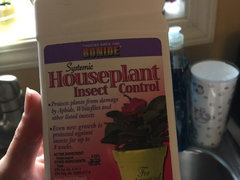
    This is what I have used in the last and did in these plants but it was a couple of years old. Anyway is the what you're talking about? Should I just get a new bottle of this? It's what I was looking for but they only had liquids which made me nervous

  • 9 years ago

    That contains the same active ingredient (Imidacloprid), so it should work on insects other than mites that feed on sap. I have a 5 lb container of Marathon, which is probably exactly the same product as is in the container in your image, that I don't use. I used it as directed one winter several years ago to combat a scale problem I had on a few plants and it really diminished root health ...... to the point the plants I used it on were struggling mightily come spring. They all straightened up and grew fine after I repotted. I'm not sure what the reason for the issue was. It was either a chemical thing or the fact that the product filtered into and plugged up a lot of the pores in my soil and introduced perched water, where before there was none. This could easily have caused me to over-water as a result of overlooking the additional water retention the fine granular vehicle caused.


    Al