Software
Houzz Logo Print
szotyori_a

Large hypertufa reinforcement

9 years ago

A little advise, please....I want to make a bigger hypertufa container 65 cm x 40 cm and 50cm high. Does it need wire reinforcement, if so what type? Chickenwire? Rigid wire line? Or some rigid wire net?

will the expansion of the wire caused by temperature crack the hypertufa.

My recepe is 1/1/1 cement, perlite, peat moss plus pp.fiber.

Does anyone have experience with reinforcement?

Thanks a lot .

P.s i hate chicken wire, I tried it, and its annoying to work with

Comments (11)

  • 9 years ago

    Chicken wire works good for flattish projects where you can lay a layer of mix followed by the chicken wire and then more of the mix. Otherwise, I agree, it is a pain to get the mix uniformly all around.

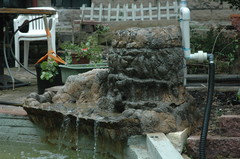
    I have used 1/2 inch hardware cloth and it is much easier since it keep a shape. I have not seen any problem with cracking yet after 3 years. Here is one of my novice attempts to create a waterfall out of hypertufa that also hides my home made bio filter bucket. I do not like the looks of it as much now and trying to find a new design for my "mountain" that holds the 5 gallon bucket.

  • 9 years ago

    Tropic of cancer, when you say "biofilter" do you mean that you filter "gray water" into fresh clean water? That would be awesome to hear details about. BTW, your hypertufa sculpture is very nice, i wish i could make something functional. I have made some really strange looking sculptures. One even cracked, I must not have cured it right. I am pretty sure the other one isn't even intact either :( . Anyhow, you have great talent to make that sculpture in the pic above.

  • 9 years ago

    poaky1: The biofilter is just a 5 gallon bucket filled with various kinds of sponges, and air-filter mesh. There are quite a few websites with details how to make one. It basically "cleans" the water by converting excess nutrients in water using naturally occurring bacteria. The sponges and mesh provide a base for bacteria to grow and populate the filter. The water from pond is circulated through it using a pump. Works quite well. Since then I have added a second one.

    Mine has not cracked yet. This was my first attempt at making something that large and odd. I used the bucket as mold. Then I placed the hardware cloth around the bucket with a gap of about an inch or so. Then packed the mix and shaped it a bit as I built it up. After it cured for a day or so I used various tools and grinders to shape it more. The top is a separate piece (you can see the line) and it comes off to clean the bucket.

    The whole thing is made of several pieces and I cured them in water for a week at least.

  • 9 years ago

    Thanks a lot for your advise, my peat most is almost dry acctually, i did not moist it because it does not mix properly then with the other ingredients. How do you mix your ingredients?


  • 9 years ago

    I would try to moisten the peat before you begin. Maybe empty the peat in a wheelbarrow and lightly spray with water until it is absorbed. Not wet, just damp. This is not my typical first step, but it may help your process if you peat is really dry.

    1. I measure each ingriendent with a small bucket and mix in a large mortar pan or large kitty litter pan and then mix . If you choose the cement fiber, add now.
    2. Then Add water gradually until the consistency you like


  • 9 years ago

    I kept my pieces wet/moist for at least 3 weeks and they cracked. I must've not mixed it all good enough or something, I'm referring to statues that I've made. I will be making a trough, but, I do those things in winter when outdoors isn't calling for upkeep and not much else is going on in the gardening needs.

  • 9 years ago

    I have found that it is best to work on concrete or hypertufa when temps are between 50 and 90 degrees. Not an expert, but I believe it cures best at these temps.

    Below 50 may have a detrimental effect on the curing process. Which may result in some cracking. My first hypertufa project was in December making pots for Christmas presents. Most of them cracked.

  • 9 years ago

    Hey all, I forgot to mention that I do all of it in my basement in winter, it stays in the 60's F all of the time. I likely didn't wet it enough. I want to also ask, i have a bag of Portland cement that has been in my basement for a year or a bit more, it is in abag that has been opened, but, we use a dehumidifier, and the bag is closed as best can be. Can I use it if there are no clods in it? I mean if it's been kept clean and dry?


    Also I'll mention, the past things I did I used "just opened" portland cement in my mixes. I'm just now asking if I can use them, so that was never a factor in those "works" if i can call them that, cracking. Thanks to anyone who answers my question.

  • 9 years ago

    Why don't you try making a project outside? It is safer, you are not breathing in the dust from the portland and perlite, also How close is the project to the dehumidifier. If you are trying to keep your project moist, I would think the humidifier has some impact on the process.

    It is best to use fresh Portland. Once opened I will either enclose opened bag in a large garbage bag and seal or use some smaller containers with lids.

  • 9 years ago

    Hi Mark Larkin, I haven';t made anything since the dehumidifier has been brought into the basement. My projects have not been exposed to the basement with a dehumidifier, at all. I do still want to make a statue or some nice effort in hypertufa, eventually. I would love to see the effort of someone else. Come on you talented folks, inspire me!

Sponsored
Peabody Landscape Group
Average rating: 3.5 out of 5 stars8 Reviews
Columbus' Reliable Landscape Design & Contracting