Software
Houzz Logo Print
nawalton

Rohanii beech tree problem


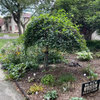
I bought a rohanii beech in the fall, had it planted by the garden shop. Everything looked good until this spring. It leafed out in late May. The leaves grew to about half their expected size, they then stopped and started browning. After about two weeks the whole tree has completely gone to pot. I talked with the garden shop and they're coming to look at it this week. Is there anything I can do?


The soil seems moist but not wet. I don't believe I've done anything to cause the issue. It does receive about 8hrs of sun per day.

Comments (25)

  • 9 years ago

    Do you use a Weed and Feed product? Was this a B&B tree or container grown?

  • 9 years ago
    last modified: 9 years ago

    B&B, I use milorganite and sometimes another supplemental fertilizer.

    Yes there was an application of weed and feed this year. Is there any way to treat weed and feed damage?

    The tree mound was elevated so I didn't think much of the weed and feed application.

  • 9 years ago

    Most herbicide damage is from drift due to wind (and it's amazing how light a wind/breeze can do it). IF that is what it is, it will grow out of it. You just have to put up with it until it drops these leaves and re-leafs (which it might do this year). However, I've never had herbicide damage do more than stunt and mis-shape the leaves. If you have the folks who planted it coming out, just sit tight until they have a chance to look at the tree.

  • 9 years ago

    Ok thanks. I do take my time on applications to try to prevent drift but I think I'm done with weed and feed.

    I felt like the rohanii was struggling before the application of weed and feed. I probably didn't help the situation.

  • 9 years ago

    forget about all that.. they owe you a new tree ...


    ken

  • 9 years ago

    what i meant was.. dont bring up a superfluous topic ...


    i attribute it all to the stresses of planting ...


    where are you.. and whats has the weather been since planting ...


    it was a HUGE transplant .... if they hesitate ... suggest a half size replacement ...


    ken

  • 9 years ago
    last modified: 9 years ago

    The weather has been cloudy, relatively normal for north central Ohio. I have kept the root ball wet during the spring. Now transitioning into summer we've had a few sunny hot days but I've had the tree mulched and kept moist during these past few days.

    When they planted it I went out and thought that doesn't seem quite right. The hole was barely large enough for the rootball and it seemed a little deep.

    I always prefer my trees to be elevated in reference to the initial ground and build a bed up around. They seem to do great bc of the easy ability to drain and it looks much nicer.

  • 9 years ago

    The damage from W&F products is via translocation by the roots, not from airborne drift. Even professionals are careless or ignorant of the fact that woody plants can be affected by the improper placement (too close to the roots) of these chemicals.

    NWalton, a common problem with newly planted trees is that the root ball doesn't get watered thoroughly after planting. Ever. Careful and slow hand watering directly to the center of the root mass is rarely done for the days, weeks, and even months after installation.

    The issue is that the root ball of a field grown plant is often dense and sometimes hydrophobic. It takes special care to help the new roots establish into their new environment.

    There are also other factors that can cause a newly planted tree or shrub to fail; improper/faulty planting practices, poor post planting care, and problematic soil/site issues can all contribute to failure.

    I hope that the garden center staff can solve the mystery. Let us know what they say.


  • 9 years ago
    last modified: 9 years ago

    I had a decades old 'Rohanii' shrivel like this. And fall over a short time later. European beech trees may often die quickly when subjected to adversities.

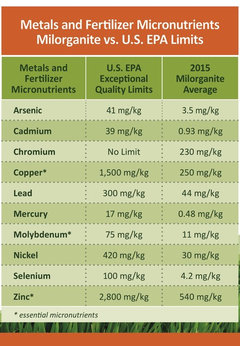
    I see you have a play set and a vegetable garden in the same lawn area as the now dead tree. I wouldn't apply municipal sludge based products or Weed & Feed type formulations to sites used by children or pets, or for food production. Please check the labeling for any warnings that may be present. When I was a kid Milorganite bags used to say the stuff had cadmium etc. in it and should never be used on sites that would ever be occupied by children, pets or crops. I've read since then they have supposedly cleaned the product up, but it is still municipal sewage sludge - how clean can they really be getting it? We're talking about all of the household, industrial and other waste that goes into the sewers of Milwaukee.

  • 9 years ago

    I was under the impression that metals in milorganite were relatively low.


  • 9 years ago
    last modified: 9 years ago

    Every time you apply it these must surely accumulate, of course - they don't break down or even I think leach away. Assuming the amounts of cadmium, lead and mercury in particular contained in even a single application are actually acceptable in the first place. And ignoring all the other things that might be in the product, besides toxic metals.

  • 9 years ago
    last modified: 9 years ago

    "European beech trees may often die quickly when subjected to adversities."

    Good observation.

    I'm seeing a notable problem with some of my mail order and on-site purchased beeches of several years ago. Not saying it is applicable _in this case_ but worth mentioning.

    They develop so slowly in the first couple years after grafting that I think they tend to get left in band pots or Forestfarm type "tubes" for too long. Then they start to grow faster and are up-potted without fixing a circling root or two. By the time you buy it, it might have been up-potted again (definitely in the case of this large one of the OP). You can think you tease the roots apart when you plant it, but you are only working on the outer edges of the pot and down near the crown there's a problem.

    Lo and behold a couple of mine grew very poorly; when I finally dug around down near the crown I saw a huge root circling a couple inches under the soil surface to form a knot. For my 'Dawyck Gold', a couple years ago I aggressive cut it, and the top seems to be growing somewhat more normally. It's caliper size is finally increasing to near 2". But I was worried I could kill the plant, so with 'Dawyck Purple' I took a wait and see approach. It is now falling behind the other in growth, caliper still stuck closer to 1".

    Even worse another cultivar that was even older completely died after a longer period, it was maybe 9' with a 3" caliper. When I dug it up to do a post-mortem, I realized the root system was a mess and had hardly grown, since 2008, beyond the bounds of the the original B&B sack! Granted I think something else might have been going on there, too, but I believe if I'd worked on the root system when I planted it, it would still be alive. Totally different trees but the positive experience I had with my Abies firmas - planted a couple years later when I was more experienced - proves that getting the roots right during planting is essential. I spent almost an hour with each untangling the roots and creating "tracks" for certain long roots, in the soil where I planted them. They have grown like weeds and laughed off any adversities. I've almost started to think of all containerized plants as "bare root when you plant them". Meaning you should aggressively rework *whatever* is in the pot, up to and including washing most of the soil away. Well produced B&B stock should not have this problem. But you can't know whether something was grown in a container for 5 years, THEN stuck in a field, and dug up and balled 1 year later!

    What I think MIGHT happen is the plant with these root problems is subsisting well enough when it's sitting there as a nursery container or B&B, getting a drip feed line. Kind of like a human with major digestive problems that is getting IV nutrition. Then when you plant it, the stress of being planted suddenly taxes the root system...it wants to grow into surrounding soil but the knotted sections suddenly cause problems. The root ball can no longer be as oxygenated as it was sitting on the ground in a nursery, and organisms like standard-issue Phytophthora can move in for the kill.

    At least in my part of the east coast, these plants are somewhat out of their climactic "comfort zone" and I believe that partly accounts for their failure to outgrow adversity as other plants like red maple can easily do. It's all about getting them established well...more of a challenge than some other trees around here. So even though there is a huge, perfectly happy purple beech over in Havre de Grace, MD...I've seen small ones planted in that town, fail after a couple years.

    Just a guess though!

  • 9 years ago

    Interesting about the roots and herbicide damage...the place where I consistently have herbicide damage is on my tomatoes (for reasons too complicated and idiotic to go into). The tomatoes are in a raised bed and the herbicide is being applied to the weeds on the ground, so no roots involved there. Is this different because of the 'feed' component, so it is being watered in? I have never used a W&F (not sure I've ever even heard of it). Thanks for any clarification.

  • 9 years ago

    If you are spraying then you have a spray drift problem which is only comparable to dust blowing off of granular products like Weed & Feed when these are being applied. If you are in fact spraying herbicides cut the top off of a used bleach bottle and use gaskets etc. to mount it on the sprayer nozzle, make a hood that prevents sideways drift while spraying.

  • 9 years ago

    Well aside from some potential weed and feed issues, I feel the tree wasn't planted right. Even now when I water it the water doesn't just soak right in and spread around. I've always liked my plants planted in elevated beds, almost like the B&B section at a nursery.


  • 9 years ago


    These images are my idea of fertilizer burn, that's not what you have. Am surprised that nobody asked what to me is the obvious. Follow down below the graft and scratch the bark, is it green? If it is green below the union and dead above, you have graft rejection.

  • 9 years ago

    Beech hate hate wet feet.

    Perhaps it was covered but beech have surface roots and are subject to damage from herbicides.

    milorganite is excellent for trees and shrubs in the spring by the way.

    good news is that it doesn't matter as you'll get a new one. Just learn for the next time to keep herbicides away from plantings in general and ensure the tree has great drainage.


  • 9 years ago

    Oh I see, W&F is granular. Thx for clarification. NOTHING will prevent sideways drift when spraying if the moron spraying is doing it when it is windy...

  • 9 years ago

    The damage weed and feed products cause to trees depends mostly on the tree itself and the amount of herbicide exposure. Trees that are shallowly rooted or young will suffer a great deal more damage than older trees with deep roots. Common symptoms include twisting or thickening of stems, narrowing or curling of leaves and calluses forming along exposed roots and stems. Extensive root damage caused by run-off may leave trees with less specific symptoms, especially if the herbicide isn't taken up into the foliage -- these trees may wilt due to a reduced ability to collect water and nutrients from the soil. Although tree death is a serious risk, it is not a guaranteed outcome.

  • 9 years ago
    last modified: 9 years ago

    NOTHING will prevent sideways drift when spraying if the moron spraying is doing it when it is windy...

    Even with the desired coarse setting a stream of fine mist exits the nozzle and blows sideways at nozzle height, if there is any breeze at all. A bleach bottle hood extends below this level and prevents the mist from escaping the target area, blowing sideways. Since spraying the center of weeds may often be adequate when using glyphosate for instance when a bleach bottle hood is present the hood can even be rested on the weed each time and used to be sure of containing the entire burst of spray.

  • 9 years ago

    'Oh I see, W&F is granular'

    The stuff I used once, the F was granular and the W was a flakey, light powder mixed. It was a perfectly calm morning and the manufacturer recommended that dew would be present for the W to stick to the weeds to get best results (using a drop spreader). I can see where the F would drop exactly but any slight breeze at all would be cause for W drift. It did a good job but like I said, it was a perfectly calm, dewy morning. But I don't know if the W was just a contact pesticide or a combination that would also sink into the soil for a duel action.

  • 9 years ago

    That bleach bottle idea is a good one. Wouldn't have worked in this situation, though.

  • 9 years ago

    Verdict is in. The tree is being over watered. They extended their warranty for the remainder of the year. But they're saying 50/50. I think if it isn't replanted for better drainage it's a goner but I don't think they going to mess with it at this point.

  • 9 years ago

    It's officially dead. Company will remove it but they doubt they can find a similar specimen to replace it with.

    At the speed and way it died, it makes the most sense that it was dropped during transplanting shocking the root system. The wetness of the rootball was a secondary effect as it cannot move water inwards and upwards.