Software
Houzz Logo Print
bsmith0023

One last plant

I have the shrub area for my plan. I need a partial shade shrub that will tolerate more shade than sun, only afternoon mixed sun with 1-2 direct. I need an evergreen with fall / winter interest. I am coastal SC, zone 8b. I have 10ft width and 5ft depth for this area. Something I can prune to 5ft max, prefer less. I have no other winter interest so i am open to any bloom color or any type of color changing leaves.

Thank you!!

Comments (33)

  • 9 years ago

    Aucuba japonica 'Gold Dust' or 'Mr. Goldstrike'.

  • 9 years ago

    My dentist has an aucuba, he keeps it in a pot in the corner of the office.

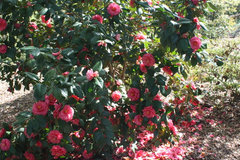
    bssmith, here is what you want for your last plant, this one is Camellia japonica 'Anacostia' but there are hundreds that you could choose from.


  • 9 years ago

    Oh I forgot to have mentioned this part, sorry, I need this last plant thst will go in between two camellia! Ha, good choice sam

  • 9 years ago
    last modified: 9 years ago

    Ternstroemia looks good with Camellia japonica. Other visually successful companions for C. japonica are Kalmia latifolia, Mahonia aquifolium and Pieris japonica. Maybe one of these would work where you are.

  • 9 years ago

    In this area I had been looking for an evergreen because I am putting two hydrangea in the very front of this bedding area and wanted something fill in such a large area.. what about a couple hellebores instead? It's not evergreen but will bloom in winter so I shouldn't be without some type of greenery in this area for very long time!?? It may look odd sitting behind sticks of hydrangea since it is not very tall, but that's one option

  • 9 years ago

    Hellebores are evergreen in my climate. But they aren't 5 foot tall! Hardly comparable with a shrub. What's the objection to Aucuba?

  • 9 years ago

    I'm jumping on the Aucuba bandwagon! It's a wonderful landscape choice for a coastal 8b climate and an ideal counterpoint to the rather boring green wall of broad leaf evergreens so common in the semi-tropical south.

    Sam's limited experience with Variegated Aucuba is just that.....limited. In the landscape, it glows and draws the eye all year round. It's a fast grower, stays full at the bottom, and responds well to pruning, when needed.

    They do not like being sprayed frequently with an irrigation system, so please consider that.


    Aucuba japonica 'Variegata'

  • 9 years ago

    Hmmmm..... I think aucuba are ugly. Sorry! I have one about 20 yards away that is the spotted kind and is probably 8ft long. It's in an oddball location space which is probably why I don't like it. But for some reason I just never bonded with it.

    Even if I did like it I am still concerned it would not give me the winter affect that I am looking for. I have never seen mine bloom for change color at all. Sorry to be difficult

  • 9 years ago

    I think all of Embo's suggestions are evergreens.

  • 9 years ago

    Aucuba isn't grown for bloom, so I don't really understand your penultimate sentence. It is fully evergreen and provides bright splashes of yellow all year round. I'm not wild about it per se but all the other evergreen suggestions, apart from the Mahonia, have been generic oval, dark green leafed species with little to differentiate them at a distance. How about Mahonia lomarifolia or 'Charity'? Evergreen striking leaves and scented yellow blossom in Winter. Or Choysia ternata?

  • 9 years ago
    last modified: 9 years ago

    I am looking for something that blooms or something with a changing leaf. That's why I was saying I appreciated the suggestion but even though it may have a bright color, since it does not bloom i don't think it will have the winter effect I was going for.

  • 9 years ago
    last modified: 9 years ago

    Well what about the Mahonias then? Evergreen, interesting shaped leaves and scented winter flowers.

  • 9 years ago

    That was the best option so far. Do you think the leaves are too "tropical" looking for the rest of what's around it, azaleas and camellia leaves ? I had posted another post looking for something fragrant and someone posted Daphne and Sweetbox, those both seem to bloom in winter. Not that I would care about the scent in this spot but they do bloom in winter which I had just seen and may consider for this area too. I am going to put them in this other area so it may be nice to keep the flow going, but im not sure

  • 9 years ago
    last modified: 9 years ago

    Sarcococca smells divine when it blooms but you will have be standing almost on top of it to see the flowers - they are tiny and almost obscured by the foliage, so not exactly showy or having visual winter interest :-) And winter daphne is really a late winter bloomer.......March

    There is nothing "tropical" looking about Mahonia. The foliage looks like holly - many species of which are SE natives - just larger.

    FWIW, winter interest can come from a lot of features....not just flowers. Colored or variegated evergreen foliage (like the aucuba), bark effect on deciduous shrubs or trees, berries on both evergreen and deciduous plants and winter scent.

  • 9 years ago

    Yea I had looked at a picture of the Mahonia and wasn't great but I just looked more into it and I like it. I want something that is a true winter, even fall and winter interest plant. This seems like it may be. I'll keep looking into it tomorrow but I'll still take other suggestions if out there too. Any idea on if it is partial shade or more full shade?

  • 9 years ago
    last modified: 9 years ago

    The Oregon grape and the pieris bloom at the same time as most Camellia japonica. Unlike the large-leaved Mahonia x media Oregon grape is a good blending shrub that goes well with a wide range of other shrubs.

    One way to check which of the plants suggested on this thread might be suitable for your climate and soils would be to search the on-line collections database of the Raulston Arboretum, see which of them are being grown there. And if they have a number of different horticultural selections of kinds where these have been produced. The pieris for instance. Them being able to maintain an assortment of selected forms of a particular species would tend to imply that species has done well for them.

  • 9 years ago

    Can Daphne take a few hours sun? It blooms in the winter.

  • 9 years ago

    Considering the genus Daphne has over 50 species, wouldn't it be helpful to specify which one is being asked about?

  • 9 years ago

    "winter daphne" is the common name usually applied to Daphne odora. In my climate this usually blooms in March so just barely "winter" :-)) And then there is February daphne, Daphne mezereum. Daphne bhoula, aka paper daphne, is also a winter bloomer (about the same time as D. odora here). Any of these could work for a winter fragrance.

  • 9 years ago
    last modified: 9 years ago

    LOL, BSmith, I cant stand acuba either...too "Florida looking" of a plant for my tastes.

    Some suggestions and thoughts...

    I vote a strong NO on mahonia....they are horribly invasive in the deep south. EDIT: they take full shade however and would do well for your specific yard location...I have a six foot tall "colony" of them in full shade, likely deposited there by birds.long ago.

    I would recommend Fothergilla (a type of witch hazel, I believe). It is native to the southeast and tolerant to part shade. It has great spring bottle brush blooms, solid summer dark green leaves, great fall color (that would contrast well against camellia), but no real winter interest unless you like how it branches out (which I think is interesting, but most don't seem to think so.)

    Edgeworthia or rice paper bush, while not native, is also deciduous. It has very fragrant upside down blooms in the dead of winter that bloom for 60 days. I LOVE this shrub, but it can be harder to find. It seems to mound out more and can get huge, but can be pruned. The one in the ground at my local nursery is planted right underneath some tall GA pines and it loves it there. Its summer foliage is more tropical looking, however.

    You could always go with one o the native azalas like Piedmont Azalea or Sweet Azalea (if those work that far south)...or the Florida azalea. They are deciduous too but their branchING patterns are interesting and their blooms are amazing come spring. (The sweet azalea blooms mid summer, I believe.)

    Avoid mountain laurels unless you are planting them for your grandchildren, they take forever to grow. FOREVER. Mine have grown 6" in 3 years.

    Is your hydrangea the oak leaf hydrangea? Their fall color looks great against the camellia in my backyard...but the rabbits or deer seemed to munch them this summer.

    If you pair the sasanqua (fall) with the japonica (winter) you can have camellia blooms from fall until spring.

  • 9 years ago
    last modified: 9 years ago

    Also...what about tea olives? They aren't much to look at and they can get huge, but they can be trimmed rather easily and their blooms (while rather unnoticable) smell like apricots in fall...mine sometime.blooms a little in spring and summer, too. The scent lingers and can be smelled from far away sometimes.

  • 9 years ago
    last modified: 9 years ago

    Also, you may want to consider red twig or yellow twig dogwood. They are shrubs and deciduous, but their winter twig colors are pretty rad.

  • 9 years ago
    last modified: 9 years ago

    Sam - If the idea interested the poster I thought he might just look up and see what s/he liked and if it would work for his/her location.

  • 9 years ago

    I think i am going to try and fit 2 japonica, 2 sasanqua and oakleaf in there, that way i will have blooms for a while. Now i just have to work on this spacing ! ha

  • 9 years ago

    Strange the aversion to aucuba. It is a very common shrub here in the U.K. It was beloved by the Victorians for its toughness and ability to withstand deep shade and air pollution in smokey cities. Far from 'Florida' looking.

  • 9 years ago

    Interesting view and background on aucuba from the UK, thanks! To me, they have big shiny tropical looking leaves, which is why they remind me of Florida. They are planted at a lot of houses and hotels down there that I visited growing up. I am in 7a so the far north of their range. I rarely see them in my city so have only really seen them in Florida.

  • 9 years ago

    Same here floral :-) Very commonly planted shrub and one of my "go-to" BLE's for a dry, shady location. And both you and I are about as far away from Florida as we can get!!

    To me, the foliage of Japanese laurel looks very similar in both size and appearance to other 'laurel' shrubs, like English or cherry laurel, so nothing at all tropical about it other than some dramatic coloring, if one wants. It's also a lot hardier than you would expect....should survive a zone 7 easily and is listed down to zone 6.

  • 9 years ago

    Interesting point gargengal, I guess it is the coloring of the leaf that makes it look more tropical to me. Had no idea people outside of Florida plant it so much!

  • 9 years ago

    Ryan, could it have been Codaeums you were seeing in Florida?

  • 9 years ago
    last modified: 9 years ago

    As we see at the link below not all Aucuba are variegated.

    https://jcra.ncsu.edu/horticulture/our-plants/results.php?search=aucuba

    Look at all the Mahonia the Raulston Arboretum is growing also:

    https://jcra.ncsu.edu/horticulture/our-plants/results.php?search=mahonia

  • 9 years ago

    Floral, good question. I'll have to read more about that plant and get back to you.

  • 8 years ago


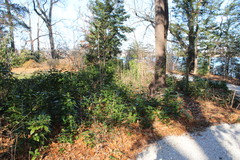
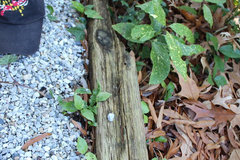
    Add my name to the negative list for Aucuba. Here its seen in a local park growing in the dappled shade of oak & hickory. It is a county property and not kept up very well, when I took this pic they were concentrating on stringing Christmas lights. They are dependent on volunteers to do the weeding. Aucuba in my first pic spreads vegetatively across the path and down the hill. Someone needs to get in and spray a lot of roundup.