Software
Houzz Logo Print
rcharles_gw

Cutting Question: Hoping for Hyn's help here.

Hi Hyn,

I have a question about taking cuttings. Not about Adeniums. I was going to send you a PM, but I thought that it would be interesting for others to understand better.

I remember ( I think it was you), talking about Meristem?

Reason I ask, is that I grow many different Brugmansia's and always overwinter and take cuttings. I have one in particular that always blooms for me in late Aug into Oct. This is fine, but last fall I took cuttings of all and the CG form this spring while in a 1 Gallon pot started to set blooms.

It made me wonder about something I remembered reading about the Meristem/having the cells for blooms? Pardon my ignorance in these matters. I was wondering if I have it right about meristem, that maybe I took this cutting from a different point on the mother plant than I have in the past?

Does any of this make sense to you or am I out in left field?

Have been meaning to ask and was reluctant, but it has got the best of me. I sure hope you do not mind me posting this here. Can take down if you prefer?

Rick

Comments (10)

  • 9 years ago

    My guess is that it is likely you were taking younger growth tips for cuttings in the past and it took all season for them to mature and harden enough to set flower buds. But this time you probably took a cutting that was older wood. It could easily have already set tiny flower bud cells at the time you originally cut it but then went through a period of having to root and put off developing those flower buds, thus holding them over until the following spring. That would not be unusual at all. I confess however that I do not grow Angel Trumpets so I am not familiar with their growth and blooming periods or how quickly their stems mature to flowering.

    Meristem tissue is found where a leaf or stem joins the main stem, or at the growing tip of a stem. At the base of the bud (hidden or visible) will be cells that have not yet differentiated. That means they haven't changed enough to know if they are going to be leaves, stem, or flowers. So there is /potential/ for any meristem plant tissue to become flower buds, yes, but no guarantee it will do so. The meristem tissue may have a small cap of cells that have already differentiated into leaf cell structures that form a layered covering. This is what the meristem tissue does most of the time. Produce leaves and stem.

    It takes particular triggers (chemical, hormonal) to produce the flower buds and these vary with the kind of plant. Some of these triggers are encouraged when the plant reaches a certain size and maturity. Other times they can be set off due to temperatures dropping low enough for long enough. Or triggered when day light lengths extend to reach so many hours a day within set temperature ranges. Very often it can be multiple factors at once that have to line up. In the case of your cuttings, it was likely a maturity issue.

    Younger, greener growth may not have the chemical factors that are required to set flower bud tissues. Once the cuttings are taken, they have to put energy into making roots rather than getting more 'mature' right away so it can take longer. But older, more mature wood that is prime (and not yet already flowered) then may already have those chemical keys present or maturing at the time when you take the cuttings. Thus it is even possible for them to suddenly break into flower even before new roots are formed, depending on how far along those buds have matured.

    This is why a cutting you take from a mature plant, when rooted or grafted, may flower long before a regular seedling. Even if you grafted the cutting onto a /seedling/ as well. This is often true no matter what kind of plant it is - adenium, orchid, hibsicus, etc it doesn't matter. But if the cutting material is fairly new, fast growth, it may still be too immature to flower even if it is taken from a mature plant. It depends on what those flowering triggers are and whether they have all been met yet in the cutting material. Does that make sense?

    I don't know if this will help answer your question, Rick. It's a broad area and there are likely papers published in various science journals specific to the family of plants you are working with as relates to further details in this path of inquiry. Many things are interrelated in plants and are shared regardless of species, and others may be more species specific and variable.

  • 9 years ago

    Thanks so much, Hyn for taking the time to give such in depth info. I appreciate it very much. Will have to do more study into the Particular genus itself.

    These Brug's seen to do so much better from older wood about 1" thick or bigger.

    My understanding now of meristem means something now, thanks you.

    Rick

  • 9 years ago
    last modified: 9 years ago

    I'm glad if I can help. Mostly I tend to point people at Googling for more information because some of these topics get very technical and complex very quickly and I couldn't possibly explain it without citing a ton of stuff and investing a lot of time. In which case I just recommend people signing up for a class for example, if they start grilling me on tissue culture. Otherwise all I can do is point them at some links to get them started on their research because it's just too vast and variable an area to cover in 5 minutes. ;)

    I wanted to suggest something you can also think about trying. If you have a plant that has a lot of growth you can cut and get rooting but may not really want more of for it's flowers, you could use it as root stock for other newer growth cuttings. Start it several months ahead of when you'll want to use it. If your root stock is mature, then grafting on immature seedling cuttings or green tip cuttings can push them to mature much faster! The adult root stock already having the chemical and hormonal triggers necessary to send up into the cutting, and the energy producing capacity with an established root base. That could speed up your cuttings to boost them into making flowers much faster and earlier in a season.

    I recently returned to working with tropical fancy hibsicus and have been reading up tons to refresh and update. From seed it can take 2 or 3 years to see flowers, but if you take a cutting from that same seedling in its first season and graft it onto an already established root stock, you /can/ cut that waiting time down to a year or less to get those first flowers! This is a nice trick when you have a lot of seedlings to bloom as a hybridizer, then cull out 90% to retain only the best new varieties. Who wants to spend 2 or 3 years waiting for first flowers if you can do it in one year? This same trick -could- apply to your cuttings if you graft them rather than root them, and if you are also going for that more mature semi-hard or hardened cuttings. Then you may be able to get both flowers much earlier in a season but also a lot more and larger flowers because the root stock can support a lot more production than if the cutting also has to make roots.

  • 9 years ago
    last modified: 9 years ago

    This btw, also applies to adeniums! If I really wanted to boost seedlings I could graft them onto already maturing root stock and see them flower much sooner. But if you graft tender seedlings that haven't hardened off for a season, then it requires you to be pretty darn good at grafting and know what you are doing. And that takes practice, but is very doable. There are photos and information about this online specific to Desert Roses.

    I personally have no interest in doing that though. When I have the choice, I much prefer to grow my seedlings on their own roots and skip the grafting scars - but once I am able to flower some real knocks, then I will want to graft some of them to share.

  • 9 years ago
    last modified: 9 years ago

    Richard Johnson, I assume? Very nice. I have only recently been getting back into the hibiscus - I used to grow them decades ago, and like so many other things, the hybrids available have come a long way! Really nice to see.

    I only have a few right now: Black Dragon, Night Runner, Symphony, Pride of Hankins (for root stock), Reflection, and the less fancy but bright yellow Hula Girl. But I have a few others on order that should arrive in the autumn.

    You don't grow them anymore, Rick?

  • 9 years ago

    Yes, R. Johnson. I am not growing them anymore, but I do love their blooms. Got to a point with all my plants that I needed to reduce for space purposes and time.

    The Hula Girl not as fancy as the others, is one of my favorites and see it alot in Hawaii when there. It is actually on of my Favorites.

    Was at a point where I was challenging myself to see what new plants I could start. Only thing is, you end up with a nursery in your house for me.

    Rick

  • 9 years ago

    I like Hula Girl too. So bright and cheerful, and sometimes a simple plain bloom is a nice contrast to the fancy, busier blooms that I also love. And hey, it's an easy keeper so that doesn't hurt either. Like my Pride of Hankins, not very fancy but still a lovely flower. I understand about the down sizing and focusing on priorities. I rotate around though my collection focus slightly from one year to another myself, always trying new things but also, always thinning less favorite things out to trim back. And yes, nursery is right! I either have to make the final leap to go full on commercial (big commitment) or cut back so my husband and I are still discussing it.

  • 9 years ago

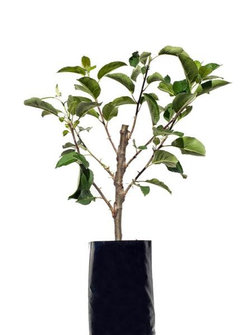
    Rick and Hyn - By the way to add to the grafting process and experience, something interesting happened to me yesterday, I went to my local nursery to look at plants as I usually do, I was looking at apple trees to grow my own. Then, as I look at plants, a stranger gentleman came saw me looking at Apple trees and said that he was doing alot of grating himself and all the Apple trees were tripple grafted and having 3 different color apples on. He said grafting is easy, if you got a knife and tape, you got a graft. Was nice talking to him about multi grafting. Then when I got home I googled, tripple grafted apple tree, only to find out that there are nurseries who has 6 different kind of apples on one Apple root stock. Omg I was gobsmacked. That would be awesome. Just imagine an Adenium plant with 6 different color blooms on. Wow!

  • 9 years ago

    ASSORTED 6 FRUIT APPLE TREE