Software
Houzz Logo Print
troglodytes__

Potting in homemade soil mix

9 years ago

Last night I went through and potted a lot of plants I've recently purchased ( a couple schefflera, a fiddle leaf fig, a rubber tree, a couple citrus trees, gardenia, etc). I noticed most of the plants all required a very similar preferred soil type (airy and fast draining, with the ability for some water retention, slightly acidic) so I went ahead and made my own soil mix and went to town, but I'm scared I perhaps should not have done that. I first made a wheelbarrow full of the following soil mix:

2 part loam (straight from my yard)

2 part homemade compost from pile

1 part potting soil (Miracle Gro, I had it leftover from a while ago)

1 part worm castings (straight from my yard with tons of worm activity)

I then potted the plants with the following mixture after lining the bottom of the pots with a layer of crushed & rinsed stone:

1 part homemade soil mix

1 part peat

1 part perlite

Did I make a big mistake using my yard soil as part of potting mix, or should I be ok? I'm worried because every picture I see shows potting soil that has a lot larger chunks (almost mulch) in it than my had. My soil mix was quite fast draining though.

The plants were all over 1 year old (except the gardenia and lime tree), so none of them are super young.

Comments (12)

  • 9 years ago

    I like your potting soil mix. It's good physically, chemically, and biologically. All you need after is just adjustment on watering schedule and placement.

  • 9 years ago
    last modified: 9 years ago

    Yes.

    I wouldn't have used any of that. Potting soil mixed 50/50 with perlite at worst, a mix with pine bark like the 5:1:1 at best.

    you don't want compost, yard soil or worm castings in a container. Your mix will never drain and the plants will have constant issues.

  • 9 years ago

    I agree that you're almost certain to encounter issues related to your soil being overly water-retentive. Ideally, your soil's largest fraction by far, should be large particles between 1/8-3/8" in size. Somewhere near 75-80% would be about right. Since particle size is largely what drives water retention, acting to ensure that your soil is mostly chunky material helps to eliminate the potential for limitations due to excess water and the accompanying dearth of air.


    Al

  • 9 years ago

    Made a similar comment to duplicate post in Soils, Compost and Mulch forum :-))

  • 9 years ago
    last modified: 9 years ago

    Sorry Troglo,

    Gotta say I weigh in w/ Dave, using mostly Cactus & Succulent mix (C&S) mixed 50/50 with either Perlite or Pumice. Since I grow lots of Succulents, I cut the C&S mix w/pumice for that, adding some bark for my Hoyas. I use the Perlite mixed in instead, which works well for Houseplants & tropicals too (Anthuriums, Spaths).

  • 9 years ago

    I'm newish back to house plants but have been gardening outside 10 years, and often pot up seedlings I find, to grow on & plant elsewhere or give away. Sometimes 30-40 at a time.

    So of course I tried using my garden soil, which has been amended and enriched so it's full of earthworms and compost and all those goodies, in the pots. But it compacts, goes either like concrete or like mud and the plants just sit there looking sickly and not growing.

    So, speaking from experience, well before ever reading anything about soils in containers, I figured out that when you put garden soil in a pot it becomes/behaves different from when it was in the ground.

    What you've made is a bit more of a mix, but you still might encounter similar issues. I don't know if you have to change anything right now, but it's something to consider in the future. And also affects how you water your plants now.

    I don't mean to be depressing after all that work you've done! But it is good to be aware.


  • 9 years ago

    You can use what you have with some adjustments. To prevent garden soil to become wet/mud like, you need better drainage pot. Make more hole at bottom and/or side of the pot. It will make excess water go away quicker, even it won't as quick as porous soil.

    Under dry conditions, both porous or less porous will suffer same effect, but denser soil have better water retention. Hard rock-like soil on the surface prevent hot air penetrate deeper to rootzone, make it moist longer. Porous soil dry faster, but with drip irigation, water can reach root quicker. Less water evaporate compared with dense soil.

    All kind of soil have their own benefit. I use both of them. I use dense heavy soil for fruit trees, palm, and other woody plants. Some fruit trees need more potash in soil. Long enough water retention needed, otherwise, fruit can't ripen or can't produce fruit at all. This kind of soil also allow me to use organic materials to feed the plant, which is cheaper.

    I usually use more porous soil for small non woody plant. Aglaonema, anthurium, peace lily, philodendron, and some more. Most of them less tolerate dense/heavy soil since their roots are big, soft, and vulnerable. Most of them don't produce fruit, so less potash still tolerated.

    I use many kind of soil. Sand, dust, biochar, compost, manure, garden soil, rice husk, and some others.. even kitchen waste. It's a pleasure for me to make anything arround me to be usefull. Yeah, so far so good.

  • 4 years ago

    I ran into a gardenia bush in front of my mother-in-law’s condo (yes, she actually had something useful). I hand twisted a couple of very large branches off this monstrous bush covered in white flowers (although full of bugs.. they thankfully stayed behind with the tree.) I removed the bottom leaves, plopped the cuttings in an old perfume bottle filled with water and four to six weeks later my cutting are full of roots - I mean LOTS of roots and new leaves on top.
    I’d like to plant these cuttings and add them to my terrace garden (consisting of all potted plants/trees, etc. ) before they rot.

    My first issue is I don’t have fancy potting ingredients such as “vermiculite,” “peat moss,” “cocoa peat” “sand” etc to mix up exotic planting mediums. I can offer the following ingredients I have on hand…

    1. Miracle Gro Moisture Control
      Potting Mix (promises you can’t
      over or underwater your plants)
    2. Cactus & Succulent Soil Mix
    3. Orchid Potting Bark small size
      and Large size
    4. Orchid Moss
    5. Perlite
    6. Worm Casings

    Issue No. 2: what is best size to pot in - do I start small In 6in pot- and then transfer 2 inches up twice a year? Or what is the best way to go?
    Thanks, Sherri

  • 4 years ago

    Hi, Sherri - What separates a grow medium that's easy to grow in from one you'll need to battle for control over your plants' vitality (health) lies mainly in whether or not you can water correctly, that is to say to beyond the point of complete soil saturation - so you're flushing the soil of any accumulating dissolved solids/ salts as you water, without having to fret over whether or not the medium will remain saturated so long it limits root function, or worse, wrecks root health. The factor that primarily determines how much water a medium can hold is particle size - the smaller the size of the particles that make up a medium, the more water it will hold. In a grow medium, too much water means too little air and limited root function or damaged root health. So if we look at this issue from the perspective of the plant, we can say the opportunity for your plants to realize as much of their genetic potential as possible increases as the amount of water the medium it's growing in decreases. This idea must be tempered by common sense and how often the grower is willing to water.

    Since the primary driver of media's water retention is media particle size, taking best advantage of the improved opportunities highly aerated and fast draining soils offer means you'll need to include a large fraction (>75%) of coarse materials in your mix. Given the choice between establishing a planting that utilizes a grow medium that will actually require watering every week as opposed to a medium that will actually require watering every other day ...... use the water-every-other-day medium if you want best vitality/ growth/ eye appeal/ resistance to insect herbivory and disease pathogens, and use the medium that requires the grower to water only every week or two if your focus is on grower convenience. We all order our own priorities, so there's no judgement to be made re what path you choose - just don't go for the convenience expecting you won't need to sacrifice in terms of results.

    I do know that your choice of grow medium will almost certainly have more impact on your growing experience than any other factor. You can fix poor light by moving the plant, poor nutrition by fertilizing, inappropriate temps by growing indoors and fuss with the humidity level; but, once a planting is established in a given medium, there is not much top be done about it until the next repot.

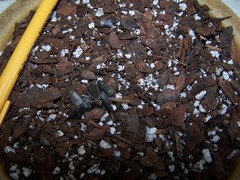
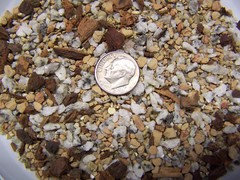
    I don't know how interested you are in this topic. There is a LOT of information at Gardenweb regarding media, good, bad, or indifferent. You can see images of the 2 basic media I make and grow in my first post to this thread 5 years ago. I'll be around if you have questions you think I might be able to answer. I've been fussing with container media for more than 40 years now, so I've learned a few things along the way.

    Al

  • 4 years ago

    Hi, Al. A question for you. Doesn't the use of a different medium, even if better than the previous one, risk creating imbalances inside the pot?

  • 4 years ago

    That can be an issue, but it's an issue that resolves itself when the grower habitually does full repots instead of potting up. It's not so much an issue when you pot up into a medium that is fairly close to what the plant is already growing in, but you wouldn't want to invite trouble by potting up a plant in MG Moisture Control into something like the 5:1:1 or gritty mix. That can/will create zones in the pot that are either too wet or too dry, perhaps even both at the same time. As well, potting up a plant already in a water-retentive medium into a medium with sharp drainage can also make it very difficult to rewet the original root/soil mass. The tendency is for the water to flow right through the new, highly aerated medium with insufficient time to move into the dry soil, especially if the planting is dry to the point of being hydrophobic.

    Al