Software
Houzz Logo Print
vlkeeney1_gw

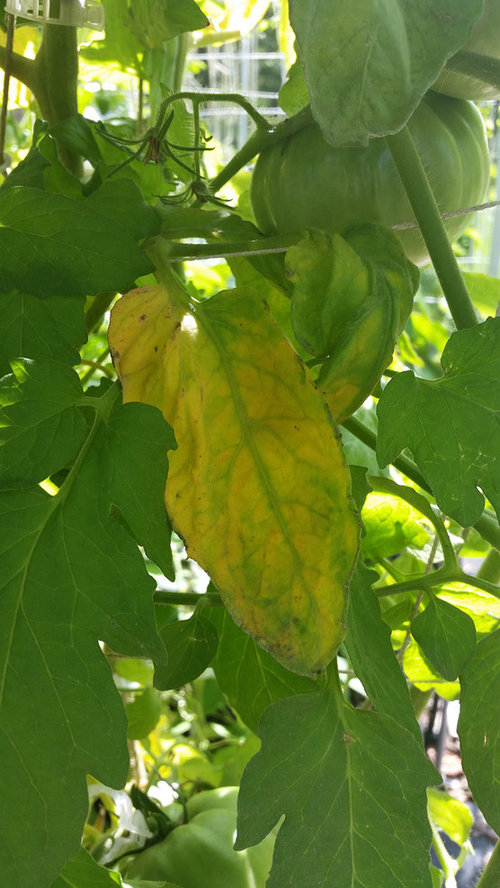
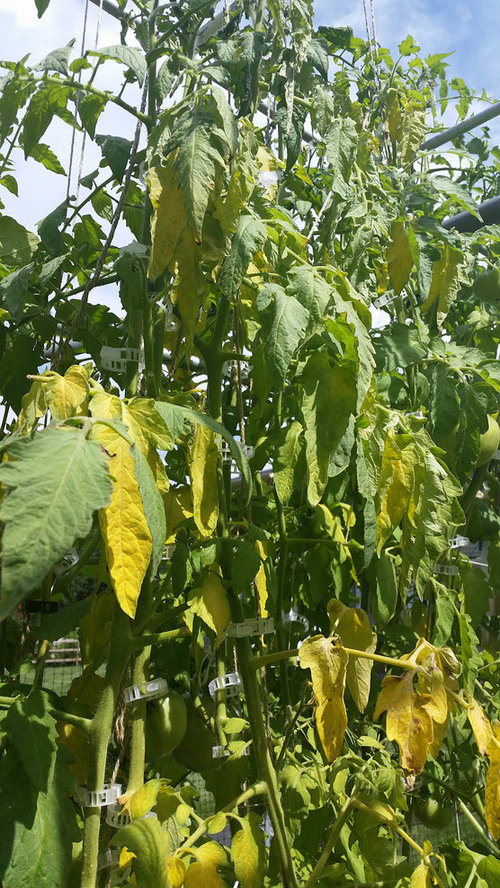
Yellow tomato leaves spreading

9 years ago
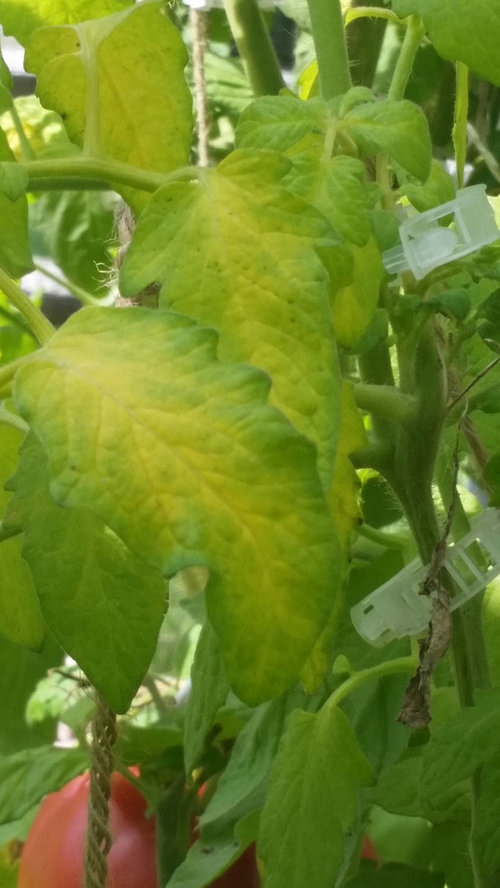
Briefly...I have 4 raised beds planted with assorted veggies. I use an drip irrigation system so all beds receive the same water amounts. I interplanted this year- wanted to try planting different things together instead of all of one kind in one bed mostly because of past insect problems. I also added new compost to all the beds and sifted the dirt for pests before planting. One of my tomato plants began developing yellow leaves a couple of weeks ago. I googled pictures of the leaves and found conflicting info - too much or too little water, different mineral issues, but I couldn't find an exact match of any photos to my leaves. I gave up until now...the yellow leaves are on several plants in different beds. It has rained a lot so I turned off my irrigation system. I've added some Sulfate of Potash Magnesia and a little alfalfa meal thinking they may help. I've also sprayed with neem oil in case it was fungal. Unfortunately things have gotten worse! I noticed that some leaves have green veins and yellow around them while others are purely yellow. The green veins are new - it started with purely yellow leaves with no brown spots. I'm posting photos - anyone know what the problem might be? If not for saving the plants this year, I want to know and understand how to prevent/help correct the problem going forward. Thanks in advance!!

Comments (9)

  • 9 years ago

    Where are you located? That looks like textbook fusarium.

  • 9 years ago

    Maryland, near DC.

  • 9 years ago
    last modified: 9 years ago

    Contact your county extension office and get a diagnosis. I suspect that you have fusarium in your soil, though. That bright "yellow flag" symptom on one leaf/one side of the plant/one side of a leaf is pretty classic for fusarium.

    If so, you'll have to grow your tomatoes elsewhere for a while or stick to resistant cultivars or plants grafted onto resistant rootstock.

    In the meantime, adding obscure soil amendments without a soil test is shooting in the dark. Better to use a balanced fertilizer for tomatoes or fruiting plants.

  • 9 years ago
    last modified: 9 years ago

    Well, fusarium isn't an emergency, as it spreads pretty slowly in soil, and it's not contagious through air. There's also nothing you can really do for your plants if they have it.

    As it looks like it struck late and your plants have fruit on them, I would give the plants a good feeding with a liquid tomato/fruiting veg fertilizer, just in case your issue is related to nutrient deficiency/nutrient leaching due to overwatering. Cut back on watering and only do so when the soil a couple inches down is dry.

    If/when your plants go downhill to the point where you want to pull them, examine the roots for the galls of root-knot nematodes. Take pics of the roots and post them here if you're not sure what to look for.

    Also, before you throw your plants away, cut the stem both cross-sectionally and lengthwise near the base and look for browning vascular tissue. It will look similar to this and this.

    If you find the brown vascular tissue, that's a pretty definite diagnosis of fusarium in addition to the "yellow flag" and wilting symptoms. Root-knot nematodes often provide the damage that lets fusarium and other soilborne pathogens into the roots, which is why it's good to check for them, too.

    If you find fusarium, you will have to plant solanaceous plants (tomato, pepper, eggplant, etc.) in a different location for the next few years, grow in containers, stick to F resistant hybrids, or graft non-resistant varieties onto F resistant rootstock.

    If you find RKN, that's a slightly more annoying problem, as they can hurt thousands of species of plants. For many veg, tomato included, there are RKN resistant varieties, though. Many resistant tomato varieties are both RKN and F resistant.

  • 9 years ago

    Thank you for your words of encouragement! It sickens me to see the plants dying after doing everything I could this year that was right - I appreciate it!! Would you suggest I cut the infected branches off the plants and would they show the symptoms like the stems would? And...when you say a liquid tomato fruiting veg fertilizer - what specifically would you suggest?

  • 9 years ago
    last modified: 9 years ago

    I would remove any yellow or dying foliage because it's not contributing to the plant at all. If there is a stem (not a leaf rachis, but an actual stalk of the plant) that is mostly dead and you want to sacrifice it, you can cut that and check for browning tissue inside. But sometimes it takes a while for the internal browning to make its way up the plant, so the surest diagnosis will come from cutting the main stalk after you pull the plant.

    For liquid fertilizer, I'd just get whatever's easy to find locally. Dr. Earth Home grown liquid is a common organic option. Miracle Gro Tomato formula (not the regular general plant formula) is a cheap and readily available option in many stores. You maynot want to use it regularly all season in beds (though it's good for containers), but it's probably one of the more quickly bioavailable liquid formulas for a "quick rescue" for nutrient-deprived plants and good to have around for that reason. It's in powder form, so shelf life isn't too much of an issue.

    Just make sure to properly clean your pruners between plants, and don't move soil around in your beds. If you have to dig in beds with suspected fusarium or soilborne disease, then wash your tools well afterward before using them to dig in other locations in your garden.

  • 9 years ago

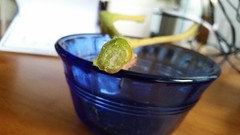
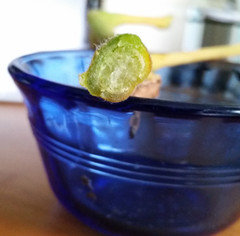
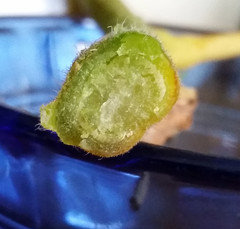
    i clipped off a few larger stems and am attaching a photo here of the inside - which doesn't look brown in the core, a little on one side but not the middle...?

  • 9 years ago
    last modified: 9 years ago

    As I said, to really know, you'd have to examine the/a main stalk. This doesn't rule out fusarium.

    Also, the vascular browning wouldn't necessarily be in the core--you want to look for a browning in the layer that contains the plant's circulatory system, which would be a layer between the outer layer and the pith/core, although the pith can also be affected.

Sponsored
Peabody Landscape Group
Average rating: 3.5 out of 5 stars8 Reviews
Columbus' Reliable Landscape Design & Contracting
More Discussions