Software
Houzz Logo Print
subersibo1973

Path in clay soil - above grade?

9 years ago
last modified: 9 years ago

I am planning a path that is 3' wide and maybe 20' long and I will be using step stones spaced a few inches apart with gravel filling out the gaps in between. Also, the surrounding areas of the path is a few inches of gravel so having the path above grade would make it more level and blend better with the surrounding area.

What material could I put under the stones to make it level and sturdy? I will use fabric before laying anything else.

I read that digging 4-6" and filling with aggregate and an inch of sand and tamping is usually how it is done but I've tried digging and the soil comes out in huge clumps that makes my excavation very uneven.

Comments (15)

  • 9 years ago

    So difficult to level out the clay. Can I add a bit of topsoil to cover up the uneven spots and fix the slope? That'll be it easier to work with.

  • PRO
    9 years ago

    Do you mean add topsoil in the excavated area? No. If anything, it would be fill, sand or the aggregate base. Topsoil can settle too much later.

    Is the excavated area reasonably uniformly excavated? It does not need to be perfect and bump free. It just needs to be reasonably uniform. It might be a disaster or you might be worrying too much about nothing. Show it if you want an opinion.

  • 9 years ago

    Ok, I think I got the area leveled by raking and tamping until the soil compacted and flattened out. So do I make a slope using the aggregate base or the soil itself? The soil has a slight but not precise slope.

  • PRO
    9 years ago

    The soil should slope the same as the aggregate base ... so that you have a consistent thickness of tamped aggregate when it's finished. I think we are not talking about much pitch here. Needs to be good but not pool table perfect.

  • 9 years ago

    Hmm, I'm thinking I should just re-do and make it above ground. What can I use to lay on top of the excavated area to make it level with the surrounding soil? I can't use the clay I just dug out because there are so many weed roots sticking to them and it would be difficult smashing them as they are like little boulders. More leveling sand maybe?

    I will be using brock paver panels https://m.lowes.com/pd/Brock-24-in-W-36-in-L-Polypropylene-Paver-Base-Panel/3609858 instead of aggregate so I did not have to dig too deep.

    So fabric, sand (1/2"), panels (about 1/2"), and then pavers (1.5 to 2").

    Every tutorial I've seen has a pre-existing lawn and the finished path would be level with the lawn. However, my yard is just dirt and when I put a 2-3" layer of gravel on top of the dirt, part of the finished walkway will be about 2-3" below the surrounding areas. I will not be digging before laying gravel in the surrounding areas as that would mean digging out the whole backyard. I will just put fabric down and gravel on top.

    This illustration will show the problem:


  • PRO
    9 years ago

    You already dug and now the excavated area is too deep because you're altering the install method ...? I have not used the method you're using, but with such a panel, the fabric seems redundant.

    A 2"-3" gravel layer sounds like 2 1/2". A 1/2" layer of sand, 1/2" of panel and 1 1/2" of paver sounds like 2 1/2", so no digging needed for the new scheme. You can fill the excavation with paver base and pack hard. I hope you are accounting for proper grade and drainage.

    subersibo1973 thanked Yardvaark
  • 9 years ago
    last modified: 9 years ago

    So I just put more base material on the deeper side to make the whole thing level with the surrounding areas, correct? Can I put the paver base on top of the fabric or under? The installation guide for the brock product recommends using fabric to lay 1/2" sand on.

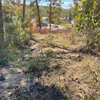
    This is what my excavation looks like with the higher side level with the surrounding areas so no paver base on that side since it is already level with the ground?

  • PRO
    9 years ago
    last modified: 9 years ago

    The fabric goes at the bottom of everything.

    A paver walk, being comprised of many small units, is a flexible layer. They only stay level or in plane on account of a solid base supporting them. That solid base happens to also be flexible on account of being made of particles. What makes it solid is its thickness, being packed tightly and the fact that it sits on terra firma. If a very heavy weight punched down in one spot, though, the layers at that spot might give a little. Over time this might add up to depressions at the surface. To combat that, a non-stretchy fabric layer is placed below all of the compacted materials and helps to keep areas from being depressed when a heavy weight is applied to one spot. The weight of all the material above it is what holds the fabric tightly in place, as though it were stretched taught. (If you've ever tried to remove a large chunk of landscape fabric that has three inches of soil on top of it you know it's impossible to pull out.) When a heavy weight is applied to the surface layer, given that the fabric below will not stretch or move, that surface layer is also resisted from moving downward. If you place a pizza on top of a carpet, it would be pretty easy to radically deform a spot of the pizza by stepping on it. If instead you placed the pizza on a very tightly stretched drum head, the pizza would deform vastly less if stepped on.

    Though I first said fabric + paneIs would be redundant, I can see why it would be helpful to have both. The panel and fabric share the same capability. However, given that the panels are limited in size, they're not going to have the ability to act as the fabric would near their edges where there is little to no meaningful weight keeping them taught below the pavers. Extending the fabric below the panels overcomes the deficiency of the panel edges.

  • 9 years ago

    Are the numbers in that diagram correct? Paver paths count as impermeable groundcover, and require some slope to drain water. 'Fixing' a 2% slope is just going to cause other problems.

  • 9 years ago

    Thanks, Yaardvark, for that thorough explanation.

    mad_gallica - yes, that is the slope I followed but my problem is if I go through with it that way the walk way ends up 2-3" below the surrounding areas as I explained in my other post. I shouldn't have excavated and just followed the existing grade.

    So would putting paver base to cover up the excavation cause problems? I guess I could leave a bit of a slope or cover up and follow the existing grade?

  • PRO
    9 years ago

    It's very difficult to understand what you mean regarding small details of grading and confirm that you're doing things sufficiently to avoid problems. It's better if you understand the general concepts and inspect your work to ensure that you're not creating drainage problems. You don't want to create any depression from which water will not drain. This is at the smallest level and for the overall yard space. There must be a way out for all the water everywhere, otherwise you will have water collecting somewhere. It should have a path to some low point (or many low points) on the property where it can move to an even lower point off of the property. A "low point" does not necessarily mean the lowest point. Water may cross a lot line on its way to a lower point. When there is a lot of pitch to a yard it is fairly easy to see with the naked eyeball where the water is going. In a nearly flat yard like yours, it might require getting out instruments (level) to measure small degrees of slope.

  • 9 years ago
    last modified: 9 years ago

    The yard is graded to where there are several areas where water can run off to. I'll just put back what I excavated, follow the grade, make the path on top of it and be done with it. Gonna be tough breaking up those big chunks to put back though. Or like you said before, use paver base to fill in the excavation instead of the old soil. I think I am done digging anything else in the yard lol.

  • 9 years ago

    If you do what you last suggested, you will have uneven settling in a few years. If you are in an area with frost, the clay will hold water and freeze and thaw will lead to heaving. I don't understand why you don't want to put in the gravel and sand under the pavers.

  • 9 years ago
    last modified: 9 years ago

    No frost here. I will still use sand and the brock paver panels before laying the pavers. What I am saying is covering up the excavation before doing so so that the path won't be lower than the surrounding areas.