Software
Houzz Logo Print
enchantedrosez5bma

More rose midge advice

• Brown/ black or deformed buds with no flowers
• Buds may fall off the bush
• Healthy plants with no blossoms

To combat this destructive pest, always start with the least harmful method of treatment and only “escalate” if you’re not getting results. Also, weigh the damage of the infestation against how much time and money you want to spend. Strive for a balance that will create the healthiest rose bushes at the lowest cost to you and the environment. Here’s a list of our recommendations:

• Purchase bare root roses or remove the soil and rinse the roots of plants brought in from your local nursery or garden store.
• Remove and destroy affected new growth to break the pest’s life-cycle.
• Pupae overwinter in the top 1-2 inches of soil/ mulch. If you use mulch, remove it and replace with fresh material at the end of each growing season.
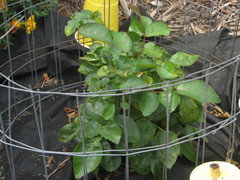
• Black plastic or other physical barrier applied in the fall will prevent the pest larvae from dropping to the ground and pupating in the soil. It will also make it difficult for adults to leave the soil in early spring.
• Beneficial nematodes (Scanmask®) may be effective against the larval/pupal stage found in the soil.
• Azatrol EC is an azadirachtin insecticide that acts as an antifeedant, insect growth regulator and as a repellent and oviposition deterrent.
• Monterey Garden Insect Spray is a relatively new insect killer containing spinosad that has been mentioned as a potential remedy. Do not apply to blooming parts of plants if bees may be foraging.
• Surround WP is sprayed on as a liquid which evaporates leaving a protective powdery film on the surfaces of leaves, buds, and stems. This film will attach to insects when they contact it, agitating and repelling them. It will also coat the buds making them unsuitable for egg-laying.
• Least toxic, botanical insecticides are usually ineffective against the larvae, which are protected deep within the tips.

https://www.planetnatural.com/forums/topic/rose-midge-control/

I haven't tried any of these yet except for the plastic barrier and removing affected growth.

Sharon

Comments (46)

  • 9 years ago

    Good read Sharon!

    I'll be starting my fight in September by releasing some Beneficial nematodes...Then will release again in April sometime...Not sure what else I'll be doing yet...

    enchantedrosez5bma thanked jim1961 Central Pennsylvania Zone 6a
  • 9 years ago
    last modified: 9 years ago

    Sharon,

    You've been doing your homework! Thanks for the great, up to date, information.

    One step in the midge battle you brought forth, mulch prevention, has shown to be more effective for me today than I thought it was, or ever could be.

    My new strategy, going by my very unprecedented, light, almost nonexistent midge plague this present summer, is to replace/top off my yearly pine bark mulching in early spring before the midge appears in an attempt to smother the cocoons as you suggested. I also will use fine pine bark mulch.

    I accidentally did that this spring when I uncovered my fine pine bark winterized roses, and spread the mulch through the bed. This was done at spring pruning, about a month before midge damage usually starts showing.

    I usually mulch later, in late spring/early summer since I believe the ground warms up faster with less mulch on it, getting the roses growing faster.

    I had just about no midge damage this year. GLORY HALLELUJAH!, unlike the yearly plague of midge I have had for the past 30+ years. I didn't have to spray for midge so far, after about 3 initial sprays which I did since I was anticipating my usual yearly onslaught.

    I believe it was the FINE PINE BARK MULCH, I spread early on, much earlier than I normally do. I have always used medium to large chunk pine bark in the past to save money, since the bigger chunks seem to last longer, decomposing probably at the same rate as the fine mulch, but being so large they seem to take forever to break down.

    The bigger chunks of mulch, I believe, were allowing the midge to emerge because of the wider air spaces between them! The fine mulch this past spring really smothered them!

    So now, I have a new weapon in my midge defence arsenal, fine pine bark mulch applied in late winter/early spring.

    Again, thanks for your enlightening, great post. You don't know how depressing my midge battle has been, and for such a long time. What a relief to discover a non-insecticidal control that appears to be so promising.

    Moses

    enchantedrosez5bma thanked Moses, Pitt PA, cold W & warm/humid S z6
  • 9 years ago

    Nicely put Sharon, I had a feeling that you where researching this. I was waiting for your post.

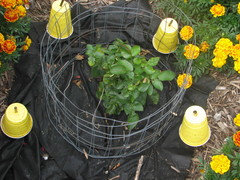
    So far my only attempt at control has been sticky yellow cups. They did work remarkably well. I will also do a soil cover this spring. In the mean time I so happy to see most my roses blooming again.

    enchantedrosez5bma thanked Patty W. zone 5a Illinois
  • 9 years ago
    last modified: 9 years ago

    I have two Fiji roses that will not grow much nor bloom at all...(Rose Midge)...The one Fiji rose I planted last year I decided recently to lay down heavy Ace Hardware landscape fabric and see what happens...I also have yellow cups coated with oil close to the ground...

    So far I am starting to see new growth without the burnt look...Only time will tell...

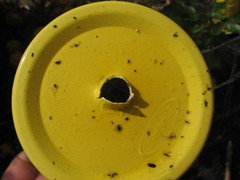
    Cups are catching something...Not sure what exactly though... PATTY you know?

  • 9 years ago
    last modified: 9 years ago

    Not really Jim, I need a magnifying glass to see them on my own cups. That said on the top to the right of the stick and up a little bit. There are 2 light brown winged insects barely noticeable. Those are the right size and shape. I caught most of mine in pairs.One has a longer body as the male and female are sightly different in shape. The only other one is on the bottom right just above the first thick textured area. Also see a few flower thrips. I don't think midge stands a chance against your defense. You might not catch too many midge if they where in the soil they are trapped there now. Great job!

  • 9 years ago
    last modified: 9 years ago

    Thanks Patty!

    Top of cup...

  • 9 years ago

    Jim,

    Your arsenal against midge shows determination and ingenuity on your part. I anticipate a turn around in your Fiji roses for a grand finale bloom this fall. Please keep us posted.

    Moses

  • 9 years ago
    last modified: 9 years ago

    Patty- I didn't write the article, just copy and paste, lol but I thought it had a lot of great info to share.

    Jim, Patty, Moses- Thanks for all your comments. I just got the spray form of tangle foot that Rebecca mentioned in another post. I haven't had time to spray my pinwheels yet but am hoping to get to it soon. I don't think I've caught any midge yet, the insects look more like a male flea with wings, kind of a tiny roundish black body with transparent wings. I have caught some thrips though. I spread clear plastic under my roses but kept the new mulch underneath to help hold water. One positive of the clear plastic it holds the moisture in and "rains" it back down into the soil. I don't know if the black would work as well since it also absorbs heat. I haven't even mulched most of my beds yet since I've been so slow with the garden work and got a very late start due to the cold, rainy spring and our house being sided which took over a month due to rain.

    Moses, I tend to mulch late because I hate putting down a nice clean layer of mulch before the various tree flowers fall on it like from maple, pine? and oak which we're surrounded by. Next year I'll lay a thin layer of mulch over newspaper which I try to use to help with the nitrogen deprivation from the mulch composting and to help suppress the weeds better and then put a topdressing of mulch on after the messy flowers fall. Maybe the newspaper layer will keep the overwintered rose midge pupae from emerging if I can manage to get it down early enough. I use shredded mulch since I like the looks of it over the nuggets and it's primarily what the landscape supply companies sell. I don't know what kind of wood it's from though. My guess would be it's probably pine since pine is very plentiful around here.

    The WP Surround looks interesting. I might try this next year too. I make porcelain dolls and was hoping the clay slip I use could be used since the main ingredient is Kaolin clay but apparently it's not as fine as needed. For this year I bought some silica to see how that works. I'll do an update post with any new info.

    I will rinse my roses though or at minimum do a permethrin dip, sort of like a flea dip. for a few minutes as a pre-caution with any newly purchased small roses. Paul Zimmerman also recommends cutting back all new growth on any new own root purchases if the rose is big enough to do so. I was also thinking of a way to quarantine that wouldn't be detrimental to the health of the rose and thought to use clear trash bags as a mini green house while keeping the pot soil covered with some kind of barrier to trap any pupating larvae. This would still allow light for photosynthesis but would keep any infestation contained. A 2 gallon ziplock would be big enough for bands.

    Sorry for the super long post but there's just so much to digest.

    Sharon

  • 9 years ago

    Jim,

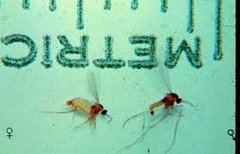
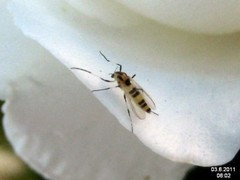
    I think I just deleted my comment. Anyway the insects I was looking at doesn't seem right but the mosquito like ones do. They should look just like this.

    With kind of see thru bodies. Some were like this
    The ones I was looking at is actually 3 insects. The orangey pear shaped one that is on the upper right looks like it could be a thrips predator.

  • 9 years ago
    last modified: 9 years ago

    I catch the rose midges on the red cups too. I catch the rose midges on the blue cups too.

  • 9 years ago
    last modified: 9 years ago

    Thanks Sam, It is possible then that by the time I had placed the blue cups out I had already caught most of them.

  • 9 years ago

    Christopher, what an interesting observation. I sprinkle used grounds when I think of it but just from my household so botenough to smother anything! Maybe I should ask our local Dunkin Donuts for used grounds since we don't have any Starbucks near here.

    Sharon

  • 9 years ago

    Wonder if Rose Midge are actually attracted to color OR are they attracted to the smell etc. of the oil coating???

  • 9 years ago

    jim- good question.


  • 9 years ago
    last modified: 9 years ago

    Maybe rose scented oil on the cup traps would be good?

  • 9 years ago

    The fabric on the potted roses placed on a non-soil surface has worked 100%. I'll report back on those with black plastic in the beds when I return home. Those I did prior were almost 100%. The black plastic has not harmed the growth, and, in fact, has seemed to push a huge lateral spurt.

  • 9 years ago

    Jim, you could try wrapping a sponge around a stake then spraying it with the oil. The sponge should hold a lot of the oil.

  • 9 years ago
    last modified: 9 years ago

    Christopher

    I believe midge fly females go after the big, juicy shoots/buds of hybrid tea types, and climbing rose canes, in preference over the small developing shoots/buds of a smaller blooming rose. However, if the midge fly population is heavy, just about any rose is fair game for it.

    Midge fly populations explode as the season progresses....to a crescendo well into fall.

    An Entomologist friend of mine told me that the midge fly female probably follows a scent trail given off by a rose's growing tip in order to locate it. Maybe, if it smells just right, its a victim. I can say my minis are not spared by the midge.

    I think there are multiple factors that either draw or repel a midge fly female from laying her eggs, or the eggs developing into maggots, or the maggots successfully reaching the ground as cocoons, or metamorphosing in the ground into adults.

    My experience has been that once any rose's growing tip's bud (hybrid tea, for example.....the midge's favorite victim, IMHO), reaches the size of a garden pea, the midge fly female sniffs elsewhere in her search for the perfect tip. Up until that point the growing shoot is vulnerable. I have had midged shoots that were only about an inch long in growth that emerged on a stem just below a deadheaded hybrid tea flower. They spare nothing early on.

    A midge fly female does not lay her eggs on a pea sized bud at this stage or later. When you see damage on a developing tip's bud, and the bud is as big as or bigger than a pea at that time, the damage was done earlier.

    I was always amazed that my cluster blooming roses, like the polyantha, Marie Pavie, was not seriously bothered by midge, and my numerous hybrid rugosas were essentially midge free.

    I believe once a female Midge fly finds a cluster bloomer's tip with its small bud production, like a polyantha, she goes elsewhere to lay her eggs. Perhaps a polyantha's growing tip does not produce as much of the attractant as a hybrid tea does. Or the prospects of her brood of maggots suffering malnutrition by eating such a thin, little growing tip is too likely, so she moves on.

    I also think the midge fly female leaves hybrid rugosas alone because it may not emit the right scent, or the growing tip folds of developing foliage are TOO feathery and it doesn't 'feel,' right, so she moves on. Maybe the very frilly, feathery growing tip would hinder the maggot at the completion of its eating cycle to easily drop to the ground. It gets stuck in the tip. The female instinctively knows this. Could be?

    There's so much that is yet unknown about the rose midge fly!

    Moses

  • 9 years ago

    great explanation Moses.

    Vaporvac- thanks for the update. I'll be watching for further updates.

    Sharon

  • 9 years ago
    last modified: 9 years ago

    I have had damage to my Tooth Fairy polyantha, but much less. Basyes Purple hybrid rugosa was also damaged until I moved the pot and protected with fabric. Its been over three weeks now.

  • 9 years ago

    Some great thoughts here. The only thought I'm still hanging onto is the variables. There so many that it is nearly impossible to assume anything. I have a rose much like a polyantha actually it probably is a poly but I forgot the name. It is the most midge damaged rose I have. I moved it several years ago. All of the dirt fell off in the move. The following year it was so incredibly beautiful without the midge damage. By the second year the midge found it again. Out of hundreds of blooms not a single bud has survived to bloom. Then it stops growing year after year.

    My worst damage this year was in the empty lot that I garden in. There are 6 carefree Beauty's, three Olivia Austin's and several others totally midged to death. Everything there was the same as in the yard. Something was different but I'll be darned if I can figure out what that would be.

  • 9 years ago

    enchantedrosez5bma -- When I was collecting from Starbucks, I was putting the grounds down about 2-3" thick each day, gradually working my way through all the beds. It took four or five months to finish, then I'd start back at the beginning again. I did that for about two years, pausing when snow made me have to stop, and resuming again when it was all gone for the year. If nothing else, it made for some really awesome soil. But I'm wondering now if that's why I didn't see much midge damage until this year -- and even this year, it's not really excessive. It's just a few "burnt tips" here and there.

    In the last couple of weeks, the Teas and Chinas and Polyanthas have been putting out a lot of new blooms. "Bermuda Spice" and 'Perle d'or' haven't stopped at all since mid-May. The other reblooming oldies I grow are getting ready for their next flushes. I no longer have any Hybrid Teas, and am down to two Floribundas which came only this year, so they're still growing more than blooming.

    :-)

    ~Christopher

    enchantedrosez5bma thanked AquaEyes 7a NJ
  • 9 years ago

    Wow Christopher, that's a lot of coffee grounds! I can imagine the soil must be great with such a thick layer of organic compost.

    Sharon

  • 9 years ago
    last modified: 9 years ago

    Christopher,

    This is a late response to your coffee ground strategy, because I'm older and slower all around, but I've been thinking about midge control strategies.

    Any attempt at disrupting the life cycle of the midge, at any point in its cycle, will probably be effective in reducing midge pressure. Sticky traps killing both male and female adults; insecticide: sprays, soil drenches, and granule soil fumigants, that kill adults, maggots, and cocoons; nematodes devouring cocoons in the ground; and ground barriers that destroy cocoons, all can be very useful controls.

    I believe you were smothering midge fly cocoons so that they either died outright, or upon hatching out they could not successfully emerge to the surface.

    This past spring after removing my winterizing collars, filled with fine pine bark mulch that I put on my tender roses at Thanksgiving time last year, I spread the mulch throughout the rose bed. It was late March when I did this.

    Normally, I do not put down mulch until May based upon the generally accepted theory that letting the soil warm up in spring accelerates growth. In my shorter growing season climate compared to, say a Florida rosarian's long flowering season, I try to give my roses as long a blooming season as possible.

    I essentially did not have any midge damage until mid-summer this year. This is the first time in nearly 30 years of combatting midge that this occurred.

    They came back in spotty attacks by August, not everywhere as is their usual custom. I'm back to spraying them right now, especially in light of the warm fall I'm experiencing so far.

    I believe there is an additional weapon in controlling midge by EARLY SPRING MULCHING, timing the mulching to occur before the midge hatch out.

    I would also wager that fluffing up the mulch with a hoe before the frosts/snow make this impossible to do, may bury and kill a significant number of midge cocoons, to be an additional effective control.

    What do you think?

    Moses

  • 9 years ago

    Interesting theory, Moses. I wonder if mulching early before growth starts and using newspaper or any paper in general as a barrier would help, too. If the midge can't get above the barrier would this stop them? We tend to mulch after our plants start growing which is already too late for midge control. One would have to be very diligent though when introducing new roses to the garden. Some kind of quarantine would need to be set up. Any ideas of what might work that wouldn't hamper the roses growth?

    Sharon

  • 9 years ago
    last modified: 9 years ago

    These are good ideas. Apparently they have to have 2" of soil to pupate, so cultivating around the roses would help, but one would have to be careful of their roots. enchanted, I'm sure newspaper would also be a good barrier, as would cardboard. Mulch certainly didn't stop mine and it's only on top of landscape fabric.Christopher, I wonder if the coffee grounds' ph might play a role?

    So far, out of my 30 pot babies, only Zaide and just today Heathcliff show any signs of damage. Heathcliff is near grass and the rose beds, so they could have blown or flown to him. Just one tip was damaged. The two Zaides were isolated from the grass well after the others, so it could just be that the cooler weather slowed down their lifecycle and they're now just emerging. I also think these super foliaged plants make it easier for the midge to burrow and pupate in the stems, as I've read they sometimes do; I've also noticed its persistence on my heavily foliaged Summer Romance. Just a thought.

    So the fabric with isolation on a non-soil surface is almost 100% after 6+ weeks. Some of these pots will be over-wintered and I am debating putting something in their soil over the winter when they're dormant, although I think the Lfabric is enough.

    Plastic on the planted bushes is probably 90+%. As mentioned, the heavily foliaged Summer Romance has taken the longest to recuperate, followed by Viking Queen and Munstead Wood. They are all bursting with new growth and buds. All except the one be I only covered a couple of weeks ago, but even those are rebounding. It's a real dilemma. I think I'll continue with the fabric on all plants through the winter and spring and spray the tips with TTea which was successful prior, but a lot of work. I think that would get me there and perhaps then I will remove the fabric and see how it goes or just leave it there until the roses obscure it. The problem will be if they get large enough to encroach on the grass

  • 9 years ago

    If you live in Rose Midge Country and have very few or no midged tips at this time of the year when midge pressure is at its peak, keep doing what you are doing!

    If your method is not harmful to the environment, you are breaking new ground in rose midge fly control. We need you to keep on experimenting, year by year, so that a consistently effective control, proven to work, will result.

    Wouldn't it be great if a lowly home rose gardener came up with a sure, easy to employ, nonpoisonous means, and very effective control, surpassing and eliminating the need for toxic controls. That day may come.

    Moses

  • 9 years ago
    last modified: 9 years ago

    Great ideas everyone!

    I'm going to take out our Fiji rose next Spring and place in a large pot... (Poor thing has hardly grown where its at in the ground because of rose midge...) I'm washing its roots off cutting back alittle of the top growth... Going to then put the rose into the large container. Then I'm coating the soil with gnatnix... Worth a try to see what happens...


  • 9 years ago

    I love these new ideas keep them coming everyone. This is on the other tread also but this was accomplished threw the used of yellow cups and a heavy weight motor oil. Perhaps with help from something in nature that I'm unaware of. The photos are horrible. They are only meant so people can see there is hope.


  • 9 years ago

    Patty-your photos are stunning as are your roses. I think I'll try motor oil next year since the vegetable spray is too thin. I'm so happy for you that your roses are blooming again :-)

    Sharon

  • 9 years ago

    Patty, were you getting any flowers prior to the cups? That's pretty impressive. Jim, what is gnatnix? Is that the nematodes?

  • 9 years ago

    Not anywhere near this many.

  • 5 years ago

    Hi,


    Did anyone try the wp surround to control the midge?


    The basal of my New Dawn got midged before it even could reach the arbor, it’s so frustrating. I’m afraid my Earth Angel is in midge trouble too, the tiny new buds look bend :(


    I already ordered yellow cups (again) but I was hoping the wp surround might work? what worries me is that New Dawns basals grow at least 2 inches a day so idk what would protect it?

  • 4 years ago
    last modified: 4 years ago

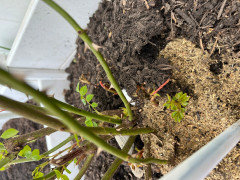
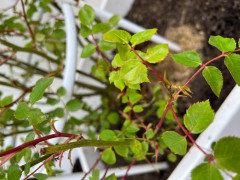
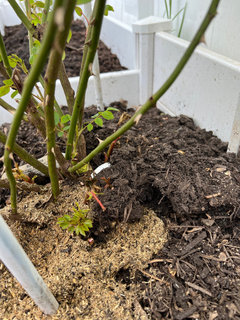
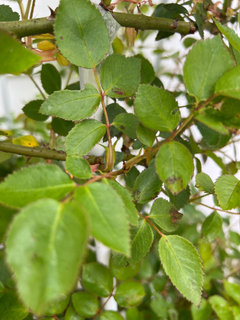
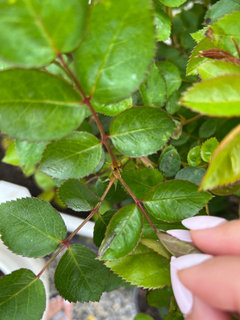
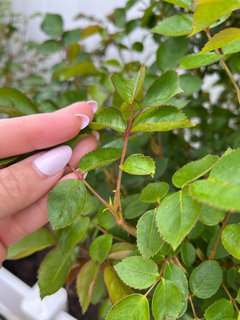
    Reviving this thread as I need expert help!! i think I have midge. at first I thought maybe neem oil was burning tge tinny buds, but when i saw tge damage on the new shoots I realized it had to be something else


  • 4 years ago

    More photos

  • 4 years ago

    I will cover the soil with paper for now (Trader Joe’s bags) and get the plastic when I have a chance.
    So far seems restricted to one rose bed. I believe it probably came with the moonlight in Paris I got last year from HD.
    I will also spray with Spinosad.

    Questions:
    Should I cut the damaged shoots/laterals? Or will they create new buds from there?

    Any color cup works or it has to be bright colors? I don’t think I have any

    Any new advice from the experts?!! Thanks in advance!!

  • 4 years ago

    I am not an expert, but I would suggest using landscape fabric rather than plastic since it is still Permeable. Also you can cut that off and new ones will come. They're already in the soil by the time you see the burnt tip so it's not to get rid of the pupae. I have not read that spinner had helps with this insect. I think they're only 3 that help But they are systemic. If your moonlight in Paris came as a bare root, I doubt that was the source. However, I have read reports at they can over winter in canes. Still I seriously doubt that was the source Is they Is they need soil too Re generate.

  • 4 years ago
    last modified: 4 years ago

    Cardboard works well too and won't blow around like paper will. Don't put down any mulch since the eggs pupate in mulch or soil. It will look awful but hopefully will break the cycle. I have Surround WP that I bought last year but haven't used it yet. Hopefully I can get to it this year. As for cups prior posters said they had good luck with pale blue and yellow ones. I actually used yellow and blue pinwheels I bought at Oriental Trading. It looked a bit more whimsical :-)

    Sharon

  • 4 years ago
    last modified: 4 years ago

    Thanks @vapor and @enchante! I did the paper today. I will get the landscape fabric too, this is a raised bed so it was easy to tuck the paper around and tuck in the raise bed.

    Vapor, the MLP came from HD as a potted rose. The damage so far is only on this bed, so I’m hoping to get it under control bf it gets worst 😫😫

  • 4 years ago
    last modified: 4 years ago

    Hurry before it gets hot! They're lifecycle speeds up the hotter it gets.

    😣😥

  • 4 years ago
    last modified: 4 years ago

    I don't normally use insecticides but I do always drench all of the plants that arrive with soil. I just can't take the risk anymore. Plus, I usually dead head them for the 1st little while which helps avoid harming pollinators.

  • 4 years ago

    Vaporvac, what do you use for a drench? I have some potted roses that just arrived.

    Thanks.

  • 4 years ago

    Anything with imildicloprid or spray with cifluthrin for something shorter acting but less reliable.

    enchantedrosez5bma thanked Vaporvac Z6-OhioRiverValley
  • 4 years ago
    last modified: 4 years ago

    Has anyone used the Surround mentioned in the 1st post? That sounds interesting. I don't know how I missed that 1 before.

  • 4 years ago

    @Vaporvac Z6-OhioRiverValley I was wonder about the wp surround too as well as nematodes. Last year was a horrible midge year for me.