Software
Houzz Logo Print
allie_hayes45

Native Texan, drought-resistant landscape design

9 years ago

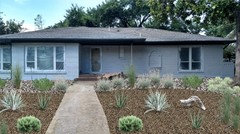
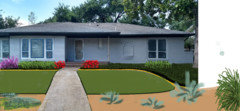
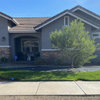
I am in the process of planning for new landscaping in front of my 1960s ranch in Dallas, TX. It is not in the budget right now to hire a landscape designer so we are doing planning, purchasing, and planting. I want to go with drought-resistant, native plants only (think sage, high grasses etc) but am unsure how to execute given that most yards around where I live do the typical floral landscape. I also tend to stick to shubbery and the Southwest feel (gravel etc.) even though I am fully aware Dallas is not in those parameters. I would love help from anyone who has attempted this look. Below is a picture of the front of the house. Note: There is a giant (but trimmed) magnolia tree on the right). The front door has been changed out for a midcentury 4-panel door and the post will be covered and stained to match the door.


Comments (11)

  • PRO
    9 years ago

    Do I understand that you intend to convert the yard to "gravel" in order to accomplish the 'Southwest' style of landscaping? But you don't have the budget for a designer? Do you expect the conversion to gravel is going to be inexpensive? It's not. It's heavy work that requires excavation (you must make room for the gravel) and a LOT of material. Realistically, how much $$ is available to spend on this project?

  • 9 years ago

    The Fort Worth Botanical garden has a cactus garden with a decomposed granite base.You might get some ideas from looking there.


    http://www.fwbg.org/gardens/#/cactus-garden/


    We are near your area and have converted a part of the yard that is difficult to water with natives and call it the dry garden. We have almost no sun so some of our choices like Turks Cap wouldn't look their best in full sun without supplemental water. We use bulk cedar mulch, not DG. There are many agave and yucca varieties as well as my favorite grasses (Little Bluestem, Inland Sea Oats and Mexican Feather Grass) that can survive with natural rainfall and thrive with water every 2-3 weeks in the hottest part of the summer.


    Allie Hayes thanked PKponder TX Z7B
  • 9 years ago

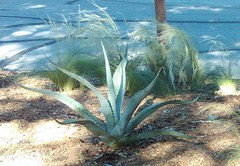
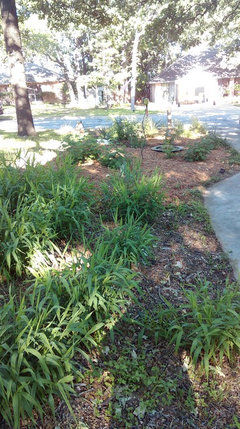
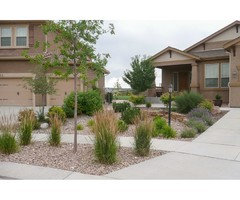
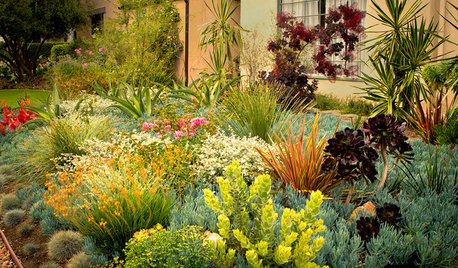
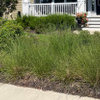
    Allie, I second Yardvaark's observation that rock mulch is expensive. It is also backbreaking to spread, difficult to plant in, and unforgiving. Once it's there, you are pretty much stuck with it. Having said all of that, I really like rock mulch and have a lot of it. It's very common here in Colorado and, used properly, can be stunning. A couple of recommendations I would like to make, however. One, most plants, even those considered xeric / drought resistant, appreciate organic mulch. That doesn't mean they won't do well with rock mulch, too, but organic mulch (i.e., shredded hardwood) will not hurt them. Two, organic mulch will be less expensive and much easier to spread yourself. Once you have plants in place and have the look you like (and as the budget allows) you can rake up the mulch, move it to the back yard, and order rock mulch if you decide you still need it to get the look you want. Three, a combination of organic mulched areas and rock mulched areas can be very attractive. I've attached a few examples, as well as a very preliminary plan for your yard, given the limited photo.

    The easiest way to begin is to invest in a backpack sprayer and spray your lawn with glyphosate (Roundup generic). If you have a Tractor Supply or other such store in your area, you can buy the generic much cheaper than buying Roundup. You will probably need to do that 2-3 times over a 3-4 week period. There is no need to remove the dead grass before planting.

    With the look you're going for, it really isn't absolutely necessary to have your foundation planting be separate from those plantings in the rest of the yard, although it would look better to do so. If you go that route, shape that area first (using garden hoses, flags, whatever).

    PKponder gave you some good plant suggestions. You might also enjoy some of these garden blogs: http://www.penick.net/digging/?page_id=6107


  • 9 years ago

    Thank you all for your comments! I think you are right...gravel might not be the best option. I was thinking we'd do grass in the the front and just have beds along the front of the house-- perhaps with a lighter color mulch. I love the grasses and shrubs. Are there any more plants you all would recommend?

  • 9 years ago
    last modified: 9 years ago

    Look into Perennial Peanut. It is a drought tolerant ground cover for zones 8 to 11 that is no mowing (once a year or two is common here), little to no water (rainwater works) and looks a little like grass. It is perfect for areas that are sunny. Check your local resources to see if it works there as well as it works in my area (zone 10). Doesn't flower in shade and only has a limited flowering time anyway. The rest of the time it looks and feels like grass.

  • 9 years ago
    last modified: 9 years ago

    im in SoCal and did a xeriscape on our rental. We used DG (decomposed granite) as the base and native succulents. The plants were taken from the neighborhood and just stuck in the ground! This was 2 yrs ago and the plants have grown and done well. Off in the flower beds are black mulch and iceberg roses. they do well in the heat and are prolific growers.

    the before pic of this house was way worse than yours! it was a bank owned property.

    under the windows you could do a curved flower bed w/the mulch. plant the rose bushes there. out in the middle of the yard, you could do the xeriscape. make sure you bring in rocks and boulders and flagstones, for variation. and use different height plants, cactus, succulents. Firestick is a good one. use lavender, flax, aloe, agave,,all would do well in Dallas.

  • 9 years ago

    Check out Plano Prairie Garden at http://planobluestem.blogspot.com for some inspiration. I believe he used DG pathways and mulch in between plants. He has a plant list also.

  • 9 years ago

    Former Richardson resident waving from North central Kansas,

    When I was trying to rehab the front flower bed at parents home in Richardson, Shades of Green, Frisco, TX was very helpful. They have landscape design and native plants. Couple of suggestions: Visit the Dallas Arboretum, Contact Texas A&M Agrilife Richardson, TX. The State Fair of Texas is a month away plan on going to look at all the landscaping companies entries in the Fall Gardening Competition. While at the fair, visit The Texas Discovery Gardens.

  • 9 years ago

    On October 14, Dallas Water Utilities has their annual Water-Wise Landscape Tour (https://savedallaswater.com/). I know that's still a bit away, but it'll provide a ton of great ideas that will jive with what you're looking for. (thank you to the Texas Gardening forums for telling me about this!)

  • PRO
    9 years ago
    last modified: 9 years ago

    I was thinking you could do something more conventional at the foundation planting area and then divide the remainder of the yard into zones. There could be a diminished irrigated grass portion, and an outlying 'desert' portion. (I cannot draw the kinds of plants for that zone so use your imagination.) The zones could expand or shrink to suit your preferences. Near the house, the windows are so low, I cannot see many, if any, conventional shrubs fitting without being a major pain insofar as trimming is concerned. Something like liriope -- which only needs to be cut down once per year in the early spring, would be large enough to serve as a shrub. Asiatic Jasmine, if it grows there would be a nice groundcover for the area below the tree and filling in other areas.

    I would still be careful about doing too many different, one-of-a-kind things in a desert zone. The effect of it can look a bit junky.

    I know peanut grows in many coastal states but how far inland I don't know. It's a great groundcover. I have it instead of turf and it might work for you in that regard. For me, in Florida, it blooms all the warm season -- April or May into October. If it freezes it browns but still doesn't look bad. Here, the freezes usually come at the end of winter so it's not long before it's green again.