Software
Houzz Logo Print
hibiscus909

branch damage

9 years ago
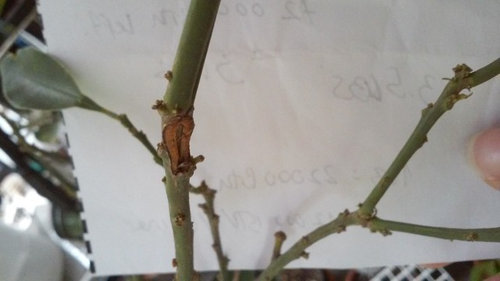
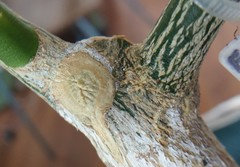
This is on my meiwa. Normally I would trim off any damage, and I know on most plants, pruning will induce new growth. But I have yet to trim any of my citrus, and the kumquats in particular are so slow growing.

This tree has a meager canopy and cutting this off would be a significant reduction. It did suffer a pot disruption a few months ago, and I broke a few roots when I repotted it last week. (lesson learned: soil was too moist when I pulled the rootball out and the weight of it broke some roots). A reduced root mass should be balanced by reducing leaves. But it also seems like I need as many leaves as I can get to grow more roots! The plant did not drop any leaves after either event, iirc.

So I'm back and forth on what to do: trim or not. Note how the wound looks healed over, except perhaps near the bottom. I do overall feel like the safest course would be to remove it to prevent pest/disease entry. The branch doesn't seem big enough to root, although I certainly would try.


Comments (22)

  • 9 years ago

    do not trim! the roots will grow to catch up.

    6b Steve

  • 9 years ago

    Looks like it callused already and if it is a big branch, probably would not cut. You could seal it to prevent any pathogen entering there.

  • 9 years ago

    Leave it alone. Do not apply wound dressing because it will only seal in moisture and cause decay.

  • 9 years ago
    last modified: 9 years ago

    In the past it was thought that a wound dressing placed on an injury was beneficial to the tree. It is now known that the best practice is to let the tree heal the injury. Do not apply any of the commercial dressings.

  • 9 years ago

    That is interesting. I thought If I trim the tree, just cut and let it be? But for big cuts maybe better?

  • 9 years ago

    I disagree the mentality in the article Vladimir has posted.

    "For some inexplicable reason, some people are compelled to “manage” a process that plants have evolved over millions of years." - it's not entirely true. Just go in any park and loot at the wounded trees. There will be broken branches, bark scars and holes. After 2-3 years of growth with a wound in bark, the visible wood will start to decay forming hollows. That tree will never thrive or recover!

    Death is a key element of natural selection in wildness. If you want to compete with this, you will eat antibiotics and also you will treat the wounds of your trees.

  • 9 years ago

    eSilviu, would you try that with old wounds (several months or more) or only fresh/recent wounds?

  • 9 years ago

    No matter what some people believe, facts still remain facts. The tree is better off if a wound paint is not applied. However, its your tree, do what ever you wish to your poor tree.

  • 9 years ago

    Very old school: apply wound dressing. We now know better.

  • 9 years ago

    Thanks for that link Vlad.

    If you get a cut you bleed, which pushes out dirt and pathogens and a scab forms and the wound heals. If you put antibiotic cream and a band aid, it will heal better/faster with less chance of infection. If it's a nasty wound, you get stitches and you don't wind up with a horrific scar.

    The article had no references to any peer reviewed scientific literature and the authors link was a dead end. I will therefore take it as nothing more than opinion. That being said, the opinion of someone with an advanced degree definitely warrants looking into.

  • 9 years ago

    It really depends on the situations for each tree and even the species of the tree weighs in on the decision. Your citrus tree will be fine if you leave it alone.

    6b Steve

  • 9 years ago

    eSilviu: In your picture of the plant I do not see any callous form. It looks like the cambium just died without forming a callous. In the first picture by hibiscus callous did form. You can see how callous starts at the edge of the wound and starts rolling over inwards to cover the wound.

    Here are my rest of the thoughts on the subject.

    Callous forms faster if the cut is as clean as possible - that is use a sharp instrument so the cambium is not damaged. It will also form faster if there is another live branch close to the wound to nourish it. For smaller branches the wound will be covered within a year or two. For larger branches the callous may not be able grow enough to cover the entire surface of the wound. In these cases water may accumulate in the hollow formed and rot the wood. Usually this is not a problem for the plant. They can compartmentalize themselves and isolate the wound. Here is an interesting read from US dept of Ag and Forest Service.

    In bonsai, one uses special branch cutters - concave cutter and/or knob cutters. These cutters aim to create a small depression in the center of the cut as opposed to shears that leave a flat cut. The reason is purely aesthetics especially if the branch is cut flush to the branch it is attached to. After the callous rolls over it creates a knob if the cut is flat. If the cut is concave the end result is a flat callous and after a few years the cut is barely noticeable.

    Timing is important too. If the plant is growing vigorously the wound will heal faster.

    In bonsai again, wound sealants/pastes are used for a variety of reasons. There is no evidence they are helpful generally in all cases. But two reasons make sense to me. First one is for plants that "bleed" profusely when cut benefit from it. Mainly it prevents die-back. Second one is exact opposite - to prevent rapid de-hydration of the cambium that can compromise callous formation.

  • 9 years ago
    last modified: 9 years ago

    Valdimir, people are going to do what they want, whether it is right or wrong. It is now know that it is best not to apply a wound dressing, but like it is said over and over====you can lead a horse to water, but you can't make them drink. Sometimes in life it is not worth all the discussion, just let them do what they want..

  • 9 years ago

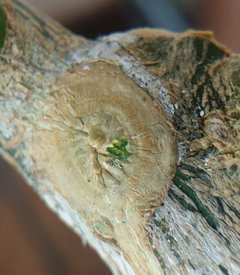
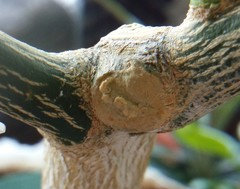
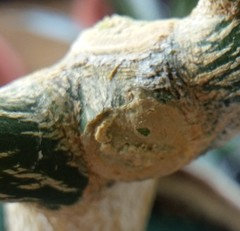
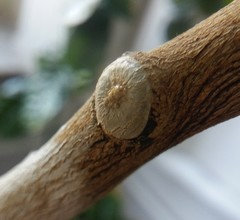
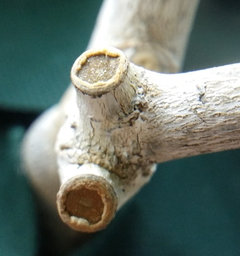
    tropicofcancer(SW-PA 6b): I took some clear pictures for you. What is seen is callus, aged by half a year. I've even made a small scratch, in order to see that the white thing in the middle of the wound is green under the white cover. If it was wood as you suggest, it would have been white!

    case 1:

    case 2 (on the other side of the same trunk):

    case 3, on other tree:

    case 4 - a partial callus covering two cuts (didn't bothered too much since I plan to remove the whole branch after fruits are gone):


    I have more example, but these are the best ones.

  • 9 years ago

    Excellent photos, great camera work.

  • 9 years ago

    An ordinary magnifier glass in front of the phone camera will produce very good macro images !

  • 9 years ago

    Good idea, must try that :)

  • 9 years ago

    The small size of our trees makes it unnecessary to dress the wounds. If I damage the bark I will wrap it in Teflon tape to seal in cambium moisture and unwrap it in a week when the cambium as sealed itself.

  • 9 years ago

    eSilviu: Very nice pictures and work. Your pictures illustrates something interesting. The cuts that are parallel to the direction of sap flow (cases 1-3) "healed" differently than the cuts across the direction of sap flow (case 4). In cases 1-3 the cambium layer grew to bridge the gap and your wrapping method allowed that to happen since the gap is small. The callous layer is also thin for the same reason. It will take a while to harden. Looks quite nice though and should work out nicely in time. The cross cut shows closer to usual response where the callous is thicker and is rolling over the wound. If you had left it exposed (in both cases) the callous would have been thicker and tougher but also uglier.

  • 9 years ago
    last modified: 9 years ago

    You are close to the facts. From my observation, a vertical branch cut at any height will not form callus to cover the horizontal cut, but it will most likely evolve as in case 4.

    I have even tried to graft a piece of bark on the top of the trimmed vertical branch and the graft just dried and died.


    PS: This should be the reason why grafting on a lower part of the trunk, while keeping the top part, will heal and grow faster (after the top is removed): fluids flowing from top to bottom around the scar/wound will promote callus formation. Probably this is the reason inverse T graft is used, and also the reason for the bulge above the girdled area on girdled trees.

Sponsored
Peabody Landscape Group
Average rating: 3.5 out of 5 stars8 Reviews
Columbus' Reliable Landscape Design & Contracting