Software
Houzz Logo Print
ash_timlin

Rubber Plant-Full sun??

9 years ago

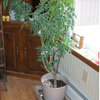
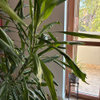
Seeking advice in regards to my newly acquired rubber plant. It lives at my office which has a very large south facing window. The associates at the store where it was purchased ensured me it would be ok in this location (very bright, full sun for several hours of the day) but I have read that this variety of plant would benefit from some light shade. Should I install some sheer curtains to filter the light or will it be ok here?

Comments (11)

  • 9 years ago
    last modified: 9 years ago

    That's very ideal spot, but if he was indoor with limited light for a long time, adaptation process required. During adaptation, he will produce more proteins to prevent his leaves got damaged by UV burn. Normally, he able to grow very healthy even get full day direct sunlight at 33° Celcius.

    Ash Timlin thanked Ekor Tupai
  • 9 years ago

    I never knew these were considered house plants until I was in college. I used to climb ours in SoCal to get onto my roof.

  • 9 years ago

    Your plant is genetically capable of tolerating full sun, even in the equatorial areas where it naturally occurs; however, its current mantel of foliage is not likely to be conditioned to tolerate full sun, which increases the potential for sunburn (photo-oxidation). The human body's reaction to an increase in the amount of sunlight on skin is an increase in the protective pigment, melanin. A plant's reaction to an increase in photo load is an increase in the production of molecules that form sinapate esters, which act as a "sunscreen" by absorbing UVB rays. You might be able to gradually increase the photo load, but there is a limit to how much change a leaf can tolerate before it's shed by the plant. IOW, if we grade light intensity on a scale of 1-10, a leaf that appears at a light level of 6 might never be capable of adjusting to light brighter than a level of 8-9 or levels lower than 4. Numbers were chosen only for illustrative purposes.

    Too, most houseplants will tolerate the photo load of full sun that passes through any type of glass, but may not be able to tolerate the passive heat gain that comes with direct sun exposure and still air indoors. IOW - if we don't include the mistake of exposing a plant to light levels it hasn't been conditioned to tolerate, more often than not the damage caused by direct sun is related to over-heating and not an excessive photo load. A small fan on a timer that turns the fan on during the brightest part of the day will interrupt what's called the boundary layer, which is a layer of still air surrounding leaves that traps heat and contributes substantially to over-heating.

    If we don't consider shade as a way of protecting the plant from a photo load it's genetically capable of tolerating, or from heat build-up due to passive solar gain, there would be no value in providing it.

    Al

  • 9 years ago

    If you're concerned, pull it back a few feet to start with - the light intensity (as far as the plant is concerned) drops off rapidly after it passes through the glass. Getting hot is more the thing to watch for, if there's not much ventilation - feel the leaves.

    Ash Timlin thanked robin98
  • 9 years ago

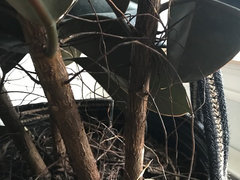
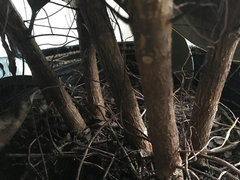
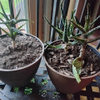
    Is this root situation normal for a specimen of this size or is a repotting necessary in the near future ?


  • 9 years ago

    That looks pretty busy to me. Don't suppose you can ease the whole root ball out the pot for a quick look-see? One clue that they're too rootbound is going through water ridiculously fast. Another is that you've just bought it - understandably, growers push them to their maximum first.

  • 9 years ago

    Look like the root down there no longer have enough room to grow. If the growth rate decrease, try potting up first. Keep some old soil on root to prevent root hair damage. If you think potting up not good enough since too many circling root, then you need to prune it. Be carefull, fix root position and only do max 25% prune. Try not to remove too much soil from the root so root performance not drop significantly. You need to wash and clean up old soil only if you think there's possibility of root rot.

  • 9 years ago

    What a beautiful plant!

  • 9 years ago

    Plants that are subjected to long periods of saturated soils and plants that are severely root bound often develop rootage that seems to crawl all over the soil's surface, so the odds are good that you should plan ahead and schedule a repot when the next good opportunity arises. By "opportunity", I'm not talking about the next day you find some spare time, I'm talking about planning a repot to be done in the part of the growth cycle when the tree tolerates and responds most enthusiastically to the work. I usually suggest right around Father's day or just before the summer solstice as the period to target for repotting most houseplants. Plants have natural rhythms that, if we pay attention to them, allow us to work with the plant instead of against it. Not only is this better for the plant, it also allows us to get more of the satisfaction that comes from the nurturing experience.

    Al


    Al

    Ash Timlin thanked tapla (mid-Michigan, USDA z5b-6a)
  • 9 years ago

    Gosh darnit, I'm starting to think I should have waited before repotting my F. Lyrata. Temps in the upper 80s-low 90s pretty consistently this past month & new growth sprouting on Fürguson, along w/ the immediate desire to "properly water" since I travel extensively for work lead me to think it was a "good opportunity" to lightly prune & repot. I'll be sure not to touch my F. Elastica, or any of my other new babies for that matter, until after Father's day next year

    In the meantime I'll wait in hopeful prayer to receive help on the damage already done to him on my other post.

    Best of luck to you, Ash. I hope my F. Elastica, "Ree Ree" (named after my fave sister :)) turns out to look as full & beautiful as yours!