Software
Houzz Logo Print
john76100

Tomato plants quickly dying

8 years ago
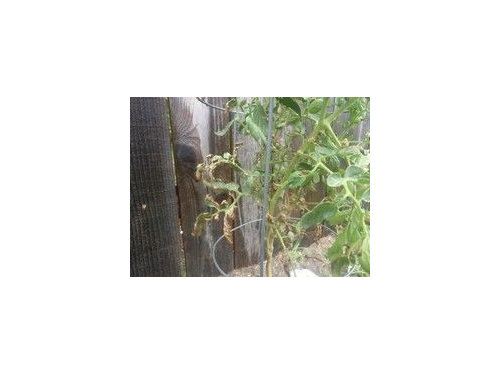
Hello,
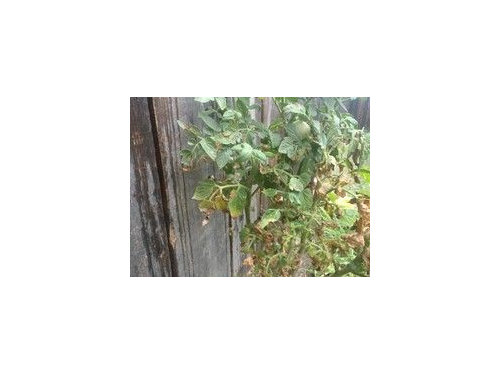
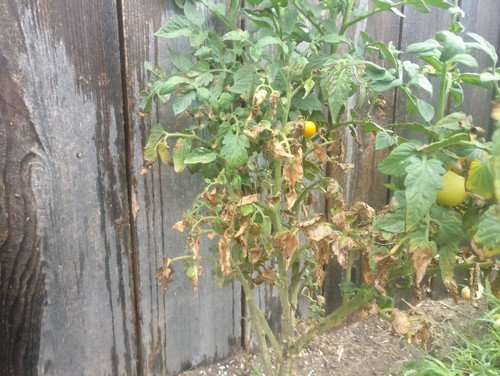
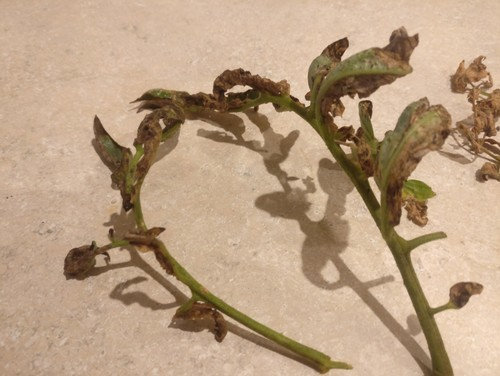
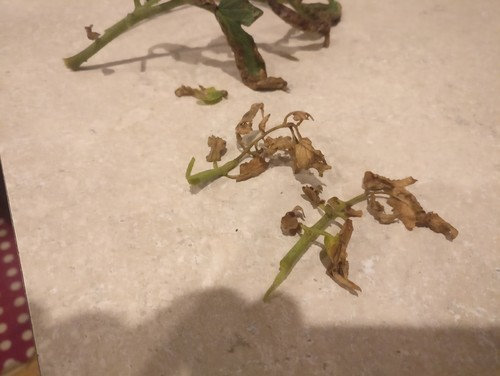
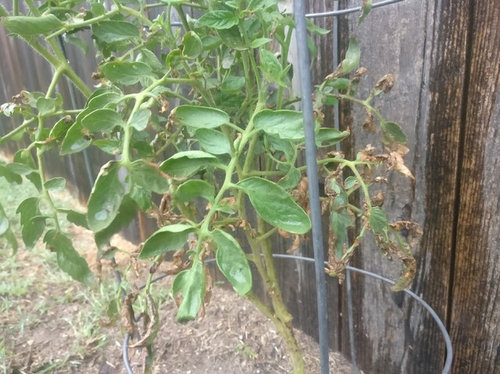
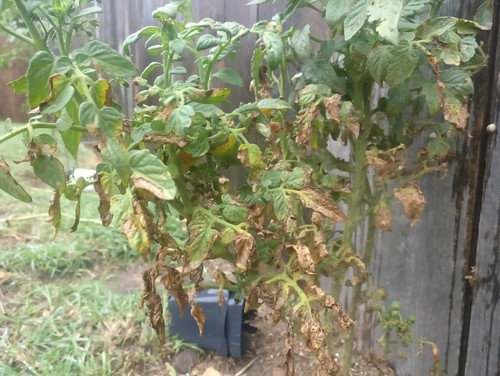
I have a few plants along my fence line. They have been doing great, but it seems within a week, something is killing the leaves. I have been regularly using neem oil on the plants, but that is not helping here. I was just about go go buy some Southern AG Liquid Copper Fungicide, but was hoping someone could offer some advice if that would help, or an alternative product. The product says it's a preventative, so perhaps it won't even help.

Should I prune off all the branches showing this damage? Some are just turning yellow from the tip to the stalk.

There's also no overhead watering, except for rain.

Thanks, and sorry if the pics are not the best, Harvey is not lending to a favorable environment to have a cell phone out.


Comments (17)

  • 8 years ago

    try daconil to slow the development.

  • 8 years ago
    Thanks for the recommendation. It sounds like a better overall product then the copper treatment.

    Now just to see when Harvey is going to be moving on.
  • 8 years ago

    My tomatoes doing the same thing here in VA. Not using anything before this. Will say I have 1 heirloom (Kellogg's Breakfast) a Lemon Boy and a Chef Orange and all are affected. Still ripening what is there but all the flower stems have died so will get no more. I know that KB is not resistant to anything as it is an heirloom, but do not know about the other two. Since the 3 are real close in separate tubs, maybe one got it and it spread. My old garden book says it is a virus, but what they say to use is synthetic so I am just clipping the branches back that go bad and removing the dead leaves. Since I have gotten 4-5 times what I got last year I am happy with the 15-20 I've had & the 8-10 ripening. If you are in Harvey's range, please take care and stay safe. Prayers to Texas!


  • 8 years ago
    Thanks Mary! Today is the first day so far with no rain. Feels like it's been a solid week of non stop rain. Luckily I am in a high spot in my town.

    I went ahead and did my first round of daconil. Hopefully it's not too little too late. A lot of the plants are totally droopy. I hope it's just due to the massive amount of rain, and hope they bounce back once it dries out a bit.

    I'll give the draconil about a week and follow up if it seems to be helping or stopping the spread.
  • 8 years ago
    Just FYI, the draconil does not seem to be having much of an effect. I've applied the initial spray, then a follow up so far. I made sure to get the top and bottom of the leaves with a pump sprayer, and also did the stems.

    I want to say perhaps the spread has slowed, but that is probably more wishful thinking.
  • 8 years ago

    Using the concentrate? I have found concentration is the key, and is also the danger referred to in the literature. I was using 2 gallons per treatment on my garden, but was getting beaten, so I mixed another batch and sprayed again. It had an impact. They are very specific about the quantity to use on certain plants, but I notice that it fluctuates. I am using 2 tablespoons per gallon. I noticed also they indicated a total usage, like 12 applications on my bottle documents. Seranade is also popular, as is neem oil and baking soda, but I would suggest potassium bicarbonate for my area where sodium bicarbonate might be fine for yours.

  • 8 years ago
    Yep, I bought the concentrate. It had much better reviews then the premixed. My sprayer is a gallon. I have also been using two tablespoons per gallon on the 2x I have applied it. Previously I had been pretty regular with Neem oil concentrate also. I've had one application of the Neem oil between the draconil.

    I'm not too sure about using more then a gallon per treatment. It is only 6 plants. With the gallon application, they were dripping with the stuff.

    Do you happen to recall from the information sheet any general info on hot pepper plants? I've applied some to a group I have growing, but only one is getting very limp leaves out of the bunch. I don't think it was the draconil, but rather all the rain I received, which I also don't understand since they are in a group. Just a Shane as it's my favorite pepper plant. In case I can't fine the info book figured I'd ask.

    Thanks.
  • 8 years ago
    last modified: 8 years ago

    Bacterial wilt is or can be a bug source problem. Maybe some small critters like aphids or mites are transmitting it, and of course if thats what it actually is and not some other thing. You might have them in too rich of an environment. They don't need much. Malathion can handle the mites. The bifenthrin types were not listed for that as I recall on the Alabama County website.

  • 8 years ago
    As another update, the plants I originally referenced, knock on wood, seem to be doing better. I am pleased to see they are blossoming.

    This is my first garden at my house. I had one at a previous home, and the tomato plants were literally planted, watered, and did great.

    I don't know what it is here, perhaps backing up to a green belt, but these tomato plants are so hard to keep healthy. Now two on a separate side of the garden are hurting. One has just gone limp, and yellowing at the bottom, while the other has spots. I'm hoping not some wilt.

    Any other ideas? Sorry I can't seem to get good pics. I could prune off some damaged branches if that would help.

    Thanks.
  • 8 years ago
    last modified: 8 years ago

    If temps are 85+ they get in this tough zone where the plant struggles with heat, and piled on top of there is but not limited to bugs transmitting disease and bacteria and fungi prospering at the plants expense. The existing yellow ringed spots may well be septoria, and things like aspirin and sulphur can help but seranade or daconil may be needed. The aspirin can make the tomato react faster with its own defenses, and the sulphur can bring ph down especially on the surface of the soil but basically seems to be antimicrobial while being a non fertilizing minor nutrient and I cannot say why the lower ph helps, just my soil goes neutral to alkaline with homemade compost and from my soil tests it helps. It can burn the plant though. especially in the heat when it gets on the plant. Just be patient and keep a miticidelike neem or stronger in the fungicide spray rotation, mites and aphids and whitefly can kick butt before you know it. As temps cool the plant can spring back if it not too beaten up. One trick I found was in running my own soil tests and using tap water instead of the recommended distilled. The tap water tends to be treated to be neutral on purpose for the sKe of the piping while pure water absorbs carbon dioxide and makes carbonic acid and the lowered ph will blow the scale of the test up.

  • 8 years ago
    Thanks trickyputt. File the asprin suggestion under something I never considered. I think that one definitely is first on the list, followed with a baking soda spray, and then another I read today of a milk/water spray. Although that may have been specific to squash/zucchini. Of course not all at once also.

    I've been keeping a steady rotation of daconil and neem oil applications. Usually a daconil application, three days later neem oil, then four/five days later another daconil.

    I'm excited about the asprin spray. It is very interesting reading about it. Makes me wonder if the tomato carries any into it.

    Thanks again for the advice. It's such a great yet frustrating experience dealing with mother nature.
  • 8 years ago
    Oh and also, being in TX we are back above the 85 mark now. Had a nice stretch of cooler weather but that passed.

    Also I was out earlier and pleased to see quite a few lady bugs. No idea when they showed up, but saw at least 10, so hopefully they are taking on some pest control duties.

    One other thing, any recommendations on rotating the sprays? I was going to do neem again tomorrow night. I'm wondering if asprin, followed by neem would be ok, or rather mix the asprin with a follow up daconil?

    Thanks again.
  • 8 years ago
    last modified: 8 years ago

    The aspirin will make a powder coating physical barrier. The tomatoes react to it. Not sure if it really does more than toughen their skin against surface attack. I read some on it long ago but I guess new pursuits pushed it out of my pea brain. A little soap wont hurt it sticking, but a proper surfacant like Tween 20 (TW20) is more appropriate. You will find the aspirin is antifungal, and works as well as baking soda. Well I use 4 325mg tabs to a gallon anyway so it stops powdery mildew about 3 weeks. Sodium bicarb is a salt. Better to use potassium bicarb instead if you want to fertilize while fending off fungi.. The ladybugs are there because your plants are infested and the neem is not working. Guess you find their dinner and you find your problem. When you spray for the whitefly or aphids they are eating, you will probably end up using something strong, and kill the ladybugs too. People talk about vacuuming and other techniques first but time is short, they suck the plants downhill fast. Check under the leaves.

  • 8 years ago

    One thing I just remembered--when I first planted them they had whitefly and I sprayed with with insecticidal soap. Maybe I was late in getting it done, and the heat waves/no rain (tho I watered every other cool day & used tomato fertilizer) just exacerbated the damage. I didn't know about adding boric acid to my original soil, tho I did add crushed eggshells. I dislike that all this garden 'soil' is not soil at all, & definitely not dirt (we have red clay), which makes it very unstable for stakes/cages. The only 'dirt' we can buy is that mess called yard dirt/contractor's cover-up, which is not really what you want as then you have to mix in some good stuff over 4-5 years to get it anywhere near viable for plants [besides, a full pickup load is the smallest amt. you can buy, when what you need is 3-4 wheelbarrow loads]

  • 8 years ago
    last modified: 8 years ago

    Will the boric acid deter nematodes? And would that be also called Borax?

  • 8 years ago
    I totally agree Mary. When I was originally digging my main bed, it was either incredibly hard dirt and rocks, or clay. My neighbor donated three bags of miracle grow "soil", which was nothing more then sticks. And the reviews from other brands at the big box stores all basically said the same thing.

    Luckily, I had recently redone my front landscaping with rock, and noticed the landscaping supply store offered multiple different kinds of bagged dirt. I ended up getting 15+ bags of two different compositions of a landscapers soil, and a gardeners soil with the main mix being compost.

    I've never tried adding a borax addition. It seems you have to be very careful with how much is applied. One site calls out;

    "Unless used in small amounts -- such as 1/2 teaspoon in a gallon of water -- Borax is toxic to plants. Borax can be sprinkled directly onto weeds and even invasive ground ivy as a natural herbicide -- but be careful to avoid sprinkling it onto any vegetable plants; it is not discriminatory and kills any plant. It should be applied when rain is not in the forecast for several days for the best results. Or mix 1/2 cup of borax in a gallon of water and apply to the base of weeds to act as a liquid herbicide on the roots."

    While this site specifically mentions 20 mule team, and seems to still stress care;

    http://homeguides.sfgate.com/role-20-mule-team-borax-organic-gardening-74730.html

    As far as my plants go, this afternoon I will probably try a neem oil, soap, and rubbing alcohol mix on one plant and see how that does.

    Should I be pruning off every branch that shows yellowing, or just pruning off the part that is yellow? I've avoided taking any off until it's either dead or mostly yellow. Perhaps I am allowing whatever the problem is to spread, but I thought any open wounds on the plant might spread stuff faster.

    Thanks.
  • 8 years ago

    I would only bury the dead. To do otherwise has not proven itself in my garden. In fact, this year the unpruned plants came.back and soundly demonstrated a capacity to recover from the heat season that I would not have been able to describe in prior years. This was with a heavy use of summer sulphur however, which has a unique set of plant supporting properties in and of itself, amongst those a propensity to discourage nematode.


Sponsored
More Discussions