Software
Houzz Logo Print
aparish32

Help identifying bug on impatiens?

9 years ago
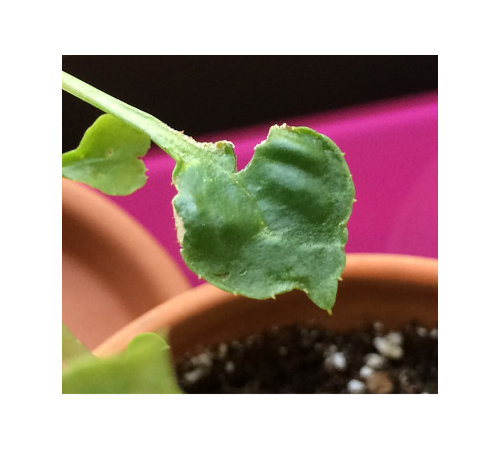
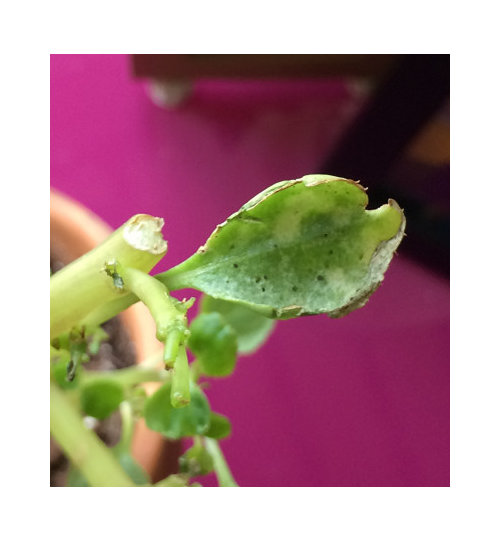
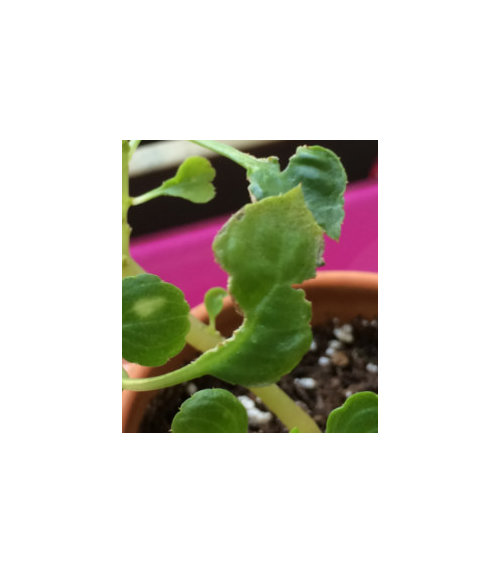
I have an impatiens (not sure what type exactly) that has been suffering for a few weeks from a bug that I can't identify. The leaves/flowers fall off even if they look healthy. It hasn't been able to keep any new growth. I tried getting rid of the bugs with a soap/water mixture but that didn't seem to get rid of all of them. I've attached some images of the leaves that seem most affected. I would take a picture of the bug itself but they are very small and hard to spot. They are thin & I've seen both light & dark colored ones. Any help would be appreciated!!

Comments (5)

  • 9 years ago

    A more comprehensive description of the insect would, without doubt, increase the odds of an accurate ID leading to resolution of your predicament. Also, we need to know if the plant is indoors or outdoors. You have some damage I might attribute to a caterpillar or perhaps a grasshopper if the plant is outdoors.

    Too, the shedding of leaves/blooms and malformed foliage might not be insect-related. There are plenty of cultural conditions that could account for those symptoms, but again, we need info re your soil, and watering/fertilizing habits. What kind of 'soap' did you use as an insecticide? Most products used for dishes and other household applications are inappropriate at any concentration for use on plants; so, if you didn't use an insecticidal soap, you might have seriously damaged soft tissues, such as foliage or succulent stem tissues.

    Impatiens blight, or impatiens downy mildew, is a disease that widely affects impatiens, so read up on symptoms and check to see if anything 'clicks'.


    Al

  • 9 years ago

    Thanks for the response! I would give a better description of the bug but I'm not sure what else to say, it is such a small bug that I can't see any defining features on it... there seems to be very few of them but they won't go away. It's an indoor plant. It's planted in basic commercial potting soil & I just water it when the soils dry. I haven't fertilized it recently though. I used typical dish soap though very diluted, I'm new to plant keeping & didn't realize it could hurt a plant that badly, I'll make sure not to do that again! The plant seems to be the same as before I sprayed it, which was about a week ago. I'd be happy to give any more info.

  • 9 years ago

    If they're thin they might be scale. Try searching that and see how you go. From the photos it's not really possible to see properly but it should be easier for you to compare photos on the internet with what you can see on the leaves.

  • 9 years ago
    last modified: 9 years ago

    Use a loupe or magnifying glass. Does it have wings? does it fly/crawl/jump? is it worm-like? does it move fast? does it have legs? where, on the plant, do you most often see it, soil or on foliage? is it more often seen on older foliage or younger foliage? any white, cottony 'tufts' anywhere on the plant? are they smaller or about the size of a speck of finely ground pepper? Have you done the "mite test" with a blank white sheet of paper?

    When a plant is beyond stress and growing under strain, death of the organism is inevitable unless the grower eliminate the cause(s). Strain is different than stress and occurs when the plant is using more energy than it's capable of producing. During periods of strain, the plant will be shedding foliage. Too, any number of leaf spot diseases can be made manifest when plants are severely weakened, most of which are difficult to pin down. All this leads to the question, how serious are you about trying to save a bedding plant? Does it have sentimental value, or are you simply determined to disallow its demise?

    If it was my plant, and I was determined to save it, I would

    * move it outdoors into dappled or open shade.

    * spray it 3 times at 2 week intervals with Bayer's 3-in-1 for Insects, Disease, Mites. It has a systemic insecticide and fungicide, as well as a miticide. Spritz the plant every 4 days with a mix of 1-2 parts water and 1 part rubbing alcohol with a 70% alcohol content (most commonly available and cheapest). Make sure to cover all underleaf surfaces and soak leaf axils (crotches).

    * since you haven't fertilized in 'a while', I'd flush the soil THOROUGHLY the next time the plant needs water with and fertilize with an appropriate fertilizer after the soil stops draining.

    * I might change pots to something larger, but with ballast in the bottom. Ballast is not the same as a drainage layer, so ask if you don't understand the concept. If the pot is small enough, try this trick: After watering over the sink, start moving the pot up and down. You'll notice at the end of the downward movement and at the beginning of the upward movement, excess water will exit the pot via the drain holes (you do have drain holes - right?). The sharper the reversal of movement, the more excess water you can force from the pot.

    * I'd avoid wetting foliage and remove/discard/flush any diseased leaves as they occur, and remove any that might be lying on the soil's surface.

    * An essential element of maintaining consistently healthy plants pivots on the grower's ability to maintain the root system in good health. There is no chance of a healthy plant w/o a healthy root system. The key that unlocks the grower's ability to maintain a healthy root system is a soil air:water ratio the plant approves of, so it's important to keep your watering under control - see tips a couple of paragraphs above.

    Your plant looks like it could have nutritional issues related to soil conditions (too soggy), so getting an appropriate fertilizer to the plant asap is important ..... even though the conventional advice is "NEVER fertilize a sick plant". In your plant's case, following that advice could well end up being the cause of death.

    Al

  • 9 years ago

    Impatiens are notorious for spider mites..and that could be the culprit.