Software
Houzz Logo Print
elizabeth_brown22

Hydrangea is flowering...just not growing

9 years ago
last modified: 9 years ago

Hi there, I'm new to gardening hydrangeas and I could not find an answer to my dilemma online. I live in Boston and planted my hydrangea in May. All summer long I've had plenty of blooms - 3-6 at any given time - but the plant is still only about 18 in tall. It really hasn't grown since I planted it. It receives plenty of water and sunlight (4-6 hrs/day). I figured that wasn't the issue since I was having lots of blooms. I noticed the leaves were getting eaten so I started using an insecticide, but that hasn't helped the growth issue and the leaves don't seem to stick around. The stem that is closer to the ground is very woody and mostly leafless. I really want it to grow to a big beautiful bush. Any ideas? Thanks!


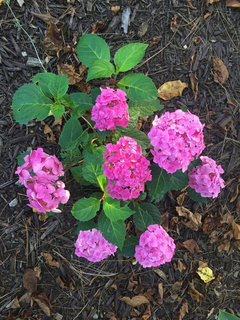
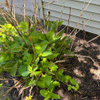
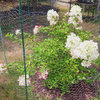
Update: added a photo just now of it. The darker flowers are just older. I typically have not been deadheading them, since I keep getting blooms. I do not know the varietal sadly


Comments (25)

  • 9 years ago

    What kind of hydrangea is it? Any pictures?

  • 9 years ago

    Thanks for the good questions, I added a photo now and I don't know the kind :(

  • 9 years ago

    Agree with the above and can let you know it is a bigleaf hydrangea, H. macrophylla, but which cultivar it may be is up for guessing ;-)) Too many and with too close a similarity as well as color differences which tend to be site specific.

    And I would seriously consider winter protection if you want it to grow into a large shrub, otherwise you are likely to get a lot of stem die back from the cold, as well as flower bud damage.

    Elizabeth Brown thanked gardengal48 (PNW Z8/9)
  • 9 years ago

    Thank you both so much!

  • 9 years ago
    last modified: 9 years ago

    Yeah, I would not worry either. Wish we could somehow "see" how the root system is developing sometimes. Would be cool to put on special glasses to see/check the roots, wouldn't it!?!?

  • 9 years ago

    That is definitely , H. macrophylla and I believe the variety is hydrangea bloomstruck.

    There is not that many macrophylla hydrangeas that can be grown in our zone so that narrows the possibilities a lot.

    The darker color stems and leaves are typical of bloomstruck and so is the flower color.

    Elizabeth Brown thanked guyground
  • 9 years ago

    Hi Elizabeth, don't be surprised to see it blue/ purple next year.. definitely Winter pro

  • 9 years ago

    Thanks all, super helpful. Recommendations on what to do to protect in a Boston winter?

  • 9 years ago

    I've never done that before

  • Elizabeth Brown thanked hyed
  • 9 years ago

    I think assuming it is Bloomstruck is a bit premature - it looks NOTHING like my Bloomstruck!! I repeat this often but you cannot determine a bigleaf hydrangea cultivar by flower color alone. One of the biggest attractions of these types of hydrangea is the color variability, depending on siting and soil chemistry..

    And bigleaf hydrangeas have been sold and planted in the Boston area and New England for decades.........long before any remontant or reblooming varieties were on the market. So I'm not sure how that narrows down the varieties available or sold in that area. If purchased in May and in bloom at that time it could just as easily be a greenhouse hydrangea and could be anything!!

    I don't mean this to come across critical of attempting to ID a specific variety of hydrangea but it is just not that simple and one should be cautious about applying one's personal growing experience to everyone else. And providing information to those not as experienced which may very well be incorrect. These plants are not that simple to ID as they go by different names in different parts of the world and many look extremely similar in appearance. And color just doesn't factor into the equation at all since it is subject to so much variability. It is very much like trying to ID a specific type of Japanese maple - there are 100's (as there are with hydrangeas) and many look very similar and even the experts have a hard time telling many apart. You can make some more or less informed guesses but that's about as precise as one should be prepared to get.

  • 9 years ago
    last modified: 9 years ago

    I don't think you are being critical but I think you are overlooking some important things particularly having local knowledge of the area.

    You live in a totally different part of the country than we do.

    I live in the same area so I'm quite familiar with what cultivars can be grown here and what cultivars are sold here and there not that many.

    Also, as we all know the same cultivars can look dramatically different in different parts of the country.

    For example, VS I've been told skips the color change in hot parts of the country. Thus, if someone in Texas shows me there VS I'm going to say it looks nothing like mine.

    My bloomstruck, in fact, looks like that.

    Ultimately, I offered an opinion on what I suspect it is, and if one doesn't agree I'm not offended.

  • Elizabeth Brown thanked guyground
  • 9 years ago

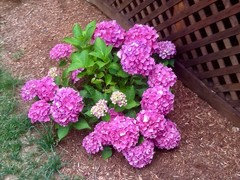
    I think it's Bloomstruck. Mine looks just like that. It's gotten darker with cooler night temps and has remained short. I did not winter protect it other than to mulch it at the base. Also, mine were planted last year. This pic was taken two weeks. The blooms are darker now.

  • 9 years ago
    last modified: 9 years ago

    Soils in the Boston area tend to an acidic pH.......if the hydrangea in question were indeed Bloomstruck, the flowers would not be hot pink!! This is why you CANNOT make an accurate ID based on flower color.....what color the plant blooms in one part of the country has nothing to do with the color it blooms elsewhere!

    Bostson and Cap Cod have long been known for bountiful plantings of blue blooming macrophyllas (blue indicating acidic soils). Many of these were in place and established long before Endless Summer hit the market or any of the other very recent remontant types were introduced. So to say that only a limited number of mac varieties are available in that area is a specious assumption!! There are entire books written about Boston/Cape Cod hydrangeas and an active Cape Cod Hydrangea Society - check out some of their photos to see the wide range of hydrangeas that grow in that area.

  • 9 years ago
    last modified: 9 years ago

    I don't know of any pink Macs in my area (Boston) everything is blue and more blue..for example bought a LaDreamin last yr (all pink) this yr Blue Blue

  • 9 years ago

    Gardengal, you don't have to get nasty about it. I'm just giving my opinion. Also, as I mentioned in my post, the blooms on my Bloomstruck hydrangea are darker now. I just don't have a picture to post.

  • 9 years ago

    I don't know why anyone would think I was getting nasty!! I was just clarifying what is a very common misconception about identifying bigleaf hydrangeas just based on flower color.......it is variable! What color one mac maybe in your area has very little bearing on what color it may be in a different part of the country with a different climate and different soil chemistry.

    As a professional horticulturist and landscape designer, I have grown and planted hundreds of different macs over the years and with only a few, very distinct exceptions, I don't feel anywhere close to being qualified to ID 95% of them conclusively. Nor do any other professionals I know.

    It is just a matter of tempering one's ID response so that it doesn't come across as definitive (and without a DNA analysis, it can't be) but more as an informed possibility. Is that too much to ask?????

  • 9 years ago
    last modified: 9 years ago

    When you purchase a new hydrangea (as the original poster did), you can by them blue or pink. When you buy it pink the grower has amended the soil alkaline. So even if your soil is acidic its going to take about a season for the blooms to be blue.

    Also Cape Cod has a unique microcosm and hydrangeas are known to do unusually well at the Cape for this part of the country.

    Boston and its surrounding suburbs mac hydrangeas don't bloom reliably or don't make it over winter reliably with the result that the variety's that are sold at nurseries / garden centers, are quite limited.

    Thus to summarize, the dark stems/leaves, the fact that the cooler weather is turning the flowers from pink to a almost a burgundy (my bloomstuck does the same), being familiar with the few the cultivars that are sold in Boston and its suburbs I feel this is likely bloomstruck.

  • 9 years ago

    It is impossible to positively ID a Mac or any other Hydrangea from a photo for several reasons. 1. Photographs are not accurate representations of color. I am a professional photographer - MFA degree - and every camera, computer and editor sees color differently. Reds and blues are the most variable.

    2. Hydrangea color is variable depending on soil chemistry. My pink Mac cuttings started in bagged soil turn blue when planted in my garden. The clone of an Ayesha (light blue) is pink only 25 feet from the mother plant. Of the Macs, I think Ayesha is the only one that can be positively identified because of the unique cupped blossoms.

    3. All plant labels in a nursery are not absolute! People can remove a label to read it better and it may have not been put back in the correct pot. Have you ever found an incorrect tag in a plant? I have! Not all nursery or plant department people are trained in horticulture - or should they be. If you want expert advice or information - go to the 'expert desk' that most good nurseries have for help. It cost a lot of money to run a nursery and that is why the better nurseries charge more for their inventory.

    4. There are several names for the same plants - Dr. Dirr tries to list most of them in his books. Every year more hydrangeas are being developed and without long term trials, it is not uncommon for a plant to revert to one of the original parents. This is not only for Hydrangeas but many plants.

    5. Personally, I don't understand the compulsion to have to ID a plant name. I am a collector of more than 60 hydrangeas and probably 30 or more are not ID. Many came from a grower who was elderly and got the tags mixed up in her nursery. Some were lost when put in the garden but they are still wonderful and beautiful. If you want a positive ID, then DNA is the way to go.


  • 9 years ago
    last modified: 9 years ago

    No one has tried to positively ID it. Simply, offering an opinion based on the information I stated in my previous post.

    Also, it might help to original poster remember something, or if she ever goes back to the same place she bought it, it might help her to recall if it was or was not bloomstruck.

  • 9 years ago
    last modified: 9 years ago

    Ophoenix, thank you for your very informative post. I thoroughly agree with everything you've said.

  • 9 years ago

    The PNW folks are very passionate about what they address, and they speak from experience. I admire their enthusiasm and won't argue with them. In 30 years I'll probably be an old codger living in the exact same area (if everything goes right). This said, anywhere east of the Mississippi is mostly not much like the PNW at all.

    My vote is for Bloomstruck. The stems are obviously ruddy and that color isn't really seen anywhere else that I know of, offhand.

    That being said, I don't encourage anyone to plant anything they cannot ID on their own unless it's a) cheap OR b) free.

    The critical error by original post OP is that hydrangeas (especially the bigleaf variety) can NOT and should NOT have judgement passed on them in year number one in-ground. Same goes for years #2-3. These plants need time to sort themselves out, so please folks, do not try and jump to conclusions about your own plants or anyone else's until you've got a solid half decade. This translates to: don't worry!

    If your plant looks like the above in its first year, there's nothing to worry about.

    PS: Bloomstrucks take at least 2-3 years to start gaining size and "volume," as I speak from growing three of them in three different types of light exposures.

  • 9 years ago

    Identifying plants from photo may not be completely scientific but it sure is fun, its a favorite pastime on the rose forum.